



Rocca Albornoziana
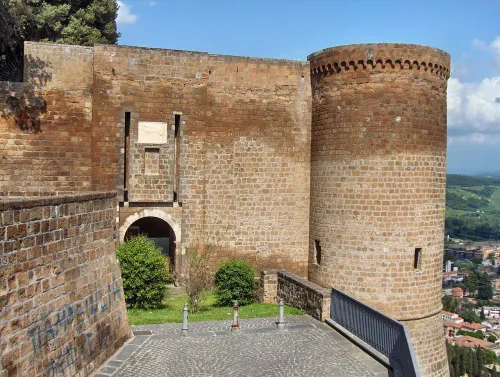
You begin on the eastern edge of the rock that carries Orvieto, entering from Piazza Cahen. Only part of the Rocca Albornoziana survives, but it is a handsome part: a strong tower and a stretch of the old perimeter wall, from which the view opens across the valley of the Paglia river. Today the fortress holds the town's main public gardens, and walking in is free.
The fortress was a political statement as much as a defence. In the fourteenth century Cardinal Egidio Albornoz reorganised papal power across central Italy and raised fortresses in every town brought back under the pope, each with a military job and a symbolic one. Here the design went to the military architect Ugolino di Montemarte, whose noble family owned land in the area. The original fortress of 1364 was a square circuit of walls ringed by a wide moat and crossed by drawbridges. What remains is the tower above Porta Soliana, later also called Porta Rocca, close to Porta Postierla.
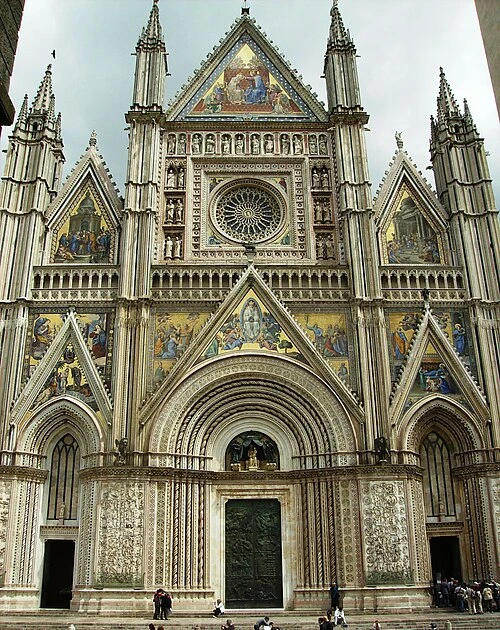
There is a harder story beneath the lawns. The fortress rose on the rubble of San Martino, a working people's quarter largely razed for military security. Officially, the proposal came from the town council itself, after Orvieto's so called free annexation to the Papal State. With the public buildings of the commune by then almost abandoned, the fortress and the slowly rising cathedral became the two poles of the town.
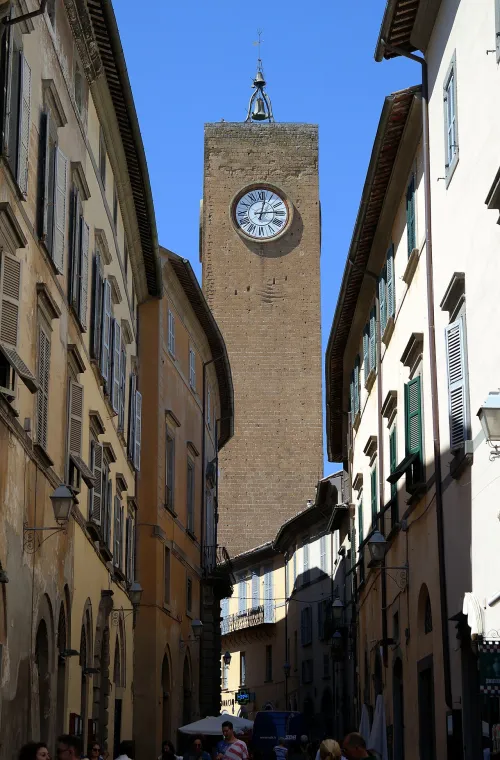
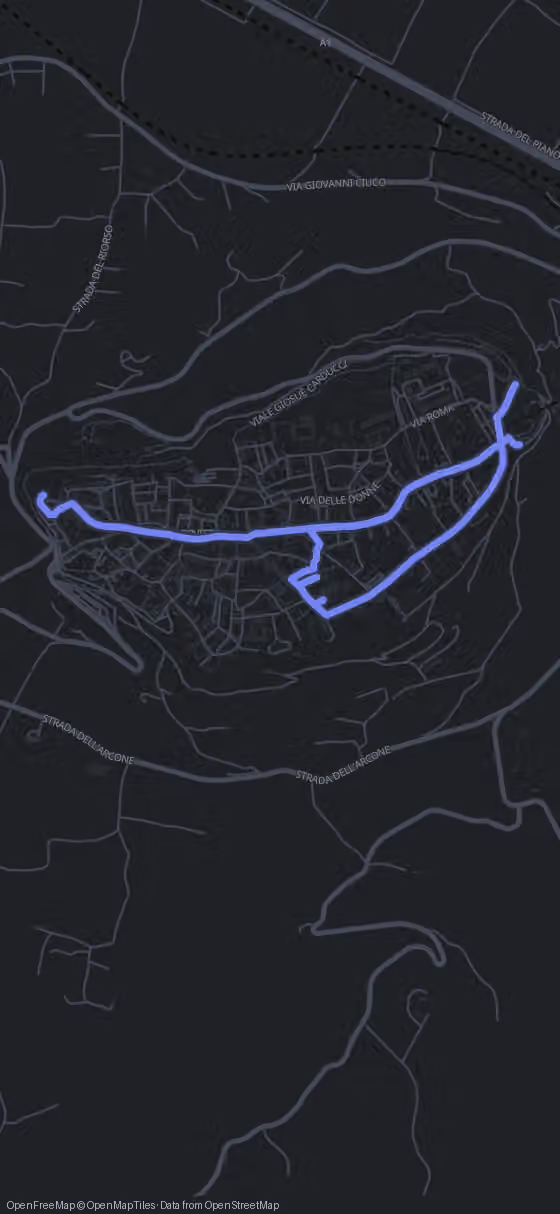
Before you leave, look for the bronze works by the American sculptor Jack Zajac, and for the house where the journalist Luigi Barzini was born. Then head for the Torre del Moro, 670 m and 11 min away; the Giardini Comunali lie along this first stretch.