

Teatro Romano
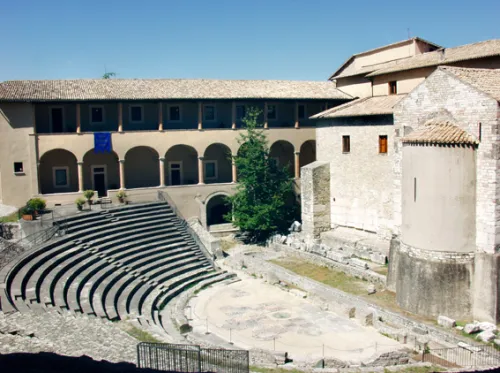
Start where Roman Spoletium went for its entertainment. The theatre dates from the 1st century BC; the whole building measured 114.40 m across, the seating bowl about 70 m. Look down at the orchestra: it still has its floor of coloured marble slabs, and in the front of the stage you can spot the holes where the poles of the curtain once stood. Part of the seating rests on a semicircular vaulted corridor, from which three passages led the audience to their seats, while the ends of the bowl were reserved for magistrates and leading citizens.
The theatre had a rough life. Already in antiquity a landslide, perhaps after an earthquake, damaged it and it had to be restored. Later it served as a stone quarry, and in the 12th century the church of Sant'Agata was built over part of the stage. The Corvi family added their houses in the 13th and 14th centuries; at the end of the 14th, Benedictine nuns moved in, inherited the Corvi palace and turned it into a monastery, adding a cloister on octagonal pillars in the 16th century. From 1870 it served as a women's prison.
The ruins were never quite forgotten: the Renaissance architect Baldassarre Peruzzi drew them in the 1500s. Yet the site was only identified in 1891, by the local archaeologist Giuseppe Sordini, a name you will meet again on this walk. Digging began in 1933 and continued in 1938, but the decisive excavations came between 1954 and 1960.
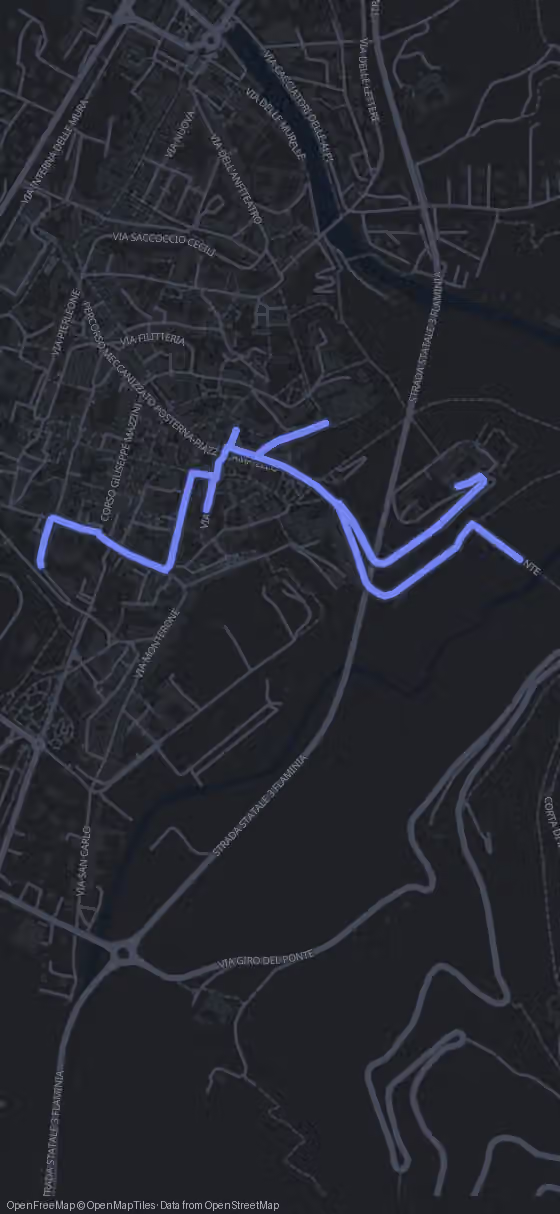
Going in costs admission and is worth it for anyone curious about Roman Spoleto; the former monastery of Sant'Agata now houses the Museo Archeologico Nazionale. From here it is 310 m, about 5 minutes, to the Roman arch, passing the museum on the way.