



Teatro Campoamor
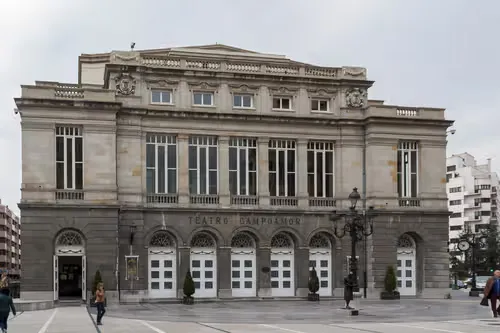
Start in front of the Teatro Campoamor, Oviedo's opera house. This is the stage where the Princess of Asturias Awards are presented, but its story begins with a more local ambition. In the late 19th century a new moneyed middle class was emerging in the Asturian capital, and it wanted a proper house for opera and drama. Until then, performances took place in the Teatro del Fontán, a building that today houses the Biblioteca de Asturias Ramón Pérez de Ayala.
The theatre rose on land of the old convent of Santa Clara, behind Calle Uría, a street laid out a couple of decades earlier. The project was presented in 1876 under mayor José Longoria Carbajal, and the building was finished in 1883. Its name came from the writer Leopoldo Alas, known as Clarín, then a city councillor, who proposed honouring the Asturian poet Ramón de Campoamor. Campoamor could not attend the opening. He sent his brother instead, along with a thousand pesetas for the city's poor, which the town hall divided among Oviedo's four parishes, 250 pesetas each.
The doors opened to the public on 17 September 1892 with Meyerbeer's Les Huguenots, followed by Lucia di Lammermoor. That second opera came back for Oviedo's first opera season in 1948 and again for the theatre's 120th anniversary. The season here is the second oldest in Spain, after the one at Barcelona's Gran Teatre del Liceu.
Give the main façade a proper look, because it is the survivor. After a first major remodelling in 1916, which reorganised the interior and added seats, the Revolution of 1934 left the theatre in rubble: soldiers set it on fire on the orders of Camilo Alonso Vega so that revolutionaries could not use it against the Santa Clara barracks. Only the main façade stayed standing.
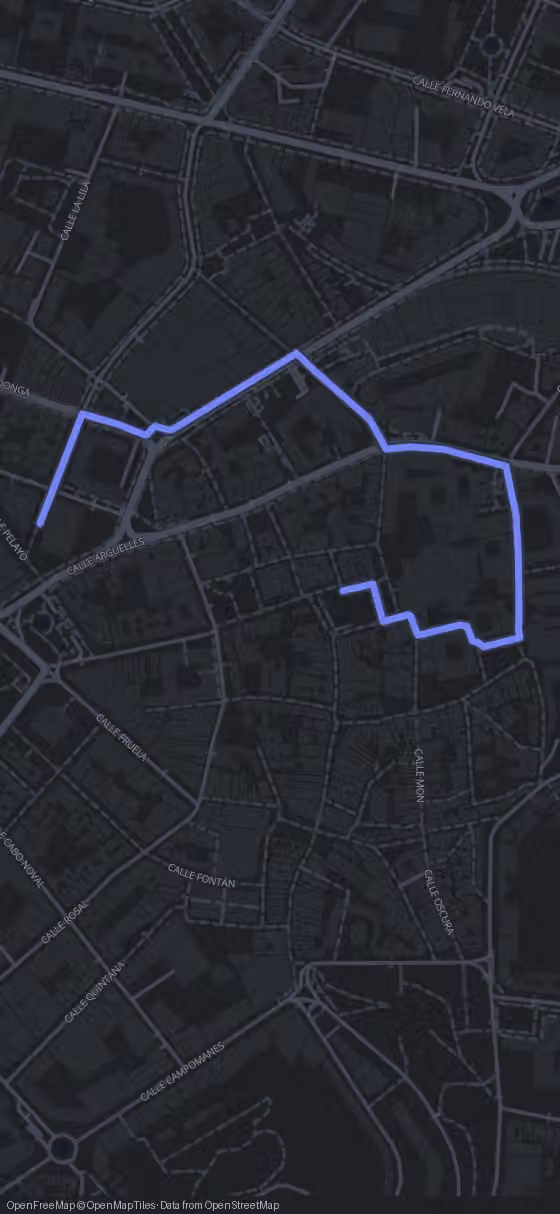
From here it is 370 m, about 5 minutes on foot, to Calle Gascona, where the walk swaps opera for cider.