Free Walking Tour León: Gaudí to the Royal Pantheon

Six stops, 1.3 km: from Gaudí's neo-Gothic Casa Botines through noble palaces and the old market square to a cathedral of glass and León's royal basilica.

6 Stops 1.3 km ~18 min walking
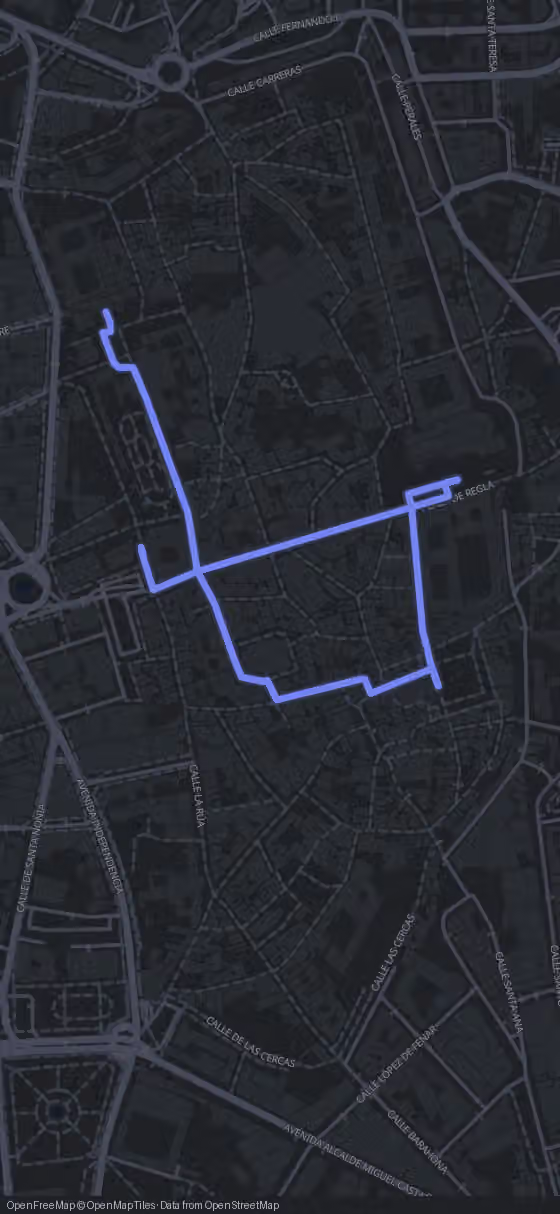
Route map for the León walking tour
Stop 1 of 6
50 m·1 min
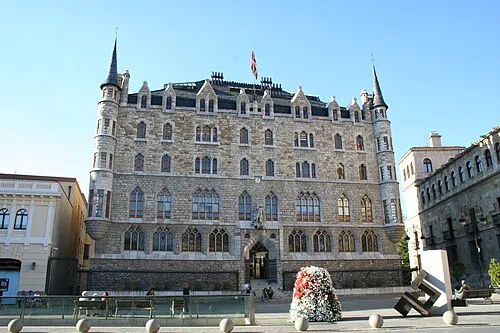
Casa Botines
Head east toward the Palacio de los Guzmanes, right next door
Hola, welcome to León. I’m Alex, and our first building shows how even Gaudí changed his language to fit a city.
Try this tour with Alex

This León Walk at a Glance

Six stops lead from Casa Botines past Palacio de los Guzmanes, Palacio del Conde Luna and Plaza Mayor to León Cathedral and Basílica de San Isidoro: 1.3 km, 18 minutes of pure walking, about four hours with the interiors.

The square and the Conde Luna palace are free; Gaudí's museum, the Guzmanes visit, the cathedral and San Isidoro charge entry. Route, map and GPS navigation are free in your browser; the AI Tour Guide is optional.

Open free GPS & optional AI Tour Guide
View of León

The Route

Walking Map of León: Six Stops from Gaudí to San Isidoro

6 stops 1.3 km 18 min walking
Tap to load interactive map

The 6 stops along this route

  1. Casa Botines in León, stop 1 on the self-guided walking tour
    1Casa Botines
  2. Palacio de los Guzmanes in León, stop 2 on the self-guided walking tour
    2Palacio de los Guzmanes
  3. Palacio del Conde Luna in León, stop 3 on the self-guided walking tour
    3Palacio del Conde Luna
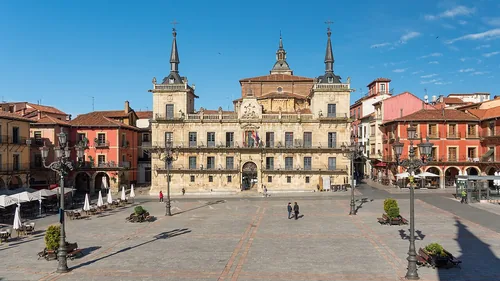
  4. Plaza Mayor in León, stop 4 on the self-guided walking tour
    4Plaza Mayor
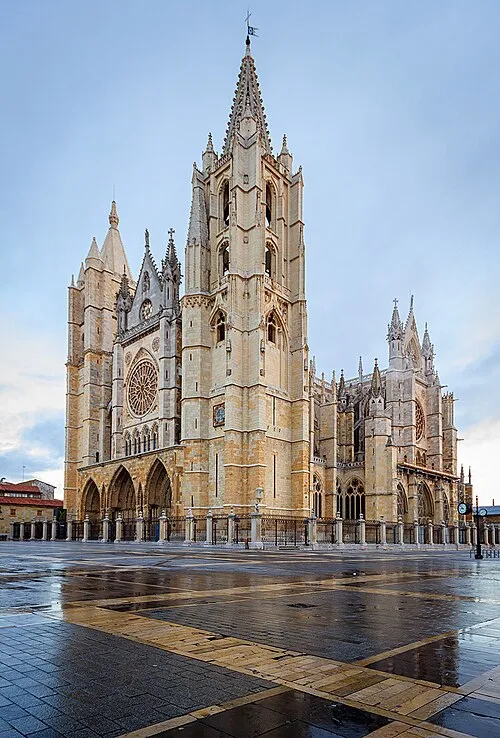
  5. León Cathedral, stop 5 on the self-guided walking tour
    5León Cathedral
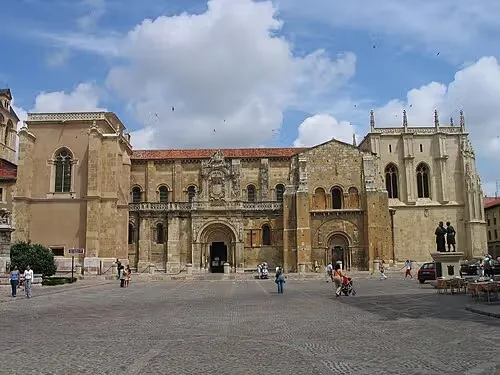
  6. Basílica de San Isidoro in León, stop 6 on the self-guided walking tour
    6Basílica de San Isidoro
  7. That's the full route.

    Walk it with an AI Tour Guide talking you through every one of these streets.

    Start free in your browser
    You made it

Your León Walking Tour, Stop by Stop: Palaces, Glass and Kings

  1. 1

    Casa Botines

    Casa Botines in León, stop 1 on the self-guided walking tour

    Your walk begins on Plaza de Santo Domingo, the point where León's old town meets the newer ensanche. The neo-Gothic building facing it is Casa Botines, designed and built by Antoni Gaudí between 1891 and 1892. It is one of only three Gaudí works outside Catalonia; the other two are the Episcopal Palace in Astorga, also in León province, and El Capricho in Comillas, in Cantabria.

    It was never meant as a showpiece. The building combined a commercial warehouse with a private residence. Its name comes from Juan Homs y Botines, a Catalan merchant who had settled in León and founded the trading company; his partners Mariano Andrés González-Luna and Simón Fernández Fernández were the ones who gave Gaudí the commission. That is why you will also hear it called Casa Fernández y Andrés.

    Look at the walls with Gaudí's thinking in mind. In these years he was working his way through medieval Gothic, including the Gothic of León and Burgos he saw on his stays here, and came away convinced it was an imperfect style, only half solved. So he did without buttresses by using ruled surfaces and left off the heavy cresting and tracery. Keep that in mind for the cathedral later on.

    Declared a historic monument in 1969 and fully restored in 1996, the house has held the Museo Casa Botines Gaudí since 2017. It offers self-guided, guided and dramatized visits. If Gaudí is part of why you came to León, go in; if you are mainly here for the medieval city, the facade and the square are enough.

    The next stop is right next door, 10 m and a minute away on Plaza de San Marcelo, and on that short hop you pass the Fuente de San Marcelo and the Caño de San Martín.
    Hours
    Monday–Sunday 10:00–21:00
    Price
    From 7 EUR (self-guided); 10 EUR (guided); 12 EUR (dramatized tour)
  2. 2

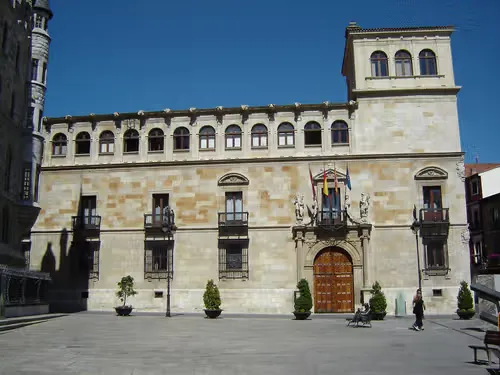
    Palacio de los Guzmanes

    Palacio de los Guzmanes in León, stop 2 on the self-guided walking tour

    The Renaissance palace beside Gaudí's building is the Palacio de los Guzmanes, built in the sixteenth century on Plaza de San Marcelo. Ramiro Núñez de Guzmán, a former leader of the comuneros, had it raised on the plots where his family's old mansions stood. The Guzmáns were among León's oldest lineages, lords of Guzmán, Aviados, Toral and the Valle de Boñar, and firmly embedded in the city's local power.

    Don Ramiro wanted a building that stood apart from everything around it, in size and in style: architecture 'a lo romano', the new Renaissance manner. He hired Rodrigo Gil de Hontañón, one of the most prestigious master builders in Castile at the time, to draw the plan, and Juan de Ribero Rada carried it out. The design was a rectangular palace around a central courtyard, free-standing on all four sides, with its main facade turned to the square so it could be admired from there. Inside it had to do two jobs at once: house the family and show off their rank.

    The ambition ran into limits straight away, and the palace stayed unfinished. Even so it became the city's most prominent palace. Only at the end of the nineteenth century did the Diputación Provincial de León take it over and complete it for its new offices, and the provincial government still works here today. It was declared a monument in 1963.

    You can only go inside on a timed visit, in groups of no more than 20, so turn up a little before your slot. The standard visit is inexpensive, an easy add-on if Renaissance interiors interest you.

    From here it is 180 m, about 3 minutes on foot, deeper into the old town to the Palacio del Conde Luna.

    Hours
    Visits Wed–Sun; winter (mid Sept-early April): 11:30/12:30/13:30 and 15:00/16:00/17:00; summer (early April-mid Sept): 10:30/11:30/12:30 and 17:15/18:15/19:15; duration approx. 30 min, max 20 people per group
    Price
    2 EUR standard visit (20 min); special visit (50 min) 3 EUR; reduced 2 EUR and 1 EUR respectively
  3. 3

    Palacio del Conde Luna

    Palacio del Conde Luna in León, stop 3 on the self-guided walking tour

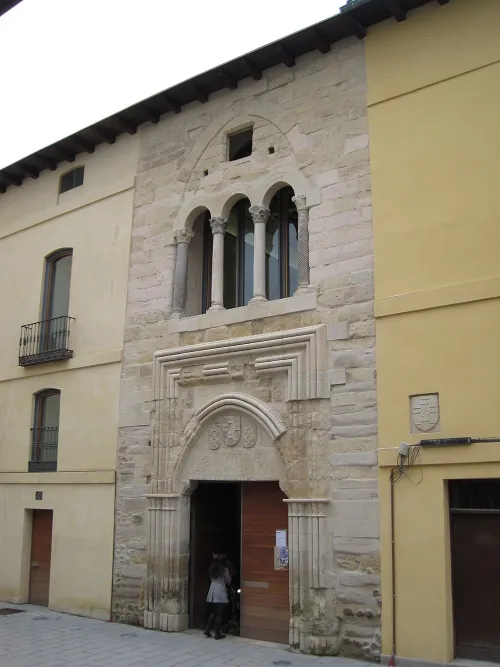
    The Palacio del Conde Luna stands in the heart of the old city, between La Rúa, Calle Conde de Rebolledo and Plaza del Conde, in the parish of San Salvador de Palat del Rey, the nerve centre of early medieval León. The palace takes up much of the southwest corner of the city wall from the late third century.

    Pedro Suárez de Quiñones and his wife Juana González de Bazán built the first palace in the fourteenth century. What survives from it is the central part of the facade, about eleven metres wide, in dressed stone. Look for the three coats of arms: the Quiñones arms in the middle, the Bazán arms on either side. Below them is the Gothic doorway, a lintel on corbels sheltered by a large pointed arch around the tympanum.

    In the mid sixteenth century the fourth Count of Luna, Claudio Fernández Vigil de Quiñones, a diplomat in the service of Philip II, set out to remodel the whole palace. His plan included a twin tower to the north, a new facade line in front of the medieval one and an arcaded wing. The tower you see today is the three-storey Renaissance tower raised by Catalina Pimentel, built of reverse-rusticated stone with panels of green slate.

    Read the tower from the bottom up. The ground floor ends in a classical entablature. The middle level has two large windows framed by Ionic pilasters and crowned by triangular pediments, with the Quiñones arms on the parapet below. The windows above are similar but have no pediment; their jambs carry the heraldry of the Quiñones and the Cortés, and the parapets show the Quiñones arms ringed by fruit motifs.

    Entry is free, so it is worth a look inside whenever it is open. Plaza Mayor is 260 m away, about 3 minutes' walk.

    Hours
    Mon: Closed | Tue–Fri: 10:00–21:00 | Sat: 10:00–14:00, 17:00–20:00 | Sun: 10:00–14:00
    Price
    Free
  4. 4

    Plaza Mayor

    Plaza Mayor in León, stop 4 on the self-guided walking tour

    Plaza Mayor belongs to the Barrio Húmedo, the old quarter close to the cathedral, and a whole web of streets leads into it. The building that stands out is the Baroque Edificio Mirador, also called the Consistorio, with two rectangular towers topped by spires. Today it houses the municipal visual arts workshop and the Junta de Cofradías, the body of León's Holy Week brotherhoods.

    The square in front of you was born from a fire. In February 1654 a great blaze destroyed everything in this area, and the city decided to rebuild it as a planned main square; work started that same year and was finished in 1677. It counts as the sixth oldest Plaza Mayor in Spain.

    From the Middle Ages until the nineteenth century this was León's great commercial centre. A market was held twice a week, and the arcades were lined with shops: mostly food, but also apothecaries, ironmongers, silversmiths and craftsmen. The square has also seen bullfights, public executions and celebrations of the Isabelline court, and in 1810 the people of León gathered here to raise the call to arms against the French occupation.

    The market still takes place every Wednesday and Saturday, so put your walk on one of those days if you like seeing the square in use. Plaza Mayor is free and always open, and it gets very busy during the fiestas of San Juan and San Froilán, at carnival and in Holy Week, when most processions pass through.

    The cathedral is 250 m on, about 4 minutes away.

    Hours
    Open 24/7
    Price
    Free
  5. 5

    León Cathedral

    León Cathedral, stop 5 on the self-guided walking tour

    León Cathedral, the Catedral de Santa María de Regla, is known as the Pulchra Leonina, the Beautiful Leonese. Begun in the thirteenth century and attributed to a master mason named Enrique, it is a masterpiece of mid-thirteenth-century Gothic with clear French influence, and it was virtually complete by the mid fifteenth century. In 1844 it became the first monument in Spain declared by royal order. It also stands on the Camino de Santiago.

    Start with the main facade. Two towers frame it; the southern one is the clock tower. Between them three portals full of sculpture open under pointed arches, with a large rose window above the central section. Look for the Virgen Blanca and for the spot at the doors where justice was once handed down.

    Inside you see why the cathedral is famous. Its builders pushed the Gothic idea of dissolving the walls to the extreme, cutting them back to a minimum and filling the space with stained glass. There are nearly 1,800 square metres of it, the great majority from the thirteenth to the fifteenth century, which is rare for a medieval Gothic church and makes this one of the largest collections of medieval stained glass in the world. This is the León Gothic Gaudí studied before building Casa Botines.

    Take time for the details as well. The Renaissance retrochoir holds alabaster sculpture by Jusquin, Copin of Holland and Juan de Malinas, and behind the tomb of King Ordoño there is a Plateresque iron screen. In the main chapel stand an altarpiece by Nicolás Francés and the silver urn with the relics of San Froilán, the city's patron saint, made by Enrique de Arfe. The cloister, built between the thirteenth and fifteenth centuries, has carved capitals, friezes and ledges.

    Entry is charged, and you buy your ticket on site. If you pay for only one interior on this walk, make it this one: the effect of the glass only works from inside. From here it is 600 m, about 8 minutes, to the Basílica de San Isidoro, and on the way you walk along the Roman Walls of León.

    Local name
    Catedral de Santa María
  6. 6

    Basílica de San Isidoro

    Basílica de San Isidoro in León, stop 6 on the self-guided walking tour

    The walk ends at the Basílica de San Isidoro, built on the site of a Roman temple to Mercury. In the early tenth century a monastery dedicated to Saint John the Baptist stood here, and the kings of León settled a community of Benedictine nuns on the site. When Al-Mansur conquered the area, the first church was destroyed; after León was repopulated, Alfonso V founded a new church and monastery in the eleventh century.

    Then comes a family drama. Alfonso's daughter, the infanta Sancha, married Ferdinand, Count of Castile. Her brother, King Bermudo III, went to war against Castile and was killed by Castilian troops helped by Navarre, and Ferdinand became Ferdinand I of León. He and Sancha rebuilt the church as a basilica, gave it the crucifix that still bears their names, and in 1063 rededicated it to Saint Isidore of Seville.

    Isidore had been archbishop of Seville and the most celebrated scholar and theologian of Visigothic Spain. His relics came to León with the agreement of Abbad II al-Mu'tadid, the Muslim ruler of Seville, so they could rest in Christian soil, and his tomb still draws visitors. Look high on the facade for the equestrian statue of the saint as a Moor-slayer among the other sculptures. Thanks to its place on the pilgrimage route to Santiago, sculptors, masons and artists from all over Europe came to work here.

    One date gives this place weight far beyond León: in 1188 the Cortes of León met here, which UNESCO recognises as the first example of modern parliamentarism in Europe. The museum with the Royal Pantheon charges admission, self-guided or guided, and is the right finale if the kings and queens of this story have caught you.

    The museum does not stay open all day, so plan your visit to the Royal Pantheon with a little care.

    Hours
    Museum and pantheon Tue–Sat, seasonal: 1 Jan-29 Mar 10:00–14:00 and 16:00–19:00; 30 Mar-12 Oct 10:00–14:00 and 17:00–20:00; 13 Oct-31 Dec 10:00–14:00 and 16:00–19:00; Sun 10:00–14:00 only; Mon closed
    Price
    Museum with the Royal Pantheon: self-guided 6 EUR, guided 8 EUR
Walking tour route map of León Route loaded
Casa BotinesPalacio de los GuzmanesPalacio del Conde LunaPlaza Mayor+2
All 6 stops are already on the map.
You just press start.
AI Tour Guide

You know the León route now. Walk it with a guide in your ear.

Press start wherever you are, even hundreds of kilometres from León, and the guide begins telling its stories right away. In the city, pick any of the 6 stops to start from: it leads you there, then talks with you the whole route, asking, listening, remembering, and shaping the tour around your answers.

6stops 1.3km 18 minwalking 13languages
▶Start the tour free

Free to start · Runs in your browser · No app, no download

Shorter Ways to Walk León's Old Town

Not every day has room for four hours of interiors. These three versions keep the recommended order and simply leave out what you don't need.

Gaudí and the noble palaces

Stops: 1, 2, 3, 4

For a short morning focused on architecture and the families who shaped the city. Only 7 minutes of walking in total. You pay for the Gaudí museum and the Guzmanes visit if you go in; the Conde Luna palace and Plaza Mayor are free.

Medieval León: square, cathedral and basilica

Stops: 4, 5, 6

For anyone who came for the stained glass and the medieval kingdom. Twelve minutes of walking from the square to the cathedral and on to San Isidoro. Entry is charged at the cathedral and at the San Isidoro museum.

Facades only

Stops: 1, 2, 3, 4, 5, 6

For a first look on arrival day or a tight budget: the whole route from outside, 18 minutes of walking and about an hour with time to look. The only interior you might still add is the free Conde Luna palace.

How Long Does This León Tour Take with the Interiors?

The 1.3 km route is compact, and the longest leg is the last one, 600 m from the cathedral to San Isidoro. What fills the time is the interiors: allow about an hour for the Gaudí museum, around 30 minutes for the Guzmanes visit, about an hour inside the cathedral and some 45 minutes for the museum and Royal Pantheon at San Isidoro. Add short looks at the Conde Luna palace and Plaza Mayor and you are at about four hours.

If you choose only the cathedral and San Isidoro as interiors, plan on roughly two and a half hours. Keeping to facades and squares, the walk takes about an hour.

Before You Set Off in León

  • Start: Casa Botines on Plaza de Santo Domingo is the recommended start, but you can join the route at any stop.
  • Finish: Basílica de San Isidoro. If you want to return to Casa Botines afterwards, the GPS navigation in your browser can lead you back to the start.
  • Best days: Wednesday to Saturday. These are the days when the interiors on the route combine best.
  • Time of day: Start in the morning at Casa Botines. With full interiors you reach San Isidoro around its lunch break, so either keep the morning visits brief or plan the basilica museum for the afternoon.
  • Costs: Walking the route costs nothing. Casa Botines, the standard Guzmanes visit, the San Isidoro museum and the cathedral each charge admission.
Walking tour route map of León
AI Tour Guide

Your guide is ready when you are, from Casa Botines on.

Press start and a voice AI Tour Guide takes it from here: leading the route through León, telling the stories, and turning your walk into a real back-and-forth conversation. No app or download is needed; it runs in your browser.

6stops 1.3km 18 minwalking 13languages
▶Start the tour free

Free to start · Runs in your browser · No app, no download

What the AI Tour Guide Adds in León

On this route the AI Tour Guide leads the walk as a conversation: it greets you at Casa Botines, tells the stories of the Guzmáns, the Counts of Luna and the royal family behind San Isidoro, asks whether Gaudí or the Middle Ages pulls you in more, and shapes what comes next around your answers. Ask it what the comuneros were fighting for or how the Cortes of 1188 actually worked, and interrupt whenever you like. You start with 100 free credits; after that, take this tour all-inclusive for €19.99 with no time limit, or pay €5 per hour.

A Real Conversation A voice AI Tour Guide greets you, leads the whole route, and tells the stories and facts as you walk, asking what you want to see and keeping a real conversation going. Not a recording you press play on.
Map Navigation Follow the route on the map and walk at your own pace. You choose where to start and when to move to the next stop.
Ask Anything Curious about a building you pass? Ask your AI Tour Guide on the spot and the conversation carries on.
13 Languages Switch language anytime. No separate tour needed.
Start free in your browser

Common Questions about Walking León

Which ticket should I choose at Casa Botines?

Self-guided suits you if you want to set your own pace. The guided visit and the dramatized tour cost a little more and add a person telling the building's story.

Is there a longer visit at the Palacio de los Guzmanes?

Yes. Besides the standard visit there is a special visit of about 50 minutes, worth it if Renaissance palaces are your thing. Reduced tickets are available too; ask at the entrance.

Where can I walk next after León?

Oviedo is 88 km away and Burgos 156 km. Burgos fits well if the cathedral here has left you wanting more Gothic: Gaudí studied it in both cities.

Is the tour really free?

Yes. The whole tour is free: the route, the interactive map and the navigation cost you nothing. Only the voice AI Tour Guide is optional and paid: you test it with 100 free credits, then you pay either €5 per hour or €19.99 for this whole tour, with no time limit. Admission to 4 of the 6 stops is not included: Casa Botines, Palacio de los Guzmanes, León Cathedral and Basílica de San Isidoro charge their own entry fees.

Do I need to download an app?

No. Everything runs in your phone browser. Open the route and start walking, no download and no sign-up required.

Do I need to book the walking tour in advance?

No booking needed. This self-guided tour is available anytime. Open the route in your browser and start walking. The AI Tour Guide works instantly, no app, no reservation required.

What languages is the AI Tour Guide available in?

The AI Tour Guide speaks 13 languages, so you take the tour in your own language and can switch at any time.

Can I skip stops or change the route?

Yes. Skip any stop, spend extra time at places you like, or start the route from any point. It is your walk, you set the pace.
Image credits
▶ Start free in your browser Runs in your browser, no app, no download