

Roman Aqueduct
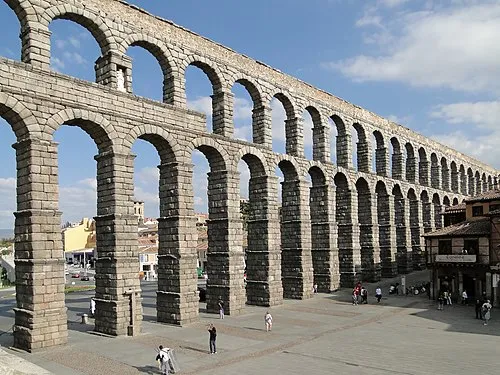
Stand at the foot of the arches and look up. This is the elevated section of Segovia's Roman aqueduct, a complete arcade of 167 arches, counted among the best-preserved Roman aqueduct bridges there are. The city treats it as its foremost symbol: you will find it on Segovia's coat of arms, and together with the old town it was declared a UNESCO World Heritage Site in 1985.
What you see is only the showpiece of a long water system. Water came from the Río Frío in the mountains of the La Acebeda area, 17 km away, and ran through 15 km of channel before it reached the city, where it fed fountains, public baths and private houses. The builders followed the principles Vitruvius had set down in his De Architectura, and they built to last: the aqueduct carried water until 1973.
For a long time nobody knew exactly when it was built. A dedication plaque once sat at the top, but its bronze letters disappeared long ago. Late in the 20th century the scholar Géza Alföldy read the text from the anchor holes that had held the letters and concluded that Emperor Domitian ordered the construction, most likely finished in 98 AD. Evidence published in 2016 points a little later, to after 112 AD, under Trajan or early in Hadrian's reign from 117 AD.
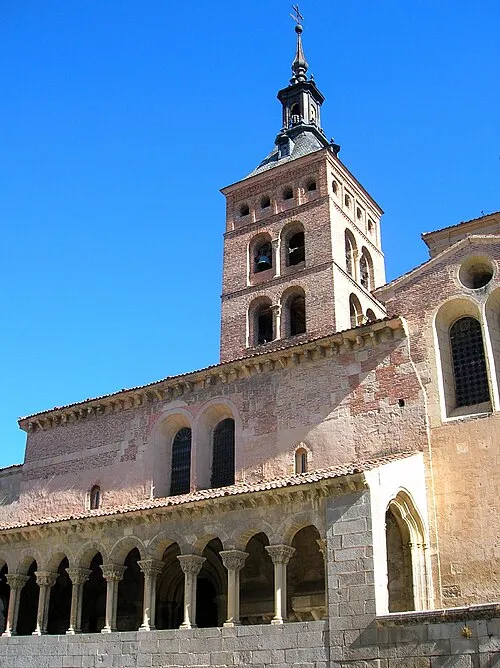
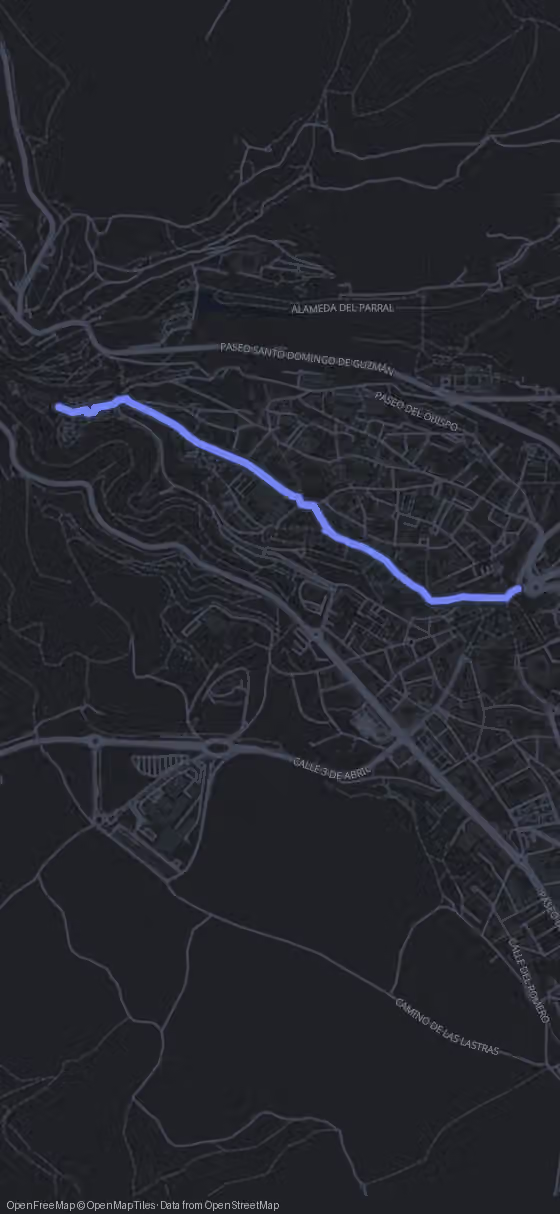
Segovia's own beginnings are just as hazy. The Arevaci people lived here before the Romans conquered the area, and Roman troops sent to control it stayed behind and settled. Take your time; the aqueduct is free and always accessible. Then head into the old town: you leave by Plaza del Azoguejo, the square at the foot of the arches, and after 410 m, about 6 minutes, you reach the Church of San Martín.