

Palma Cathedral
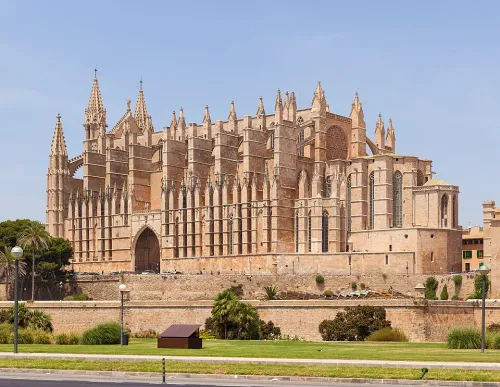
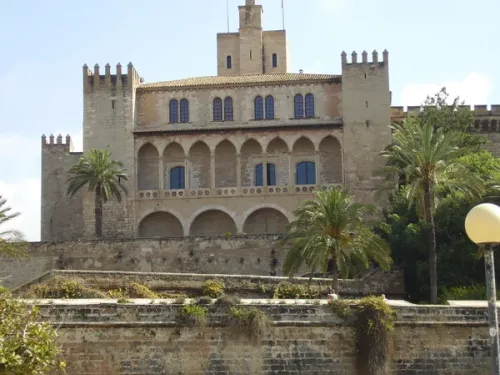
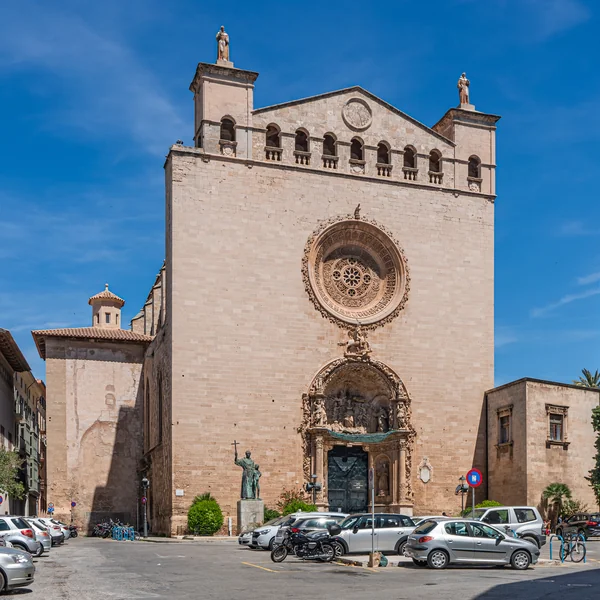
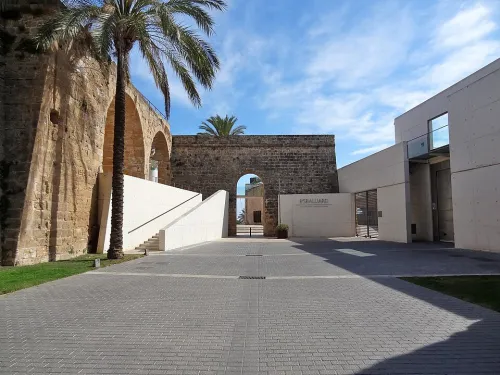
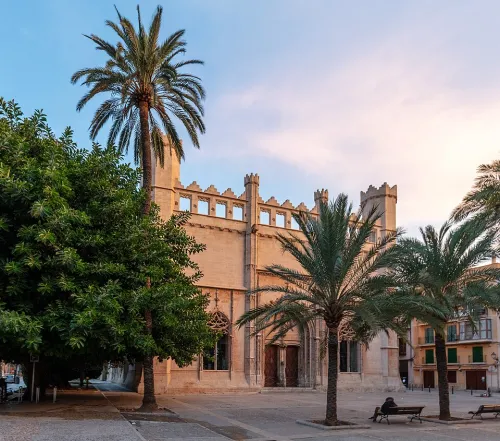
You start at La Seu, the cathedral of Santa Maria, which stands right on Palma's seashore against the old city walls, with the Royal Palace of La Almudaina on one side and the Episcopal Palace on the other. Look up at the west front: its pointed gable is a 19th-century neo-Gothic addition, built when structural problems forced a renovation of what had been a flat-topped façade.
The story begins in 1229, when King James I took the city, then called Madina Mayurqa, from its Almohad rulers. He re-established the diocese at once, and work began on the site of the city's largest mosque; Bishop Pere de Morella consecrated it in 1230. The oldest part still standing, the Chapel of the Holy Trinity, was finished in 1327 as a burial place for the kings of Mallorca. By 1386 the last traces of the mosque had gone, and the bell tower was completed in 1498, around the time the naves and their vaults were closed. The rood screen and choir stalls that followed were set, unusually, in the middle of the nave.
Inside is where La Seu earns its reputation. The nave rises 44 metres, the eighth-highest in the world, and the rose window measures nearly 14 metres across, the second-largest Gothic rose window still in existence. After the Council of Trent the church filled with Baroque murals and altarpieces, and in 1903 Antoni Gaudí was invited to oversee a restoration that reshaped much of the interior.
It is Palma's most popular sight, and rightly so: if you go into only one building on this walk, make it this one, especially if light, height and Gothic engineering move you. The Royal Palace of La Almudaina sits directly opposite, 110 metres and one minute away.