

Aljafería Palace
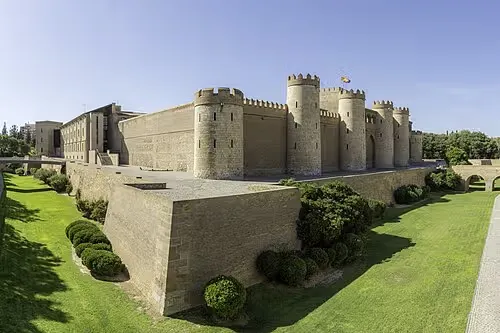
You begin at a fortified palace built in the second half of the 11th century, when Zaragoza was Saraqusta and ruled by its own Muslim dynasty, the Hudids. King al-Muqtadir had it raised as a royal residence and a place of pleasure, and his court called it Qasr al-Surur, the Palace of Joy. The thick outer walls tell you it was a fortress too; the name over the gate, Aljafería, is a worn-down echo of the king's own name.
What makes this building special is its rarity. It is the only large building that survives from the taifa period, the era of small independent Muslim kingdoms in al-Andalus before the Almoravids arrived. Its models lie far to the east, in the desert palaces of the Umayyad caliphs in Syria from the 8th century.
Think of it as the middle piece of a trio: the Mosque of Córdoba from the 10th century, this palace from the 11th, and the Alhambra in Granada from the 14th. If you only know the other two, the Aljafería fills the gap between them.
Admission is charged, and for anyone curious about Islamic Spain it is the visit to make on this route; allow about an hour. If you are pressed for time or saving money, the outer walls alone give you a sense of the place.
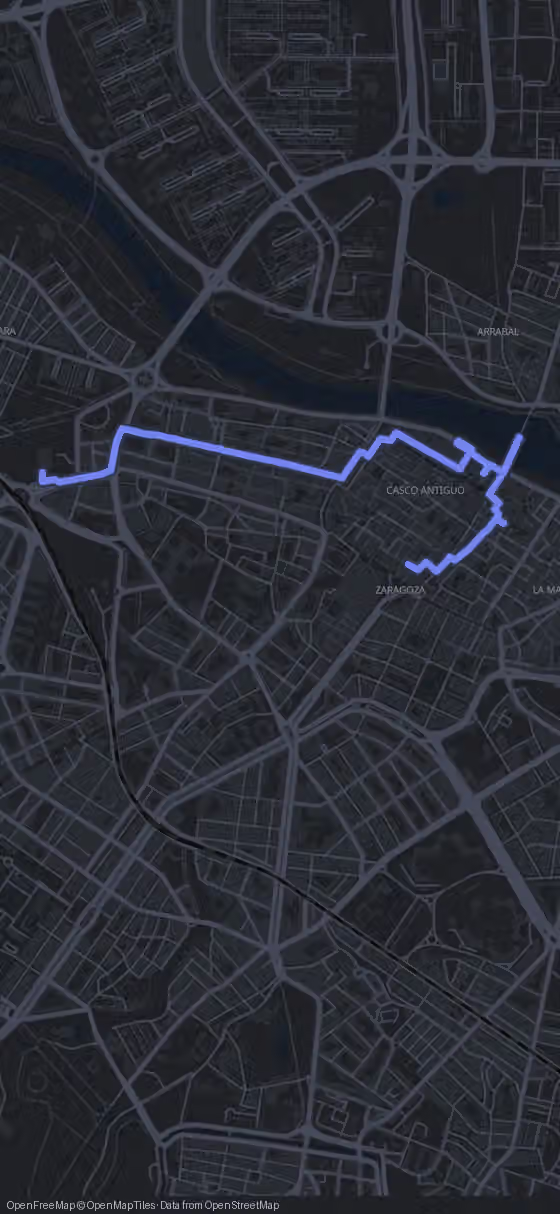
From the palace it is the longest leg of the day, 1360 metres and about 19 minutes, towards the old town; on the way you pass the Church of San Pablo.