

Iglesia del Sagrado Corazón de Jesús
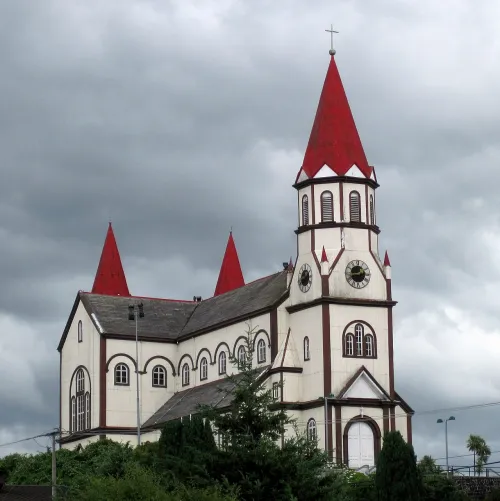
Start in the upper part of town at the Iglesia del Sagrado Corazón de Jesús, the parish church often called the most representative church of southern Chile's architecture. Look at its skin first: the walls are clad in iron sheets and the roof in shingles of alerce. Under that cladding stands a frame of ulmo and roble, and inside, the walls are lined with mañío and laurel. It is a timber building dressed for the weather.
Its story begins with the German colonists who settled around Lago Llanquihue and needed a place for Catholic worship. Puerto Varas had a church in the late 19th century and another in the early 20th century, and fire destroyed both. In 1911 a group of residents met to build again, this time in the upper town. Isabel Felmer sold the land to the parish on condition that it carry a Catholic church, and in January 1914 the first stone was blessed.
Three builders, Edmundo Niklitschek Lückeheide, Bernardo Klenner Droppelmann and Adalio Morales, raised it under the eye of Father Sander. Work began in 1915, and the church was inaugurated with a religious ceremony on 24 November 1918. The design follows plans of churches in Baden-Württemberg, which is why it looks so much like a village church in southern Germany set down by a Chilean lake.
It proved its solidity in the 1960 Valdivia earthquake, coming through with only minor damage thanks to the strong materials of its base and its overall structure. In June 1992 it was declared a National Monument of Chile. Entry is free, and stepping in for 15 minutes is worth it for the wooden interior alone; it is a working parish, so if a Mass is on, sit quietly at the back.
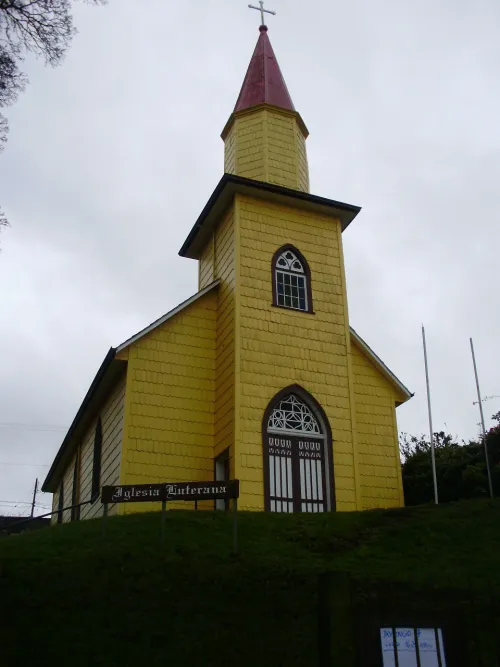
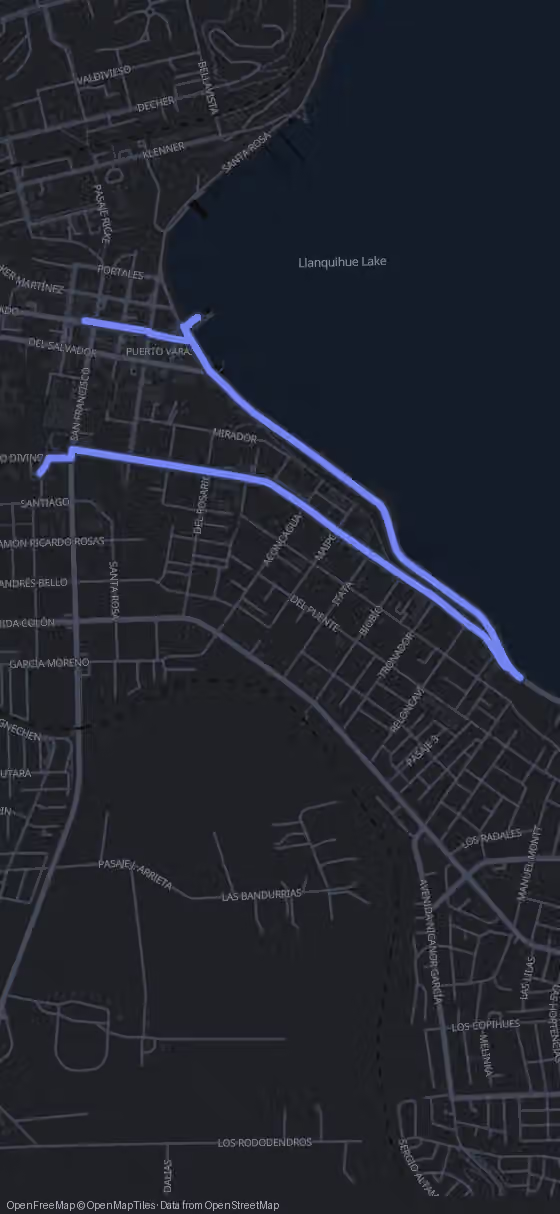
From here comes the longest leg of the route: 1430 m, about 20 minutes, to the second church of the settlers, the Lutheran temple on Avenida Vicente Pérez Rosales.