

La Mano (Los Dedos)
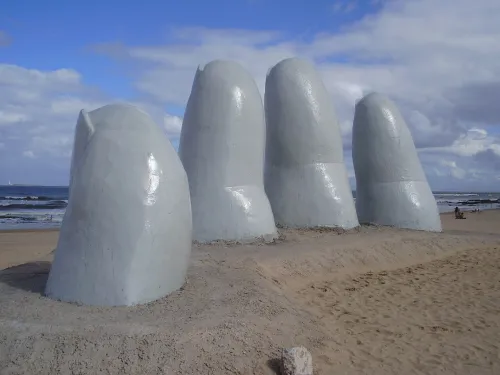
Five fingers rise out of the sand at Parada 1 on Brava Beach, as if a giant buried under the beach were reaching up for air. Locals call it La Mano or Los Dedos, its official title is Hombre emergiendo a la vida, Man Emerging into Life, and in English it is simply The Hand. Since 1982 it has become the symbol of Punta del Este and one of the most recognizable landmarks in Uruguay.
It was made by the Chilean artist Mario Irarrázabal during the first International Meeting of Modern Sculpture in the Open Air, in the summer of 1982. Nine sculptors took part and he was the youngest. The others quarrelled over the spots on a public square, so he simply went to the beach instead. He had the whole summer, yet finished in six days, despite the strong southeast wind that often blows here.
Look at it as he meant it: a hand drowning, a warning to swimmers. Up the coast toward La Barra the waves are rougher and better for surfing, while the waters toward Solanas are calmer. The fingers are concrete and plastic, reinforced with steel bars and metal mesh and coated against weathering, which is why they still stand. Sculptors from around the world worked on this beach that summer; only this piece remains, in its original spot and largely untouched.
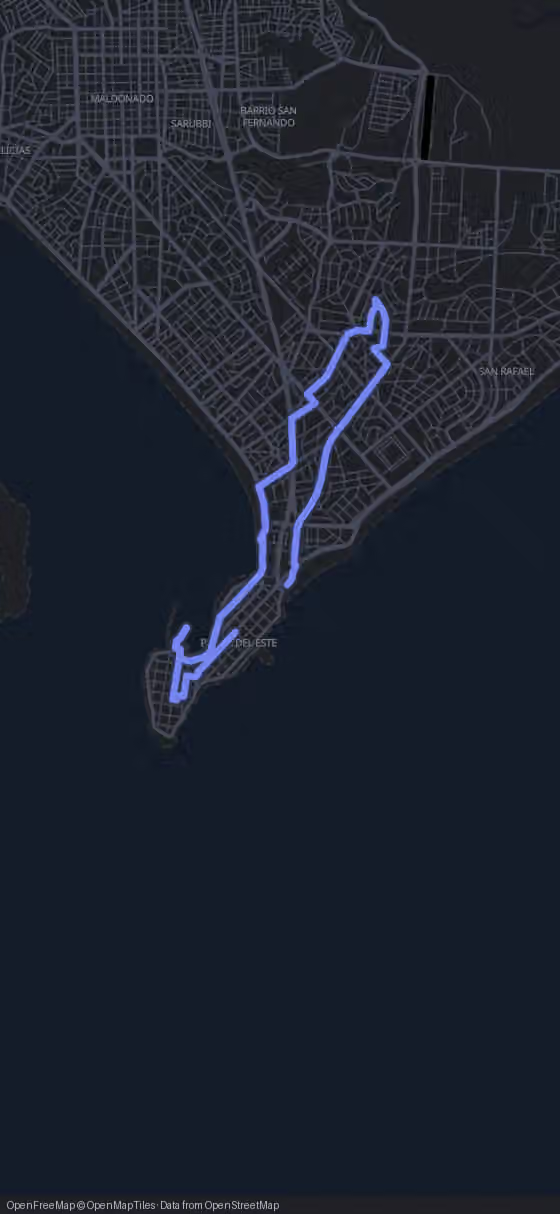
The Hand made Irarrázabal famous, and he later built close or exact relatives of it in Madrid in 1987, in Chile's Atacama Desert as the Mano del Desierto in 1992, and in Venice in 1995. Take your photo, then set off on the first long leg: 3690 m, about 54 minutes, to Museo Ralli in the Beverly Hills neighborhood.