

Place du Capitole
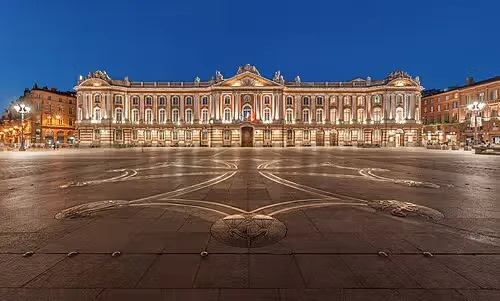
This is the square Toulouse built to show itself off. Under your feet lies pink granite, and set into it is a large Cross of Toulouse, laid in 1995 by the artist Raymond Moretti. Two years later he completed the series of paintings that decorate the arcades, so when you walk under them, look up. The long monumental facade facing the square is the Capitole itself, the old "common house" of the city's consuls, the capitouls.
The idea of a grand royal square goes back to the end of the 17th century, but clearing the space only began in the early 18th. The capitouls used the project to put their own power on display: the facade of their town hall went up at the same time, and the best Toulouse artists of the day worked on it. From then on this was the heart of the city, used as a market, a stage for festivals and, during the French Revolution, the place of the guillotine.
The square got its present look in the first half of the 19th century, when the south, north and west sides were built in neoclassical style between 1809 and 1852 to plans by the city architect Jacques-Pascal Virebent. Grand cafés, restaurants and hotels such as the Bibent and the Florida spread their terraces along it. In the second half of the 20th century cars took over, and when the underground car park was dug, the remains of a Roman gate turned up and were destroyed for good. The metro arrived in 1993, the square was renovated and handed back to pedestrians.
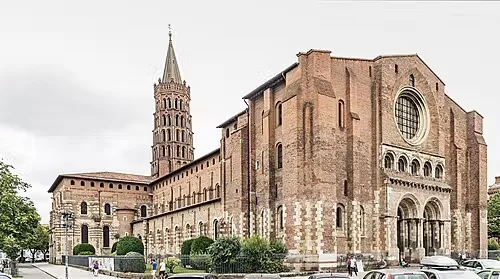
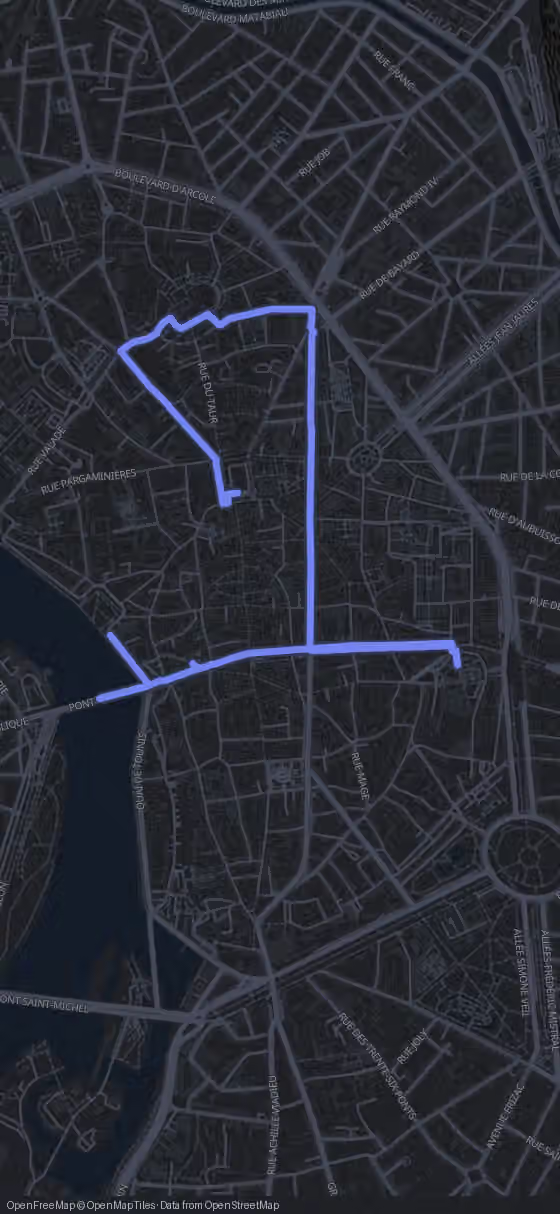
The square has been a protected site since 1943, so what you see today is meant to stay. From here it's 820 metres, about 11 minutes, to Saint-Sernin; on the way you pass the Musée Saint-Raymond.