

Trakai Peninsula Castle
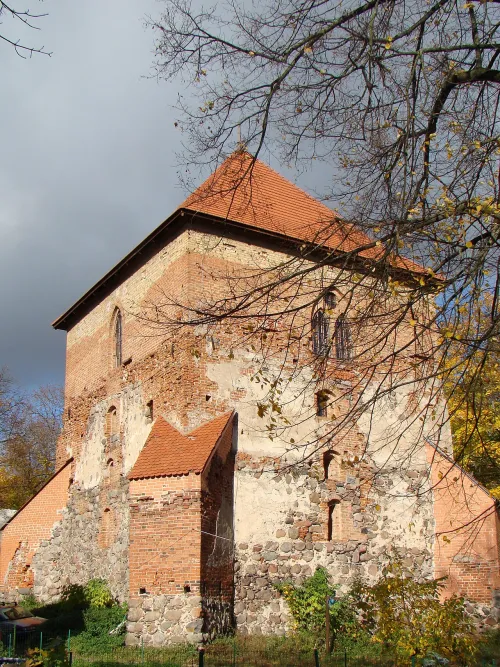
You start on the peninsula between southern Lake Galvė and Lake Luka, at the castle that came first. Kęstutis, Duke of Trakai, built it sometime between 1350 and 1377, and its job was blunt: shield Trakai and Vilnius, the capital of the Grand Duchy of Lithuania, against the Teutonic Knights. What you walk among today are the remaining walls and towers, protected by the Trakai Historical National Park.
Picture it complete: seven towers joined by a wall 10 m high. The three largest, each 15 m by 15 m, stood on the southwestern flank, the side the builders considered most vulnerable, and a moat more than 12 m wide cut the fortress off from the town. Keep that in mind as you look at the surviving towers and you can read where the defenders expected trouble.
These walls saw real fighting: attacks in 1382 and 1383 during the civil war of the early 1380s, and again in 1390. After the Treaty of Melno in 1422 the castle lost its military role, and grand dukes used it as a residence. On 20 March 1440 Sigismund Kęstutaitis was murdered here. In the 16th century it served as a prison, and in the Russo-Polish War of the mid 17th century it was destroyed and never rebuilt.
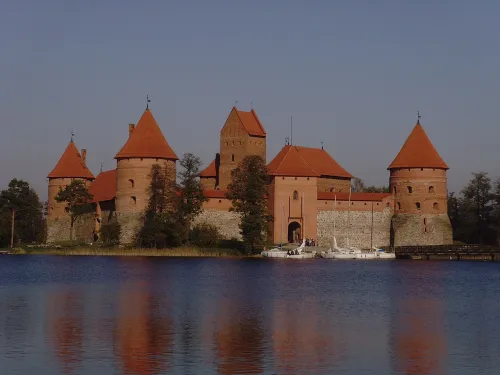
The church and monastery belong to the ensemble too. In 1678 Marcjan Aleksander Ogiński, Voivode of Trakai, granted the land to the Dominicans, though the monks only built their monastery and church in the 1770s. The site charges entry; it's worth it if you enjoy reading a fortress from its footprint and want the backstory to the Island Castle at the end of the walk.
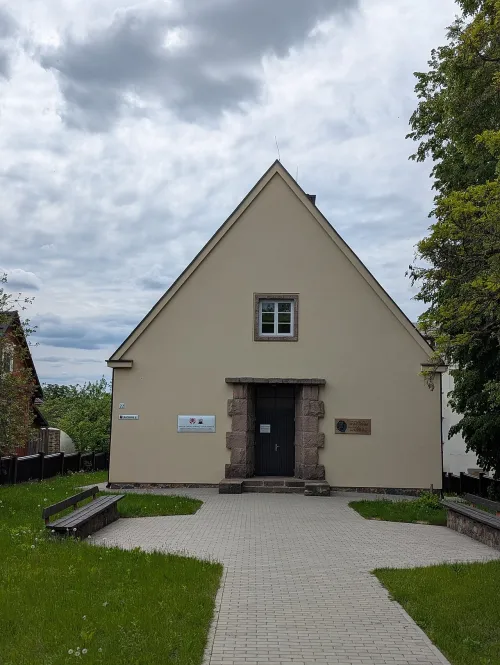
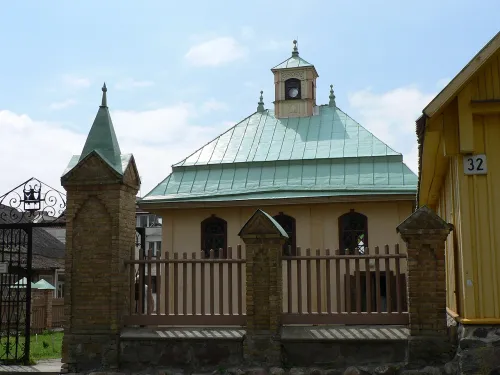
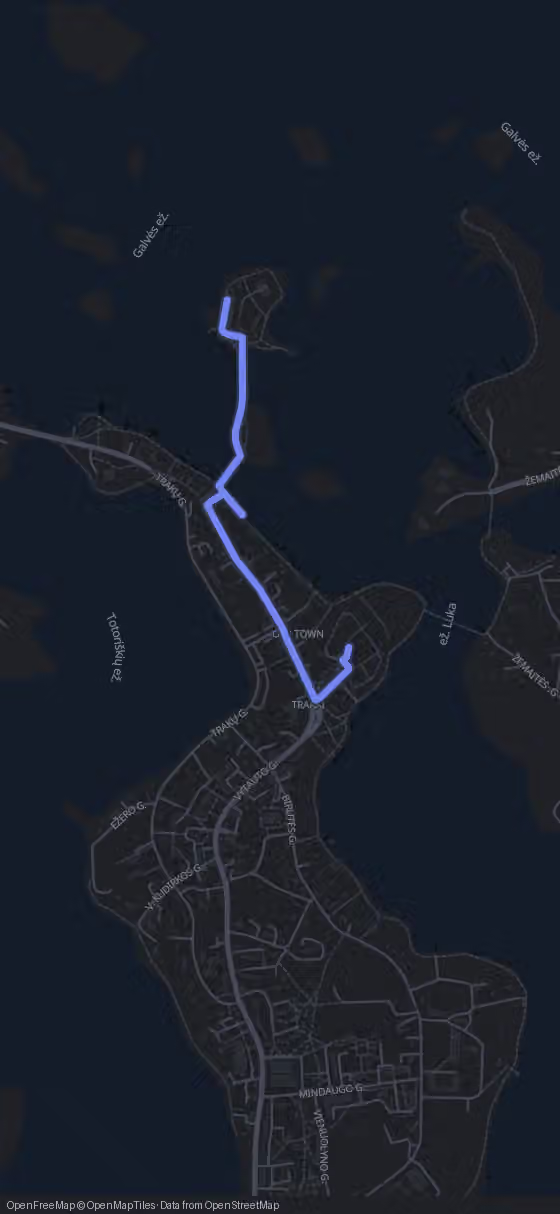
From here it's 440 m, about 6 minutes, to Karaimų Street, and on the way you pass the Trakai History Museum.