

Kaunas Castle
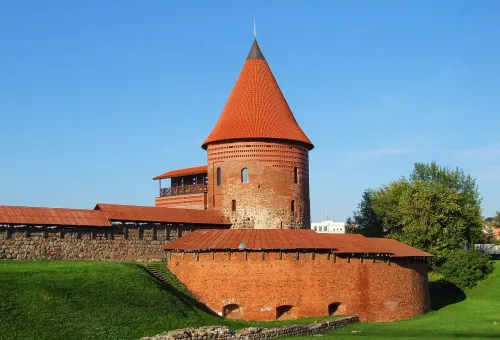
Kaunas Castle sits on a rise above the Nemunas, close to where it meets the Neris, and that position explains its whole history. A stone castle stood here by the middle of the 14th century, built in Gothic style about 100 km from Vilnius as a strategic outpost. It guarded nearby towns and the trade routes along the rivers, and it belonged to the ruler of Lithuania himself.
Look at the walls and picture them over 11 metres high including the firing galleries. That is the height the Teutonic Knights faced in 1362. A year earlier their Grand Master, Winrich von Kniprode, had ordered spies to find out exactly how thick the walls were. In March the Knights arrived, built a siege tower and brought machines to break the walls; early firearms may even have been used, as gunpowder was just reaching Europe.
Inside were about 400 Lithuanian soldiers under Prince Vaidotas, son of Grand Duke Kęstutis. After three weeks the walls gave way. On Easter Sunday the Knights celebrated Mass in the captured castle, and of the 400 defenders only 36 are said to have survived. Why no help came from outside is still debated. Kęstutis soon won the site back and rebuilt it, but the castle stayed a prize between the two sides, and in 1384 the Knights took it again.
Today roughly a third of the original castle remains. The interior charges admission and is worth it if the siege story has hooked you and you want to stand inside these walls. If you are saving time and money for the museums later on, the exterior and the story carry the visit well.
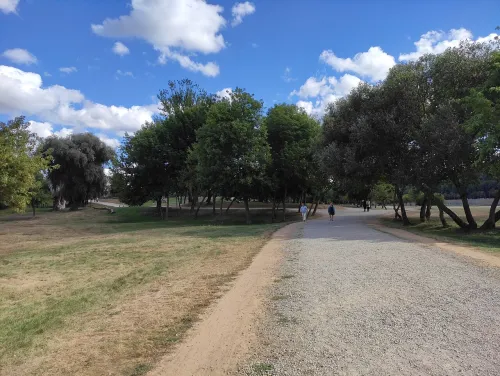
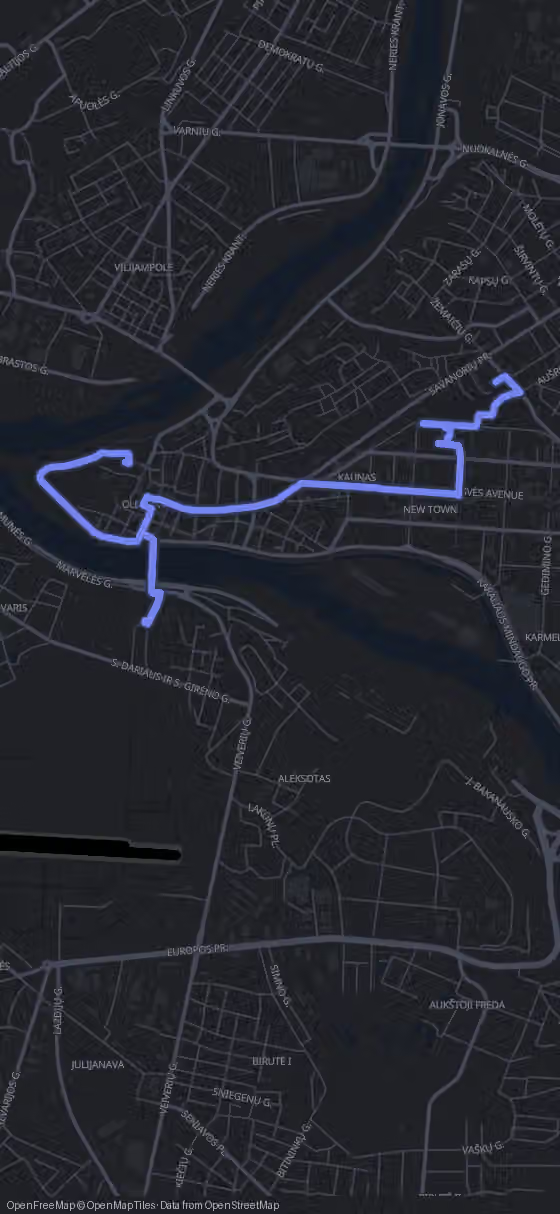
The castle actually stands in the eastern part of Santakos Park, so the next stretch is short: 500 m, about 7 minutes, out to the confluence itself.