Free Walking Tour Zagreb: Kaptol, Gradec and Lower Town

From the cathedral spires through the market and an old creek street up to Gradec, where a cannon fires at noon, then down to the plane trees of Zrinjevac.

9 Stops 2.2 km ~30 min walking
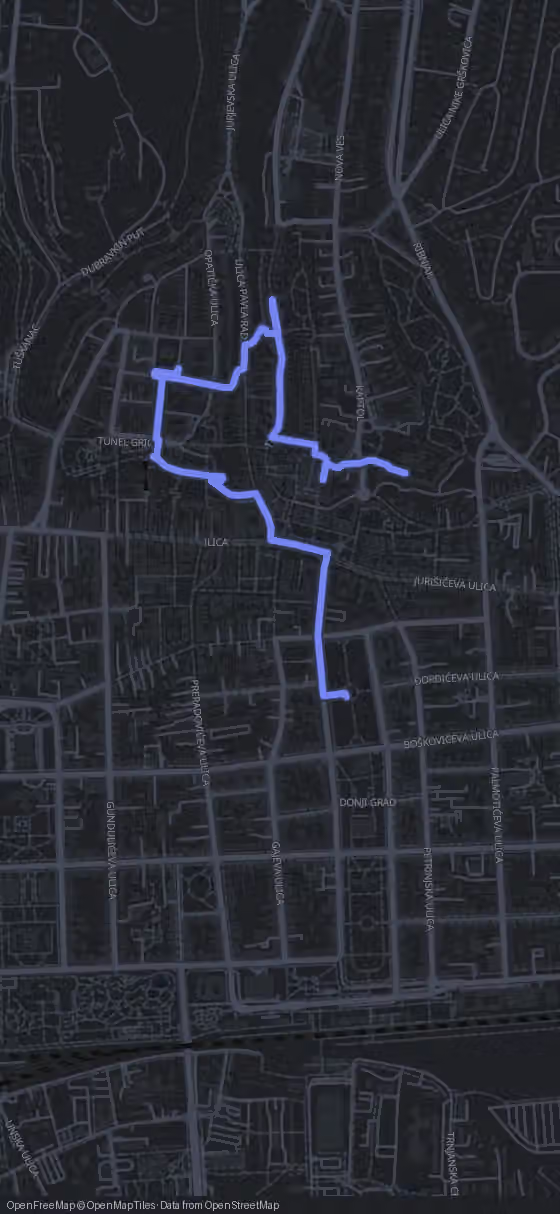
Route map for the Zagreb walking tour
Stop 1 of 9
200 m·2 min
Zagreb Cathedral
Head west toward Dolac Market
Bok, welcome to Zagreb. I'm Alex, and one museum here began when two artists turned their own breakup into something public.
Try this tour with Alex

This Route at a Glance

Nine stops, 2.2 km, 30 minutes of pure walking: from Zagreb Cathedral and Dolac Market along Tkalčićeva Street to the Stone Gate, St. Mark's Church, the Museum of Broken Relationships and Lotrščak Tower, then on to Ban Jelačić Square and Zrinjevac Park.

With the museum and the tower, plan close to four hours. Those two charge admission; everything else is free. The GPS route in your browser costs nothing, and the AI Tour Guide is optional.

Open free GPS & optional AI Tour Guide
View of Zagreb

The Route

Walking Map of Zagreb from Kaptol to Zrinjevac

9 stops 2.2 km 30 min walking
Tap to load interactive map

The 9 stops along this route

  1. Zagreb Cathedral, stop 1 on the self-guided walking tour
    1Zagreb Cathedral
  2. Dolac Market in Zagreb, stop 2 on the self-guided walking tour
    2Dolac Market
  3. Tkalčićeva Street in Zagreb, stop 3 on the self-guided walking tour
    3Tkalčićeva Street
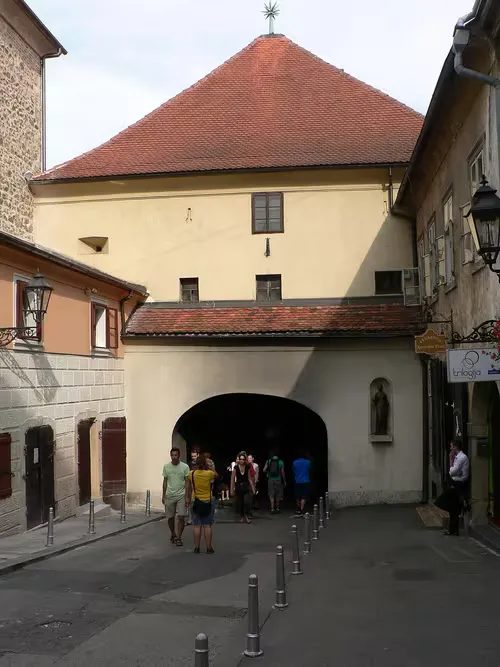
  4. Stone Gate in Zagreb, stop 4 on the self-guided walking tour
    4Stone Gate
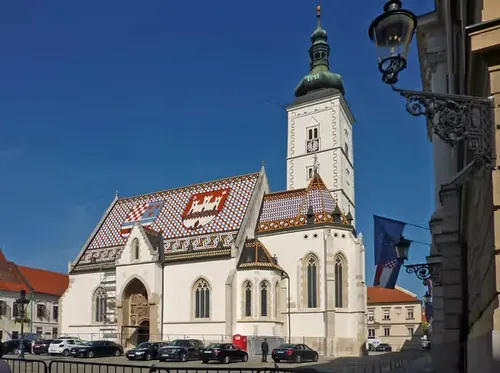
  5. St. Mark's Church in Zagreb, stop 5 on the self-guided walking tour
    5St. Mark's Church
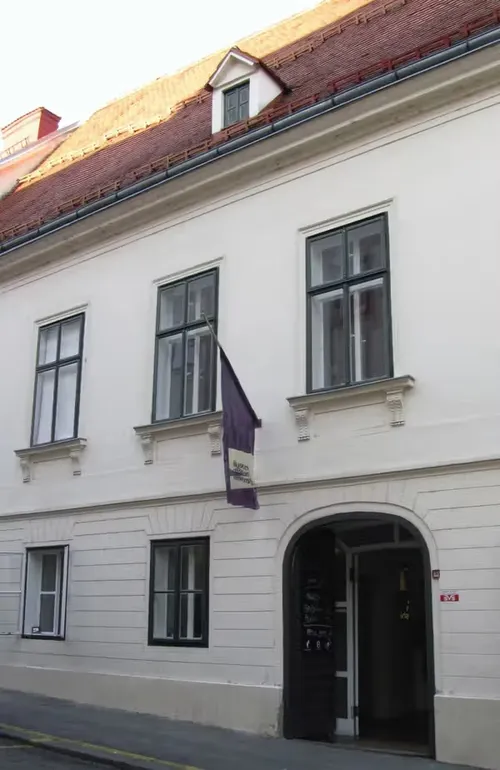
  6. Museum of Broken Relationships in Zagreb, stop 6 on the self-guided walking tour
    6Museum of Broken Relationships
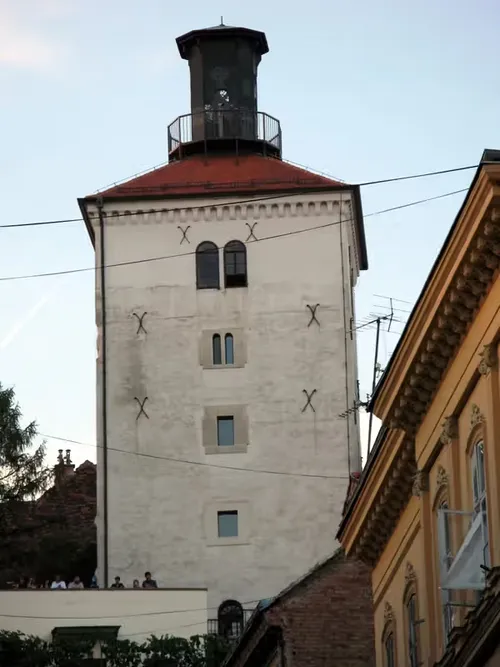
  7. Lotrščak Tower in Zagreb, stop 7 on the self-guided walking tour
    7Lotrščak Tower
  8. Ban Jelačić Square in Zagreb, stop 8 on the self-guided walking tour
    8Ban Jelačić Square
  9. Zrinjevac Park in Zagreb, stop 9 on the self-guided walking tour
    9Zrinjevac Park
  10. That's the full route.

    Walk it with an AI Tour Guide talking you through every one of these streets.

    Start free in your browser
    You made it

Your Zagreb Walking Tour, Nine Stops in Order

  1. 1

    Zagreb Cathedral

    Zagreb Cathedral, stop 1 on the self-guided walking tour

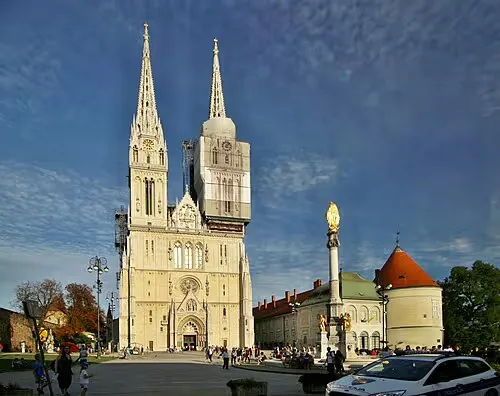
    You start in Kaptol, the old church town, in front of the twin spires that are visible from most parts of Zagreb. Officially this is the Cathedral of the Assumption of the Blessed Virgin Mary and Saints Stephen and Ladislaus, and at 108 metres it is the tallest sacral building in Croatia, counted as the most monumental Gothic church southeast of the Alps.

    The story here begins long before the spires. A Roman tombstone and early Croatian jewellery found in Kaptol show that people lived here well before 1094, the year from which the written history of Zagreb and its cathedrals is counted. The first cathedral, Romanesque, was finished in 1217 and badly damaged in the Tatar invasion of 1242. Over the following centuries it was rebuilt in Gothic style; its sacristy from that time is still considered of great architectural value.

    Then came the earthquake of 1880, which brought down large sections of the building. Architect Hermann Bollé led the restoration and gave the cathedral the Neo-Gothic form you see today, twin spires included. History repeated itself in 2020, when another earthquake damaged one of the spires, and the reconstruction is still going on, so expect building work.

    Entry is free, so go inside if the works allow it; a short look is enough to sense the scale. Then walk 200 metres, about 3 minutes, to Dolac Market, which was laid out where old city walls once stood.
    Local name
    Zagrebačka katedrala
    Hours
    Daily 08:00–19:00
    Price
    Free
  2. 2

    Dolac Market

    Dolac Market in Zagreb, stop 2 on the self-guided walking tour

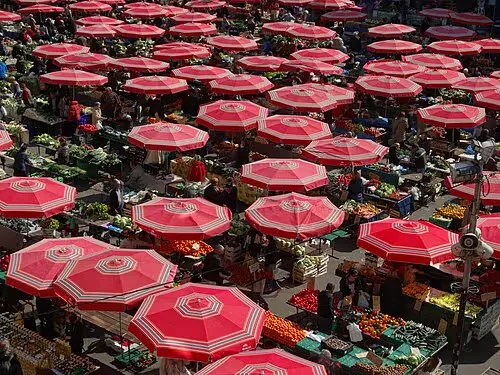
    Dolac is Zagreb's largest and best-known market, and it works on two levels. Fruit and vegetables are sold in the open on the upper square under red umbrellas, while the covered hall underneath holds meat, cheese, dairy, fish and bakeries. Much of what you see is brought in by farmers from the villages around the city.

    The market exists because the old one had to move. It used to stand on today's main square, and when it was relocated the city argued about where to put the new one. Architect Viktor Kovačić proposed this site between St. Mary's Church and Kaptol. To make room, the old city walls and several houses of the old Dolac neighbourhood were torn down; the street name Pod zidom, 'under the wall', still remembers them.

    Look for the bronze market woman. Since 2006 the statue of kumica Barica by sculptor Stjepan Gračan has stood here. Kumice are women from the countryside around Zagreb who sell their own fruit and vegetables or homemade cheese and cream. The people of Zagreb chose the name Barica, and the model was Đurđica Jančić, who has traded at Dolac for over 50 years.

    North of the market, flower sellers fill Petrica Kerempuh Square, and Opatovina beyond it sells clothes and crafts. Bring cash. From here it is 450 metres, 6 minutes, to Tkalčićeva Street.

    Hours
    Mon–Sat 07:00–15:00, Sun 07:00–13:00
    Price
    Free (market visit/walk-through; individual stalls sell goods)
  3. 3

    Tkalčićeva Street

    Tkalčićeva Street in Zagreb, stop 3 on the self-guided walking tour

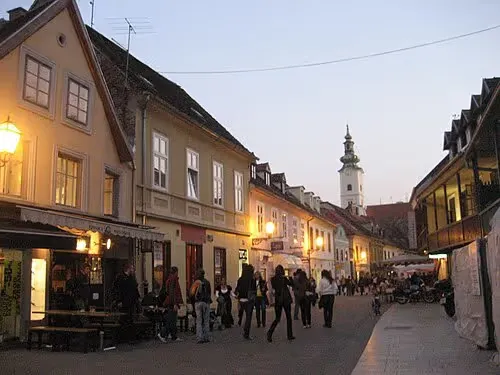
    Tkalčićeva Street looks as if it had always been a street of terraces and bars, but for centuries a creek ran where you are walking: the Medveščak, also called Crikvenik. Its water drove the mills that started Zagreb's industry, from the first cloth, soap, paper and liquor factories to the later tanneries.

    The mills stood on the border between the twin towns of Kaptol and Gradec and caused constant feuds between them. A peace treaty of 1392 banned new mills along the shared border, leaving only two in the city, both owned by a Cistercian monastery.

    In 1898 the creek was covered and both mills were razed. What was left was a full street, aptly named Ulica Potok, 'Creek Street'. Most of the houses you pass date from the 18th or 19th century. The street was first surfaced with gravel from the Sava and paved with asphalt only around the middle of the 20th century; the tanneries closed in 1938 and small shops took their place. Architect Milan Lenuci is said to have planned the transformation of the old creek valley around 1900.

    Today this is the social spine of Zagreb, where locals and visitors share the terraces, and it is liveliest in the evening, so keep it in mind for dinner. Now head up to Gradec: the Stone Gate is 240 metres away, about 4 minutes.

    Local name
    Tkalčićeva ulica
    Hours
    Open 24/7
    Price
    Free
  4. 4

    Stone Gate

    Stone Gate in Zagreb, stop 4 on the self-guided walking tour

    Walk into the Stone Gate and you are passing through the only surviving old city gate of Gradec. In 1242 the Golden Bull made Gradec a free royal city, on condition that it be surrounded by walls and entered only through its gates. This gate is believed to date from 1266. It sits in the remains of a fortress, shaped like a rectangular tower with a carriageway through it, and its present look comes from the 18th century.

    The reason people stop here is a fire. Late on the evening of 30 May 1731 a blaze broke out in the St. Joseph Seminary and spread through the Upper Town, reaching Kaptol the next day. On the third day, searching the burnt area, people found a painting of the Virgin Mary in the ashes, undamaged, with only its wooden frame burnt away.

    News of the miracle spread fast. A pious widow had a small altar set up under the arch so that everyone could venerate the painting, and the shrine has been here ever since. An expert commission later established that the painting was not on any fire-resistant material. On 31 May 1991 Cardinal Franjo Kuharić proclaimed the Mother of God of the Stone Gate the patron saint of Zagreb, and when the earthquake of 22 March 2020 struck, the gate recorded not the slightest damage.

    It is free, and people come here to pray, so keep your voice low as you pass the shrine. St. Mark's Church is 220 metres on, about 4 minutes.

    Local name
    Kamenita vrata
    Hours
    Gate/passage: Open 24/7; chapel: Daily 06:00–22:00
    Price
    Free
  5. 5

    St. Mark's Church

    St. Mark's Church in Zagreb, stop 5 on the self-guided walking tour

    Look up first. The colourful tiled roof of St. Mark's Church carries two coats of arms: the white castle on red of Zagreb, and the arms of the Triune Kingdom of Croatia, Slavonia and Dalmatia. This is the parish church of old Zagreb and one of the oldest buildings in the city.

    Its origins lie in the 13th century. The best evidence is the Romanesque window in the south facade, along with the semicircular plan of St. Mary's chapel. In the second half of the 14th century the church was radically rebuilt as a late Gothic church with three naves.

    Then walk round to the south portal, the most valuable part of the church, attributed to sculptors of the Parler family from Prague at the end of the 14th century. Fifteen figures stand in eleven shallow niches: Joseph and Mary with the infant Jesus at the top, St. Mark and his lion underneath them, and the Twelve Apostles on both sides. Four of the apostles are wooden replacements for lost originals. For its composition and number of statues, it is considered the richest Gothic portal in southern Central Europe.

    On the northwest wall you can find the oldest coat of arms of Zagreb, engraved with the year 1499; the original is kept in the Zagreb City Museum. There is no tourist ticket and visits inside are severely restricted, so enjoy the church from the square. The Museum of Broken Relationships is 170 metres away, 2 minutes on foot.

    Local name
    Crkva sv. Marka
    Price
    Free (no tourist ticket; interior visits severely restricted)
  6. 6

    Museum of Broken Relationships

    Museum of Broken Relationships in Zagreb, stop 6 on the self-guided walking tour

    This museum collects what is left over when love ends. Every object comes with the personal story of a relationship, and together they become a much larger story about how people love and part. It sounds like a joke, and it started as one.

    The founders, film producer Olinka Vištica and sculptor Dražen Grubišić, were a couple for four years. When they split in 2003, they joked about opening a museum for the things left behind. Three years later Grubišić came back to the idea in earnest. They asked friends to donate objects from their own break-ups, and in 2006 the collection was shown for the first time at the Glyptotheque in Zagreb as part of the 41st Zagreb Salon.

    After that the collection went on tour and has visited 68 cities in 35 countries, from Tokyo and San Francisco to Berlin, Paris, London and Shanghai, gathering new objects and stories along the way. In 2011 it won the Kenneth Hudson Award for the most innovative museum in Europe, in 2017 it had more than 100,000 visitors, and in November 2024 a second permanent location opened in Chiang Mai, Thailand.

    Admission is charged, and it is worth it if you enjoy personal stories more than old stones; allow about an hour. If you only have time for one indoor visit on this walk, make it this one. Lotrščak Tower is only 80 metres away, about 1 minute.

    Local name
    Muzej prekinutih veza
    Hours
    Summer (01.06–30.09): daily 09:00–22:00 (admission until 21:30); winter (01.10–31.05): daily 09:00–21:00 (admission until 20:30); closed on Christmas Eve/Christmas/New Year/Easter/All Saints, New Year's Eve 10:00–18:00
    Price
    9 EUR full, 7 EUR reduced (pupils/students/disabled/seniors 65+), groups of 15+ 7 EUR/person
  7. 7

    Lotrščak Tower

    Lotrščak Tower in Zagreb, stop 7 on the self-guided walking tour

    Lotrščak Tower dates from the 13th century and once guarded the southern entrance to Gradec, the Dverce gate. It was part of the fortifications that King Béla IV required in his Golden Bull, a reward to the town for sheltering him as he fled the Tatars. Building the walls and towers took about twenty years and was finished in 1266.

    The name comes from a bell. In 1646 a bell was hung here, known in Latin as campana latrunculorum, the 'thieves' bell', and it rang every evening before the town gates were closed. The gate itself is gone: it was demolished in 1812 when the southern promenade, today's Strossmayer Promenade, was redeveloped.

    Old drawings suggest the tower first had two floors with two windows each and a four-sided roof. Its biggest change came in 1857, in a period of Romantic restoration, when two more floors and a polygonal wooden fire-watch turret on the roof were added.

    On the fourth floor sits the Grič cannon, fired every day at precisely noon, so plan to be here a few minutes before twelve. The tower charges admission and hosts exhibitions, including photographs of Zagreb. From here you leave the Upper Town: Ban Jelačić Square is 440 metres away, about 6 minutes.

    Local name
    Kula Lotrščak
    Hours
    Mon closed; Tue–Fri 09:00–20:00; Sat–Sun 11:00–20:00
    Price
    3 EUR adults, 2 EUR children 7-18, 1 EUR per child for groups of 10+ children
    Website
    gkd.hr ↗
  8. 8

    Ban Jelačić Square

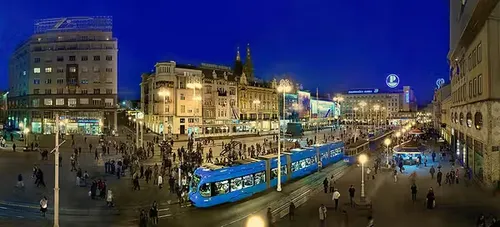
    Ban Jelačić Square in Zagreb, stop 8 on the self-guided walking tour

    Ban Jelačić Square is the heart of Zagreb and the centre of its pedestrian zone. Locals call it Jelačić plac and use it as the city's meeting point; trams cross it, and Ilica, one of the main streets, runs off it to the west. It lies just south of Dolac Market, at the foot of the old towns of Gradec and Kaptol.

    It was not always a square. Its earliest known name was Harmica, from a Hungarian word for a tax that merchants paid to sell at the market here. Because it sat between the Upper and Lower Town, the market place turned into a meeting point and finally into the main square. The name survives in the small Harmica passage leading up to Dolac.

    Look for the Manduševac fountain, which stands where a well once supplied the city with water. The square takes its current name from ban Josip Jelačić, one of the most influential Croatian political figures of the 19th century.

    Shops, cafés and restaurants line the square, but this is not where locals eat. Zrinjevac Park is 370 metres away, about 5 minutes; on the way you pass the Archaeological Museum Zagreb.

    Local name
    Trg bana Jelačića
    Hours
    Open 24/7
    Price
    Free
  9. 9

    Zrinjevac Park

    Zrinjevac Park in Zagreb, stop 9 on the self-guided walking tour

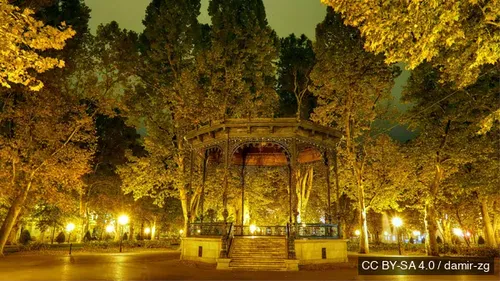
    You finish under the plane trees of Zrinjevac, officially Nikola Šubić Zrinski Square. Laid out in 1892, it is the oldest of the seven Lower Town squares that form the Green Horseshoe, also called Lenuci's Horseshoe. Plane trees line it on every side except the north, where maple and linden grow.

    Before it was a park, this was farmland, then a cattle fair called Novi trg. The idea of turning it into a square came with the 300th anniversary of the death of Nikola Šubić Zrinski. In 1863 city surveyor Janko Grahor was asked to draw up a design, money followed in 1864, and in 1866 it was named Zrinski Square. In 1970 it was declared a monument of park architecture.

    Walk the alley of plane trees to the music pavilion of 1891 in the middle. In the northern part stands a meteorological column from 1884, a gift from military doctor Adolf Holzer. In the southern part you find busts of notable Croatians, among them Julije Klović, Andrija Medulić, Krsto Frankopan, Nikola Jurišić, Ivan Kukuljević Sakcinski and Ivan Mažuranić.

    The buildings around the park are Neo-Renaissance, Neo-Romanesque and classicist, and they house the Supreme Court, the palace of the Croatian Academy of Sciences and Arts, the French embassy and the Archaeological Museum. Find a bench and rest; the walk ends here.

    Hours
    Open 24/7 (no Zaun/no Schliesszeit)
    Price
    Free
Walking tour route map of Zagreb Route loaded
Zagreb CathedralDolac MarketTkalčićeva StreetStone Gate+5
All 9 stops are already on the map.
You just press start.
AI Tour Guide

You've read the route. Now walk it with a guide in your ear.

Press start wherever you are, even hundreds of kilometres from Zagreb, and the guide begins telling its stories right away. In the city, pick any of the 9 stops to start from: it leads you there, then talks with you the whole route, asking, listening, remembering, and shaping the tour around your answers.

9stops 2.2km 30 minwalking 13languages
▶Start the tour free

Free to start · Runs in your browser · No app, no download

Shorter Ways to Walk the Route

Not everyone wants the full loop with both tickets. These three cuts keep the best parts together.

Kaptol and Gradec only

Stops: 1, 2, 3, 4, 5, 6, 7

For first-time visitors who care most about the old towns. You walk from the cathedral to Lotrščak Tower in 20 minutes of pure walking and skip the Lower Town squares. Admission applies at the Museum of Broken Relationships and Lotrščak Tower; with both, allow a little over three hours.

Free stops only

Stops: 1, 2, 3, 4, 5, 7, 8, 9

For a tight budget. You leave out the museum and look at Lotrščak Tower from outside, so nothing on the walk costs admission. The walking time stays at about 30 minutes, and the whole loop takes around two and a half hours.

Upper Town in under two hours

Stops: 4, 5, 6, 7

For anyone short on time who still wants the museum and the noon cannon. From the Stone Gate to Lotrščak Tower is only 7 minutes on foot. Admission applies at the museum and the tower; time your arrival at the tower for noon.

How Long This Zagreb Tour Takes, With and Without Tickets

The pure walking time is 30 minutes for 2.2 km, so the clock is set by what you go into. With an hour in the Museum of Broken Relationships, a visit to Lotrščak Tower and short pauses everywhere else, plan close to four hours.

A morning start works well. Begin at Zagreb Cathedral at 9:00 and you reach Dolac Market at 9:23 while the stalls are full. Leave at 9:48, walk Tkalčićeva Street from 9:54, reach the Stone Gate at 10:13 and St. Mark's Church at 10:27. The museum takes you from 10:39 to 11:39, which puts you at Lotrščak Tower at 11:40, in time for the noon cannon. Leave around 12:05, reach Ban Jelačić Square at 12:11 and Zrinjevac Park at 12:26, and you finish at about 12:40, ready for lunch.

The Kaptol and Gradec version takes a little over three hours, the free version around two and a half, and the Upper Town version under two.

Before You Set Off from the Cathedral

  • Start and finish: Begin at Zagreb Cathedral and finish at Zrinjevac Park. You can join at any stop, but the suggested order flows best, and the GPS navigation in your browser can lead you from the last stop back to the start.
  • Best time: Mornings, when Dolac Market is at its busiest; Saturday mornings are the liveliest of all. Try to be at Lotrščak Tower shortly before noon.
  • Tickets: Only the Museum of Broken Relationships and Lotrščak Tower charge admission. The cathedral, the market, the streets, the Stone Gate, the squares and the park are free. St. Mark's Church has no tourist ticket, but visits inside are severely restricted.
  • Cash: Dolac Market and some bars are cash only, so carry a few euros in notes and coins.

Food and Breaks Between Dolac and Tkalčićeva

The best eating on this route sits right at the start: around Dolac Market and along Tkalčićeva Street, where locals eat too. Plan breakfast or a snack at the market, coffee on Tkalčićeva and lunch after you finish.

Burek at Dolac MarketFilo pastry with cheese, meat or apple, a Zagreb breakfast staple. The meat version can sell out, so come early if that's the one you want. (Dolac Market)
Pod Zidom BistroA Michelin-listed bistro cooking with produce from the stallholders next door, with a plant-lined terrace facing the cathedral. (Pod Zidom 5, by Dolac Market and the cathedral)
Gostionica FiclekTraditional Croatian home-style cooking, high tables inside and a patio with cathedral views. (Next to Pod Zidom, under Dolac Market)
Otto & FrankGo for the Zagreb breakfast: poached eggs, cottage cheese, sour cream and ham. (Tkalčićeva Street 20)
La StrukA restaurant that serves only štrukli, savoury or sweet, made to order. No reservations and a real wait, so come with time. (Skalinska 5, off Tkalčićeva Street)
Batak GrillThe local consensus pick for ćevapi. The platters for two could feed three; order kajmak on the side. (Tkalčićeva Street)
Konoba Didov SanA traditional tavern with food from the Dalmatian hinterland, including frog legs and eel. (Mletačka 11, near St. Mark's Church)
Vinoteka BornsteinA wine bar in a 200-year-old cellar with Croatian wines from every region. (Kaptol 19)

Tourist Traps to Avoid in Central Zagreb

  • Restaurants right around the main square and the cathedral: Many cater to tourists rather than locals. Eat on Tkalčićeva Street or around Dolac instead.
  • Overcharging and helpers at Dolac: Enjoy the market, but check prices before you pay and politely wave off unsolicited helpers. (Dolac Market)
  • Exchange offices in tourist areas: Some short-change customers with sleight of hand. Count your change in front of the cashier.
Walking tour route map of Zagreb
AI Tour Guide

Your guide is ready when you are, at any stop.

Press start and a voice AI Tour Guide takes it from here: leading the route through Zagreb, telling the stories, and turning your walk into a real back-and-forth conversation. No app or download is needed; it runs in your browser.

9stops 2.2km 30 minwalking 13languages
▶Start the tour free

Free to start · Runs in your browser · No app, no download

What the AI Tour Guide Adds in Zagreb

Zagreb is two medieval towns that fought over mills and then grew into one city, and that story runs through every stop. The AI Tour Guide tells it as a conversation: it greets you at the cathedral, picks up what interests you, asks questions back and lets you interrupt whenever you like, so you can dig into who Ban Jelačić really was or what the kumice sell through the year. Start with 100 free credits; after that, unlock this tour all-inclusive for €19.99 with no time limit, or pay €5 per hour.

A Real Conversation A voice AI Tour Guide greets you, leads the whole route, and tells the stories and facts as you walk, asking what you want to see and keeping a real conversation going. Not a recording you press play on.
Map Navigation Follow the route on the map and walk at your own pace. You choose where to start and when to move to the next stop.
Ask Anything Curious about a building you pass? Ask your AI Tour Guide on the spot and the conversation carries on.
13 Languages Switch language anytime. No separate tour needed.
Start free in your browser

Common Questions About Walking Zagreb

Are cafés in Zagreb smoky?

Often, yes; Croatia has a smoking culture. Eliscaffe on Ilica is smoke-free, the upper floor at Quahwa near Ban Jelačić Square is non-smoking, and the courtyard of Cafe U Dvorištu is usually fine.

Do I need to validate my tram ticket in Zagreb?

Yes, right after boarding. Inspectors do check, and an unvalidated ticket means a fine.

How do I avoid being overcharged by a taxi?

Tell the driver where you're going before you set off and ask what it will cost.

Which other cities can I walk the same way?

Ljubljana and Graz are the closest, and on the coast there are routes for Split and Dubrovnik.

Is the tour really free?

Yes. The whole tour is free: the route, the interactive map and the navigation cost you nothing. Only the voice AI Tour Guide is optional and paid: you test it with 100 free credits, then you pay either €5 per hour or €19.99 for this whole tour, with no time limit. Admission to 2 of the 9 stops is not included: Museum of Broken Relationships and Lotrščak Tower charge their own entry fees.

Do I need to download an app?

No. Everything runs in your phone browser. Open the route and start walking, no download and no sign-up required.

Do I need to book the walking tour in advance?

No booking needed. This self-guided tour is available anytime. Open the route in your browser and start walking. The AI Tour Guide works instantly, no app, no reservation required.

What languages is the AI Tour Guide available in?

The AI Tour Guide speaks 13 languages, so you take the tour in your own language and can switch at any time.

Can I skip stops or change the route?

Yes. Skip any stop, spend extra time at places you like, or start the route from any point. It is your walk, you set the pace.
Image credits
▶ Start free in your browser Runs in your browser, no app, no download