

Piazza Unità d'Italia
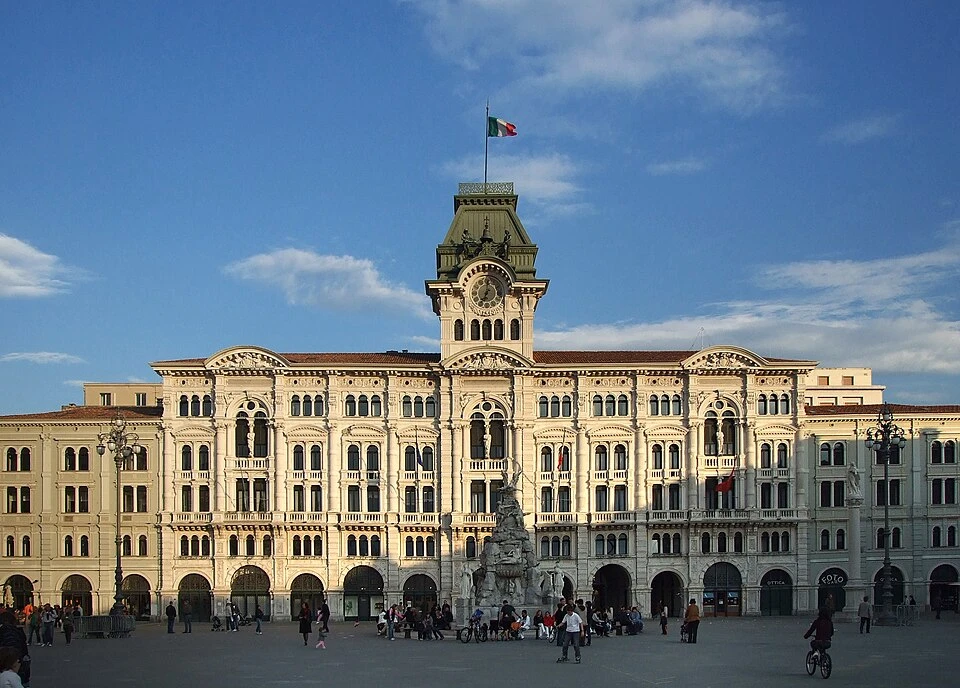
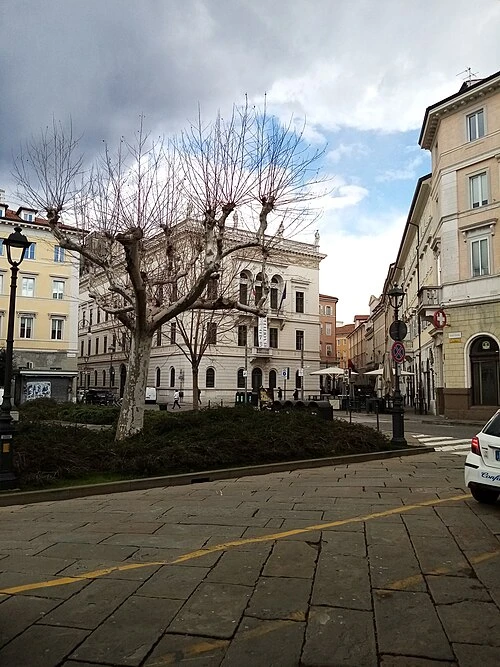
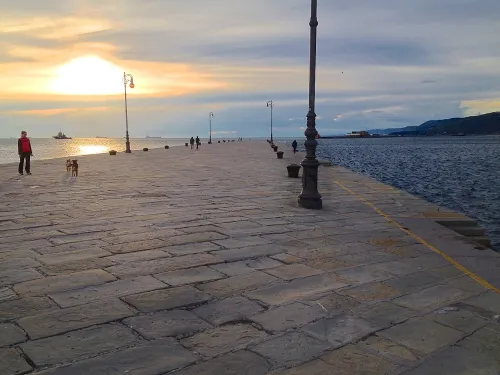
Stand in the middle of Piazza Unità d'Italia and turn slowly. On three sides rise neoclassical and a few baroque palaces; the fourth side simply stops at the Gulf of Trieste. That open edge is what makes this rectangle one of the largest squares in Europe facing the sea, and the reason locals still call it Piazza Grande, the big square.
In Roman times you would have been standing in water. The square grew out of the silting of the Roman harbour, as the town spread onto the new ground. In the Middle Ages it was much smaller and longer, closed off behind the city walls with no view of the sea at all.
The change came after 1719, when Trieste was made a free port. Trade boomed, the population rose fast and the city needed room, so in the late 18th and early 19th century the square was rebuilt almost entirely and opened to the water.
Its names follow Trieste's history. First it was Piazza San Pietro, briefly Piazza Francesco Giuseppe after the death of Emperor Franz Joseph I, then Piazza Unità once the city joined Italy in 1918. On 25 April 1955, after the uncertain postwar years, mayor Gianni Bartoli gave it its full official name, Piazza dell'Unità d'Italia.
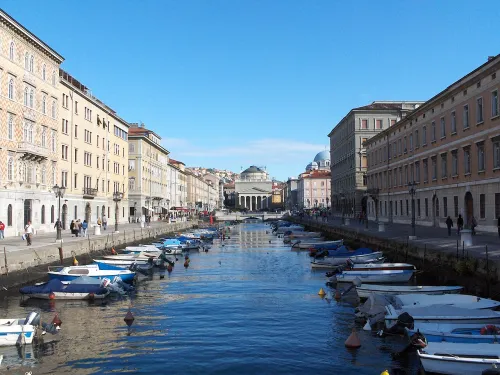
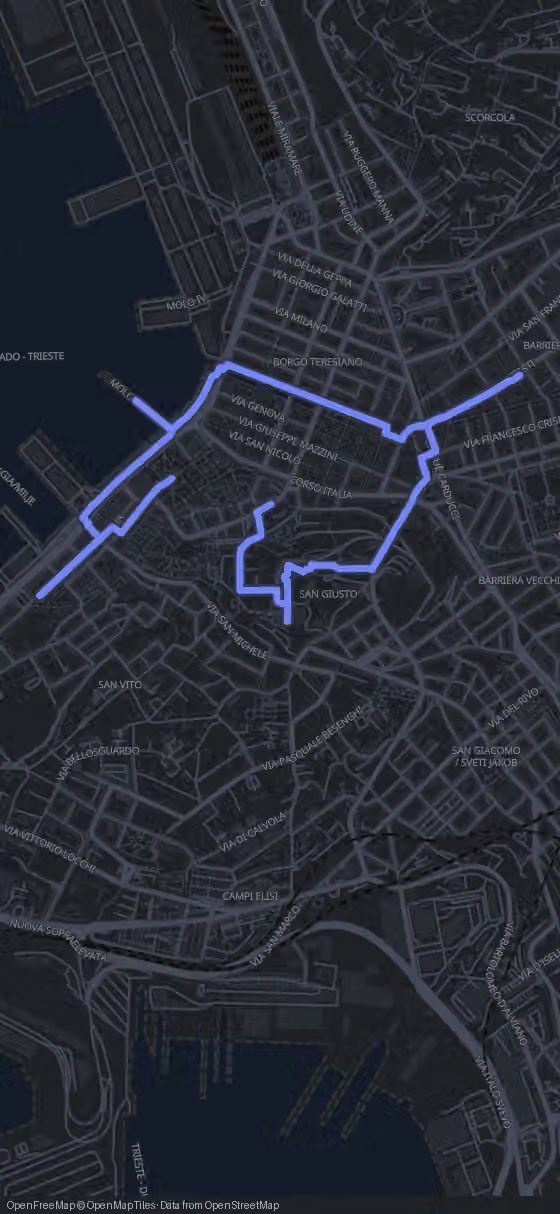
From here it is 530 m, about 7 minutes, to the Revoltella Museum in the Borgo Giuseppino, one of the two districts the square connects.