

Porta Torre
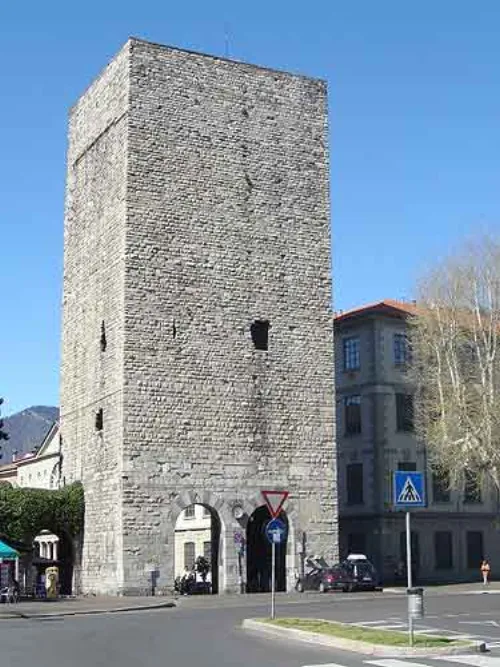
Start with the big picture: a square stone tower 40 metres high, built in 1192 to guard the main entrance to Como. Look at the outer face first. It is massive and almost closed, pierced only by two entrance arches. Then walk through and turn around. On the town side a single, wider arch opens up, and above it four rows of paired arches lighten the wall. They match the four floors that once existed inside, all of them wooden and long since gone.
The tower is the answer to a defeat. In 1127 Milan won its war against Como and tore down the town's old Roman walls. Como turned to Emperor Frederick I, called Barbarossa, and when he came to Italy for the first time in 1154 he agreed to let the city rebuild its defences. Stretches of those walls still run around the old town. In 1192 the city added three great towers on the southern side and put the most imposing one in the middle, squarely facing the road to Milan. It was a gate and a statement of independence at once.
Why is the inner side so open? Probably on purpose: if enemies ever seized the tower, they would stand exposed to defenders attacking from inside the town. Later centuries kept adding to it, a small ravelin with guns and two pentagonal side towers in the 14th century, a semicircular bastion in the 16th. None of that survives, which is why the tower stands alone today, one of the better preserved Romanesque military buildings in Italy.
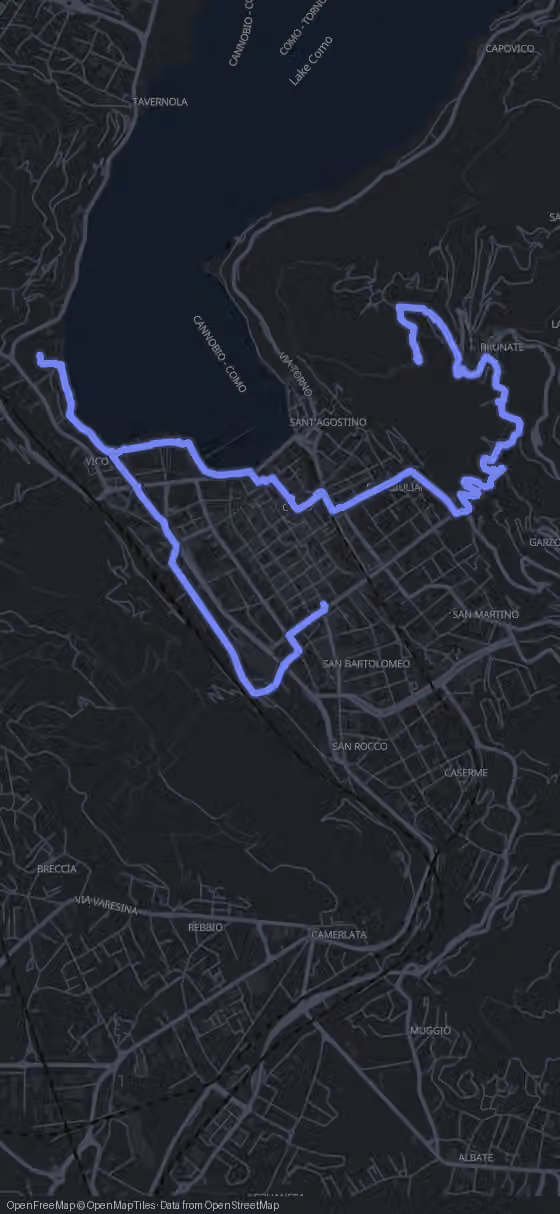
Porta Torre is free and open at any hour; there is nothing to visit inside, so ten minutes of looking from both sides is enough. From here it is 740 metres, about 11 minutes, to the Basilica di Sant'Abbondio, a church whose story begins centuries before these walls.