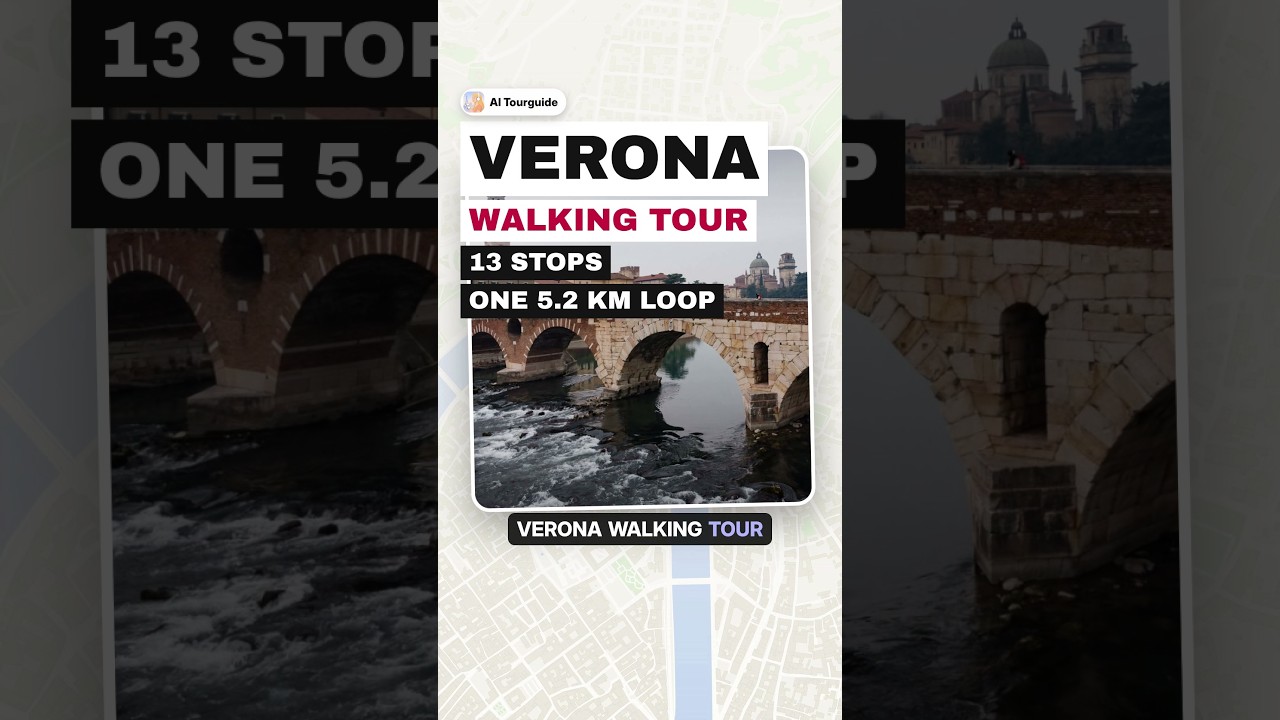
Free Walking Tour Verona: Arena to Castelvecchio

One loop, thirteen stops: a Roman arena, Juliet's courtyard, the Scaliger tombs, a bridge rebuilt stone by stone and a castle that became a museum.

13 Stops 5.2 km ~1 h 15 min walking
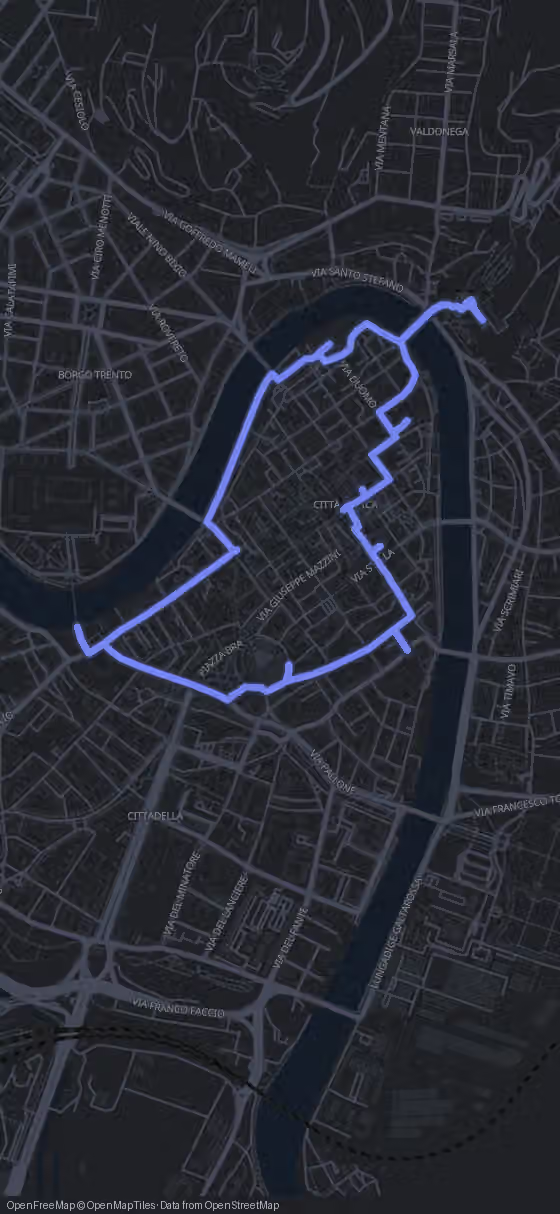
Route map for the Verona walking tour
Stop 1 of 13
470 m·6 min
Piazza Bra & Arena di Verona
Head east down Via Roma toward San Fermo Maggiore
Ciao, welcome to Verona. I'm Alex, and one of the city's oldest Roman crossings owes its modern life to a remarkable recovery.
Try this tour with Alex

Your Verona Loop at a Glance

This loop links 13 stops, starting and ending at Piazza Bra & Arena di Verona and passing Casa di Giulietta (Juliet's House), Ponte Pietra and Castelvecchio Museum. It covers 5.2 km with 1 h 15 min of pure walking; with the interiors that matter, plan on about seven hours.

Piazza delle Erbe, Ponte Pietra, Porta Borsari (Roman Gate) and the Teatro Romano & Museo Archeologico are free; the Arena, Juliet's House museum, the Lamberti tower, the Scaliger Tombs and Castelvecchio charge entry. The GPS route runs free in your browser, and the AI Tour Guide is optional.

Open free GPS & optional AI Tour Guide
This short shows highlights of the route. All 13 stops follow below.

The Route

Walking Map of Verona's Old Town Loop

13 stops 5.2 km 1 h 15 min walking
Tap to load interactive map

The 13 stops along this route

  1. Piazza Bra & Arena di Verona, stop 1 on the self-guided walking tour
    1Piazza Bra & Arena di Verona
  2. San Fermo Maggiore Church in Verona, stop 2 on the self-guided walking tour
    2San Fermo Maggiore Church
  3. Casa di Giulietta (Juliet's House) in Verona, stop 3 on the self-guided walking tour
    3Casa di Giulietta (Juliet's House)
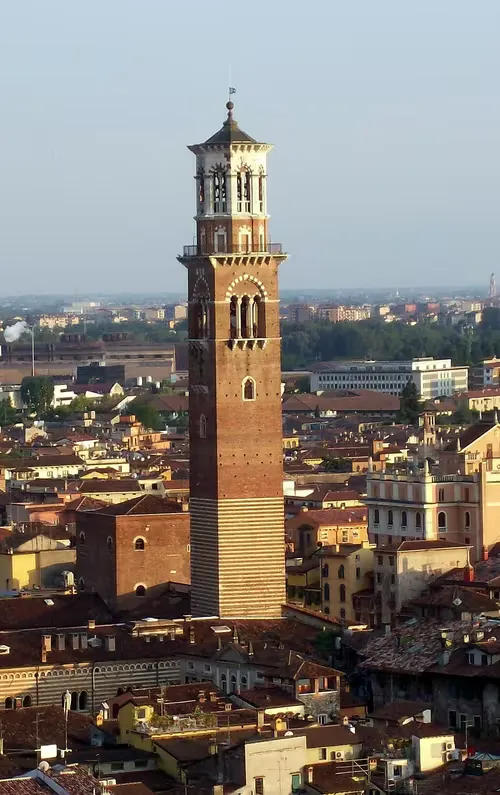
  4. Torre dei Lamberti in Verona, stop 4 on the self-guided walking tour
    4Torre dei Lamberti
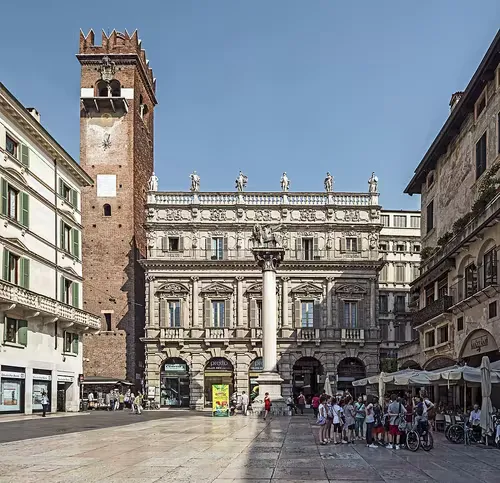
  5. Piazza delle Erbe in Verona, stop 5 on the self-guided walking tour
    5Piazza delle Erbe
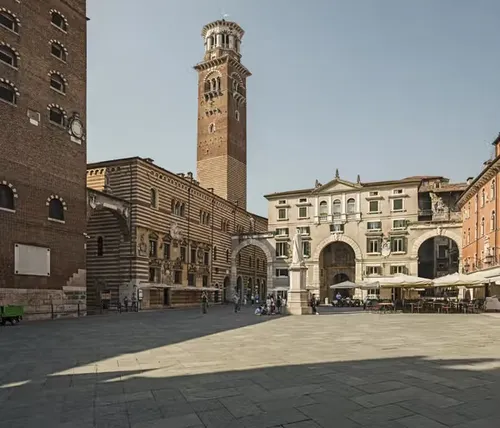
  6. Piazza dei Signori in Verona, stop 6 on the self-guided walking tour
    6Piazza dei Signori
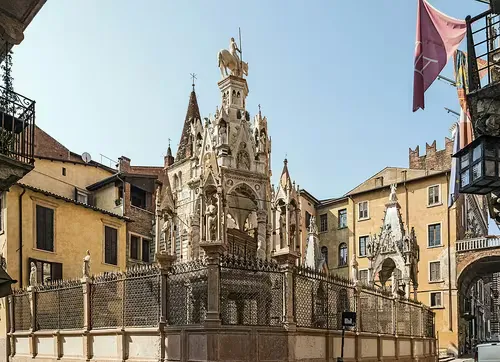
  7. Arche Scaligere (Scaliger Tombs) in Verona, stop 7 on the self-guided walking tour
    7Arche Scaligere (Scaliger Tombs)
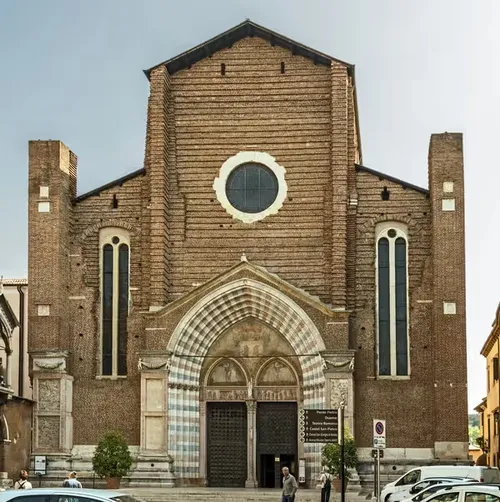
  8. Basilica di Sant'Anastasia in Verona, stop 8 on the self-guided walking tour
    8Basilica di Sant'Anastasia
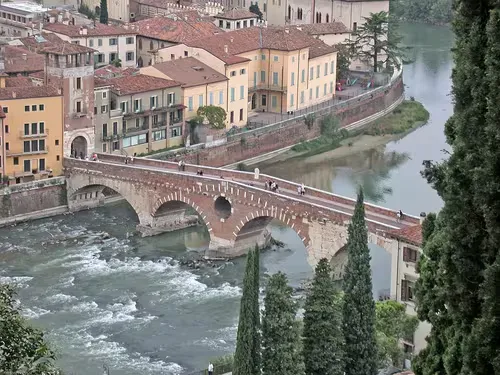
  9. Ponte Pietra in Verona, stop 9 on the self-guided walking tour
    9Ponte Pietra
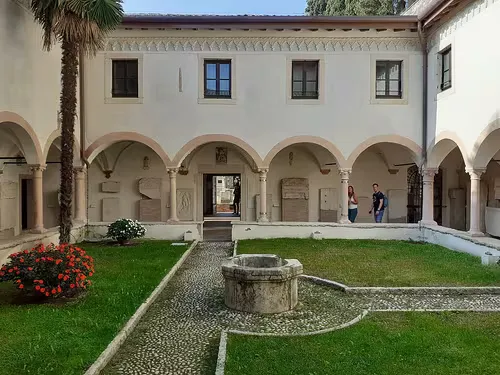
  10. Teatro Romano & Museo Archeologico in Verona, stop 10 on the self-guided walking tour
    10Teatro Romano & Museo Archeologico
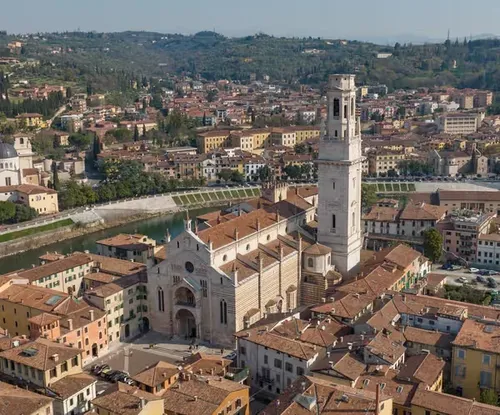
  11. Duomo di Verona (Cathedral), stop 11 on the self-guided walking tour
    11Duomo di Verona (Cathedral)
  12. Porta Borsari (Roman Gate) in Verona, stop 12 on the self-guided walking tour
    12Porta Borsari (Roman Gate)
  13. Castelvecchio Museum in Verona, stop 13 on the self-guided walking tour
    13Castelvecchio Museum
  14. That's the full loop.

    Walk it with an AI Tour Guide talking you through every one of these streets.

    Start free in your browser
    You made it

Your Verona Walking Tour, 13 Stops from Arena to Castle

  1. 1

    Piazza Bra & Arena di Verona

    Piazza Bra & Arena di Verona, stop 1 on the self-guided walking tour

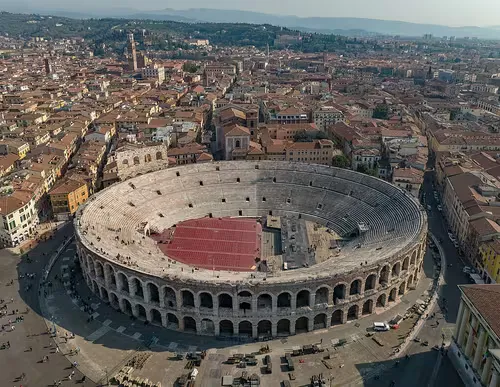
    Piazza Bra opens wide in front of you, and on its edge rises the Arena, a Roman amphitheatre that ranks among the best-preserved of the ancient world. That it still stands so complete is no accident: systematic restoration began as early as the 16th century, and the city has looked after it ever since. Fill your water bottle at the fountain in the little park on the square before you start.

    Nobody wrote down when the Arena was built, so historians have argued for centuries. Proposals ran from the 1st to the 3rd century, until scholars compared it with the amphitheatre in Pula, so similar in style and technique that the same architect and workforce may have built both. The best clue is carved in tuff: a life-sized gladiator's head in a helmet with two round eye holes and cheek guards tied under the chin. That helmet type appeared only around the end of Augustus' reign, which pins the building to the decades between Augustus and Claudius.

    The Arena is no museum piece. Its summer opera festival has run every year since 1913, interrupted only by wars, and the rest of the year it hosts concerts. In 2026 it staged the closing ceremony of the Winter Olympics and the opening of the Winter Paralympics. Going inside costs entry and is worth it if you want to sit on the stone tiers and picture the crowds; buy at the ticket office at the Arena itself rather than through resellers.

    From here it is 470 m, about 6 minutes, to San Fermo Maggiore, a church built on ground that was a burial place long before Christianity.
    Hours
    Piazza: continuously accessible
    Website
    arena.it ↗
  2. 2

    San Fermo Maggiore Church

    San Fermo Maggiore Church in Verona, stop 2 on the self-guided walking tour

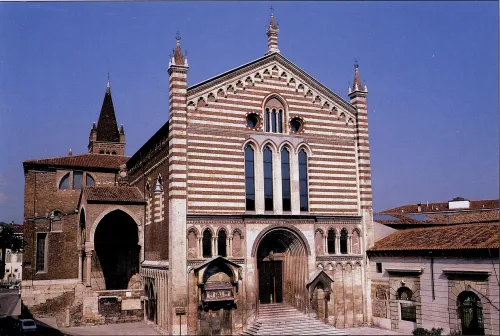
    San Fermo Maggiore, properly Santi Fermo e Rustico, stands on ground that served as a cemetery since antiquity. It lay just outside the Roman city gate Porta Leoni, and restorers in the early 20th century found traces of a square cemetery basilica of the 5th or 6th century beneath the floor of today's crypt.

    The church is named after two martyrs, Firmus and Rusticus, who were probably beheaded on the banks of the Adige in 304 under Emperor Diocletian. In the 8th century Bishop Annone had their remains brought here. An inscription on the reliquary, whose reading is disputed, dates their burial at the foot of the presbytery to 27 March 765. The spot of the martyrdom itself, about 400 m downstream, once had its own small church, San Fermo Minore; it was demolished in the late 19th century and only a plaque recalls it.

    Later the Benedictines took over the church, an abbey and a hospital. The Adige kept flooding, sediment piled up around the walls, and the monks finally decided to rebuild. That is why you find two churches stacked on top of each other here, the lower one with its crypt and the newer church above. Entry is part of Verona's combined church ticket, worth it if you plan to see at least three churches today.

    Next comes the most famous address in town: Juliet's House, 390 m and 5 minutes away.

    Local name
    Chiesa di San Fermo
    Hours
    1 Mar-31 Oct: Mon–Sat 09:30–18:00, Sun 13:00–18:00 | 1 Nov-28 Feb: Mon–Fri 10:00–17:00, Sat 10:00–17:30, Sun 13:00–17:30
  3. 3

    Casa di Giulietta (Juliet's House)

    Casa di Giulietta (Juliet's House) in Verona, stop 3 on the self-guided walking tour

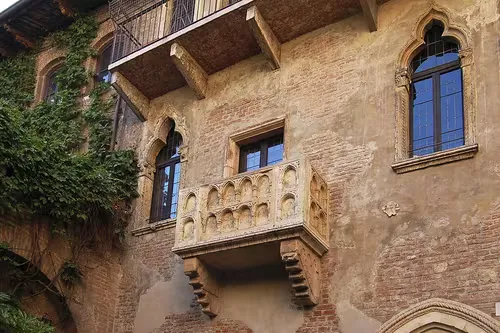
    Through an archway on Via Cappello you enter a courtyard that draws more visitors than any other monument in Verona. The building is a medieval tower house, first documented in 1351, and since 1940 it has officially been presented as Juliet's House. Look up at the keystone of the arch facing the courtyard: it bears a hat, the emblem of the inn "del Cappello" that once operated here, owned by the heirs of Antonio Cappello.

    That hat is the whole story. In the 18th and 19th centuries, when people went looking for places linked to Shakespeare's tragedy, the hat suggested the Capulets, in Italian Cappelletti, a family Dante names in his Purgatorio alongside the Montecchi. The building stayed an inn with a few craft workshops for centuries. The city bought it in 1905, demolished part of it in 1930 to make room for the Teatro Nuovo, and museum director Antonio Avena finished the museum in 1939, mixing new neo-medieval wall and ceiling decoration with genuine stones, columns, fireplaces and furniture from the 13th to the 15th century. The famous balcony was only added in the 1930s.

    The courtyard with the statue and the view of the balcony is free. Standing on the balcony yourself and seeing the costumes from Zeffirelli's 1968 film requires the museum ticket, best booked online with a time slot. If you only want the photo, the courtyard is enough; if you enjoy how legends get built, the museum shows it. The walls of love letters are now behind panels, and rubbing the statue is no longer allowed.

    The Torre dei Lamberti is just 180 m on, a 3-minute walk.

    Hours
    Mon: Closed | Tue–Sun: 09:00–19:00
    Price
    9 EUR (1 EUR EU citizens 18-25, free under 18)
  4. 4

    Torre dei Lamberti

    Torre dei Lamberti in Verona, stop 4 on the self-guided walking tour

    At 84 metres the Torre dei Lamberti is visible from all over Verona. It belonged to the Lamberti family, and its construction is dated to 1172. You can read its history in the masonry: the lower, Romanesque part alternates regular bands of brick and tuff blocks, while the elegant octagonal bell chamber with tall Gothic double windows came much later. In May 1403 lightning brought down the top; the rebuilding only started in 1448 and was finished in 1463 or 1464. The clock was added in the late 18th century.

    The tower spoke to the city through its bells. Statutes of 1272 called for the Rengo, which summoned the council and called citizens to arms, and the Marangona, from the dialect word for carpenter, which marked the start and end of the working day and later warned of fires. Both bells, installed in 1295, still hang there. The Rengo also tolled for executions, and the bell ringers doubled as guards, lookouts and jailers, because the tower usually held a few prisoners.

    Since 1972 the tower has been open to visitors, and there is an elevator. Going up costs entry and is worth it if you want the view over the roofs and the Torricelle hills from the very centre. On a tight budget, the free view from Castel San Pietro across the river covers the same panorama, with this tower in it.

    Piazza delle Erbe is only 40 m away; you pass the GAM, Verona's modern art gallery, on the way.

    Hours
    Mon–Fri 10:00–18:00, Sat–Sun and public holidays 11:00–19:00; open daily except Dec 25
    Price
    Full price 6.00 EUR; reduced 4.50 EUR (groups of 15+, seniors 60+, 8-14 years, students 14-30 with ID); elevator for VeronaCard holders 1.00 EUR (stairs free for VeronaCard holders)
  5. 5

    Piazza delle Erbe

    Piazza delle Erbe in Verona, stop 5 on the self-guided walking tour

    Piazza delle Erbe is Verona's oldest square, and it sits on the site of the Roman forum, where the two main streets of the Roman city crossed. When Verona became a Roman municipium in 49 BC, the forum took shape here as the centre of politics, religion, justice and trade, later adorned with a basilica and a curia. On the north-west side stood the Capitolium temple.

    Almost nothing of those Roman buildings survives above ground; their traces lie about 4 metres beneath your feet. In the early Middle Ages the forum buildings were abandoned or stripped for stone, yet the square never lost its place in city life. With the medieval commune in the 12th century it became political again, and between the 12th and 13th centuries it took on roughly the shape you see today. When the Scaligers moved power next door to Piazza dei Signori, Erbe stayed the market square, under Venice as well.

    Look around the edges: palaces from many centuries face the square. Where the Capitolium once rose and money changers set up their benches in the late Middle Ages, you now see the 17th-century Palazzo Maffei, which also houses a museum. Walking through is free, and the square is lovely for a drink, but eat a few lanes further away.

    Piazza dei Signori is 100 m on, about a minute.

    Hours
    Open 24/7
    Price
    Free
  6. 6

    Piazza dei Signori

    Piazza dei Signori in Verona, stop 6 on the self-guided walking tour

    Step from the market into the seat of power. Piazza dei Signori, also called Piazza Dante, grew in the Middle Ages out of the Scaliger palaces and had political, administrative and ceremonial functions from the start. Its monumental buildings are linked by arches and loggias, which gives the square its closed, almost courtyard-like feel.

    The Palazzo della Ragione dates from the late 12th century; its facade was partly altered in the 19th. Through an arch on its right you reach the Mercato Vecchio courtyard. It once had four towers, the Torre dei Lamberti being the mightiest. Next to it, the Palazzo di Cansignorio was the seat of Scaliger and later Venetian power. Its medieval keep survives, while the rest of the facade is by Sanmicheli in the 16th century, with the Porta dei Bombardieri of 1687. Look for the slot below where citizens could drop anonymous denunciations of their neighbours.

    The Palazzo del Podestà, built by the Scaligers, carries the swallowtail Ghibelline battlements; the Venetians opened a new portal in 1404 and set the lion of St Mark above it. Beside it stands the Loggia del Consiglio, traditionally linked to Fra Giocondo, built for the city council and finally begun in 1476. The square is open to walk through.

    Half hidden beside the palaces, the Scaliger Tombs are just 90 m away.

  7. 7

    Arche Scaligere (Scaliger Tombs)

    Arche Scaligere (Scaliger Tombs) in Verona, stop 7 on the self-guided walking tour

    Behind a wall with wrought-iron grilles, next to the little Romanesque church of Santa Maria Antica that the Scaliger family loved, stand five Gothic funerary monuments. The Scaligers ruled Verona from the 13th to the late 14th century, and they wanted to be remembered in the middle of their city, not in a quiet chapel. The French historian Georges Duby counted these tombs among the outstanding works of Gothic art.

    Look closely at the grilles: they repeat a scala motif, the emblem behind the family name della Scala. Most tombs are freestanding open tabernacles rising high above the ground, each with a sarcophagus, an elaborate canopy and on top the deceased on horseback in armour. Statues of saints stand on the stone pillars of the enclosure.

    The first and most famous is that of Cangrande I, built out from the church wall over a doorway rather than standing free. Its canopy rests on richly harnessed dogs, a pun on his name, which means "big dog". His effigy on the sarcophagus wears an unusual smile. The rider on top is a copy; the original is in Castelvecchio, where you will meet it at the end of the walk. The tomb of Mastino II, begun in 1345, was originally painted and gilded, with four Virtues at the corners. You see a lot through the grilles; entering the enclosure costs entry.

    Sant'Anastasia is 260 m on, about 4 minutes.

    Hours
    Mon–Thu: Closed | Fri–Sun: 10:00–13:00, 14:00–17:00
    Price
    4.50 EUR (0.50 EUR EU citizens 18-25, free under 18)
  8. 8

    Basilica di Sant'Anastasia

    Basilica di Sant'Anastasia in Verona, stop 8 on the self-guided walking tour

    Sant'Anastasia is the largest church in Verona and the high point of its Gothic period. It stands at the end of the Roman decumanus maximus, close to where Ponte Pietra crosses the great bend of the Adige, the meeting point of the city's road and river traffic. Its official name is San Pietro da Verona in Santa Anastasia, though nobody calls it that.

    It was a joint show of strength: the Dominicans, the ruling Scaligers and the Castelbarco family paid for it at a time when the city's institutions were growing richer and more confident. Its plan, with a wide transept and four chapels on each side of the presbytery, all built in brick, became a model for other churches. The facade was never finished; only the majestic Gothic doorway hints at what was planned.

    Inside, monumental round columns divide three naves lined with chapels and altars. The most famous altar is the Fregoso altar by Danese Cattaneo, which Vasari praised. Painters include Pisanello, Altichiero, Liberale da Verona, Stefano da Zevio and Lorenzo Veneziano. If you like Gothic painting, this is the church to go inside; it is covered by the combined church ticket.

    From here it is 460 m, about 6 minutes, to Ponte Pietra.

    Hours
    1 Mar-31 Oct: Mon–Fri 09:30–18:30, Sat 09:30–18:00, Sun 13:00–18:00 | 1 Nov-28 Feb: Mon–Fri 10:00–17:00, Sat 09:30–18:00, Sun 13:00–17:30
  9. 9

    Ponte Pietra

    Ponte Pietra in Verona, stop 9 on the self-guided walking tour

    Ponte Pietra is Verona's oldest bridge over the Adige and the only one left from Roman times. It stands where people forded the river since prehistory: here the Adige narrows to 92 metres and its current slows after the wide meander. That crossing is the reason Verona exists at all.

    A first wooden bridge went up in 148 BC with the Via Postumia. The stone bridge that replaced it was older than the Roman grid of the city, which is why it sits slightly askew to the streets laid out after 89 BC. Look at the two arches on the left bank: they are the original Roman ones, in squared stone with pointed piers. On the keystone of the second arch from the left is a river god, probably from a restoration in the second half of the 2nd century.

    Floods and people damaged it again and again, in 1007, 1153, 1232 and 1239. In the Second World War retreating German troops blew it up. Afterwards it was rebuilt by fitting the original stones, recovered from the riverbed, back into place. Crossing is free, and you may want to pause in the middle to look at the patchwork of old and new.

    On the other side, the Roman theatre and archaeological museum are 300 m away, about 6 minutes.

    Hours
    Open 24/7
    Price
    Free
  10. 10

    Teatro Romano & Museo Archeologico

    Teatro Romano & Museo Archeologico in Verona, stop 10 on the self-guided walking tour

    The archaeological museum sits above the Roman theatre, in the former monastery of St Jerome of the Jesuati. The monks settled on this hill rich in spring water around 1430 and built their monastery on a broad terrace at its top. In 1923 the city turned it into a museum for ancient finds from Verona and its surroundings.

    Inside, look for two panels of floor mosaic from a Roman villa in Negrar, dated to the 3rd century, showing a mythological scene and a chariot pulled by a putto; they hang in the room next to the lift. Among the sculptures is a portrait of a member of the Julio-Claudian imperial family found in Verona. The former monks' cells hold Etruscan and Roman bronzes, a two-faced female head, Roman glass and pottery, and the bronze portrait of a distinguished Veronese from the age of Augustus.

    In the refectory sits a headless woman in tunic and cloak, possibly a Roman copy of Phidias' Aphrodite, below remains of a Last Supper by Giovanni Francesco Caroto. Caroto also painted the chapel of St Jerome in 1508, with its flat wooden ceiling decorated with leafy branches and shields. The cloister is lined with Roman tombstones. Entry is free, so give it an hour if Roman Verona interests you.

    Back across the river, the Duomo is 720 m away, about 12 minutes, the longest leg of the loop.

    Local name
    Museo archeologico al teatro romano
    Hours
    Mon: Closed | Tue–Sun: 10:00–18:00
    Price
    9.00 EUR full admission to Museo Archeologico al Teatro Romano; free ages 0-17 (under 14 accompanied); 18-25 eligible young-person rate 2.00 EUR; standard reduced rate 6.00 EUR for eligible categories.
  11. 11

    Duomo di Verona (Cathedral)

    Duomo di Verona (Cathedral), stop 11 on the self-guided walking tour

    Verona Cathedral, Santa Maria Matricolare, is the seat of the city's bishop. Two early Christian churches stood here before an earthquake destroyed them in 1117. The Romanesque cathedral that replaced them was consecrated on 13 September 1187, and while later renovations changed a lot, the plan stayed the same.

    Stop in front of the porch. It is two storeys high and the work of the 12th-century sculptor Nicholaus, who also signed portals at San Zeno and Ferrara Cathedral. Its columns rest on the backs of two griffins. In the lunette the Virgin holds the Christ child, between the Annunciation to the Shepherds and the Adoration of the Magi; Faith, Charity and Hope appear in medallions on the lintel, ten prophets on the doorposts. Set into the walls on either side stand Roland and Oliver, the holy warriors guarding the church.

    Read the facade upwards: Gothic windows from the 14th century, a Baroque top from the 17th. Walk round to the south side for a second portal in the Lombard style, and to the main apse, preserved intact from the mid-12th century. Entry is part of the combined church ticket and worthwhile if you enjoy Romanesque sculpture up close.

    Porta Borsari is 820 m on, about 11 minutes.

    Hours
    1 Mar-31 Oct: Mon–Fri 10:00–17:30, Sat 10:00–15:30, Sun 13:30–17:30 | 1 Nov-28 Feb: Mon–Fri 10:00–17:00, Sat 10:00–15:30, Sun 13:30–17:30 (Sun windows: Sundays & religious holidays)
  12. 12

    Porta Borsari (Roman Gate)

    Porta Borsari (Roman Gate) in Verona, stop 12 on the self-guided walking tour

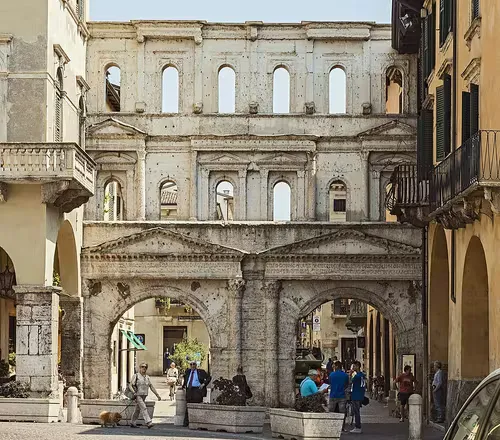
    Porta Borsari was built in the 1st century BC as a gatehouse in the Roman walls, after Verona became a municipium in 49 BC. Together with Porta Leoni, near San Fermo where you started, it was one of the two main gates of the city inside the river bend. The Via Postumia entered Verona through it and ran on along the decumanus maximus to the forum, today's Piazza delle Erbe.

    What you see is the showpiece facade in white limestone, added under Emperor Claudius in 44 AD in front of the original brick structure. Before that the street level was raised by a metre so that heavy rain would not rush down into the lower forum. In the second half of the 3rd century Emperor Gallienus added an inscription on the side facing the road, commemorating new city walls.

    The names tell the story too. The Romans called it Porta Iovia after a temple of Jupiter a few metres away, but nobody knew that until 1986, when restorers found the name on a votive altar in the church of San Procolo. In the early Middle Ages it was Porta San Zeno; the current name comes from the bursarii, the officials with money bags who collected tolls here. It is free and takes only a few minutes.

    Castelvecchio is 610 m away, about 9 minutes.

    Hours
    Open 24/7
    Price
    Free
  13. 13

    Castelvecchio Museum

    Castelvecchio Museum in Verona, stop 13 on the self-guided walking tour

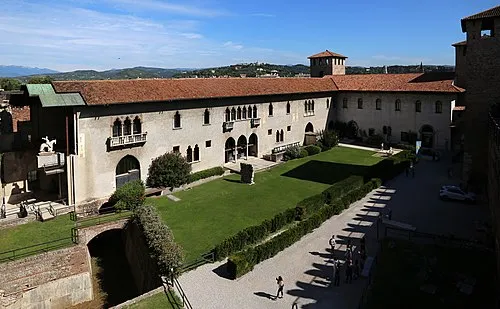
    Castelvecchio was built between 1354 and 1356 by order of Cangrande II della Scala as a fortress, and for a short time the family also lived here. Its use stayed military: it became a munitions store, and under Venice it housed the academy of military engineering. Napoleon's troops damaged it, lowered the towers and removed the battlements, and between 1801 and 1806 the north and east wings were added as a French barracks; today they house the gallery.

    It remained a barracks until 1924, when museum director Antonio Avena, the same man behind Juliet's House, and architect Ferdinando Forlati restored it in medieval style, raising the towers again and rebuilding the wall walks. Between 1958 and 1974 the architect Carlo Scarpa redesigned the museum, and his work here is one of his most complete and best-preserved projects.

    About thirty rooms hold sculpture, Italian and foreign painting, old weapons, ceramics, goldsmiths' work, miniatures and the old city bells. Here you also meet the original equestrian statue of Cangrande I from the Scaliger Tombs. Entry is charged; plan an hour, more if you care about architecture as much as art.

    To close the loop, walk 780 m, about 10 minutes, back to Piazza Bra, where the Museo Lapidario Maffeiano stands at the end of the route.

    Hours
    Tue–Sun 10:00–18:00 (last entry 17:15); closed Mondays, 25 December and 1 January
Walking tour route map of Verona Route loaded
Piazza Bra & Arena di VeronaSan Fermo Maggiore ChurchCasa di Giulietta (Juliet's House)Torre dei Lamberti+9
All 13 stops are already on the map.
You just press start.
AI Tour Guide

You've read the route. Now walk it with a guide in your ear.

Press start wherever you are, even hundreds of kilometres from Verona, and the guide begins telling its stories right away. In the city, pick any of the 13 stops to start from: it leads you there, then talks with you the whole route, asking, listening, remembering, and shaping the tour around your answers.

13stops 5.2km 1 h 15 minwalking 13languages
▶Start the tour free

Free to start · Runs in your browser · No app, no download

Shorter Ways to Walk Verona

Not everyone has a full day. The loop splits neatly into two halves, each worth doing on its own.

Squares and Scaligers in a morning

Stops: 1, 2, 3, 4, 5, 6, 7, 8

For first-timers with half a day: from the Arena through Juliet's courtyard and the two great squares to Sant'Anastasia. Only 21 minutes of walking. Entry costs apply at the Arena, Juliet's House museum, the Lamberti tower and the Scaliger Tombs; the churches are covered by a combined church ticket. Allow about three hours.

Romans, river and castle

Stops: 8, 9, 10, 11, 12, 13, 1

For history lovers who have already seen the squares: from Sant'Anastasia across Ponte Pietra to the Roman theatre, back over to the Duomo, through Porta Borsari to Castelvecchio and finally to Piazza Bra. 54 minutes of walking. The theatre museum is free, Castelvecchio charges entry. Allow about four hours.

How Long Does This Verona Loop Take?

The pure walking time for the whole loop is 1 h 15 min over 5.2 km, and no leg takes longer than 12 minutes. The stops between Juliet's House and the Scaliger Tombs sit almost on top of each other, so the first half feels like one long stroll through the medieval centre.

If you go inside the Arena, climb the Lamberti tower, visit Sant'Anastasia and the Duomo and give the archaeological museum and Castelvecchio an hour each, the day comes to around seven hours with a few breaks. Seen only from outside, the loop takes about three and a half hours. The morning half needs about three hours, the river and castle half about four.

Before You Set Off in Verona

  • Start and finish: The recommended start is Piazza Bra by the Arena, and the loop brings you back there after Castelvecchio. You can join at any stop; the order here is simply the one that flows best.
  • Time of day: Start in the morning. Juliet's courtyard gets crowded from around 10:30 in summer, and the two big museums at the end deserve unhurried time.
  • Entry fees: The Arena, Juliet's House museum, the Torre dei Lamberti, the Scaliger Tombs and Castelvecchio charge entry; the churches have a combined ticket that pays off from the third church. A VeronaCard only makes sense if you plan at least four paid visits; it also covers city buses and the main churches, and it runs for 24 hours from activation, not per calendar day, so starting it one afternoon gives you the next morning too. Book Juliet's House online with a time slot.
  • Getting there: From Porta Nuova station it is about 23 minutes on foot to Piazza Bra, or a short bus ride. From the airport the Airlink bus runs every 20 minutes and reaches Porta Nuova in 15; its ticket stays valid on city buses for 75 minutes, enough to reach Piazza Bra.
  • Water: Refill your bottle at the drinking fountain in the park on Piazza Bra before you set off.

Food and Breaks Between the Arena and the Adige

Verona rewards walking two or three lanes away from the big squares for food. These are good addresses for a breakfast at the counter, a quick lunch, a sit-down meal, an aperitivo or an ice cream along the day.

Pasticceria FlegoA classic breakfast stop: brioche and espresso standing at the counter, the Italian way.
La Bottega della GinaFresh ravioli to take away, ideal if you want a quick lunch without losing walking time.
Trattoria al PompiereA trattoria with some 200 years behind it, for a proper sit-down lunch. Not cheap, but you eat Veronese cooking in a historic room.
La TradisionThe place for an aperitivo: try a Spritz al Cynar with a few cicchetti. (near Piazza delle Erbe)
La Romana dal 1947Gelato for the afternoon stretch along the river and back to the castle.

Tourist Traps to Avoid in Verona's Big Squares

  • Restaurants facing Piazza Bra and Piazza delle Erbe: Terraces with a view of the Arena or the market square charge a premium and the food is rarely the best. Enjoy the view as you walk through, have at most a drink, then eat two or three lanes further on, where trattorias serve simpler and better food.

Day Trips from Verona to Nearby Cities

Out in the morning, back by night. Every route here fits in one full day.

Walking tour route map of Verona
AI Tour Guide

Your guide is ready when you are, at any stop.

Press start and a voice AI Tour Guide takes it from here: leading the route through Verona, telling the stories, and turning your walk into a real back-and-forth conversation. No app or download is needed; it runs in your browser.

13stops 5.2km 1 h 15 minwalking 13languages
▶Start the tour free

Free to start · Runs in your browser · No app, no download

What the AI Tour Guide Adds on This Route

Verona is a city of layers: Roman forum under the market, Scaliger palaces around it, Venetian lions on top. The AI Tour Guide walks these layers with you as a conversation. It can tell you more about the Castelbarco family who helped pay for Sant'Anastasia, or what exactly Dante wrote about the Montecchi and Cappelletti, notices what you linger over and follows that thread. Start with 100 free credits; after that choose this tour all-inclusive for €19.99 with no time limit, or credits at €5 per hour.

A Real Conversation A voice AI Tour Guide greets you, leads the whole route, and tells the stories and facts as you walk, asking what you want to see and keeping a real conversation going. Not a recording you press play on.
Map Navigation Follow the route on the map and walk at your own pace. You choose where to start and when to move to the next stop.
Ask Anything Curious about a building you pass? Ask your AI Tour Guide on the spot and the conversation carries on.
13 Languages Switch language anytime. No separate tour needed.
Start free in your browser

Common Questions About Walking Verona

Is there a free viewpoint as good as the Lamberti tower?

Yes. Piazzale Castel San Pietro gives the classic postcard view over the bend of the Adige, Ponte Pietra and the old town, including the Lamberti tower itself. You reach it on foot for free or by funicular, there is a drinking fountain at the top, and it is a fine spot for sunset.

How can I see an opera in the Arena without spending a fortune?

Choose the unnumbered seats on the stone tiers instead of the premium stalls. You see the same performance in the same Roman amphitheatre, just further away and without a backrest. Visitors under 30 get reduced rates for selected stalls seats, though not for premieres or Saturdays.

Where should I buy tickets for the Arena and Juliet's House?

Buy them officially: at the ticket office at the Arena, and for Juliet's House through the official museum booking with a time slot. Resellers often add a markup.

Which cities pair well with Verona?

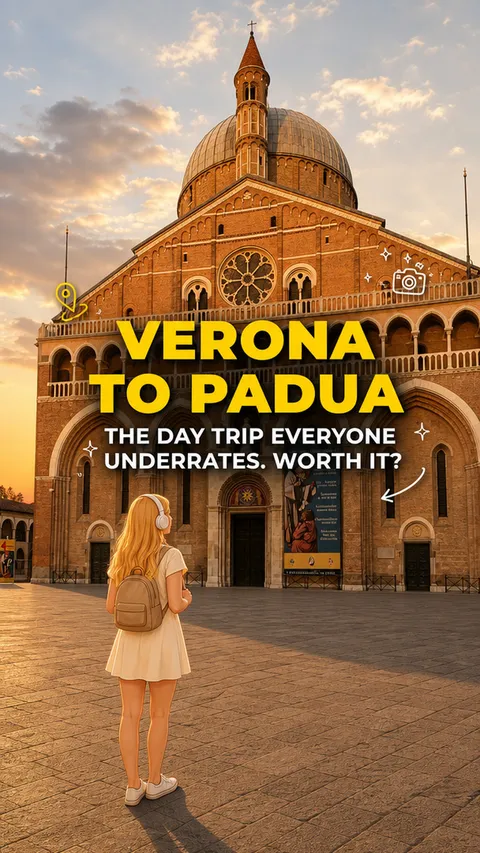
Mantua is 35 km away and Vicenza 44 km, both easy day trips. For a bigger combination, Padua and Venice lie further east, and Trento to the north.

Is the tour really free?

Yes. The whole tour is free: the route, the interactive map and the navigation cost you nothing. Only the voice AI Tour Guide is optional and paid: you test it with 100 free credits, then you pay either €5 per hour or €19.99 for this whole tour, with no time limit.

Do I need to download an app?

No. Everything runs in your phone browser. Open the route and start walking, no download and no sign-up required.

Do I need to book the walking tour in advance?

No booking needed. This self-guided tour is available anytime. Open the route in your browser and start walking. The AI Tour Guide works instantly, no app, no reservation required.

What languages is the AI Tour Guide available in?

The AI Tour Guide speaks 13 languages, so you take the tour in your own language and can switch at any time.

Can I skip stops or change the route?

Yes. Skip any stop, spend extra time at places you like, or start the route from any point. It is your walk, you set the pace.
Image credits
▶ Start free in your browser Runs in your browser, no app, no download