



Jardin Darcy
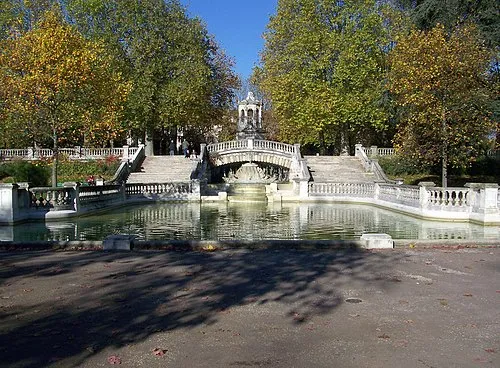
Begin in Dijon's first public park, laid out in 1880 to plans by Félix Vionnois. The centrepiece is easy to spot: an octagonal tower in neo-Renaissance style, a masonry ground floor topped by an open ring of columns that carries the roof. In front of it, water runs down a terraced fountain and cascade framed by pale balustrades, and the whole design is built on symmetry. Benches, a lawn for lounging and a children's playground make this a gentle place to start.
That tower is really a lid. Between 1838 and 1840 the Dijon-born engineer Henry Darcy built a drinking-water reservoir on this spot, a basin 28 metres across holding 350,000 litres. Pipes brought the water from the upper Suzon valley, about twelve kilometres away, to a town of roughly 29,000 people, which made Dijon one of the first cities with a modern water supply.
The architect Émile Sagot covered the basin and crowned it with the tower, which is why you will hear it called the Monument à Darcy, the Château d'eau or the Monument du réservoir des fontaines. Look at the door in the ground floor: it still leads into the reservoir, and the bust above it is Darcy himself. Vionnois then set his fountain directly below the reservoir, so the park quite literally grew out of the waterworks.
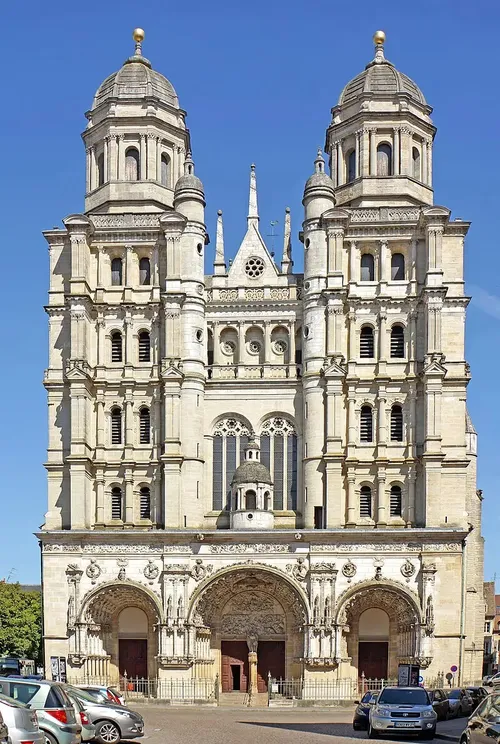
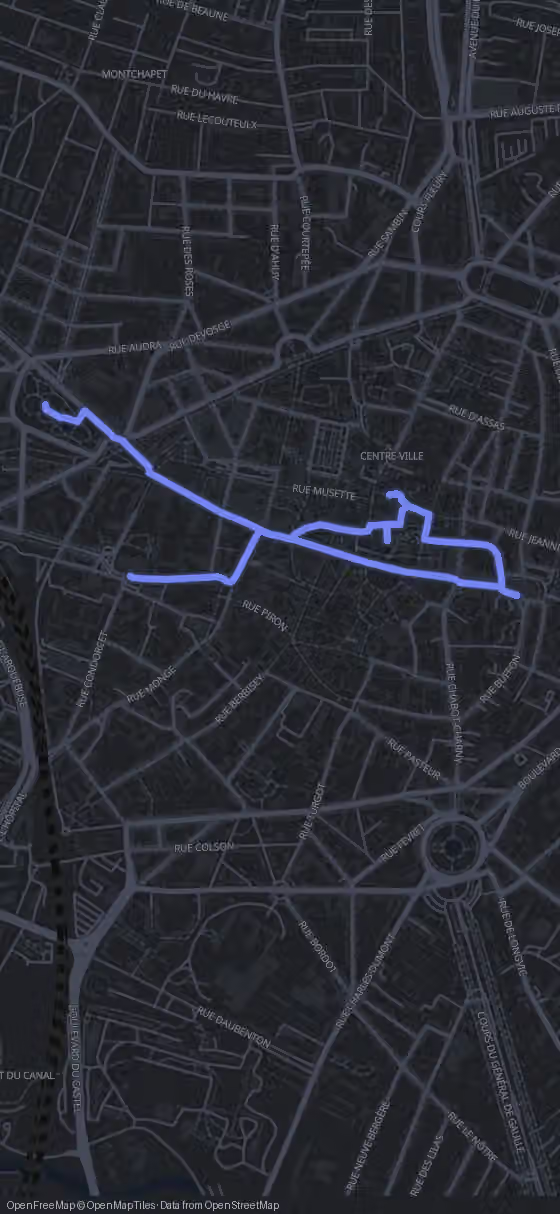
From here the longest leg of the walk, 1140 m or about 15 minutes, takes you into the old centre; on the way you pass the Owl Trail, the Musée Rude and the Musée des Beaux-Arts before reaching Saint-Michel Church.