

Nancy Cathedral
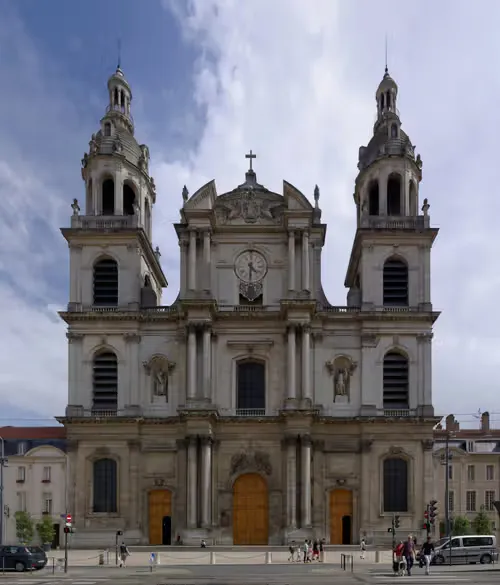
Start in front of a facade that looks more Roman than French. Nancy Cathedral is baroque and classical through and through: Corinthian columns and pilasters outside, the same Corinthian order inside. The first architect, Giovan Betto, took his ideas from the church of Sant'Andrea della Valle in Rome; Jules Hardouin-Mansart and Germain Boffrand then reworked his plans. Building began in 1703 under Duke Leopold I of Lorraine and was finished in 1742.
Look at the space between the two towers and imagine a great central dome rising behind them. That is what the spacing and the length of the nave were designed for. The dome never came; in the end the church got a simpler dome and a pediment with a clock, which is what you see today.
The name tells a political story. In the early 17th century the Duchy of Lorraine was independent in politics but answered spiritually to the bishoprics of Metz, Toul and Verdun. Nancy had no bishop of its own, so Duke Charles III persuaded the pope to appoint a primate instead, and the church was known as the primatial church of Nancy. It only became a cathedral in 1777, when Nancy got its first bishop, after Lorraine had passed to France and King Stanislas had died.
Go inside: it is free, and the interior is the reason to come. The nave is 60 metres long and 13.5 metres wide, with massive pillars dressed in Corinthian pilasters, and the effect as you walk in is calm and balanced rather than showy. The plan is a Latin cross, with three chapels on each side and the organ set in a half bay above the entrance.
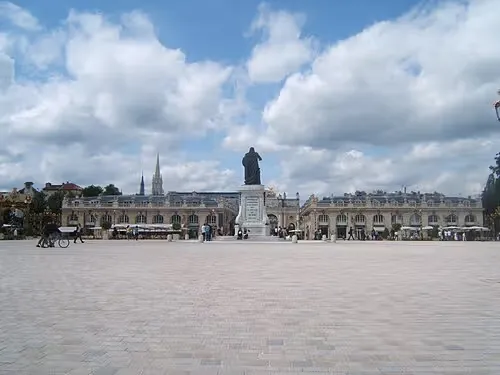
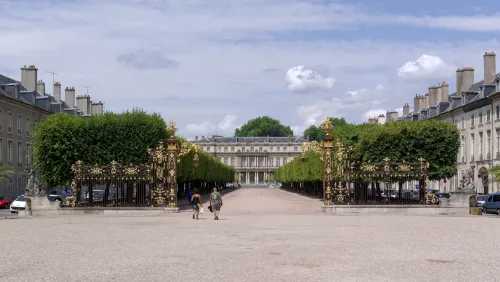
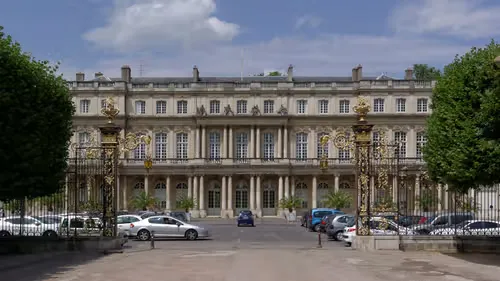
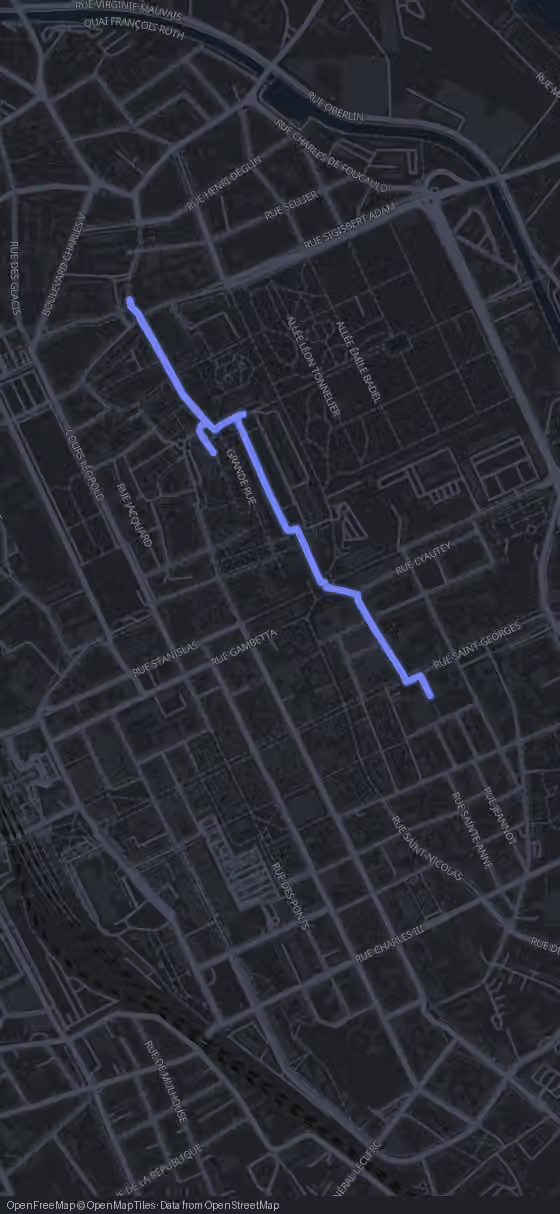
From here it is 370 m, about 5 minutes on foot, to Place Stanislas, the square that Leopold's successor built to make Nancy look like a capital.