

St-Pierre Cathedral
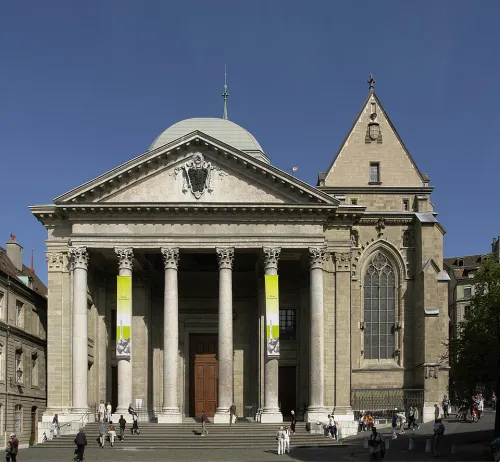
Start on the hill where Geneva began. Long before any church stood here, the Allobroges built a fortified settlement on this hill to control boat traffic on the Rhône, and beneath today's cathedral an archaeological site still holds the tomb of one of their chieftains from the 1st century BC. In the 4th century Geneva became the seat of a bishop, and the first Christian church rose here, built between 350 and 375 on the ruins of a Roman sanctuary.
After a fire in the year 500, King Sigismund of Burgundy rebuilt the church and asked Pope Symmachus for relics of St Peter. The building you see now was begun around 1160 under Prince-Bishop Arducius de Faucigny, in Gothic style; the Neo-Classical main façade was only added in the 18th century, so the front and the body of the church belong to very different eras.
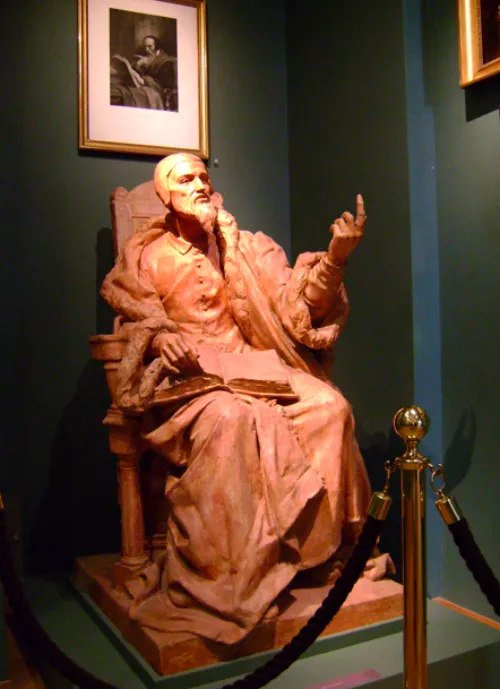
Inside, the emptiness is the story. When Geneva embraced the Reformation, the rood screen, the side chapels and every decorative work of art were removed, leaving only the stained glass. Since 1535 this has been the main church of Geneva's Protestants, and John Calvin preached here. Compare the bare nave with any Catholic church you have seen and you understand the break in a minute.
One famous piece made for this church survives elsewhere: Konrad Witz painted the St Peter Altarpiece for it in 1444, today in the Musée d'Art et d'Histoire. Its Miraculous Draft of Fishes places the biblical scene on a real view of Lake Geneva, the earliest known topographically accurate landscape in Western art.
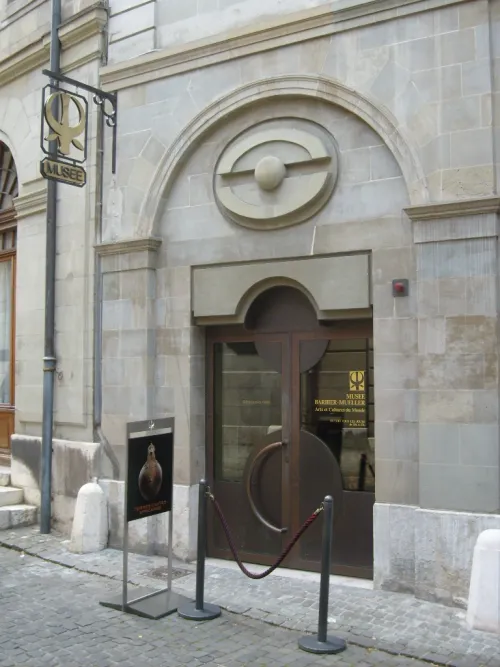
The nave is free, so step in even if you are short on time. The tower visit costs extra and closes half an hour before the building; with it, give the cathedral about 40 minutes. The Museum of the Reformation is only 20 m away, a 1 minute walk.