

Petersberg Citadel
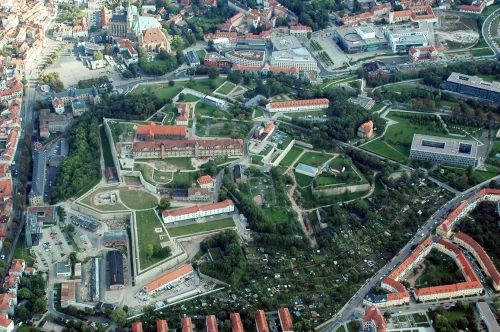
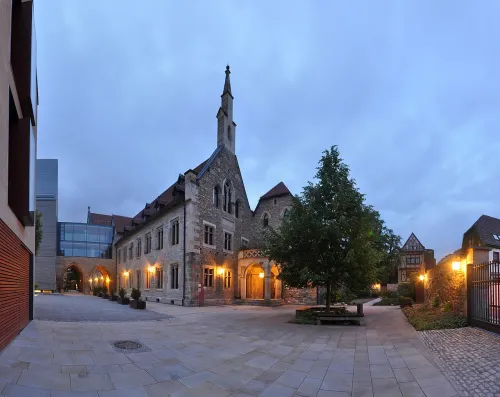
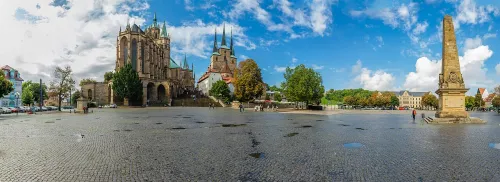
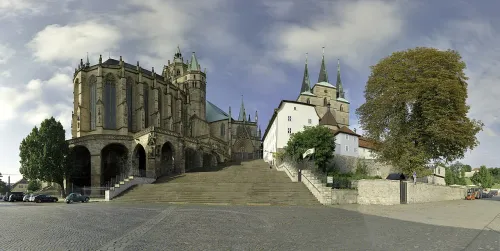
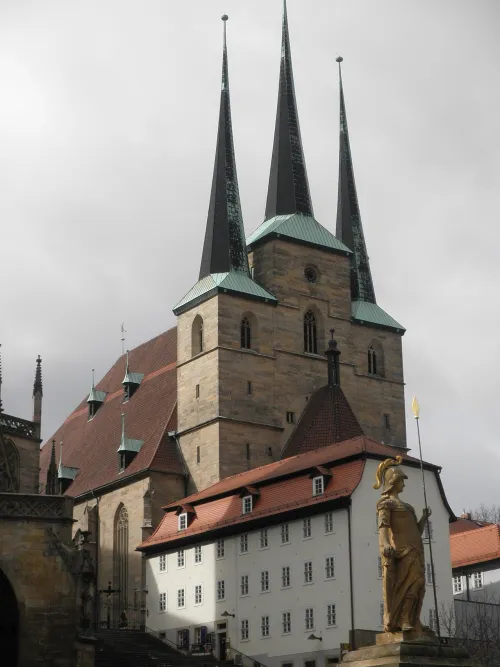
You start on the Petersberg, the hill in the north-western part of the old town, inside one of the largest and best-preserved town fortresses in Europe. More than two kilometres of stone walls enclose 36 hectares. Work on the baroque citadel began in 1665, when Erfurt was governed by the Electorate of Mainz. The outdoor grounds are free and open around the clock, so you can walk the bastions whenever you like.
The hill was holy ground before it was military ground: the citadel sits on the site of a medieval Benedictine monastery, and the oldest parts of the complex go back to the 12th century. After Mainz came Sweden, Prussia, Napoleon, the German Empire, the Nazis, the Soviet occupiers and East Germany, and every one of them used and reshaped the fortress. French troops held it from 1806 to 1814, which is why you will still hear the French name Citadelle Petersberg. Napoleon came to Erfurt several times, extended the works, and had a hidden trench dug to the smaller Cyriaksburg Citadel in the south-west of the city; parts of the Petersberg were damaged in a battle in 1813.
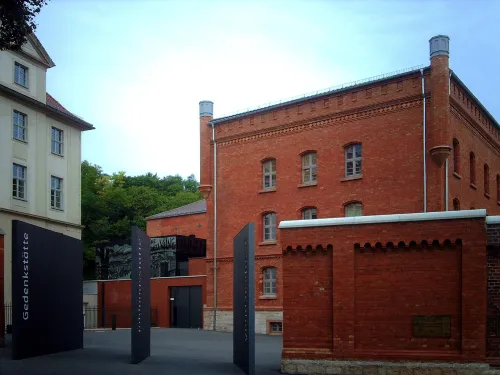
The army only left in 1963. Since reunification in 1990 the citadel has been restored and opened as a historic site, the fortress bakery from 1832 is working again, and the former lower barracks now hold the archives of the Stasi Records Agency, a thread you pick up again at the end of the loop.
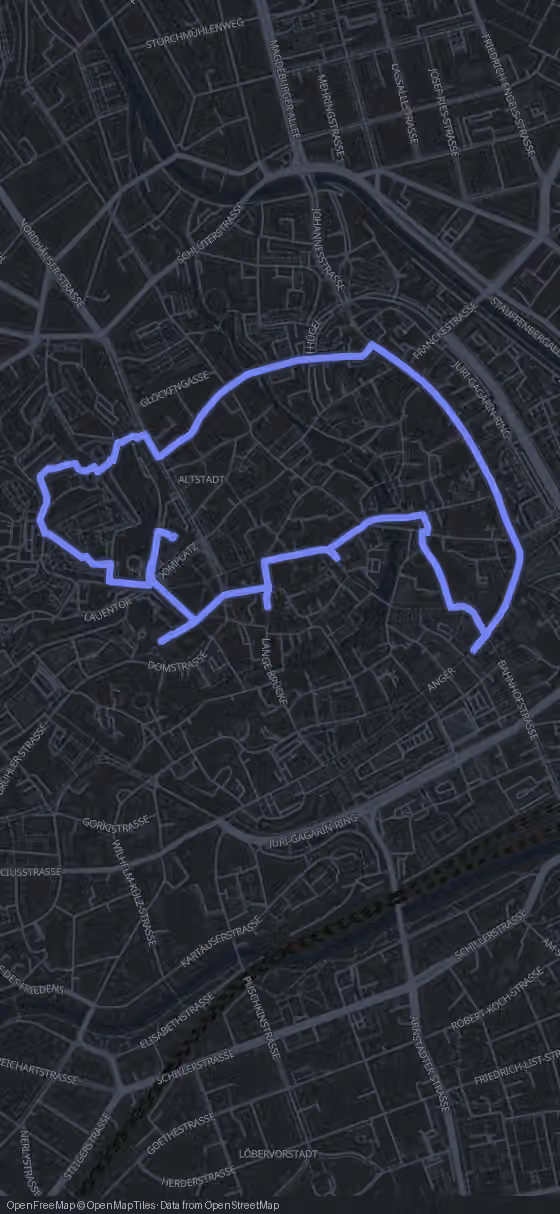
Is it worth going inside? The exhibition in the commander's house charges admission, and the maze of underground passageways is open to visitors on the paid guided Horchgang tour. If fortresses are your thing, give it an hour; otherwise the walls and views of the grounds are enough. From the gate it is 1260 m, about 17 minutes, down through the Andreasviertel to the Augustinian Monastery.