

Schloss Friedenstein
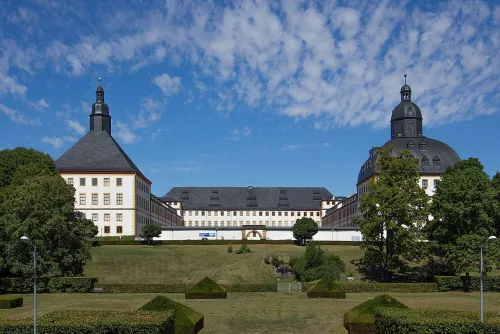
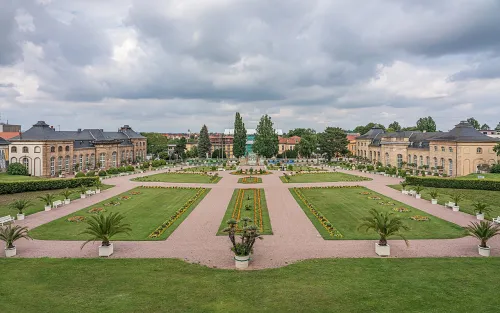
Friedenstein dominates Gotha the way it was meant to: a huge early Baroque palace, one of the largest of its time in Germany and one of the very first Baroque palaces built anywhere. Take a moment outside to let the scale sink in before you think about tickets.
The name is a statement. Before it, the site held Grimmenstein Castle, first mentioned in 1316 and fortified for the age of gunpowder in the 1530s. After the Protestant Ernestine Wettins lost the Battle of Mühlberg in 1547, John Frederick I was stripped of his title as Elector of Saxony and imperial troops blew up the fortifications. Rebuilt, the fortress was razed almost completely in 1567, when John Frederick II tried to win the electoral title back by force. Ernest I, remembered as Ernest the Pious, chose Gotha as his residence in 1640 as first ruler of the new Duchy of Saxe-Gotha; work on the park began in 1641, on the palace in 1643. 'Friedenstein' means 'rock of peace'.
Later the palace became one of the residences of the Dukes of Saxe-Coburg and Gotha, the family tied to the British royal house through Queen Victoria and Prince Albert. The last two ruling dukes were both princes of the United Kingdom.
Is it worth going in? If you choose only one interior in Gotha, make it this one. The complex houses several museums and the Ekhof-Theater, one of the oldest working theatres in Germany, which still has its original Baroque machinery for changing the scenery. Allow about 90 minutes.
From the palace, a 550 m walk of about 7 minutes brings you to the Orangerie, the duke's garden for exotic plants.