

Naumburg Cathedral
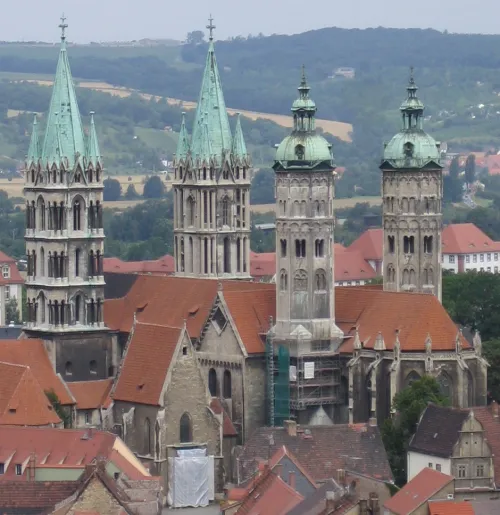
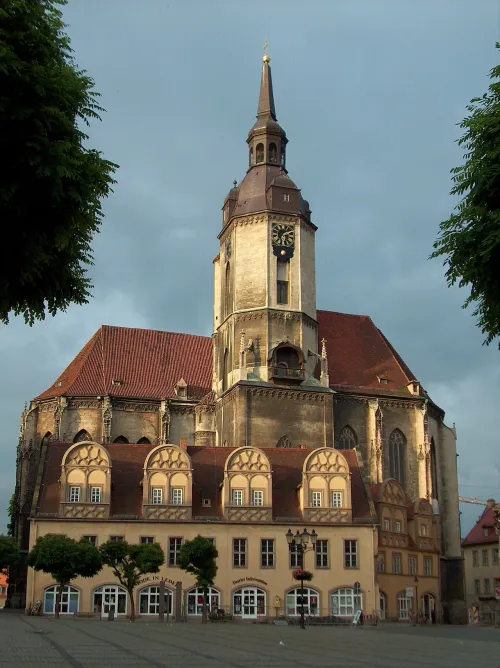
You begin at the building that put Naumburg on the UNESCO World Heritage list in 2018. Most of what stands here dates from the 13th century, and it counts as a landmark of German late Romanesque. It was built for a bishop: in 1028 the episcopal see moved here from Zeitz, and the new church rose next to an older parish church. That makes it the proto-cathedral of the former Diocese of Naumburg-Zeitz. With the Reformation, town and cathedral became Protestant, and the building still serves as a Protestant parish church today.
The reason to buy a ticket waits in the west choir. Here stand the famous donor statues of the twelve cathedral founders, the Stifterfiguren, together with the Lettner, the choir screen. Both are works of the sculptor known as the Naumburg Master, and together they rank among the most significant monuments of early Gothic art. Take your time with the faces: these are founders of the church, portrayed in stone, not saints.
The cathedral also explains why there is a Naumburg at all. Around the turn of the 9th and 10th centuries, most likely Margrave Ekkehard I of Meissen, then the most powerful man on the eastern border of the empire, built a residence on a rock about 25 metres above the right bank of the Saale, near the mouth of the Unstrut. The castle was called neweburg, the new castle, and the name became Naumburg. The site was chosen because several busy trade roads crossed nearby. Ekkehard himself never came back: he was murdered in 1002 at Pöhlde Abbey in the Harz, and could not be buried here because neither castle nor monastery was finished yet.
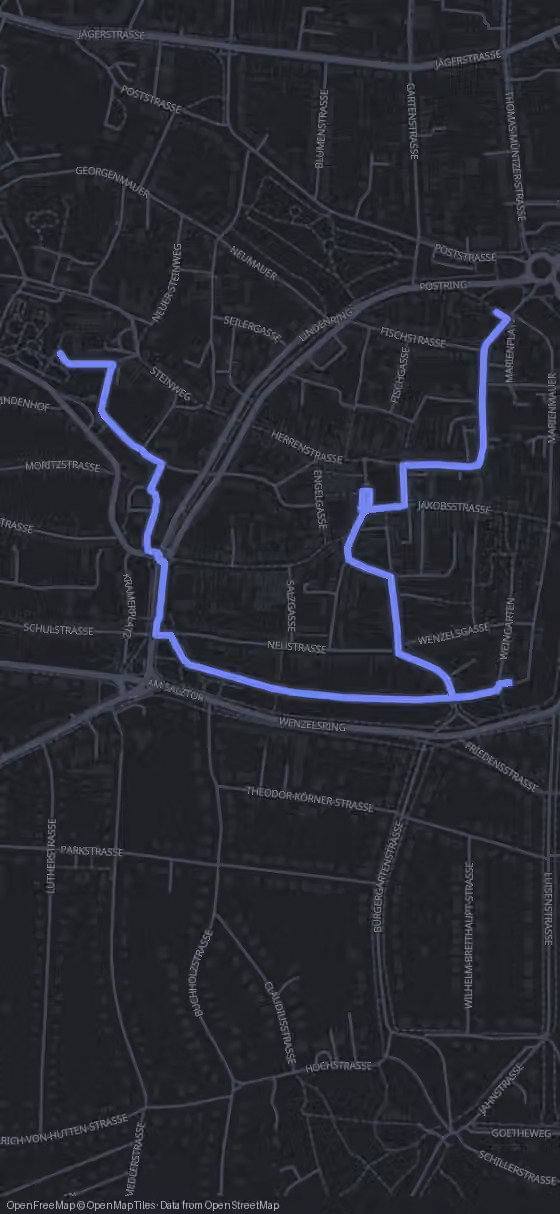
Go inside if you go inside anywhere on this walk. Admission includes an audio guide, so you can work through the west choir at your own pace. The cathedral is also part of the Romanesque Road through Saxony-Anhalt, if you are planning further. From here the route leaves the church's world for the town's: 390 metres, about five minutes, to the Historical Pharmacy.