Free Walking Tour Halle (Saale): Salt, Handel and a Castle

Eleven stops on one long day: a Renaissance cemetery, a room made of chocolate, the Nebra Sky Disc and a Romanesque castle, ending under Halle's five towers.

11 Stops 14.3 km ~3 h 16 min walking
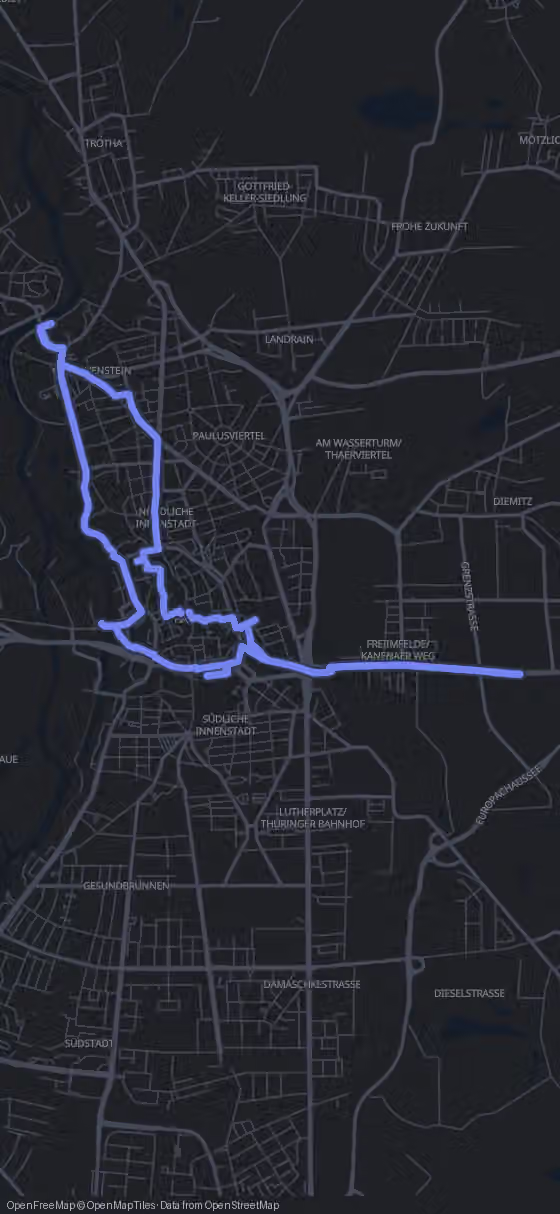
Route map for the Halle (Saale) walking tour
Stop 1 of 11
690 m·9 min
Market Square
Head east toward the Stadtgottesacker
Guten Tag, welcome to Halle. I'm Alex, and this city's name and fortune both begin with salt.
Try this tour with Alex

Halle in One Day: What the Route Covers

Eleven stops lead from the Market Square via the Stadtgottesacker, Halloren Chocolate Factory, Francke Foundations, Saline Museum, Giebichenstein Castle, State Museum of Prehistory, Moritzburg Art Museum, Händel-Haus and Marktkirche Unser Lieben Frauen to the Red Tower. That is 14.3 km and 3 h 16 min of pure walking; with a few museums, plan about seven and a half hours.

The square, the cemetery and the church are free, the museums and the castle charge admission. The GPS route runs free in your browser, and the AI Tour Guide is optional.

Open free GPS & optional AI Tour Guide
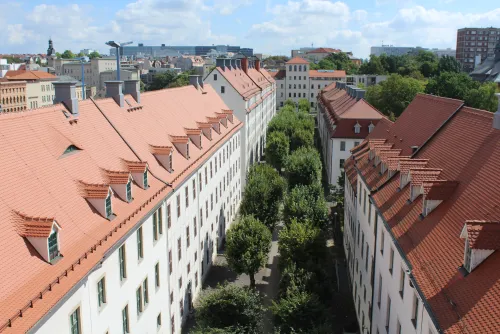
View of Halle (Saale)

The Route

Walking Map of Halle (Saale): 11 Stops, 14.3 km

11 stops 14.3 km 3 h 16 min walking
Tap to load interactive map

The 11 stops along this route

  1. Market Square in Halle (Saale), stop 1 on the self-guided walking tour
    1Market Square
  2. Stadtgottesacker in Halle (Saale), stop 2 on the self-guided walking tour
    2Stadtgottesacker
  3. Halloren Chocolate Factory in Halle (Saale), stop 3 on the self-guided walking tour
    3Halloren Chocolate Factory
  4. Francke Foundations in Halle (Saale), stop 4 on the self-guided walking tour
    4Francke Foundations
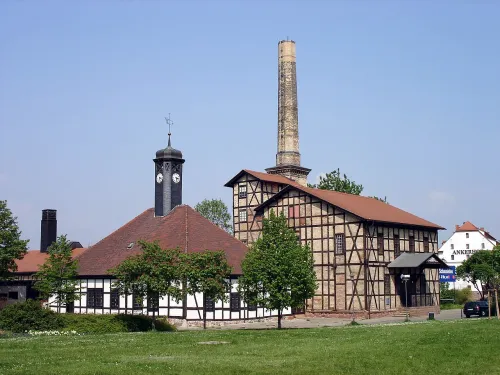
  5. Saline Museum in Halle (Saale), stop 5 on the self-guided walking tour
    5Saline Museum
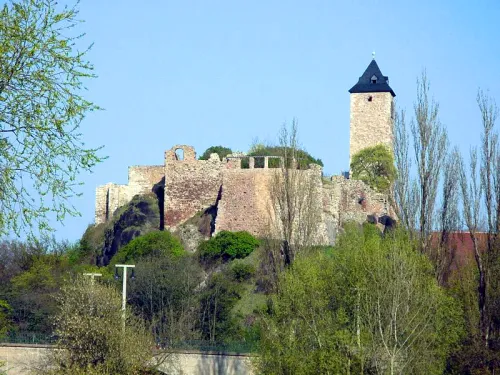
  6. Giebichenstein Castle in Halle (Saale), stop 6 on the self-guided walking tour
    6Giebichenstein Castle
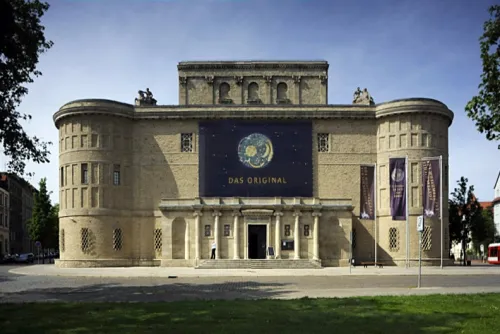
  7. State Museum of Prehistory in Halle (Saale), stop 7 on the self-guided walking tour
    7State Museum of Prehistory
  8. Moritzburg Art Museum in Halle (Saale), stop 8 on the self-guided walking tour
    8Moritzburg Art Museum
  9. Händel-Haus in Halle (Saale), stop 9 on the self-guided walking tour
    9Händel-Haus
  10. Marktkirche Unser Lieben Frauen in Halle (Saale), stop 10 on the self-guided walking tour
    10Marktkirche Unser Lieben Frauen
  11. Red Tower in Halle (Saale), stop 11 on the self-guided walking tour
    11Red Tower
  12. That's the full route.

    Walk it with an AI Tour Guide talking you through every one of these streets.

    Start free in your browser
    You made it

Your Halle (Saale) Walking Tour, from the Market Square to the Red Tower

  1. 1

    Market Square

    Market Square in Halle (Saale), stop 1 on the self-guided walking tour

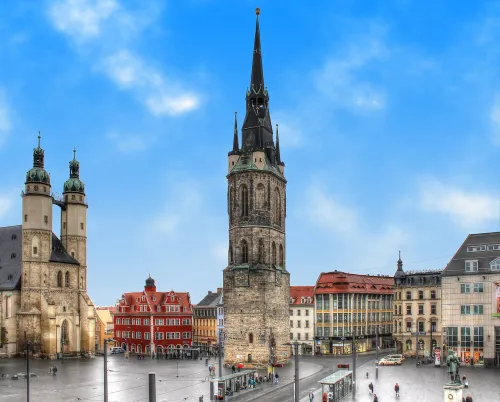
    Start in the open heart of Halle. The Market Square counts among the largest market squares in Germany, and together with the Hallmarkt it is one of the two medieval cores the city grew from. Turn slowly on the spot: the free-standing Red Tower, the four towers of the Marktkirche, the Stadthaus, the Ratshof, the Kaufhaus Lewin, the Marktschlößchen and the Handel monument all frame this space. You come back to the towers at the very end, so for now simply notice how they rule the skyline.

    Look at the southeast side and something seems missing. It is: until 1945 the old town hall and the historic town weighhouse, the Ratswaage, stood here between the Stadthaus, the Handel monument and the Ratshof. Neither was rebuilt, and that side of the square has stayed incomplete ever since.

    Near the Marktkirche, look for the Geoskop, a small viewing box set into the square. Peer in and you see the Market Square fault, a geological break running right beneath your feet. It matters more than it looks: along this fault, brine springs reached the surface, and the salt boiled from them made Halle rich. Keep that in mind, because salt will follow you through the whole day.

    The square is open around the clock and free. From here it is 690 m, about 11 minutes, to the Stadtgottesacker; on the way you pass the Marktplatz weekly market.

    Local name
    Marktplatz
    Hours
    24/7
    Price
    Free
    Website
    halle.de ↗
  2. 2

    Stadtgottesacker

    Stadtgottesacker in Halle (Saale), stop 2 on the self-guided walking tour

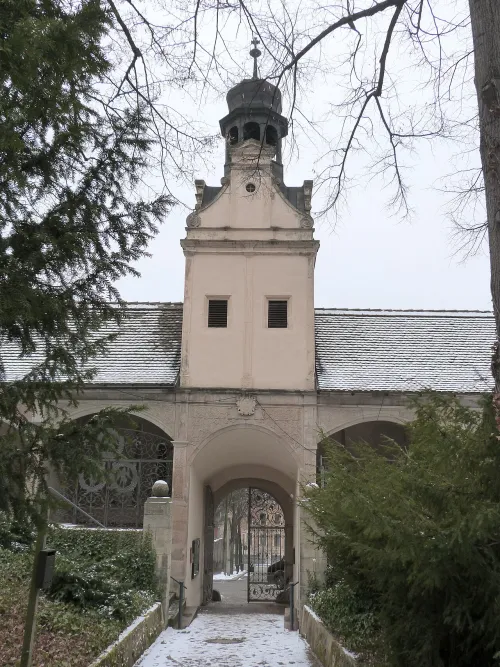
    Step through the gate and you are inside a walled square of arches. The Stadtgottesacker was laid out from 1557 after the model of the Italian camposanto, and it is regarded as a masterpiece of the Renaissance north of the Alps. Along the wall run 94 arches that open inward as arcades, each once closing off a family crypt behind an ornate iron or wooden grille.

    The cemetery exists because of a reform. In the 16th century towns began burying their dead outside the walls, and in 1529 Cardinal Albrecht ordered Halle's old burial grounds inside the city to be closed. The choice fell on the Martinsberg, then still outside town, where a chapel to St Martin stood until 1547 and where victims of plague had been buried in mass graves since 1350. The city architect and stonemason Nickel Hoffmann designed the arches, and building them took more than thirty years.

    Look closely at the stone for masons' marks. A survey in 1882 counted 92 different ones; by 1986 only 50 were still legible. Who exactly carved the arches can no longer be traced, because destruction in 1945 and decay afterwards erased the evidence. The crypts are numbered and belonged to the city, but citizens could rent or buy them. Originally the coffins stood visibly on the floor of crypts up to four metres deep; in 1862, for reasons of hygiene, most were filled with earth.

    The open field in the middle was only used for burials from 1822. Later, when other cemeteries took over for ordinary residents, this became the burial place of choice for Halle's upper class: industrialists, university professors, senior officials and officers, mostly in family plots. Around 2,000 graves remain.

    Entry is free, and the gates close earlier in the darker months. Give it 20 minutes. Then comes one of the long legs: 2,570 m, about 35 minutes, to the Halloren Chocolate Factory.

    Hours
    Daily: Jan–Feb 08:00–17:00, Mar 08:00–18:00, Apr 08:00–19:00, May–Aug 08:00–20:00, Sep 08:00–19:00, Oct 08:00–18:00, Nov 08:00–17:00, Dec 08:00–16:30
    Price
    Free admission
    Website
    halle.de ↗
  3. 3

    Halloren Chocolate Factory

    Halloren Chocolate Factory in Halle (Saale), stop 3 on the self-guided walking tour

    The museum sits inside the working factory complex, and that is its trump card: through a large panoramic window you watch chocolate being produced while you visit. Founded in 2002 and expanded several times, the museum now covers 900 m² with the history of chocolate from early times to today and the story of the company itself, plus a small cinema area and, since 2012, a relief of Halle made entirely of chocolate.

    The highlight is the chocolate room, about 17 m² and considered unique in Germany as a complex chocolate artwork. It was first shown in 2004 in Biedermeier style, focused on the company's founding year 1804. In March 2017 it was completely redesigned under the Austrian chocolate artist Gerhard Petzl, supported by the in-house chocolatiers around Claudia Heimann: around 1.5 tonnes of chocolate and some 5,000 working hours.

    The new room shows the study of Ernst David in the late 1890s, shortly after the new factory on Delitzscher Straße had opened. David had taken over the business from his father together with his brother in 1879. At its centre sits a life-size chocolate figure of him at his desk; figure, desk and chair alone used almost 400 kg of chocolate. Around him you find a harpsichord, a bookshelf, a cat on a cushion, a dining table, a couch, a carpet and even a fireplace with fire, all chocolate.

    Worth the admission for families and anyone with a sweet tooth. Plan 45 minutes, then walk 2,830 m, about 39 minutes, to the Francke Foundations.

    Local name
    Halloren Schokoladenmuseum
    Hours
    Mon–Sat 09:00–18:00, Sun and public holidays closed (last entry to museum 45 min before closing)
    Price
    Adults and children from 9 years: 5.00 EUR | Children up to 8 years: free
  4. 4

    Francke Foundations

    Francke Foundations in Halle (Saale), stop 4 on the self-guided walking tour

    You are now in front of a whole town within the town. The Francke Foundations, also known as the Glauchasche Anstalten, are a complex of historic buildings where more than 4,000 people learn, teach, work and live today: kindergartens, four schools, a youth workshop, a bible centre, archives, libraries, museums and research institutes. Since 1999 the complex has been on Germany's proposal list for UNESCO World Heritage.

    It all began with a small donation. August Hermann Francke, pastor and professor in Halle, wanted more than handing out alms on Thursdays, the town's day for giving to the poor; he wanted to educate poor children. Paying their school fees achieved little. Then, in 1695, someone left seven small coins for the poor, and Francke decided this was capital enough to found a school of his own.

    University students taught the children, and the school soon had such a reputation that local families sent their children too. In the same spring of 1695 Francke founded the Paedagogium, a school for the sons of nobility and the middle class, in 1697 a Latin school followed, and in 1698 he began building the orphanage for boys. Finished in 1701, it was a lavish building compared with similar institutions of its time.

    The museum charges admission and rewards anyone interested in education and social history; on the full-day plan, a look at the orphanage front is enough. From here it is 1,450 m, about 20 minutes, to the Saline Museum.

    Local name
    Franckesche Stiftungen
    Hours
    Tue–Sun and public holidays 10:00–17:00, Mon closed
    Price
    Adults: 8 EUR | Reduced: 5 EUR | Children and youth under 18: free
  5. 5

    Saline Museum

    Saline Museum in Halle (Saale), stop 5 on the self-guided walking tour

    The Saline Museum is currently closed, so this is a stop from outside. The buildings belonged to the Royal Prussian Saline, founded in 1721 by King Frederick William I on an island in the Saale. It competed with the older salt works of the lessees in the low-lying area around the Hallmarkt, which produced salt until 1869; in 1868 the lessees' brotherhood took over the Prussian works, which ran until 1964. The museum opened here in 1967.

    Salt production in Halle goes back to the Bronze Age and rested on four wells near the Hallmarkt, the oldest recorded in 803. Only one, the Gutjahr well, survives, covered since the 1950s under a house on Oleariusstraße and not accessible. The Hallors, after whom the museum is named, were the brotherhood of salt producers. Now comes the longest leg of the day: 3,170 m, about 43 minutes, to Giebichenstein Castle.

    Local name
    Halloren- und Salinemuseum
    Status
    Currently closed
  6. 6

    Giebichenstein Castle

    Giebichenstein Castle in Halle (Saale), stop 6 on the self-guided walking tour

    The castle sits on a rocky outcrop and is part of the Romanesque Road. In the 9th century it was a fortified burgward; later it became a royal residence of Otto I, who gave it to the Archbishopric of Magdeburg he had founded in 968. Three bishops died or lay in state here: Adalbert in 981, Tagino in 1012 and Walthard later that same year.

    Under King Henry II, Giebichenstein served as a state prison for the high nobility. Henry of Schweinfurt was held here in 1004, Ezzo of Este, Ernest of Swabia and Godfrey the Bearded followed. Legend adds Louis the Springer, founder of the Ludovingian dynasty, but there is no historical evidence that he was ever imprisoned here. Henry IV stayed at the castle in 1064, and in 1157 Frederick Barbarossa called an assembly of princes here.

    The decisive turn came under Archbishop Wichmann, who issued charters here from 1154 and made the castle the centre of a territory of the archbishopric. The oldest excavated walls of the upper castle date from his time: a gate tower, a curtain wall and a southern tower on what had been bare rock. Look for the narrow entrance through the massive Romanesque gate tower; a second entrance seems to have existed on the east side. In 1215, King Frederick II is said to have besieged the castle, because the archbishop had sided with his rival Otto IV.

    The castle charges admission and is worth going inside when it is open. Plan 45 minutes, then walk 1,180 m, about 17 minutes, to the State Museum of Prehistory.

    Hours
    Wed–Fri 12:00–18:00, Sat–Sun and public holidays 11:00–19:00 (Sep–Oct until 18:00), Mon–Tue closed (Season: 04 April to 31 October 2026)
    Price
    Adults: 4.00 EUR | Reduced: 2.50 EUR | Children up to 14 years: free
  7. 7

    State Museum of Prehistory

    State Museum of Prehistory in Halle (Saale), stop 7 on the self-guided walking tour

    Before you go in, look at the building itself. Wilhelm Kreis designed it after the Porta Nigra in Trier, and when it was built between 1911 and 1913, on land the city gave for free, it became the first museum building for prehistory in Germany. It was inaugurated on 9 October 1918.

    Inside waits one of the oldest, largest and most important archaeological collections in Germany, more than 15 million finds. The star is the Nebra Sky Disc, on permanent display since 23 May 2008. Do not stop there: look for the Rider Stone of Hornhausen, the family graves of Eulau, the forest elephant of Gröbern and the shaman of Bad Dürrenberg.

    The collection is older than the building. It goes back to an antiquarian society founded on 3 October 1819 in Naumburg, which moved to Halle in 1823. The province later approved funds for a museum of its own, whose first director, Hans von Borries, took office in 1884; with him began official archaeological heritage care in the Province of Saxony.

    If you go inside only one museum today, make it this one. Allow 75 minutes. Then it is 1,580 m, about 21 minutes, back toward the old town and the Moritzburg Art Museum.

    Local name
    Landesmuseum für Vorgeschichte Halle
    Hours
    Tue–Fri 09:00–17:00, Sat, Sun and public holidays 10:00–18:00, Mon closed (except for pre-booked groups)
    Price
    Adults: 12.00 EUR | Reduced: 9.00 EUR | Children 6-18 years: 3.00 EUR | Children 0-5 years: free
  8. 8

    Moritzburg Art Museum

    Moritzburg Art Museum in Halle (Saale), stop 8 on the self-guided walking tour

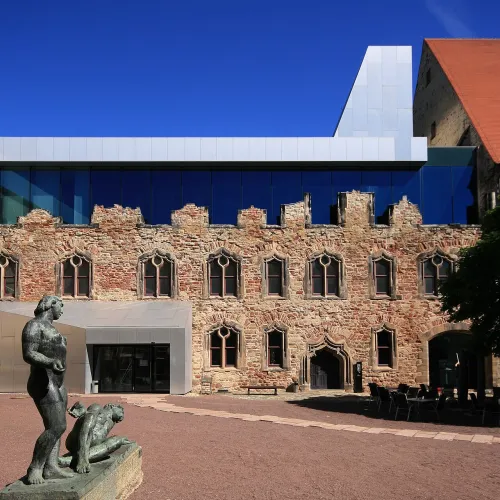
    The Moritzburg was the residence of the archbishops, and for a long time much of it lay in ruins; the south wing had been destroyed since the 17th century. In 1904 the city's museum of art and applied art, founded in 1885, opened a second home here. Today it is the art museum of Saxony-Anhalt and counts among the most important museums of modernist art in Germany.

    Here the salt thread returns. In the south wing the city built a historicising copy of the Thalamt, the Renaissance seat of Halle's Count of Salt on the Hallmarkt, which had been demolished in 1881. Its two historic rooms, a banqueting room and a courtroom, rare examples of Mannerist interior design in Central Germany, were saved and set into the upper floor of the new building. By 1917 a barrel-vaulted exhibition hall had been finished in the southwest bastion.

    Go in if modernist art or the Thalamt rooms appeal to you; the permanent collection charges admission. On the full-day plan, admire the walls from outside and walk on 450 m, about 6 minutes, to the Händel-Haus.

    Local name
    Kunstmuseum Moritzburg Halle
    Hours
    Thu–Tue 10:00–18:00, Wed closed
    Price
    House ticket: 15.00 EUR (reduced 10.00 EUR; from 21 Sep: 13.00 EUR / reduced 7.00 EUR) | Permanent collection only: 8.00 EUR (reduced 5.00 EUR) | Children and youth under 18: free
  9. 9

    Händel-Haus

    Händel-Haus in Halle (Saale), stop 9 on the self-guided walking tour

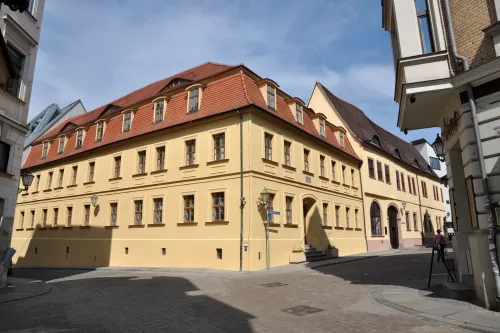
    At the core of this Renaissance complex, built before 1558, stands the house where George Frideric Handel was born; it stayed in the family for more than a hundred years. Today it is a music museum run by a city foundation, and it also houses the direction of the Handel Festival and the Handel Society.

    The house is older than it looks. Its foundations and cellar vault date back to the 15th and 16th centuries, and a partly preserved groin vault shows Romanesque traits that probably reach back to the 12th century. The ground floor dates from the 16th and 17th centuries, the upper floor from the second half of the 18th. Glance into the courtyard: on the side wing you can see Renaissance half-timbering, and inside, the ceiling of the main house and a well-preserved plank-lined room, the Bohlenstube, belong to the same period.

    For music lovers the visit is a must, and there is a family ticket. From here it is 260 m, about 4 minutes, to the church where the young Handel was baptised.

    Hours
    Tue–Sun: Apr–Oct 10:00–18:00, Nov–Mar 10:00–17:00; Mon closed (except public holidays and Handel Festival)
    Price
    Single ticket: 9.50 EUR | Reduced: 6.00 EUR | Children up to 6 years: free | Family ticket: 20.00 EUR
  10. 10

    Marktkirche Unser Lieben Frauen

    Marktkirche Unser Lieben Frauen in Halle (Saale), stop 10 on the self-guided walking tour

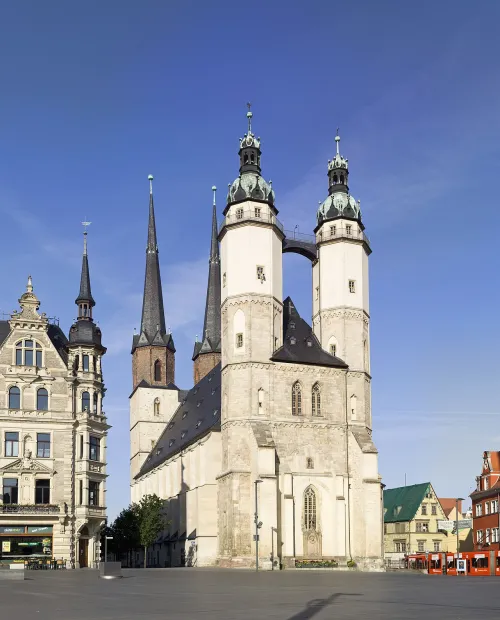
    Look up at the four towers first: they belong to two older churches. St Gertrude, from the 11th century, was the church of the salt makers on the Hallmarkt; St Mary, from the 12th century, was the parish church of merchants and tradesmen on the market square. Between 1529 and 1554 the new church was built over both and kept their towers. It is the youngest of Halle's medieval churches and counts among the most important late Gothic buildings in central Germany.

    The patron was Cardinal Albrecht of Brandenburg, who wanted a prestigious church at the centre of his residence town. Fearing for his soul, he had amassed more than 8,100 relics and 42 holy skeletons, the so-called Hallesches Heilthum, tied to the sale of indulgences that had just set off the Reformation. Soon after, Justus Jonas brought the Reformation to Halle, and his friend Martin Luther preached here.

    Music runs through this church too. Handel was baptised here and had his first organ lessons, Johann Sebastian Bach came to inspect the new organ, and his son Wilhelm Friedemann Bach served as organist. The church came through the Second World War with little damage.

    Entry to the church is free. The ascent of the Hausmannstürme costs extra and is also offered with a guided tour. Then cross 80 m, a single minute, to the Red Tower.

    Hours
    Summer (Mar–Dec): Mon–Sat 10:00–17:00, Sun 15:00–17:00 | Winter (Jan–Feb): Mon–Sat 11:30–16:00, Sun 11:00–12:00
    Price
    Church entry: Free | Tower ascent (Hausmannstürme): 4.00 EUR (guided tour 7.00 EUR / reduced 5.50 EUR)
    Website
    ekmd.de ↗
  11. 11

    Red Tower

    Red Tower in Halle (Saale), stop 11 on the self-guided walking tour

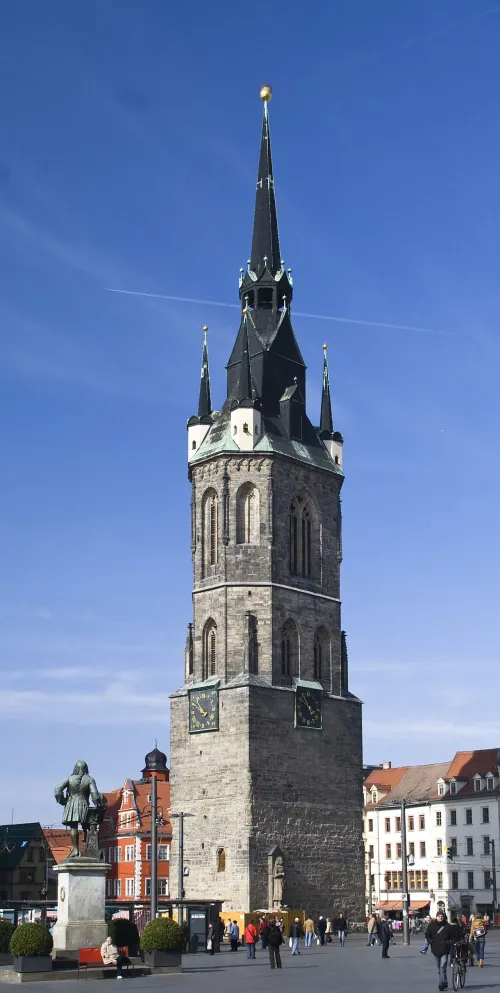
    You are back on the Market Square, at the foot of the free-standing late Gothic clock and bell tower. Together with the four towers of the Marktkirche it forms the city's landmark and gives Halle its nickname, the City of the Five Towers. At 80.7 metres it is the tallest medieval structure in Halle, on a base of about 10 by 15 metres, and it houses the largest carillon in Europe, the Europa-Carillon.

    St Mary's parish built it as the bell tower of its church, a campanile, starting in 1418 and finishing on 24 July 1506, a date recorded in documents. Look for the Latin inscription cut into the stone about four metres up: it marks the laying of the first stone in 1418. Back then it was called the New Tower; the name Red Tower only appears from the 17th century.

    Now look right to the top. The copper spire carries a gilded ball with 246 spikes, 3.60 metres around. On 16 April 1945 artillery fire set the tower ablaze and it lost its spire; it was restored in 1975, except for the buildings that once surrounded its base.

    The exterior is on view at any hour. Inside you go only on a paid guided tour, held on a few fixed days, with extra tours by arrangement. If one fits your day, it makes a fitting end right where you started.

    Local name
    Roter Turm
    Hours
    Guided tours only: Fri 17:00, Sat 14:00 (additional tours by prior arrangement; exterior viewable 24/7 on market square)
    Price
    Guided tour: Adults 6.00 EUR | Children up to 14 years: 4.50 EUR
Walking tour route map of Halle (Saale) Route loaded
Market SquareStadtgottesackerHalloren Chocolate FactoryFrancke Foundations+7
All 11 stops are already on the map.
You just press start.
AI Tour Guide

Read it, now walk it: Halle with a guide in your ear

Press start wherever you are, even hundreds of kilometres from Halle (Saale), and the guide begins telling its stories right away. In the city, pick any of the 11 stops to start from: it leads you there, then talks with you the whole route, asking, listening, remembering, and shaping the tour around your answers.

11stops 14.3km 3 h 16 minwalking 13languages
▶Start the tour free

Free to start · Runs in your browser · No app, no download

Shorter Ways to Walk Halle

Fourteen kilometres is a full day. If you have less time or want to spend it inside museums, these three sections of the route work well on their own.

Old town finale

Stops: 8, 9, 10, 11

For a relaxed half day with time indoors: from the Moritzburg Art Museum to the Händel-Haus, the Marktkirche and the Red Tower is only 790 m, about 11 minutes on foot. Admission applies at the Moritzburg and the Händel-Haus; the church is free, its tower ascent and the Red Tower tour cost extra.

South loop: cemetery, chocolate, Francke

Stops: 1, 2, 3, 4

Good for families and a morning: from the Market Square past the Stadtgottesacker and the chocolate museum to the Francke Foundations is 6.1 km, about 1 h 25 min of walking. The square and the cemetery are free; the chocolate museum and the Francke museum charge admission, and children get in cheaply or free at both.

Castle to towers

Stops: 6, 7, 8, 9, 10, 11

For history lovers: start at Giebichenstein Castle and walk via the State Museum of Prehistory back into the old town. That is about 3.6 km and 49 minutes of walking. Admission applies at the castle, the prehistory museum, the Moritzburg and the Händel-Haus; the Marktkirche is free.

How Long Does This Halle (Saale) Tour Take on Foot?

The full route is 14.3 km with 3 h 16 min of pure walking. Most of the distance sits in three legs: 35 minutes from the Stadtgottesacker to the chocolate museum, 39 minutes on to the Francke Foundations and 43 minutes from the Saline Museum out to Giebichenstein Castle. The last four stops, by contrast, lie within a few minutes of each other.

A realistic day goes inside the Stadtgottesacker (20 minutes), the chocolate museum (45 minutes), the castle (45 minutes), the State Museum of Prehistory (75 minutes) and the Marktkirche (20 minutes), with short looks from outside everywhere else. That adds up to about seven and a half hours. Start at 08:30 and you reach the castle around 12:30 and stand under the Red Tower again around 16:00, with time for the church and the Red Tower tour.

Everything inside in one go does not fit into a day; split it over two if you also want the Francke museum, the Moritzburg and the Händel-Haus. The old town finale takes about two and a half hours with two museums, the south loop about three hours, and the castle-to-towers section about three and a half hours with the castle and the prehistory museum.

Before You Set Off from the Market Square

  • Start and finish: The recommended start is the Market Square, but you can join at any stop. The route ends at the Red Tower, which stands on the Market Square, so you finish where you began.
  • Best day: Pick a day when the stops you want to go inside are open. The chocolate museum, the Francke Foundations, the prehistory museum, the Händel-Haus, the castle and the Moritzburg do not all share the same rest days.
  • Season: Giebichenstein Castle opens only for its summer season. Outside that window, treat it as a stop to see from outside.
  • Costs: The route itself is free. The realistic day plan includes admission for the chocolate museum, the castle and the prehistory museum; the Red Tower tour costs extra.
Walking tour route map of Halle (Saale)
AI Tour Guide

Your guide for Halle is ready when you are

Press start and a voice AI Tour Guide takes it from here: leading the route through Halle (Saale), telling the stories, and turning your walk into a real back-and-forth conversation. No app or download is needed; it runs in your browser.

11stops 14.3km 3 h 16 minwalking 13languages
▶Start the tour free

Free to start · Runs in your browser · No app, no download

What the AI Tour Guide Adds between Salt, Saints and Handel

On a day with legs of 35, 39 and 43 minutes, the AI Tour Guide turns the walking into conversation. It greets you, tells the stories of each place, asks what caught your interest and picks that thread up again later, so the salt from the Geoskop can come back at the Saline Museum and the archbishops of the castle at the Moritzburg. Want to know how the Hallors' brotherhood was organised, or who else lies under the arches of the Stadtgottesacker? Just ask, and interrupt it whenever you like. You start with 100 free credits; after that, choose this tour all-inclusive for €19.99 with no time limit, or €5 per hour.

A Real Conversation A voice AI Tour Guide greets you, leads the whole route, and tells the stories and facts as you walk, asking what you want to see and keeping a real conversation going. Not a recording you press play on.
Map Navigation Follow the route on the map and walk at your own pace. You choose where to start and when to move to the next stop.
Ask Anything Curious about a building you pass? Ask your AI Tour Guide on the spot and the conversation carries on.
13 Languages Switch language anytime. No separate tour needed.
Start free in your browser

Common Questions about Halle (Saale)

Is the Saline Museum open?

No, it is currently closed. You pass the former Royal Prussian salt works from outside and walk straight on to Giebichenstein Castle.

Can I see the Nebra Sky Disc on this walk?

Yes. It has been part of the permanent exhibition of the State Museum of Prehistory since 2008, so any regular ticket includes it.

Does the route work in winter?

Partly. The castle is closed outside its season, the Stadtgottesacker and the Händel-Haus close earlier, and the Marktkirche keeps shorter hours in the depth of winter. The old town finale is the better choice then.

Is the full route manageable with children?

At 14.3 km it is long for small legs. The south loop with the chocolate museum suits families better, and the Francke Foundations and the Moritzburg let everyone under 18 in for free.

Where can I go from Halle for another day?

Leipzig is the closest city, and Naumburg, where the prehistory collection began, makes a good pairing. Wittenberg continues the Reformation story of the Marktkirche.

Is the tour really free?

Yes. The whole tour is free: the route, the interactive map and the navigation cost you nothing. Only the voice AI Tour Guide is optional and paid: you test it with 100 free credits, then you pay either €5 per hour or €19.99 for this whole tour, with no time limit. Admission to 6 of the 11 stops is not included: Halloren Chocolate Factory, Francke Foundations, Giebichenstein Castle, State Museum of Prehistory, Moritzburg Art Museum and Händel-Haus charge their own entry fees.

Do I need to download an app?

No. Everything runs in your phone browser. Open the route and start walking, no download and no sign-up required.

Do I need to book the walking tour in advance?

No booking needed. This self-guided tour is available anytime. Open the route in your browser and start walking. The AI Tour Guide works instantly, no app, no reservation required.

What languages is the AI Tour Guide available in?

The AI Tour Guide speaks 13 languages, so you take the tour in your own language and can switch at any time.

Can I skip stops or change the route?

Yes. Skip any stop, spend extra time at places you like, or start the route from any point. It is your walk, you set the pace.
Image credits
▶ Start free in your browser Runs in your browser, no app, no download