

Stiftskirche St. Servatius
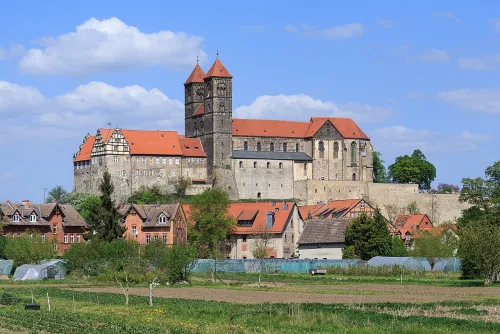
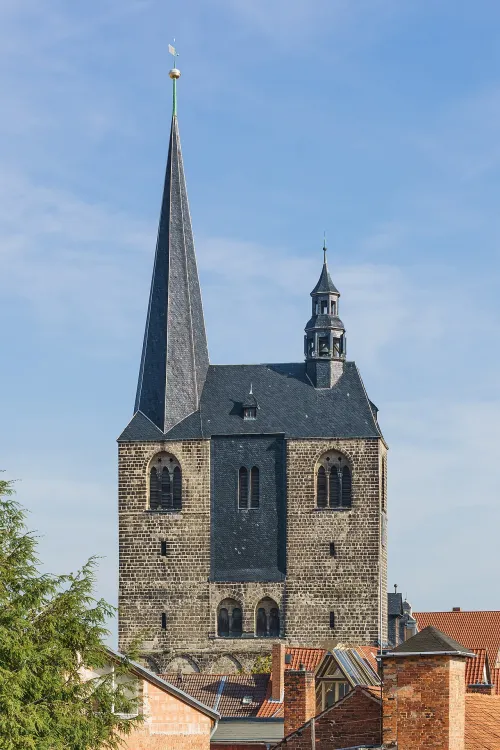
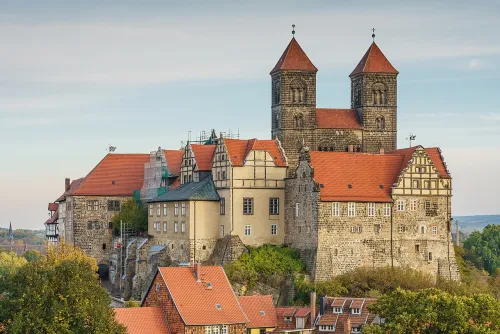
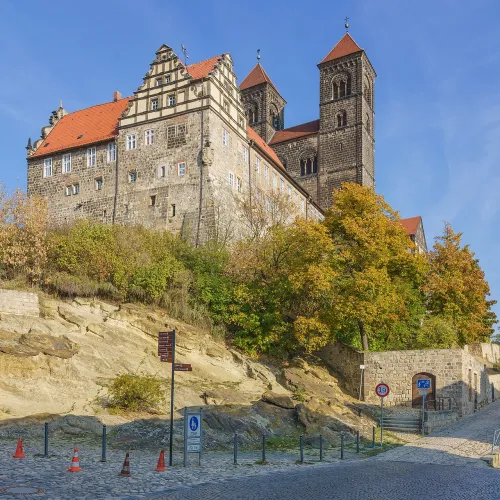
You start on the Schlossberg at the church that made Quedlinburg matter. The Stiftskirche St. Servatius, often simply called the cathedral, is a flat-roofed, three-aisled basilica of high Romanesque architecture, dedicated to Saints Dionysius and Servatius. It was the church of the women's abbey on the hill, and since 1994 it has been part of the UNESCO World Heritage Site together with the castle and the old town.
What you see is the fourth church on this spot. The first was a chapel inside a castle, built before 936, and King Henry I was buried in front of its main altar. When the castle became a women's abbey in 936, a larger church replaced it, and a confessio for Saint Servatius was built in, then soon filled up again. It was only uncovered in the 19th century, in the form you see today in the crypt. A third church, begun under Abbess Mathilde, was consecrated on 24 September 1021 in the presence of Emperor Henry II, and burned in 1070.
Work on the present church started soon after that fire, and it was consecrated again at Pentecost 1129 with King Lothar III attending. From the crypt you reach the small chapel of St. Nicolai in vinculis, probably older than 997: look at its two columns, where the slanted impost blocks are bigger than the simplified Ionic capitals beneath them. The high choir is Gothic, rebuilt under Abbess Jutta von Kranichfeld by 1320. And the two towers with their pointed Rhenish helmets are younger than they look: they came with Ferdinand von Quast's restoration between 1863 and 1882.
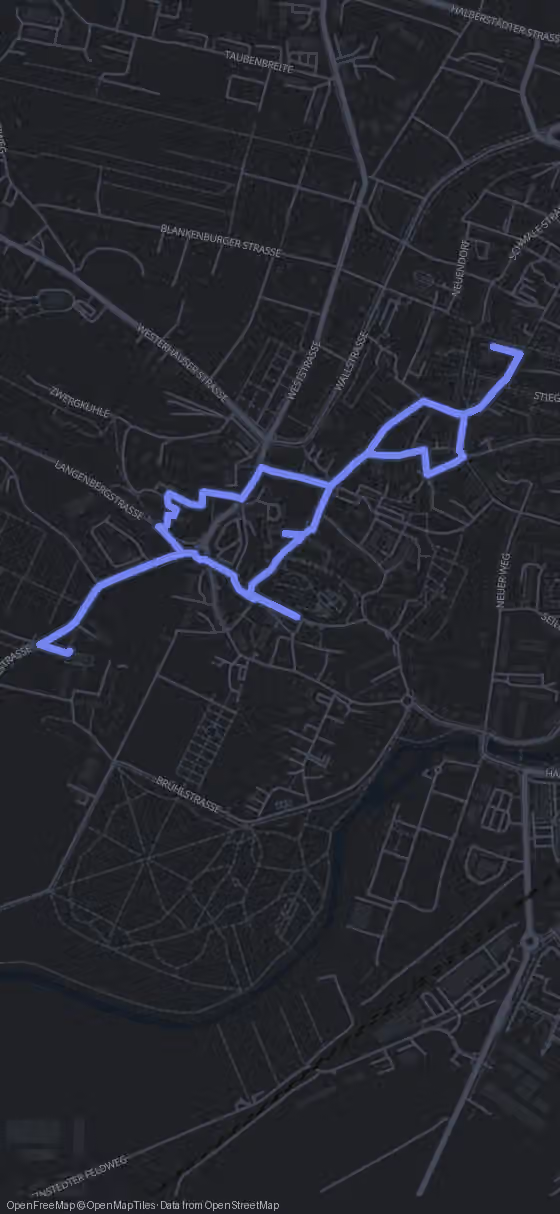
The church charges admission, and it is the one ticket on this route that almost everyone should buy: the crypt and the confessio are where the town's story begins. From here it is 710 m, about 10 minutes, down to the Wipertikirche, the other half of the royal story.