Free Walking Tour Lausanne: Old Town to the Lake

Start at a bishop's castle, stand inside a cathedral begun in 1170, then follow old market squares and new museums all the way to the lake at Ouchy.

11 Stops 5.5 km ~1 h 15 min walking
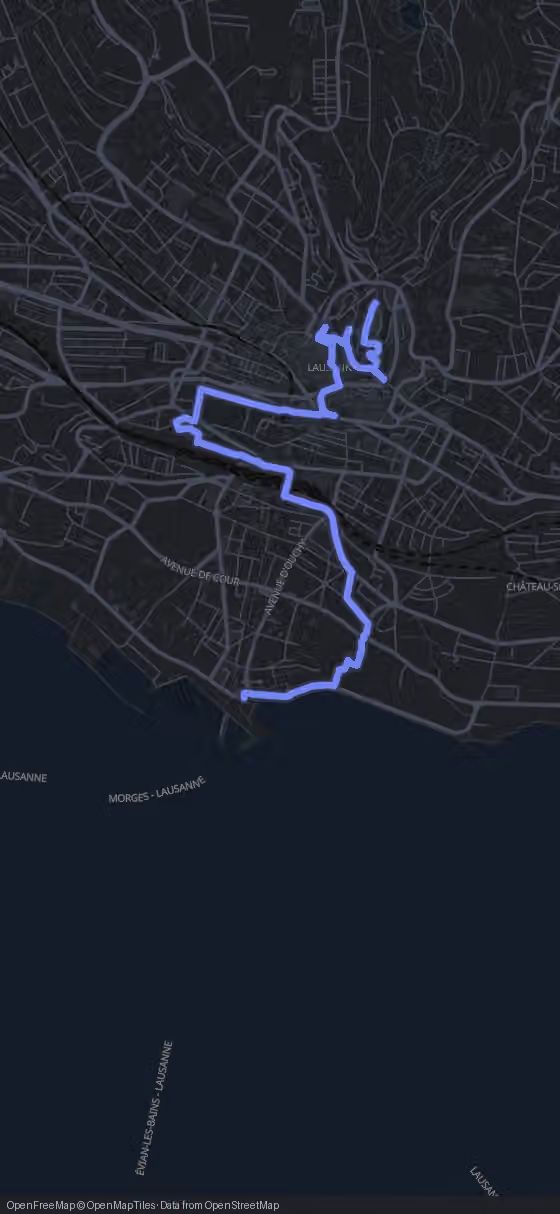
Route map for the Lausanne walking tour
Stop 1 of 11
230 m·3 min
Château Saint-Maire
Head south toward Lausanne Cathedral
Bonjour, welcome to Lausanne. I'm Alex, and a human voice still carries an old duty across the rooftops.
Try this tour with Alex

Lausanne on Foot: What This Route Covers

This route links 11 stops from Château Saint-Maire in the old Cité to the Ouchy Waterfront on Lake Léman: 5.5 km and 1 h 15 min of pure walking. If you only step into the Lausanne Cathedral, plan about three hours; with the Olympic Museum and the art museums, a full day.

The squares, the bridge and the cathedral nave are free; the tower, the Olympic Museum and special exhibitions charge admission. The GPS route runs free in your browser, and the AI Tour Guide is optional.

Open free GPS & optional AI Tour Guide
View of Lausanne

The Route

Walking Map of Lausanne: From the Cité to the Lakeshore

11 stops 5.5 km 1 h 15 min walking
Tap to load interactive map

The 11 stops along this route

  1. Château Saint-Maire in Lausanne, stop 1 on the self-guided walking tour
    1Château Saint-Maire
  2. Lausanne Cathedral, stop 2 on the self-guided walking tour
    2Lausanne Cathedral
  3. Pont Bessières in Lausanne, stop 3 on the self-guided walking tour
    3Pont Bessières
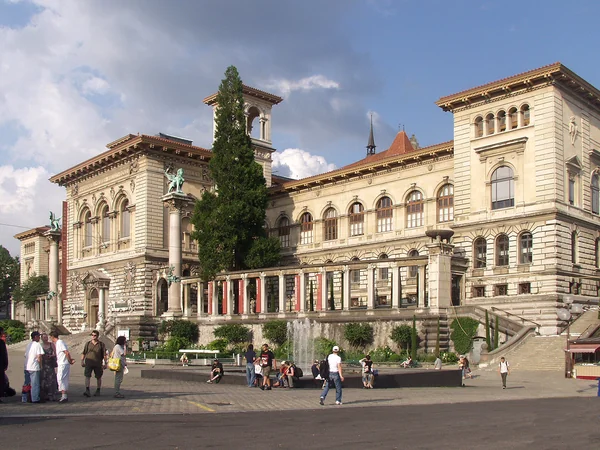
  4. Palais de Rumine in Lausanne, stop 4 on the self-guided walking tour
    4Palais de Rumine
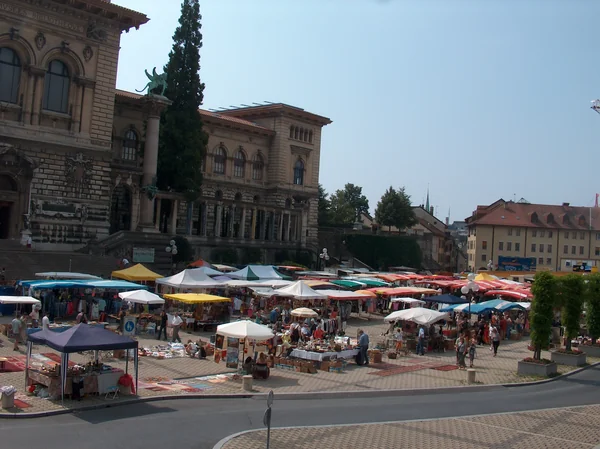
  5. Place de la Riponne in Lausanne, stop 5 on the self-guided walking tour
    5Place de la Riponne
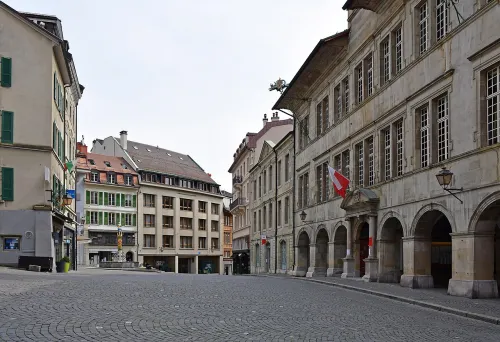
  6. Place de la Palud in Lausanne, stop 6 on the self-guided walking tour
    6Place de la Palud
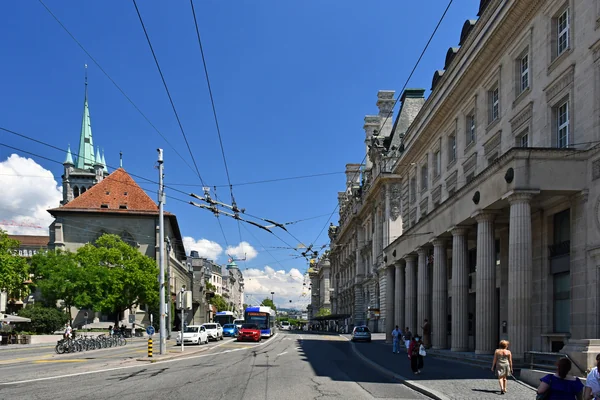
  7. Place Saint-François in Lausanne, stop 7 on the self-guided walking tour
    7Place Saint-François
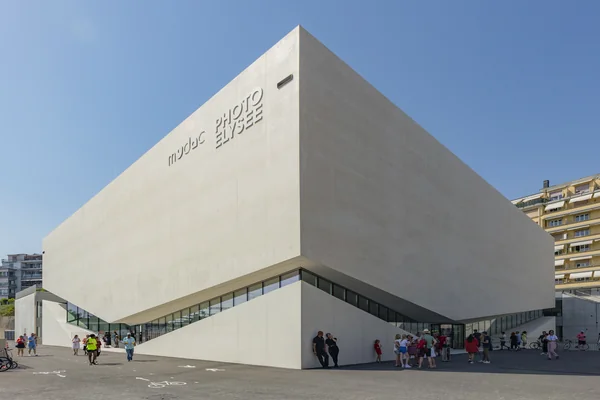
  8. Photo Elysée in Lausanne, stop 8 on the self-guided walking tour
    8Photo Elysée
  9. MCBA, Cantonal Museum of Fine Arts in Lausanne, stop 9 on the self-guided walking tour
    9MCBA, Cantonal Museum of Fine Arts
  10. Olympic Museum in Lausanne, stop 10 on the self-guided walking tour
    10Olympic Museum
  11. Ouchy Waterfront in Lausanne, stop 11 on the self-guided walking tour
    11Ouchy Waterfront
  12. That's the full route.

    Walk it with an AI Tour Guide talking you through every one of these streets.

    Start free in your browser
    You made it

Your Lausanne Walking Tour, from Castle to Lake, Stop by Stop

  1. 1

    Château Saint-Maire

    Château Saint-Maire in Lausanne, stop 1 on the self-guided walking tour

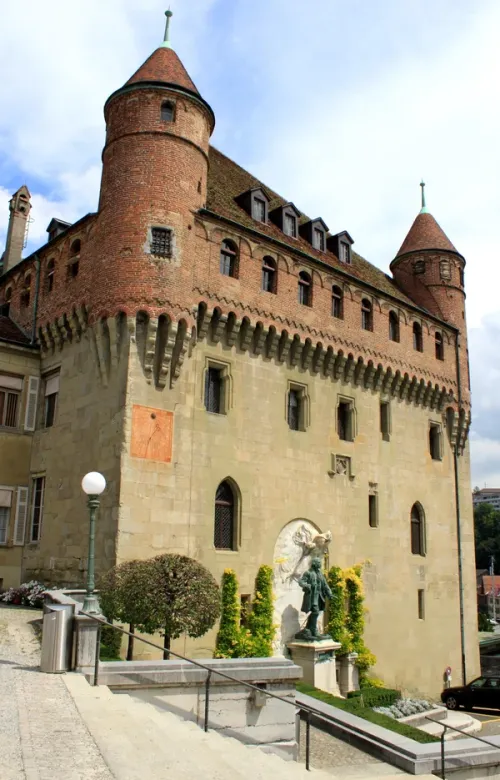
    Look up at the building from Place du Château: a massive cube of grey molasse stone, topped by upper floors of red brick with machicolations and small corner turrets. Near the top, look for the split battlements. The red brick is the giveaway of the style of the Aosta Valley, and that is no accident: the bishop who finished the castle, Guillaume de Challant, came from an old noble family of that valley.

    The castle was commissioned by Bishop Guillaume de Menthonay and built between 1397 and 1406. He never saw it finished. In 1406 his own chamberlain stabbed him several times in the stomach, and his successor Challant completed the work. Cube-shaped fortresses like this one were the fashion of the time, serving as both residence and defence; the castles of Vufflens and Blonay in Vaud follow the same idea.

    The walls did their job in 1482, when the citizens of Lausanne rose against their bishop and failed to take the castle. What finally ended episcopal rule was Bern: in March 1536 its troops under Hans Franz Nägeli conquered Vaud, and the last bishop, Sébastien de Montfalcon, fled. The Bernese bailiffs barely touched the building until 1789, when one of them added two storeys for more space and light. In 1798 the last bailiff, Ludwig von Büren, was asked to leave.

    Since 1811 the castle has housed the government of the Canton of Vaud, and it still does. That is why you cannot go inside, even though Aymon de Montfalcon had the interior richly decorated around 1500. Ten minutes outside is enough. From here the cathedral is only 230 metres away, a three minute walk.
    Hours
    24/7 exterior viewing from Place du Château; seat of the Cantonal government of Vaud, interior is closed to the public
    Price
    Free (exterior only; no public visits)
  2. 2

    Lausanne Cathedral

    Lausanne Cathedral, stop 2 on the self-guided walking tour

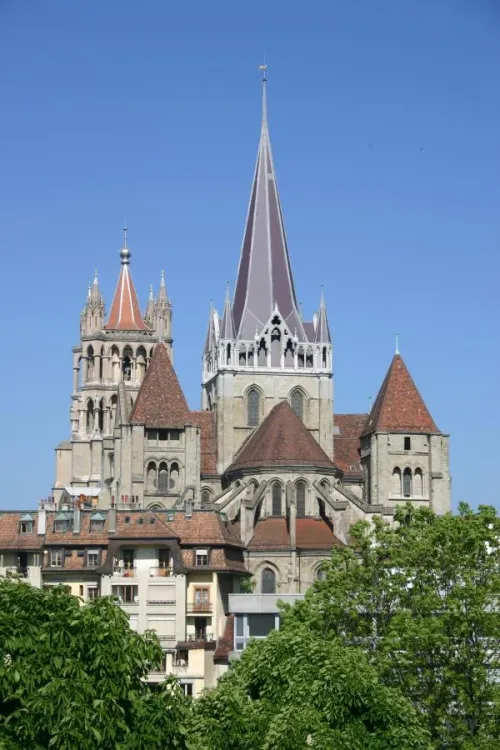
    The Cathedral of Our Lady took three master builders and more than a century. An unknown mason began around 1170, a second restarted the work twenty years later and continued until 1215, and a third, Jean Cotereel, built most of what you see, including the porch and two towers. Only one became the belfry; the other was never finished. Once you know that, the lopsided silhouette makes sense.

    In 1275 Pope Gregory X consecrated the cathedral to the Virgin Mary, with King Rudolph I of Germany in attendance. Inside, find the rose window of the south transept: the medieval architect Villard de Honnecourt drew it in his sketchbook in the 1220s. Look out too for the painted portal on the south side, restored in the 20th century along with the painted decoration of the interior.

    Those colours had been hidden for centuries. With the Reformation of 1536 the church became Protestant, a new liturgical area was added in the nave and the colourful decoration was covered over. Later restorations, some led by Eugène Viollet-le-Duc in the 19th century, slowly brought the building back.

    Listen for the great organ, inaugurated in December 2003 after ten years of design: 7,000 pipes, two consoles, five manuals, the first organ to unite four major styles, and the first built by an American firm, Fisk, for a European cathedral. The nave is free and worth half an hour for anyone. The tower charges admission and is worth it if you want the old city laid out around you. Then walk 310 metres, about four minutes, to the Pont Bessières.

    Hours
    Cathedral open daily: Apr–Sep 09:00–19:00, Oct–Mar 09:00–17:30 (Sunday worship at 10:00, no visits); Belfry tower climb: Apr–Sep Mon–Sat 09:30–12:30 & 13:30–18:30, Sun 13:00–17:30; Oct–Mar Mon–Sat 09:30–12:30 & 13:30–17:00, Sun 14:00–17:00
    Price
    Free admission to cathedral nave; tower visit: CHF 6 adults (26+), CHF 4 reduced (AVS, students, apprentices, groups 10+), free for ages 25 and under
  3. 3

    Pont Bessières

    Pont Bessières in Lausanne, stop 3 on the self-guided walking tour

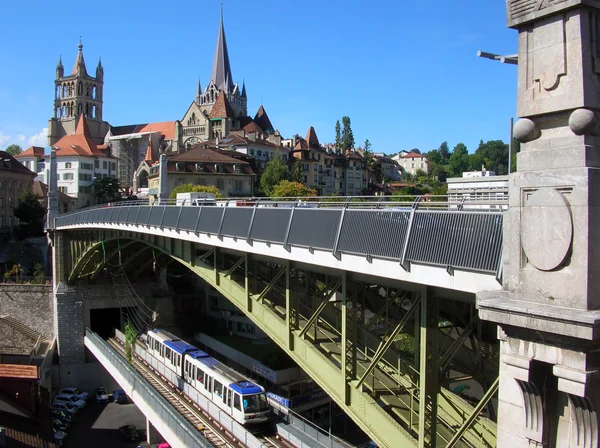
    This 120 metre bridge, finished in 1910, connects the Cité hill with the Rue Caroline. It took a long time to happen: a first project was shelved in 1839, and nothing moved until the banker Charles Bessières gave the city 500,000 Swiss francs. Even that was not enough; his brother Victor added another 50,000 to finish the job.

    Look at the tall obelisks on the bridge. The competition of 1899 was won by Eugène Jost, who wanted neo-medieval turrets to match the cathedral. They were too expensive, so the city settled on eleven metre obelisks in Louis XVI style, chosen to suit the hospital next door. Édouard Chavannes was chief engineer.

    Below the road deck runs a second level: two tunnels carry the line of the Lausanne metro across the bridge, and since 2008 there has been an m2 station here. It is a neat example of how this city stacks itself in layers. The bridge also carried a darker reputation for a long time, as one of the places in French-speaking Switzerland most associated with suicide.

    Take ten minutes for the view of the old town from the deck, then walk 360 metres, about five minutes, to the Palais de Rumine.

    Hours
    Always open
    Price
    Free
  4. 4

    Palais de Rumine

    Palais de Rumine in Lausanne, stop 4 on the self-guided walking tour

    The palace looks as if it belongs in Florence, and that was the plan: Gaspard André from Lyon designed it in the style of the Florentine Renaissance, and it was built between 1898 and 1906. It was inaugurated on 17 July 1906 as the main building of the University of Lausanne.

    Its name comes from Gabriel de Rumine, a civil engineer of Russian origin born in Lausanne, who died in 1871 aged just 30. He left the city 1.5 million francs on one condition: the money was to be invested until it doubled and, fifteen years after his death, spent on a public building. The timing was perfect, because Lausanne wanted to turn its Academy, founded in 1537, into a full university.

    Getting an architect was messier. The competition of 1889 drew 36 entries, and the jury refused to award a first prize. The city first chose the third place design by Dominique Demierre, then disqualified him when it emerged he worked in the same office as a jury member, Henri-Paul Nénot. Only then did André get the job, and political quarrels delayed construction for several more years.

    Today the building holds five museums and part of the cantonal and university library. The permanent exhibitions are free, so even a quick half hour is worth it. The cantonal art collection hung here for most of the 20th century, before it moved to the MCBA you will reach later. Next, 340 metres and five minutes to the Place de la Riponne.

    Hours
    Building public access: Mon–Fri 08:00–22:00 (main entrance only 20:00–22:00), Sat 08:00–17:00, Sun & public holidays 10:00–17:00; Museums inside: Tue–Sun & public holidays 10:00–17:00, Mon closed
    Price
    Free for permanent exhibitions and library; temporary exhibitions: CHF 8 adults, CHF 5 reduced, free for under 26 and first Saturday of each month
  5. 5

    Place de la Riponne

    Place de la Riponne in Lausanne, stop 5 on the self-guided walking tour

    Stand in the middle of this big open square and picture a valley. Until the 19th century, the stream Louve, also called the Petit Flon, ran through here towards the lower town and on into the Flon. The old road from Lausanne to Echallens followed it, and the area lay outside the medieval walls, reached through the Porte de Chaucrau and the Porte de la Madeleine. Before the Reformation, the Dominican monastery of Lausanne stood near the stream.

    The name comes from the Ripon family, Lausanne citizens who lived in a house at the edge of the site from the Middle Ages. The politician David-Abram Bergier sold that house to the town in 1813, and it was pulled down in 1831.

    From 1812 the town covered the lower Louve to improve hygiene in the lower quarter, and by 1838 a new market square had been levelled. In 1840 the architect Henri Fraisse built the large Grenette market hall here, which also hosted the Swiss Music Festival in 1842 and the Swiss Art Exhibition in 1898. In 1846 Frédéric Loba set up the first two gas lamps in Lausanne on this square, and won the concession for a private gasworks as a reward. The city's first art museum, founded by the painter Marc-Louis Arlaud, also opened by the Riponne in 1841.

    Ten minutes is enough here. The Place de la Palud is 260 metres away, three minutes on foot.

    Hours
    Open 24/7
    Price
    Free
  6. 6

    Place de la Palud

    Place de la Palud in Lausanne, stop 6 on the self-guided walking tour

    This cobbled square is where the town's market life began. In the late 9th century, when Lausanne still fitted on the Cité hill, the roads heading west and south crossed slightly marshy ground here, and a small market grew at the crossing. The name says it all: palud is an old word for marsh.

    By 1220 this was the main market of the city, and in the 14th century the market from Place du Crêt moved here too. Goldsmiths, tailors and hatters set up next to gardeners and butchers. A fire in 1405 destroyed part of the district, and the bishop bought houses around the square to build new wheat halls, levelling the bumpy, sloping ground in the process. They soon proved too small, and a partly stone hall followed in 1415.

    When it rained, public assemblies met in these halls, which were turned into a town hall between 1454 and 1461. The council met here for the first time on 24 January 1469, and the Palud became the administrative heart of Lausanne, confirmed after the Lower Town and the Cité united in 1481. From 1501, elections for the council and the mayor took place here rather than at the cathedral.

    The town hall you see today dates from 1675 and was raised by the architect Henri Perregaux in 1816. Give it a quarter of an hour, then walk 370 metres, six minutes, to Place Saint-François.

    Hours
    Open 24/7
    Price
    Free
  7. 7

    Place Saint-François

    Place Saint-François in Lausanne, stop 7 on the self-guided walking tour

    The square takes its name from the Church of Saint-François in its centre. The Franciscans arrived in Lausanne around 1258 and built their church and convent around 1270, tearing down part of the town walls to make room. The north side of the square probably already existed then, reached by the Rue du Mazel.

    Today this is a working crossroads and one of the main hubs of Lausanne's public transport, with more than ten trolleybus and bus lines stopping here, plus the starting point of the Pyjama night buses. The area north and east of the church is pedestrian, lined with shops and cafés, and from here the Rue de Bourg and the Rue Saint-François lead off on foot.

    Across the road to the south stand three heavy institutional buildings: the head office of the Banque Cantonale Vaudoise, the main post office and a UBS building. On Wednesdays and Saturdays part of the city market spreads around the church, and in December the square traditionally hosts the Christmas market.

    After ten minutes here, the longest leg so far begins: 1,070 metres, about 14 minutes, to Photo Elysée.

    Hours
    Open 24/7
    Price
    Free
  8. 8

    Photo Elysée

    Photo Elysée in Lausanne, stop 8 on the self-guided walking tour

    Photo Elysée is a museum entirely devoted to photography, founded in 1985 by Charles-Henri Favrod. For decades it lived in an 18th century mansion; in 2020 it closed to move, and in June 2022 it reopened in this new building by the Portuguese architects Aires Mateus. It shares the Plateforme 10 arts district with the MCBA and the design museum mudac.

    The collection holds more than 100,000 photographs, from 19th century daguerreotypes to digital prints. Some of its holdings have remarkable stories: the entire archives of the travellers Ella Maillart and Nicolas Bouvier, around 10,000 photographs from Charlie Chaplin's own collection, acquired in 2011, and the collection of Pierre Gilliard, tutor to the children of Tsar Nicholas II. Adolphe Braun, who worked at the court of Napoleon III, is here too.

    The museum also awards the Prix Elysée, since 2014, and organises the Nuit des Images at the end of June. Since June 2022 it has been led by Nathalie Herschdorfer.

    Is it worth going in? If photography interests you at all, yes: the permanent collection is free, and the exhibitions charge admission. Plan an hour. The MCBA is just 170 metres away, two minutes across Plateforme 10.

    Hours
    Mon 10:00–18:00, Tue closed, Wed 10:00–18:00, Thu 10:00–20:00, Fri–Sun 10:00–18:00
    Price
    CHF 15 full, CHF 12 reduced (seniors/AVS, AI, job seekers, students, apprentices, groups 10+), free for under 26; permanent collection is free
  9. 9

    MCBA, Cantonal Museum of Fine Arts

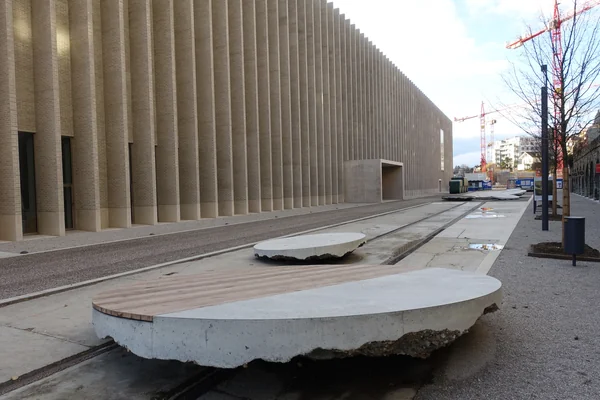
    MCBA, Cantonal Museum of Fine Arts in Lausanne, stop 9 on the self-guided walking tour

    The MCBA, the Cantonal Museum of Fine Arts, has been in Lausanne since 1841 but only moved here in 2019, onto the site of the former locomotive halls by the station. Inside you find the world's largest collection of the Swiss and French artist Félix Vallotton, and since 2025 seventeen sculptures by Alberto Giacometti on long-term loan, the most important Giacometti group in French-speaking Switzerland.

    The collection started with one man's idea. In 1808 the Vaud watercolourist Abraham-Louis-Rodolphe Ducros proposed a drawing school and offered his own Italian paintings as teaching material. He died before it happened, but the canton bought his collection in 1816. The painter Marc-Louis Arlaud then founded a museum by the Place de la Riponne, built by Louis Wenger, which held the cantonal art from 1841 until 1904. After that the art moved into the Palais de Rumine.

    The road here was not straight. In 2008 the voters of Vaud rejected funding for a new museum at Bellerive by the lake, and in 2009 the cantonal government picked this site near the station instead.

    The permanent collection is free, and an hour with the Vallottons is time well spent; special exhibitions charge admission. The next leg is the longest of the tour: 1,700 metres, about 23 minutes, to the Olympic Museum.

    Local name
    Musée cantonal des Beaux-Arts de Lausanne
    Hours
    Tue–Wed 10:00–18:00, Thu 10:00–20:00, Fri–Sun 10:00–18:00, Mon closed
    Price
    Free for permanent collection (La collection, Espace Focus, Espace Projet); temporary exhibitions: CHF 15 full (adults 26+), CHF 12 reduced, free for under 26 and 1st Saturday of each month
    Website
    mcba.ch ↗
  10. 10

    Olympic Museum

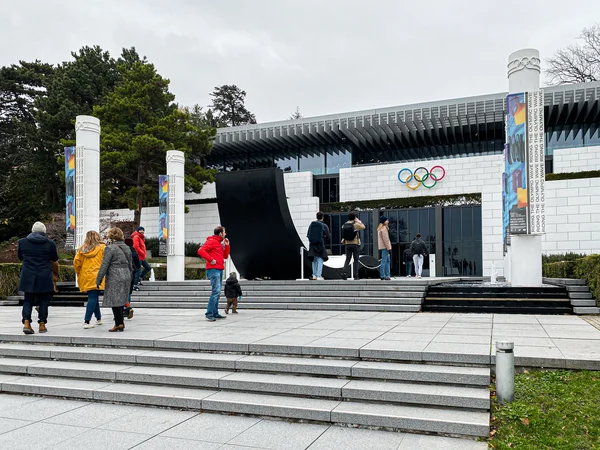
    Olympic Museum in Lausanne, stop 10 on the self-guided walking tour

    The Olympic Museum holds more than 10,000 artefacts, the largest archive of Olympic memorabilia in the world, and draws over 250,000 visitors a year. It opened on 23 June 1993 on the initiative of Juan Antonio Samaranch, then president of the International Olympic Committee, whose headquarters lie at Vidy, west of Ouchy. The Mexican architect Pedro Ramírez Vázquez and Jean-Pierre Cahen designed it, and in 1995 it was named European Museum of the Year.

    Between 2012 and 2013 it closed for 23 months of renovation; meanwhile a temporary exhibition ran aboard the lake boat Helvétie in front of the park. It reopened on 21 December 2013 with 3,000 square metres instead of 2,000.

    The visit begins on the third floor with Olympic World: the ancient Games, their revival in the 19th century, a display of Olympic torches and a film of great opening ceremonies. The second floor covers the Games themselves, with sporting equipment and sections on the Youth Olympic Games and the Paralympics. At individual stations you can search more than 1,000 video clips. Then there is Olympic Spirit, the third theme.

    For sports fans and families, it is the big indoor stop of the day. It charges admission, and you should allow two hours minimum. Outside, the Olympic Park sculpture garden stretches towards the lake. From here it is 660 metres, about ten minutes, to the Ouchy Waterfront.

    Local name
    Musée olympique
    Hours
    Tue–Sun 09:00–18:00, Mon closed (except public holidays); last admission 17:00
    Price
    CHF 20 adults (16+), CHF 14 concessions (seniors, students, apprentices, visitors with disabilities, groups 10+), free for children 15 and under
  11. 11

    Ouchy Waterfront

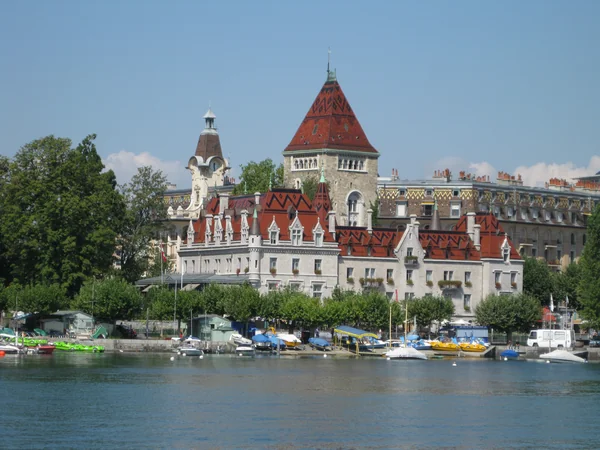
    Ouchy Waterfront in Lausanne, stop 11 on the self-guided walking tour

    The walk ends at Ouchy, Lausanne's quarter on the shore of Lake Léman. After the steep old town and the museums, this is the place to slow down and look out over the water.

    Look for the Château d'Ouchy. Despite the turrets, it is not a medieval castle: Jean-Jacques Mercier built it as a hotel between 1889 and 1893, on the site of an older castle. It is a fitting final image for a tour that began at a real fortress, Château Saint-Maire, and shows how the late 19th century liked to dress up in the past, much like the obelisks on the Pont Bessières.

    Take as long as you like here. If you still have energy and days left, Vevey and Montreux further along the lake make natural next walks.

    Hours
    Open 24/7
    Price
    Free
Walking tour route map of Lausanne Route loaded
Château Saint-MaireLausanne CathedralPont BessièresPalais de Rumine+7
All 11 stops are already on the map.
You just press start.
AI Tour Guide

You know the route now. Walk it with a guide in your ear.

Press start wherever you are, even hundreds of kilometres from Lausanne, and the guide begins telling its stories right away. In the city, pick any of the 11 stops to start from: it leads you there, then talks with you the whole route, asking, listening, remembering, and shaping the tour around your answers.

11stops 5.5km 1 h 15 minwalking 13languages
▶Start the tour free

Free to start · Runs in your browser · No app, no download

Shorter Ways Through Lausanne

Eleven stops make a long day if you go inside the museums. These three cuts keep the order of the full route and work well on their own.

Old Town only

Stops: 1, 2, 3, 4, 5, 6, 7

For a first visit or a half morning: castle, cathedral, the Bessières bridge and the four squares of the old centre. About 1.9 km and 26 minutes of walking. Everything is free apart from the cathedral tower; the permanent collections in the Palais de Rumine cost nothing either.

Old Town and Plateforme 10

Stops: 1, 2, 3, 4, 5, 6, 7, 8, 9

For art and photography lovers who want to skip the Olympic Museum. About 3.1 km and 42 minutes of walking. Photo Elysée charges for its exhibitions, while its permanent collection and the MCBA's collection are free.

Museums and lakeshore

Stops: 8, 9, 10, 11

For a day built around museums, starting at Plateforme 10 and ending by the water. About 2.5 km and 35 minutes of walking. The Olympic Museum charges admission; leave it at least two hours.

How Long Does This Lausanne Tour Take, With and Without Museums?

The pure walking time is 1 h 15 min, and most of it sits in the second half: the old centre is compact, with legs of three to six minutes, while the walk from Place Saint-François to Photo Elysée takes 14 minutes and the leg from the MCBA to the Olympic Museum 23 minutes.

A full day with everything inside works like this: start at Château Saint-Maire at 09:30, give the cathedral and its tower 45 minutes, the Palais de Rumine half an hour, both Plateforme 10 museums an hour each and the squares about ten minutes apiece. You reach the Olympic Museum around 14:45 and stand on the Ouchy Waterfront just before 17:00 after two hours with the Olympic torches. That is about seven and a half hours before any meal break.

The Old Town cut takes roughly two and a half hours with the cathedral tower and a short look into the Palais de Rumine. The museums and lakeshore cut needs about four and a half hours with an hour in each art museum and two in the Olympic Museum.

Before You Start Your Walk Through Lausanne

  • Start and finish: The recommended start is Château Saint-Maire on Place du Château, and the walk ends on the Ouchy Waterfront by the lake. You can join at any stop; the order given here is simply the one that works best.
  • Best days: Pick a day when every museum on the route is open, since several of them have a weekly closing day.
  • Sunday mornings: On Sunday mornings the cathedral is reserved for worship, with no visits. On a Sunday, start after lunch or save the cathedral for the end of the day.
  • Time of day: A weekday morning start gets you to the cathedral tower while it is open and leaves plenty of time for the Olympic Museum near the end of the route.
  • Costs: Walking the route costs nothing. The cathedral tower and the Olympic Museum charge admission, as do the special exhibitions at Photo Elysée and the MCBA.
Walking tour route map of Lausanne
AI Tour Guide

Your guide is ready when you reach the castle gate.

Press start and a voice AI Tour Guide takes it from here: leading the route through Lausanne, telling the stories, and turning your walk into a real back-and-forth conversation. No app or download is needed; it runs in your browser.

11stops 5.5km 1 h 15 minwalking 13languages
▶Start the tour free

Free to start · Runs in your browser · No app, no download

What the AI Tour Guide Adds Between Castle and Lake

The free GPS route gets you from the castle gate to the lakeshore. The AI Tour Guide turns the same walk into a conversation: it greets you at Château Saint-Maire, tells the stories of each place, asks what caught your eye and follows that thread, whether it is the murdered bishop, the Reformation or Vallotton's paintings. You can cut in at any moment, for instance to ask what Lausanne's Academy taught in 1537 or how the Olympic movement ended up on this lake. You get 100 free credits to start; after that, either this tour all-inclusive for €19.99 with no time limit, or €5 per hour.

A Real Conversation A voice AI Tour Guide greets you, leads the whole route, and tells the stories and facts as you walk, asking what you want to see and keeping a real conversation going. Not a recording you press play on.
Map Navigation Follow the route on the map and walk at your own pace. You choose where to start and when to move to the next stop.
Ask Anything Curious about a building you pass? Ask your AI Tour Guide on the spot and the conversation carries on.
13 Languages Switch language anytime. No separate tour needed.
Start free in your browser

Common Questions About Walking Lausanne

When is the best time to go up the cathedral tower?

A weekday morning suits it best, which is why the walk begins on the cathedral hill. On a Sunday, save the tower for later in the day.

Are there discounts for young visitors in Lausanne's museums?

Yes, and they are generous. Under 26 you pay nothing for the cathedral tower (free up to age 25), Photo Elysée exhibitions or special exhibitions at the MCBA and the Palais de Rumine. At the Olympic Museum, children aged 15 and under get in free.

Is there a free museum day?

On the first Saturday of each month, the special exhibitions at the MCBA and in the Palais de Rumine are free for everyone. The permanent collections there are free every day.

Can I visit the museums in the evening?

Photo Elysée and the MCBA stay open late one evening a week. That makes it a good plan to walk the Old Town first and leave Plateforme 10 for the evening, though the Olympic Museum does not keep late hours.

Where can I go from Lausanne for a day trip?

Along the lake, Vevey and Montreux are close by, and Geneva makes a full city day. For a medieval old town, Fribourg is a good pick.

Is the tour really free?

Yes. The whole tour is free: the route, the interactive map and the navigation cost you nothing. Only the voice AI Tour Guide is optional and paid: you test it with 100 free credits, then you pay either €5 per hour or €19.99 for this whole tour, with no time limit. Admission to 2 of the 11 stops is not included: Photo Elysée and Olympic Museum charge their own entry fees.

Do I need to download an app?

No. Everything runs in your phone browser. Open the route and start walking, no download and no sign-up required.

Do I need to book the walking tour in advance?

No booking needed. This self-guided tour is available anytime. Open the route in your browser and start walking. The AI Tour Guide works instantly, no app, no reservation required.

What languages is the AI Tour Guide available in?

The AI Tour Guide speaks 13 languages, so you take the tour in your own language and can switch at any time.

Can I skip stops or change the route?

Yes. Skip any stop, spend extra time at places you like, or start the route from any point. It is your walk, you set the pace.
Image credits
▶ Start free in your browser Runs in your browser, no app, no download