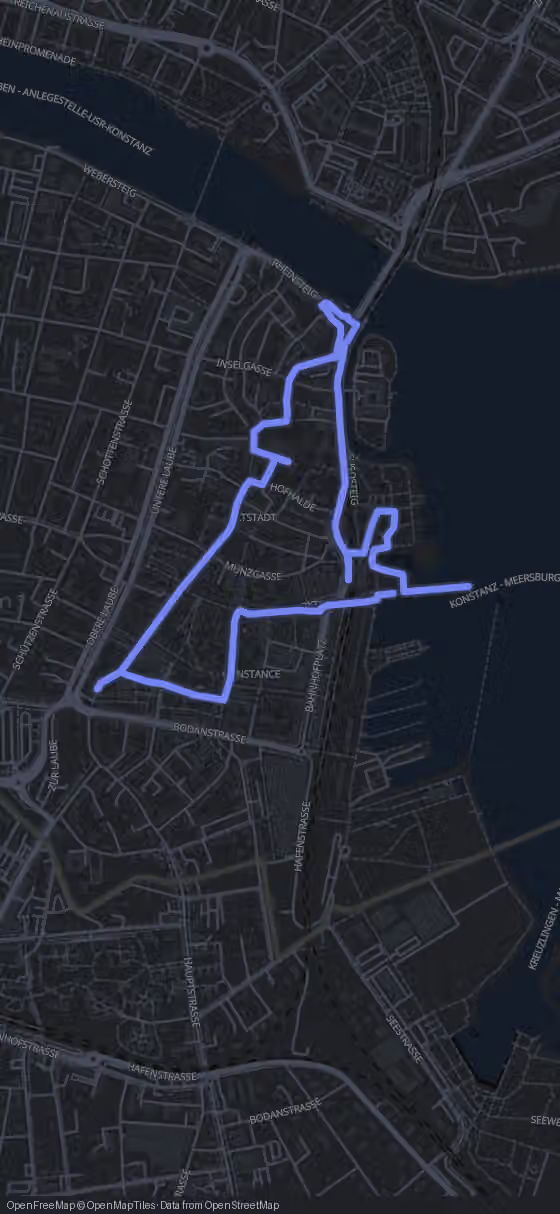
This route links ten stops over 3.2 km, starting at Constance Harbour and ending at the Imperia Statue by the harbour entrance. Pure walking time is 45 min; with a few interiors plan about two and a half hours, with every museum about four.
Your Constance Walking Tour Stop by Stop, from Guild House to Rotating Statue
1
Constance Harbour
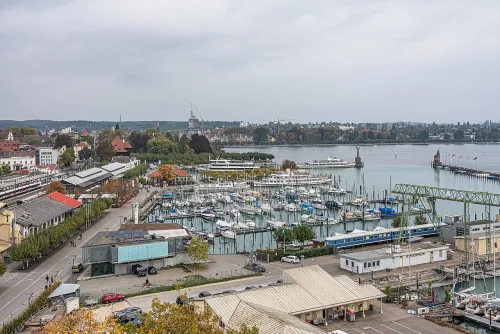
Start where the city meets the lake. The harbour and its shore promenade are public space, free and open around the clock, so you can begin whenever suits you. Take a moment to look along the waterfront before heading into the streets: this is where Constance made its money.
For centuries goods moved through this harbour, carried between northern Italy and the Upper Rhine. The great stone warehouse the city built for them in 1388 still stands near the water, and you will reach it on the way back as the Konzilgebäude.
The route makes a loop: from here it heads into the old town through squares, museums and gates, then returns to the lake and finishes at the Imperia Statue at the harbour entrance. That means no separate return leg to plan. The first leg to the Marktstätte is short, 240 m and 4 min.
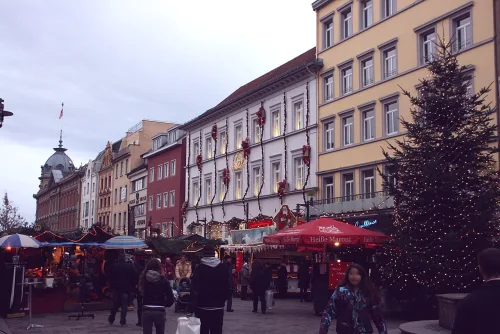
The Marktstätte is the central square and pedestrian zone of the old town, the place its streets run together. For this walk it works as a switchboard: museums, Minster and city gates all branch off from here. Nothing to buy, nothing to queue for. Get your bearings and keep moving.
If you are here on a hot summer afternoon, expect company. On those days Swiss day-trippers fill the old town, and the square sits right in the middle of it. The calm window is a midweek morning before 11:00. Either way you will be through in minutes.
The Rosgartenmuseum is just 140 m away, a 2 min walk.
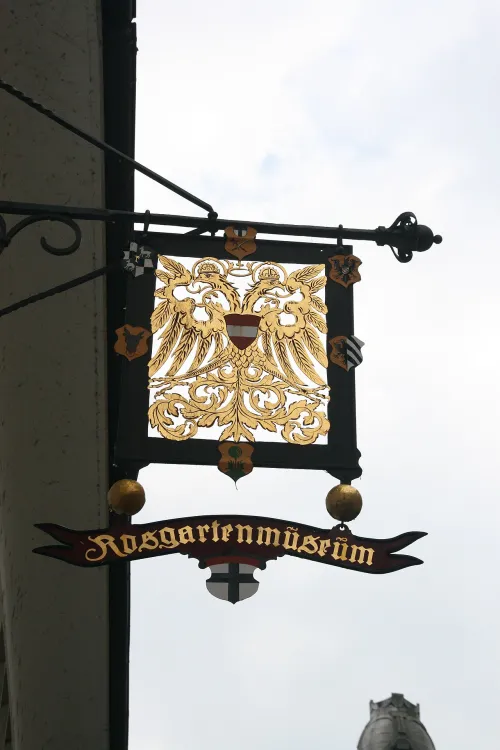
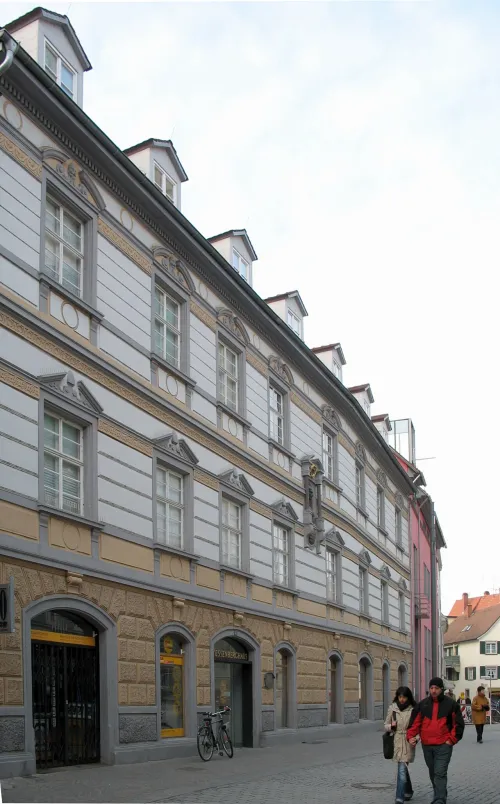
Before you go in, look at the portal. The two coats of arms there belong to the houses that make up the building: 'Zum Rosgarten', first mentioned in 1324, and 'Zum Schwarzen Widder', joined to it in 1454. In the Middle Ages this was the guild house of the butchers, grocers, apothecaries, potters and rope makers, a place where the town's tradespeople met and ran their affairs.
The museum itself dates from 1870, founded by Ludwig Leiner, a Constance pharmacist and town councillor. His own collection and several private ones were merged to create a city museum of art, culture and history for Constance and the lake region, one of the oldest of its kind in the area. Today it holds around 50,000 objects, from Stone Age finds and medieval altar paintings to carved church figures, works by local artists, everyday things from the last two centuries and private letters and photographs.
Do not skip the Leinersaal, named after the founder and kept as a museum within the museum. Its cases tell the story of the earth and of life up to the Bronze Age people of the lake: Jurassic fossils, finds from the end of the Ice Age and a large number of objects from the prehistoric pile-dwelling settlements on the shore.
Worth the admission if you want the whole sweep of Constance history in one place before the Council stories begin; give it about an hour. Next comes the Hus-Museum, 420 m and 6 min away.
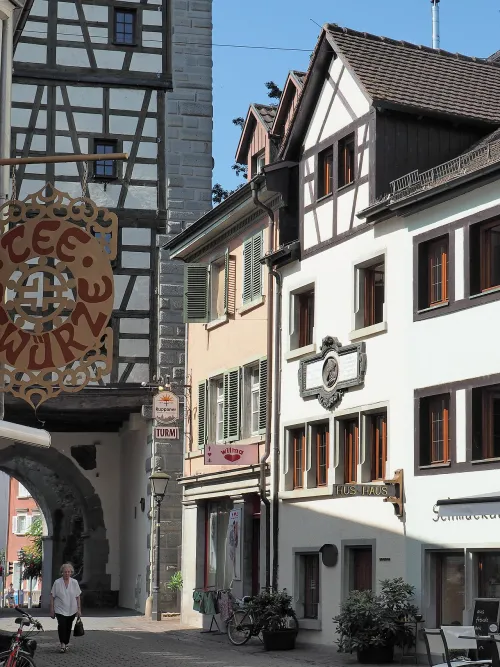
This half-timbered house from the 15th or 16th century stands in the Hussenstraße, near the Schnetztor. It is dedicated to Jan Hus, the Prague reformer who came to Constance and died in this city.
Hus arrived on 3 November 1414 and stayed free for less than four weeks, until his arrest on 28 November. During that time he lodged with his companions at the house of a widow named Pfister in the Paulsgasse, as a chronicle of the Council records. The street was renamed Hussenstraße in 1873. Whether Hus lived in exactly this house has never been proven beyond doubt, which is worth keeping in mind as you look up at the façade.
The house has an unusual history of its own: the Czechoslovak state bought it in 1922 and handed it a year later to the Hus Museum Society in Prague. The exhibition, reworked in 2014 with the Hussite Museum in Tábor, follows Hus as a dean, his journey to Constance and the course of his trial, with facsimiles, photographs and a multimedia 'heretic test' for visitors.
Entry is free, so step in even if you only have twenty minutes. From here it is the longest leg of the route, 650 m and 9 min, to the Minster.
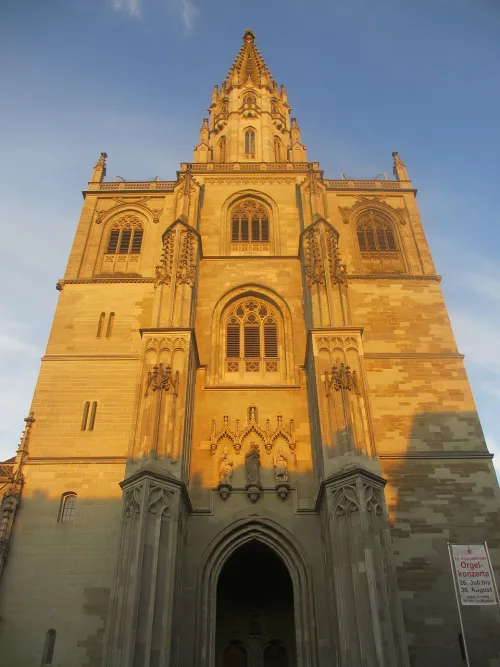
The Minster is the tallest building of the largely medieval old town, and its outline has shaped the view of Constance for centuries. Its roots go back to the founding of the bishopric around the year 600; it is first documented in 780. For roughly twelve centuries it was the cathedral of the bishops of Constance, and between 1414 and 1418 it served as the session hall of the Council. Since the diocese was dissolved in 1821 it has been a parish church.
What you see is layered. The core is a Romanesque basilica with three aisles and a cross-shaped plan, consecrated in 1089 and one of the largest Romanesque churches in southwest Germany. Gothic builders added the broad west tower block with its portal and the rows of side chapels, while the pointed spire on top only dates from the 19th century. Inside, Baroque, Neoclassical and neo-Gothic furnishings overlap; the Romanesque and Gothic fittings survive only in places.
Look for the Romanesque Mauritius Rotunda with its early Gothic Holy Sepulchre, a pilgrim destination on the Way of St James.
The church is free. The tower costs extra, and if you want the old town and the lake laid out at your feet, it is the one paid add-on on this route worth choosing. The Wessenberg-Galerie is right next door, 70 m and 1 min away.
Local name
Konstanzer Münster
Hours
Daily 10:00–18:00
Price
Church free; tower climb 4 EUR (reduced 2.50 EUR, ages 8–17 1 EUR, under 8 free)
The gallery occupies the house where Ignaz Heinrich von Wessenberg lived and died. He was the last administrator of the diocese of Constance, and his bequest created the city's first museum.
When he died on 9 August 1860, Wessenberg left the town 357 copper engravings and 77 lithographs, mostly reproductions of famous Italian paintings, meant for teaching drawing students, along with his large library. His paintings went to Grand Duke Friedrich I of Baden, on condition that 20,000 guilders be paid to charities of his choosing. The Grand Duke agreed within the month but ruled that the pictures should stay in Constance for the education of the public. Collected largely on Wessenberg's travels, they include many Italian and Dutch masters, mostly religious scenes along with landscapes, genre pictures and portraits.
Today the gallery focuses on changing exhibitions of 19th and 20th century art from southwest Germany and the Lake Constance region, with a small display from Wessenberg's collection and a cabinet showing works by Hans Meid, changing each year.
Go in if the current exhibition appeals to you; it charges admission. Then walk 450 m, about 6 min, to the Rheintorturm.
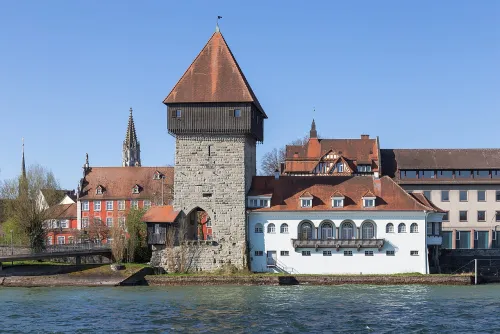
A city gate tower that opens far less often than the other stops on the route, so you may well find it closed. Entry is free, with donations asked for the citizens' initiative that looks after the tower. Included in the visit is a small carnival museum. When the tower is shut, you see it from outside and the museum not at all.
The museum explains a big part of local life. The Constance Fasnacht is one of the oldest and most elaborate Swabian-Alemannic carnivals, with close to a hundred guild groups in hand-carved wooden masks moving through the medieval lanes. Its dates move with the church year.
Outside opening hours, this is a quick look at the old gate on your way to the lake. The Konzilgebäude is 600 m ahead, 8 min on foot.
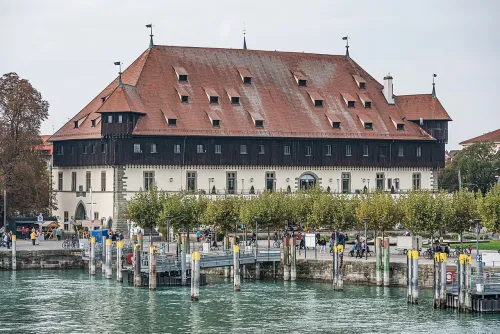
Despite its name, this massive three-storey stone building with its hipped roof was built as a warehouse. In 1387 a delegation of Milanese merchants came looking for a base for long-distance trade, because Swiss wars had shifted the route over the Alps, and much of the trade between northern Italy and the Upper Rhine ran through Constance. The town council decided that a house should be built to store the goods of the Milanese and other foreigners, and 'it should last'.
It did. Under master builder Arnold, work ran from March 1388 to 1391. The building rests on hundreds of oak piles driven into the damp lake bed, and it stood right on the shoreline of the time as part of the eastern town wall. Cranes in the oriels hoisted goods straight from the boats into the upper floors; short-term wares stayed on the ground floor, while durable goods and trading went on higher up. For almost 500 years it was the goods exchange of the harbour.
Its most famous moment came in 1417, when the conclave of the Council of Constance met here and elected Pope Martin V. It is considered the largest surviving medieval secular building in southern Germany.
Since 1912 it has been a restaurant, banqueting hall and congress centre. The outdoor area and pier are always accessible, so this is the natural place for a meal or a drink on the walk. The Stadtgarten is 200 m away, 3 min.
Hours
Restaurant: daily 09:30–22:00 (kitchen until 21:30); outdoor area and pier continuously accessible
Every walk needs one place that asks nothing of you. The Stadtgarten is it: a public park on the lakeshore, always open, always free, and the natural pause before the last leg. Sit down and look at the water. The final stop will not run away; well, it rotates, but slowly.
In summer the park earns its crowds. The four-day wine festival fills it in late July, and the free Sommernächte festival runs here on the evenings before the Seenachtfest fireworks in early August. On an ordinary day it is the quietest stretch of the route, unless a hot afternoon has drawn half the neighbourhood to the shore.
From here it is 380 m, 7 min, to the Imperia Statue.
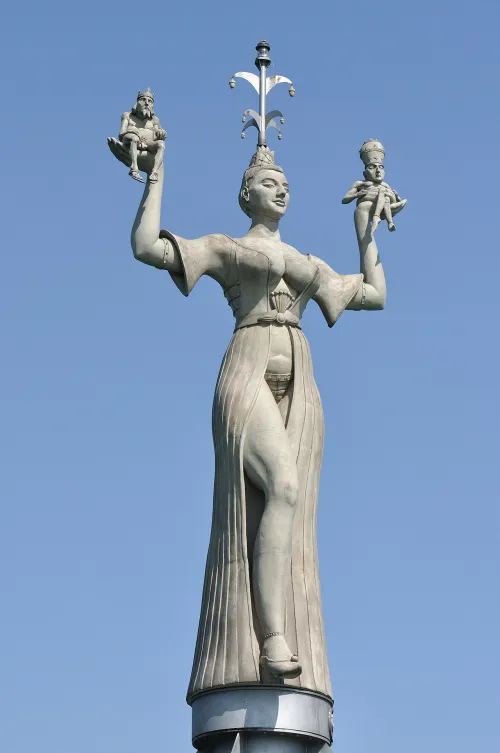
The walk ends with a provocation. The Imperia, by the sculptor Peter Lenk, was set up at the harbour entrance on 24 April 1993: a cast concrete figure nine metres tall and weighing 18 tonnes. During the day a turntable rotates her once around her own axis, counterclockwise, in about four minutes, so wait a few minutes and you see her from every side. Her base holds an older water level gauge, surrounded by a walkway.
She is a voluptuous courtesan in a low-cut gown held shut by a belt, and the idea comes from a bawdy tale by Honoré de Balzac. In her raised hands she holds two naked little men. The one on the right wears a king's crown and holds an imperial orb; the one on the left wears a papal tiara and sits with legs crossed. Whether they portray Emperor Sigismund and Pope Martin V, the powers of the Council, or simply stand for worldly and spiritual power is left open. Lenk himself sees them as naked jesters who have helped themselves to the symbols of power.
The satire aims at the Council, at the church's critics' old charge of rule by mistresses, and at centuries of patriarchy: emperor and pope as playthings of their own desires, with Imperia the one who really holds power. Once controversial, she has been a protected monument since August 2024.
Free and open at all times, she closes the loop. You are back at Constance Harbour, where you began.
All 10 stops are already on the map. You just press start.
AI Tour Guide
You just read the route. Now walk it from the harbour with a guide in your ear.
Press start wherever you are, even hundreds of kilometres from Constance, and the guide begins telling its stories right away. In the city, pick any of the 10 stops to start from: it leads you there, then talks with you the whole route, asking, listening, remembering, and shaping the tour around your answers.
Free to start · Runs in your browser · No app, no download
Three Ways to Walk Old Constance
The full line works for most people, but the route also splits neatly by budget, by theme or by the time you have left.
All ten stops, free entry only
Stops: 1, 2, 3, 4, 5, 6, 7, 8, 9, 10
For anyone on a tight budget. Walk the whole line (45 min of walking) and go inside only where it costs nothing: the Hus-Museum, the nave of the Minster and, when it is open, the Rheintorturm. You pass the Rosgartenmuseum and the Wessenberg-Galerie from the outside.
The Council of Constance trail
Stops: 4, 5, 8, 10
For history lovers. Start at the Hus-Museum, where the story of the trial begins, continue to the Minster where the Council sat, on to the Konzilgebäude where the conclave of 1417 chose a pope, and finish at the Imperia, the satire of it all. Following the route line from the Hus-Museum to the statue takes 34 min of walking; every one of these four stops is free.
Lakeside finale
Stops: 8, 9, 10
For a short evening stroll or a last hour before the train. Konzilgebäude, Stadtgarten and Imperia Statue sit 580 m apart in total, 10 min of walking, all of it free and open at any hour outdoors.
How Long This Constance Tour Takes, With and Without the Museums
The pure walking time is 45 min over 3.2 km, in short legs: the longest, from the Hus-Museum to the Minster, is 650 m. The time goes into the interiors. Allow about an hour for the Rosgartenmuseum, half an hour for the Hus-Museum, forty minutes for the Minster with its tower, and around forty-five minutes for whatever exhibition the Wessenberg-Galerie is showing.
Add those up with short pauses at the open-air stops and you are at about four hours. Choosing only the free interiors brings it to around two and a half hours; the Council trail fits into roughly two hours with the Minster tower, and the lakeside finale into half an hour.
Before You Set Off in Constance
Start and finish: The recommended start is Constance Harbour, and the walk ends at the Imperia Statue at the harbour entrance, so there is no separate way back to plan. You can join at any stop; on request the GPS navigation in your browser leads you from the last stop back to the start.
Best day: Pick a day when the Rosgartenmuseum, the Hus-Museum and the Wessenberg-Galerie are all open, since they share a rest day. The Rheintorturm opens far less often than the rest, so plan around it if you want to go inside.
Time of day: A morning start with the Rosgartenmuseum first lines up well with the Hus-Museum later on.
Costs: The Rosgartenmuseum, the Wessenberg-Galerie and the Minster tower charge admission, with reduced tickets available. Everything else on the route is free; the Rheintorturm asks for a donation.
AI Tour Guide
Your guide is ready at the harbour when you are.
Press start and a voice AI Tour Guide takes it from here: leading the route through Constance, telling the stories, and turning your walk into a real back-and-forth conversation. No app or download is needed; it runs in your browser.
Free to start · Runs in your browser · No app, no download
What the AI Tour Guide Adds in the Council City
On this route the AI Tour Guide turns ten separate places into one conversation about a city that once hosted the whole of Latin Christendom. It greets you at the harbour, tells the stories as you walk, asks what you want more of, whether pile dwellings, popes or carnival masks, and remembers it for the next stop. Ask it how merchants from Milan haggled in a medieval warehouse, or what a juror at a heresy trial would have believed, and interrupt whenever you like. You start with 100 free credits; after that you choose between this tour all-inclusive for €19.99 with no time limit, or €5 per hour.
A Real Conversation
A voice AI Tour Guide greets you, leads the whole route, and tells the stories and facts as you walk, asking what you want to see and keeping a real conversation going. Not a recording you press play on.
Map Navigation
Follow the route on the map and walk at your own pace. You choose where to start and when to move to the next stop.
Ask Anything
Curious about a building you pass? Ask your AI Tour Guide on the spot and the conversation carries on.
13 Languages
Switch language anytime. No separate tour needed.
No. It opens only at limited times, so it is easy to find it closed. When it is open, entry is free with a donation requested and a small carnival museum is included; otherwise you see the gate tower from outside only.
Can I eat inside the Konzilgebäude?
Yes. The building houses a restaurant, and the outdoor area and the pier are accessible at all times.
Can children climb the Minster tower?
Yes. The youngest go up free, and children and teenagers pay a reduced price for the climb. Entry to the church itself is free.
Yes. The whole tour is free: the route, the interactive map and the navigation cost you nothing. Only the voice AI Tour Guide is optional and paid: you test it with 100 free credits, then you pay either €5 per hour or €19.99 for this whole tour, with no time limit. Admission to 2 of the 10 stops is not included: Rosgartenmuseum and Wessenberg-Galerie charge their own entry fees.
Do I need to download an app?
No. Everything runs in your phone browser. Open the route and start walking, no download and no sign-up required.
Do I need to book the walking tour in advance?
No booking needed. This self-guided tour is available anytime. Open the route in your browser and start walking. The AI Tour Guide works instantly, no app, no reservation required.
What languages is the AI Tour Guide available in?
The AI Tour Guide speaks 13 languages, so you take the tour in your own language and can switch at any time.
Can I skip stops or change the route?
Yes. Skip any stop, spend extra time at places you like, or start the route from any point. It is your walk, you set the pace.