Free Walking Tour Luxembourg City: Old Town to Kirchberg

From the old parade ground of Place d'Armes through the fortress casemates to the acorn-topped towers of Fort Thüngen, with free GPS directions all the way.

14 Stops 4.9 km ~1 h 13 min walking
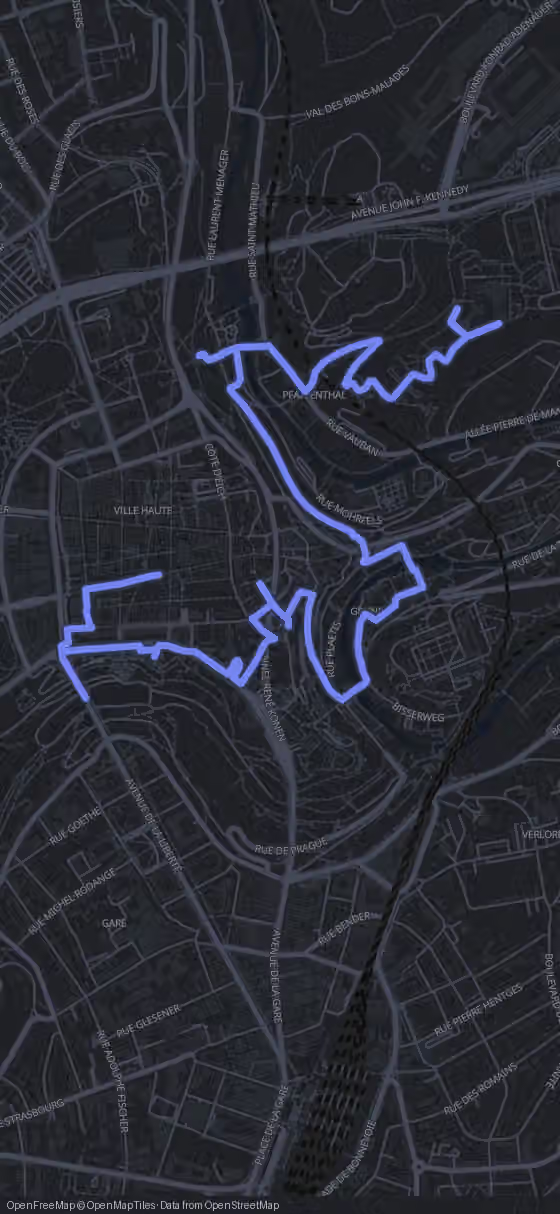
Route map for the Luxembourg City walking tour
Stop 1 of 14
250 m·3 min
Place d'Armes
Head south-west toward Casino Luxembourg
Welcome to Luxembourg City. I'm Alex, and this fortress capital knows how to raise a fallen symbol.
Try this tour with Alex

This Luxembourg City Route at a Glance

Fourteen stops, 4.9 km, from Place d'Armes in the old town through Grund to the Dräi Eechelen Museum on the Kirchberg plateau. Pure walking time is 1 h 13 min; with the interiors worth your time, count on a full day.

The squares, bridge, cathedral, abbey and panoramic lift cost nothing; the Pétrusse Casemates and three museums charge admission. Route, map and GPS navigation run free in your browser, and the optional AI Tour Guide tells the stories as you walk.

Open free GPS & optional AI Tour Guide
View of Luxembourg City

The Route

Walking Map of Luxembourg City: Old Town, Grund and Kirchberg

14 stops 4.9 km 1 h 13 min walking
Tap to load interactive map

The 14 stops along this route

  1. Place d'Armes in Luxembourg City, stop 1 on the self-guided walking tour
    1Place d'Armes
  2. Casino Luxembourg – Forum of Contemporary Art in Luxembourg City, stop 2 on the self-guided walking tour
    2Casino Luxembourg – Forum of Contemporary Art
  3. Adolphe Bridge in Luxembourg City, stop 3 on the self-guided walking tour
    3Adolphe Bridge
  4. Gëlle Fra Monument in Luxembourg City, stop 4 on the self-guided walking tour
    4Gëlle Fra Monument
  5. Pétrusse Casemates in Luxembourg City, stop 5 on the self-guided walking tour
    5Pétrusse Casemates
  6. Notre-Dame Cathedral in Luxembourg City, stop 6 on the self-guided walking tour
    6Notre-Dame Cathedral
  7. Place Clairefontaine in Luxembourg City, stop 7 on the self-guided walking tour
    7Place Clairefontaine
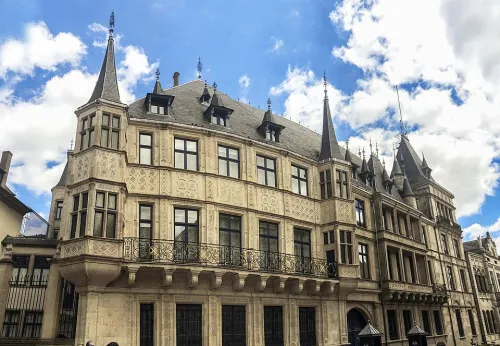
  8. Grand Ducal Palace in Luxembourg City, stop 8 on the self-guided walking tour
    8Grand Ducal Palace
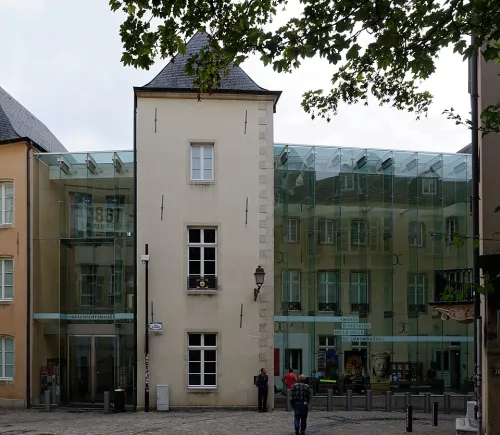
  9. Luxembourg City History Museum, stop 9 on the self-guided walking tour
    9Luxembourg City History Museum
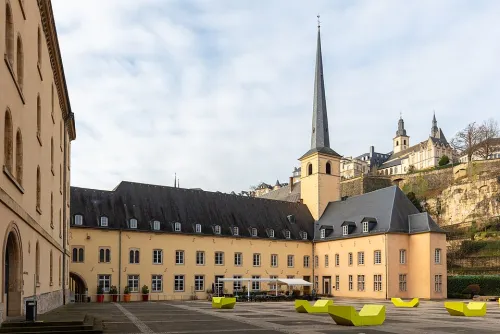
  10. Neumünster Abbey in Luxembourg City, stop 10 on the self-guided walking tour
    10Neumünster Abbey
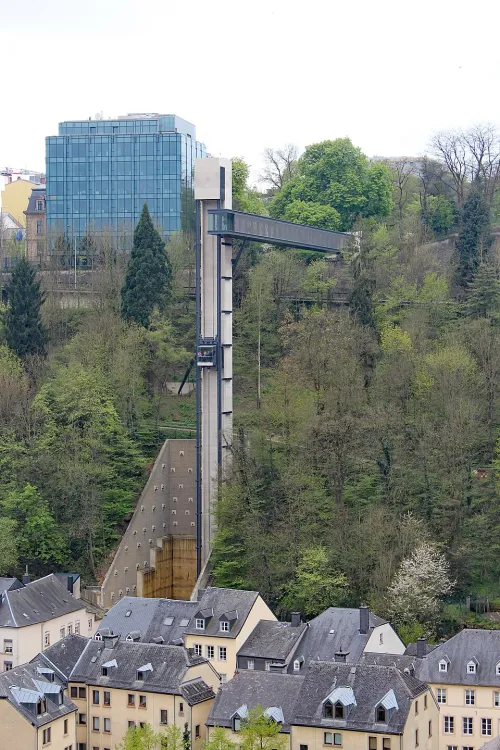
  11. Pfaffenthal Panoramic Lift in Luxembourg City, stop 11 on the self-guided walking tour
    11Pfaffenthal Panoramic Lift
  12. Mudam Luxembourg (Museum of Modern Art) in Luxembourg City, stop 12 on the self-guided walking tour
    12Mudam Luxembourg (Museum of Modern Art)
  13. Fort Thüngen (Three Acorns) in Luxembourg City, stop 13 on the self-guided walking tour
    13Fort Thüngen (Three Acorns)
  14. Dräi Eechelen Museum in Luxembourg City, stop 14 on the self-guided walking tour
    14Dräi Eechelen Museum
  15. That's the full route.

    Walk it with an AI Tour Guide talking you through every one of these streets.

    Start free in your browser
    You made it

The Luxembourg City Walking Tour in 14 Stops

  1. 1

    Place d'Armes

    Place d'Armes in Luxembourg City, stop 1 on the self-guided walking tour

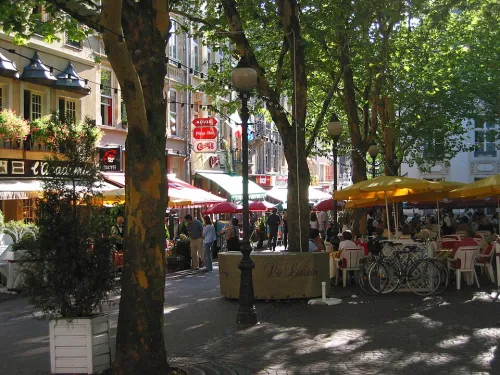
    Start where the city's soldiers once drilled. Place d'Armes sits in the middle of the old town, ringed by cafés whose terraces spill onto the pavement in summer, and it is still where Luxembourg meets, locals and visitors of every age. Find the bandstand in the centre: on summer evenings visiting bands and music groups give concerts from it.

    The square owes its shape to a disaster. In 1554 gunpowder exploded in the church of the Franciscan convent, and the fires destroyed much of the upper town. Dutch military engineer Sebastian van Noyen drew up a reconstruction plan, and in 1561 Thomas Mameranus submitted an evolved version with a Forum Novum of 96 by 64 metres at the centre of a grid of streets, about the size of the Grand-Place in Brussels at the time. In 1671 the Spanish engineer Jean Charles de Landas, Count of Louvigny, laid out a slightly smaller square on the same spot. Because the garrison paraded here, it became the Place d'Armes, and under Louis XIV it was paved with flagstones and lined with lime trees.

    At the eastern end stands the Cercle Cité, built as an administrative building with reception rooms; the structure was finished in 1906, the interior only in 1909. Look up at the façade for the frieze by P. Federspiel showing Countess Ermesinde granting the Charter of Emancipation in 1244, which set out the citizens' rights and duties toward the nobility.

    If you are here on the second or fourth Saturday of the month, a flea market fills the square, and in December the Christmas market moves in. From here it is 270 metres, about three minutes, to Casino Luxembourg.
    Hours
    24/7
    Price
    Free
  2. 2

    Casino Luxembourg – Forum of Contemporary Art

    Casino Luxembourg – Forum of Contemporary Art in Luxembourg City, stop 2 on the self-guided walking tour

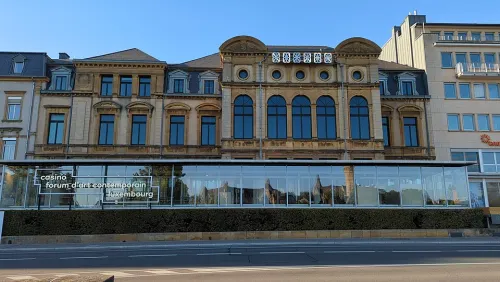
    Despite the name, nobody gambles here any more. Casino Luxembourg is a free forum for contemporary art, showing temporary exhibitions in a 19th-century building with a large glass and steel pavilion attached to its south side.

    It opened in 1882 as the Casino Bourgeois, designed by the Luxembourg architects Pierre and Paul Funck. Gaming was only part of it: there was a reading room, a restaurant and large halls for lectures, balls, plays, concerts and art exhibitions. Franz Liszt gave his last piano recital here on 19 July 1886. During the First World War the building served as the Kaiser's headquarters.

    After the State bought it, it was rented in 1959 to the Cultural Circle of the European Communities and became the Foyer Européen; the glass pavilion by René Maillet dates from that year. For 1995, when Luxembourg City was European Capital of Culture, the Swiss artist Urs Raussmüller filled the rooms with open-topped white cubes to create far more hanging space than the old walls offered. In March 1996 the building took on its current role.

    Is it worth going in? If contemporary art interests you at all, yes: it costs nothing, and even twenty minutes gives you a sense of the space. Book lovers should look for the Infolab, a public library with some 7,000 publications on art since the 1960s. The Adolphe Bridge is 240 metres away, about four minutes on foot.

    Hours
    Mon, Wed, Fri–Sun 11:00–19:00, Thu 11:00–21:00, Tue closed
    Price
    Free
  3. 3

    Adolphe Bridge

    Adolphe Bridge in Luxembourg City, stop 3 on the self-guided walking tour

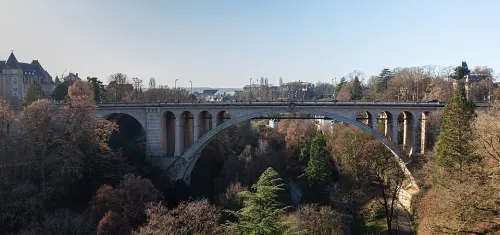
    The Adolphe Bridge carries you across the Pétrusse on a double-decked stone arch, from Boulevard Royal in the upper town to Avenue de la Liberté on the Bourbon Plateau. The upper deck, 153 metres long, takes road traffic, two footpaths and, since 13 December 2020, trams in both directions. Suspended under it hangs a second deck, 154 metres long and opened in 2018, with a two-way cycle path that pedestrians may use too. Walk one deck and look at the other; the two give quite different views of the arch.

    The bridge was designed by the Frenchman Paul Séjourné and the Luxembourger Albert Rodange and built between 1900 and 1903. It is named after Grand Duke Adolphe, who reigned from 1890 to 1905 and was the first to hold the title without also wearing another crown. The design travelled: the Walnut Lane Bridge in Philadelphia copies it.

    Why build a bridge here at all? After the 1867 Treaty of London the fortress was demolished, the city lost its strategic role and began to grow south across the Pétrusse, where the railway station already stood. Locals still call this the New Bridge, more than a century later; the old one is the Passerelle, built between 1859 and 1861. Today the Adolphe Bridge is an unofficial symbol of Luxembourg's independence.

    From the bridge it is 380 metres, about six minutes, to the Gëlle Fra on Place de la Constitution.

    Hours
    24/7
    Price
    Free
  4. 4

    Gëlle Fra Monument

    Gëlle Fra Monument in Luxembourg City, stop 4 on the self-guided walking tour

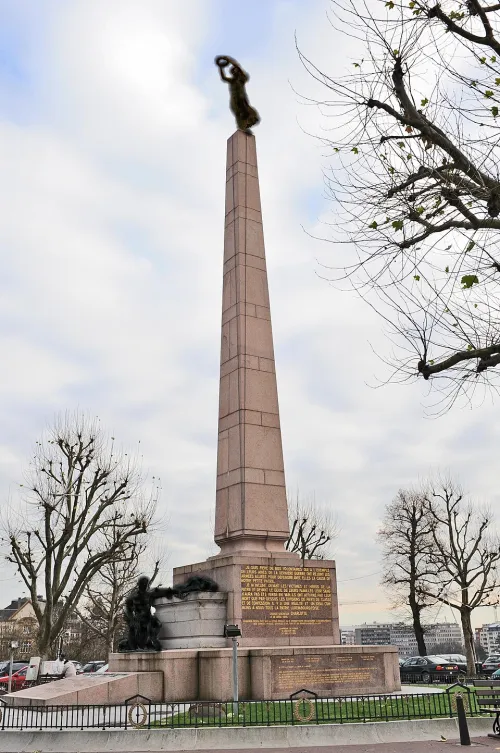
    Officially it is the Monument of Remembrance, but everyone calls it the Gëlle Fra, Luxembourgish for Golden Lady. A 21-metre granite obelisk carries a gilded bronze Nike, goddess of victory, also called the Queen of Freedom, holding out a laurel wreath as if placing it on the head of the nation.

    Look at the foot of the obelisk: two bronze soldiers, not gilded. One lies dead in the service of his country, the other sits beside him in mourning. All three figures are by the Luxembourg sculptor Claus Cito. Who modelled for the Golden Lady is unknown.

    The monument was inaugurated in 1923 and honours the thousands of Luxembourgers who volunteered for the Allied forces in both World Wars and the Korean War, as well as those who joined the International Brigades in the Spanish Civil War. One French inscription, under the name of Marshal Foch, salutes the volunteers of 1914 to 1918 who fought on the Marne, the Aisne and the Somme, in Artois and Champagne and at Verdun.

    Why did they volunteer? Luxembourg had declared neutrality in the First World War but was occupied by Germany anyway. Most Luxembourgers feared annexation in the event of a German victory, and the Septemberprogramm approved by Chancellor Theobald von Bethmann Hollweg proved them right. The entrance to the Pétrusse Casemates is just 80 metres away, a one-minute walk.

    Hours
    24/7
    Price
    Free
  5. 5

    Pétrusse Casemates

    Pétrusse Casemates in Luxembourg City, stop 5 on the self-guided walking tour

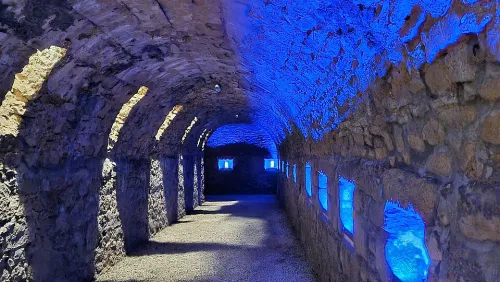
    Here the route goes inside the fortress. The Pétrusse Casemates take you into the underside of the old fortress city, the part you have been walking on top of since the bridge. Seeing it from within changes how you read everything that follows, right up to Fort Thüngen at the end of the route.

    The visit is easy to fit in. Groups go in every 15 minutes and a visit lasts at most 45 minutes, so you simply join the next departure and are out again within the hour.

    It is the priciest ticket on the route, more than any of the three museums, yet if you pay for only one interior in Luxembourg City, make it this one. Do it now rather than coming back later.

    Back in daylight, the Notre-Dame Cathedral is 170 metres away, about two minutes.

    Hours
    Daily 09:45–17:00 (departures every 15 min; max duration 45 min)
    Price
    12.60 EUR adults, 10.15 EUR students and seniors (60+), 6.30 EUR children 4-12, free under 4
  6. 6

    Notre-Dame Cathedral

    Notre-Dame Cathedral in Luxembourg City, stop 6 on the self-guided walking tour

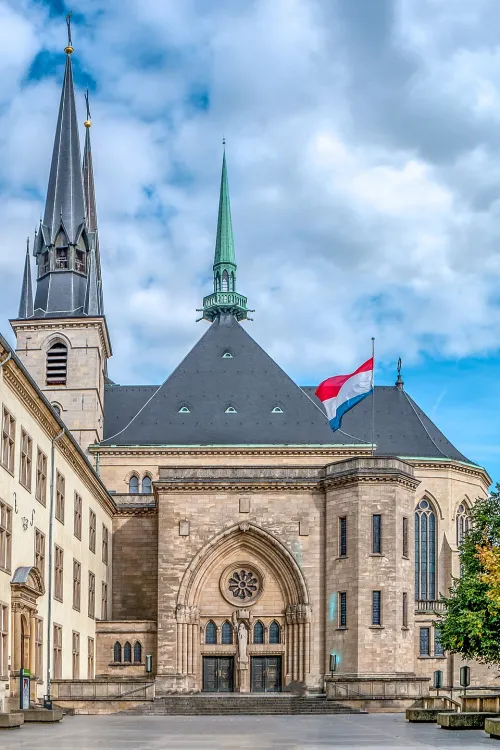
    Luxembourg's only cathedral started life as a Jesuit church. From outside it reads as late Gothic, but go in and you find many Renaissance elements. Look for the organ tribune by the German sculptor Daniel Muller from Freiberg in Saxony, and for the alabaster decoration, a favourite material of Dutch Renaissance sculptors: early Baroque angels making music among leaves and flowers.

    Jesuits from Belgium, which like Luxembourg then belonged to the Spanish Netherlands, opened a college here in 1603, and until 1773 most young Luxembourgers were taught there. The first stone of their church was laid on 7 May 1613 under Father François Aldenard; the builder was Ulrich Job from Lucerne, who also oversaw the decoration of the columns. The church was consecrated to the Immaculate Conception on 17 October 1621.

    Its central figure is Our Lady of Consolation, patron saint of both city and nation. Pope Pius IX granted a decree of coronation for her image on 24 June 1866, and Cardinal Karl-August von Reisach performed the rite on 2 July 1866. In 1870 the church was raised to cathedral, and between 1935 and 1938 it was enlarged.

    At the cathedral cemetery stands the National Monument to the Resistance and to the Deportation, centred on Lucien Wercollier's bronze The Political Prisoner. Remember the name: you will meet Wercollier again at Neumünster Abbey. Entry is free, and twenty minutes inside is well spent. Place Clairefontaine is 260 metres on, about four minutes.

    Hours
    Mon–Sat 08:00–18:00, Sun 08:00–19:00
    Price
    Free
  7. 7

    Place Clairefontaine

    Place Clairefontaine in Luxembourg City, stop 7 on the self-guided walking tour

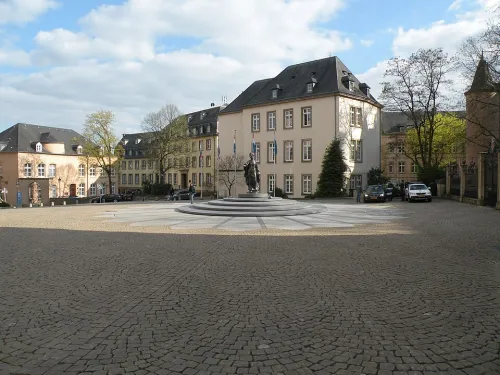
    This quiet square lies between the cathedral and the Chamber of Deputies, in the political heart of the country. Since 1990 it has held the monument to Grand Duchess Charlotte; beside it stands the Ministry of Foreign Affairs, and the Minister of State also has his seat here.

    The square in its present form dates from the late 1980s, when the surrounding quarter was extensively restored and partly rebuilt. Before that, a street ran here: the Rue de Clairefontaine, in German Badenburgergasse or Bardenburgergasse. It was named after a refuge belonging to the former Clairefontaine Abbey near Arlon, a town house the monks used, which was pulled down in 1933.

    Take a moment with Charlotte's monument, because her story continues at the next stop. The Grand Ducal Palace is just 150 metres away, two minutes on foot.

    Hours
    24/7
    Price
    Free
  8. 8

    Grand Ducal Palace

    Grand Ducal Palace in Luxembourg City, stop 8 on the self-guided walking tour

    This is where the Grand Duke works as head of state, even though he lives mainly at Berg Castle in Colmar-Berg. Soldiers of the Luxembourg army stand guard at the door, as they have since 1966; before that, from 1945, the Grand Ducal Guard did the job.

    The building has served many masters. It was the city hall from 1572 to 1795, then the seat of the prefecture of the Département des Forêts, and from 1817 the headquarters of the government and the residence of the governor who represented the Dutch grand dukes, among them Prince Henry. Its interior was renovated in 1883 for a visit by King William III and Queen Emma. When the House of Nassau-Weilburg took the throne in 1890, the palace was reserved for the grand ducal family, and under Grand Duke Adolphe the Belgian architect Gédéon Bordiau and state architect Charles Arendt added a new wing with family rooms and guest quarters.

    Its darkest years came in the Second World War, when the Nazis used it as a concert hall and tavern, hung huge swastika flags down the front and ruined much of the furniture, art and jewels. Grand Duchess Charlotte returned from exile in 1945 and made it the seat of the court again; she oversaw its redecoration in the 1960s, and between 1991 and 1996 it was thoroughly restored.

    The interior opens only for guided summer tours, and this year's season sold out and is over. For now, enjoy the façade and the guard, then walk 120 metres, one minute, to the History Museum.

    Hours
    Summer tours only (2026 season: 18 July to 30 August, sold out; reopens spring/summer 2027)
    Price
    18 EUR adults, 9 EUR children 4-12, free under 4
  9. 9

    Luxembourg City History Museum

    Luxembourg City History Museum, stop 9 on the self-guided walking tour

    If the casemates showed you the fortress, this museum shows you the whole city across a thousand years. It occupies four restored houses on the rue du Saint-Esprit, built between the 17th and 19th centuries and still bearing traces from the Middle Ages. Luxembourg architect Conny Lentz and the Paris firm Repérages joined them with modern additions such as a floating glass façade, and the museum opened on 22 June 1996.

    The highlight is the panoramic lift, a huge glass cage that holds up to 65 people. On the way through the building you see the rock foundations on the lower levels, then the Grund district and the Rham plateau from the upper ones, the city's history laid out layer by layer. Look out for the vaulted cellars, found during excavations in the early 1990s.

    The floors under the street-level entrance hold the permanent collection on how the town grew and was built; the upper floors host temporary exhibitions. A multimedia system running through the building gives access to some ten thousand documents and almost sixty audiovisual sequences.

    Plan about an hour; the museum charges admission. Then walk 740 metres, about eleven minutes, to Neumünster Abbey in Grund, passing the National Museum of Natural History on the way.

    Local name
    Musée d’histoire de la ville de Luxembourg
    Hours
    Tue–Wed, Fri–Sun 10:00–18:00, Thu 10:00–20:00, Mon closed
    Price
    5 EUR adults, 3 EUR seniors (60+) and youth 21-26, free under 21, free Thu 18:00-20:00
  10. 10

    Neumünster Abbey

    Neumünster Abbey in Luxembourg City, stop 10 on the self-guided walking tour

    In Grund, the former Benedictine abbey of Neumünster has been a public cultural meeting place since 1977, with concerts, exhibitions and seminars. Its courtyard hosts open-air concerts in summer, and the line-ups have included alt-J, Iggy Pop, Kraftwerk, Massive Attack, PJ Harvey, Sigur Rós and Tears for Fears.

    The monks did not start here. Their first abbey stood on the Altmünster plateau and was destroyed in 1542; in 1606 they built a new one at Neumünster. Fire destroyed that in 1684, it was rebuilt in 1688 and enlarged in 1720. After the French Revolution the monks were driven out, and the buildings became a police post and prison, then a Prussian barracks after Napoleon's defeat in 1815, and from 1867 the state prison.

    Inside, the Lucien Wercollier cloister permanently displays works from the sculptor's private collection, the same artist whose Political Prisoner stands by the cathedral. History was made here too: on 25 April 2005 the treaty bringing Bulgaria and Romania into the European Union was signed in the abbey. Since 1997 it has also housed the European Institute of Cultural Routes.

    Entry is free, and half an hour in the cloister and courtyard is time well spent. The next leg is 1,020 metres, about 15 minutes, to the Pfaffenthal Panoramic Lift.

    Hours
    Daily 10:00–18:00
    Price
    Free
  11. 11

    Pfaffenthal Panoramic Lift

    Pfaffenthal Panoramic Lift in Luxembourg City, stop 11 on the self-guided walking tour

    Luxembourg City is built on plateaus cut by deep gorges, and this public lift links two of its levels: the historic centre of the Ville Haute and Pfaffenthal in the Alzette valley. The ride itself is the attraction, with open views over the valley, and it is free.

    It is one of three such links, together with the Grund lift and the Pfaffenthal to Kirchberg funicular. City planners began looking for a mechanical connection in 2006 to make walking and cycling between the levels easier, to bring more visitors into Pfaffenthal and to open up the former fortifications, a UNESCO World Heritage site, among them the Béinchen, a 17th-century fortified bridge over the Alzette designed by Vauban.

    A 2007 study weighed a funicular, escalators and cable cars before choosing a lift: cheaper to build and maintain, suited to Pfaffenthal's tight streets and gentle on the World Heritage sites. The council approved 7,573,950 euros on 16 February 2009 and broke ground on 10 December that year, but securing the hillside cutting proved so difficult that construction was delayed by four years.

    Now comes the longest leg of the route: 1,200 metres, about 20 minutes, to Mudam.

    Local name
    Ascenseur panoramique Pfaffenthal - Ville-Haute
    Hours
    Daily 05:45–01:00
    Price
    Free
  12. 12

    Mudam Luxembourg (Museum of Modern Art)

    Mudam Luxembourg (Museum of Modern Art) in Luxembourg City, stop 12 on the self-guided walking tour

    Mudam, the Grand Duke Jean Museum of Modern Art, stands on the site of the old Fort Thüngen at the edge of the Kirchberg plateau, close to many of the European Union institutions in the city. The building is by the Pritzker Prize winner I. M. Pei and cost 100 million dollars.

    It took a long time to get here. The museum was first proposed in 1989 and championed by Prime Minister Jacques Santer, but the location was disputed until 1997, when the Dräi Eechelen Park, joined to Fort Thüngen, was chosen. Grand Duke Jean, to whom the building is dedicated, inaugurated it on 1 July 2006, and the public came in the next day. Under director Marie-Claude Beaud it drew more than 115,000 visitors in its first year.

    Luxembourg had no public modern art collection and the budget could not buy one, so Mudam went for contemporary art. Its permanent collection covers 100 artists, including Andy Warhol, Bruce Nauman, Julian Schnabel, Thomas Struth and Daniel Buren.

    Worth it if contemporary art or Pei's architecture draws you; plan around 75 minutes, and expect an entrance fee. The Mudam Café serves gluten-free, vegetarian and vegan dishes, a useful pause this late in the walk, and the boutique sells art books and design pieces. Fort Thüngen is 160 metres away, two minutes.

    Hours
    Tue, Thu–Sun 10:00–18:00, Wed 10:00–21:00, Mon closed
    Price
    10 EUR adults, 7 EUR ages 21-25 & seniors (65+), free under 21, free Wed 18:00-21:00
    Website
    mudam.lu ↗
  13. 13

    Fort Thüngen (Three Acorns)

    Fort Thüngen (Three Acorns) in Luxembourg City, stop 13 on the self-guided walking tour

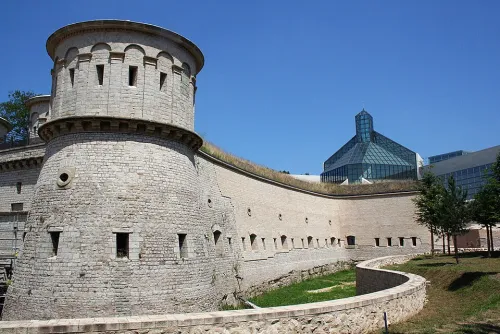
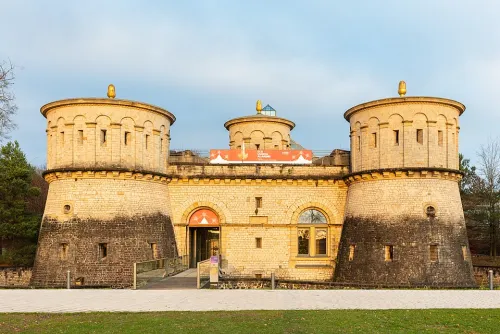
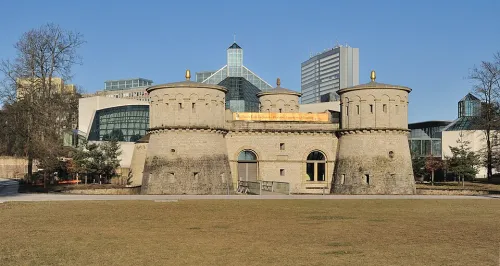
    Three round towers, each topped with an oversized acorn, give Fort Thüngen its Luxembourgish name: Dräi Eechelen, the Three Acorns. The fort is named after the Austrian fortress commander Baron Adam Sigmund von Thüngen and was built in 1732 around the Redoute du Parc, a defence laid out by Vauban about fifty years earlier.

    A deep ditch surrounded it, and it could be reached from Fort Obergrünewald through a 169-metre underground passage cut into the rock. The Prussians extended it in 1836 and strengthened it again in 1860, but between 1870 and 1874 it was demolished. Only the three towers survived, along with foundations uncovered again in 1991; the outer walls were completely reconstructed in the 1990s.

    It could have disappeared a second time. I. M. Pei's plans for Mudam would have built the fort into the museum, and a citizens' initiative called Fanger wech vun den Dräi Eechelen, hands off the Three Acorns, stopped it.

    The outer grounds and the park are free and open at all times. Take a moment for the view over Pfaffenthal and Clausen in the Alzette valley and across to the Corniche. The Dräi Eechelen Museum is only 60 metres away, one minute.

    Hours
    24/7
    Price
    Free (outer grounds and park)
  14. 14

    Dräi Eechelen Museum

    Dräi Eechelen Museum in Luxembourg City, stop 14 on the self-guided walking tour

    The route ends inside the fortress it has been circling all day. The Dräi Eechelen Museum occupies a restored and partly rebuilt section of Fort Thüngen, and its motto, fortress, history, identities, sums up its theme: how the fortress shaped Luxembourg and how Luxembourgers see themselves. Until 2007 it was officially called the fortress museum of the city.

    The museum exists because of a protest. Pei's 1991 concept for Mudam would have covered or destroyed much of the original fort, so heritage groups, among them Jeunes et patrimoine, organised an open day and a lecture to raise the alarm. In 1995 the deputy Robert Garcia proposed a law for a separate fortress museum in the fort's reduit. Parliament passed it on 5 December 1996 and it came into force on 17 February 1997, with costs then put at 665.5 million Luxembourg francs.

    Progress was slow. The topping-out was celebrated in June 2003, the government added another 130 million francs, and the fortifications around the fort were excavated and partly rebuilt. The museum finally opened on 13 July 2012, more than fifteen years after the first law.

    After the casemates and the fort grounds, this is the place where the fortress story comes together; plan about 45 minutes. The museum charges admission. Your walk ends here on Kirchberg.

    Hours
    Tue, Thu–Sun 10:00–18:00, Wed 10:00–20:00, Mon closed
    Price
    7 EUR adults, 10 EUR families, free under 26 and students
Walking tour route map of Luxembourg City Route loaded
Place d'ArmesCasino Luxembourg – Forum of Contemporary ArtAdolphe BridgeGëlle Fra Monument+10
All 14 stops are already on the map.
You just press start.
AI Tour Guide

Read it, then walk it: this route with a guide in your ear

Press start wherever you are, even hundreds of kilometres from Luxembourg City, and the guide begins telling its stories right away. In the city, pick any of the 14 stops to start from: it leads you there, then talks with you the whole route, asking, listening, remembering, and shaping the tour around your answers.

14stops 4.9km 1 h 13 minwalking 13languages
▶Start the tour free

Free to start · Runs in your browser · No app, no download

Shorter Ways to Walk Luxembourg City

The route splits neatly in two: the compact old town around the palace, and the stretch from Grund out to the fortress and museums on Kirchberg. Each half works on its own, and together they make an easy two-day plan.

The old town in half a day

Stops: 1, 2, 3, 4, 5, 6, 7, 8, 9

For a first visit or a short stopover: the squares, the Adolphe Bridge, the Golden Lady, the cathedral and the palace, all close together. You walk about 1,670 m in 23 minutes of pure walking. The only paid doors are the Pétrusse Casemates and the History Museum; the Casino and the cathedral are free.

Grund to Kirchberg

Stops: 10, 11, 12, 13, 14

For a second day, or if fortresses and modern art matter more to you than the palace district. You walk about 2,440 m in 38 minutes, most of it on the two longer legs via the panoramic lift. Neumünster Abbey and the lift are free; Mudam and the Dräi Eechelen Museum charge admission.

How Long Does the Luxembourg City Tour Take with Museums?

Walking alone takes 1 h 13 min over 4.9 km, and the longest legs come at the end: 15 minutes from Neumünster Abbey to the panoramic lift, then 20 minutes on to Mudam. If you only look at everything from outside, you need about three hours. With the interiors that repay the time (Casino, Casemates, cathedral, History Museum, Neumünster, Mudam and the Dräi Eechelen Museum), plan about seven and a half hours, plus whatever meal break you add.

For the full route in one day, start at Place d'Armes at 11:00, and you reach the Casino at 11:18, the Casemates at 12:19, the cathedral at 13:06, the History Museum at 13:48, Neumünster Abbey at 14:59, the lift at 15:44 and Mudam at 16:09. After 75 minutes there and a look at Fort Thüngen, you enter the Dräi Eechelen Museum at 17:37. The two Kirchberg museums stay open later only on some evenings, so pick such a day, skip the Casino visit or split the walk in two.

Split that way, the old town half takes about four hours with the Casino, the Casemates and the History Museum, and the Grund to Kirchberg half about three and a half hours with Mudam and the Dräi Eechelen Museum.

Before You Set Off in Luxembourg City

  • Start and finish: The recommended start is Place d'Armes in the old town; the route ends at the Dräi Eechelen Museum on the Kirchberg plateau. You can join at any stop, for example at Neumünster Abbey if you only want the second half.
  • Best day and time: Pick a day when all the interiors are open: the History Museum, Mudam, the Dräi Eechelen Museum and the Casino each have a weekly closing day. A late-morning start lines everything up.
  • What it costs: Walking the route is free, and so are the Casino, the cathedral, Neumünster Abbey, the panoramic lift and the grounds of Fort Thüngen. Four interiors charge admission: the Pétrusse Casemates, the History Museum, Mudam and the Dräi Eechelen Museum. The Grand Ducal Palace opens only for summer tours.
  • Free route and AI Tour Guide: Route, map and GPS navigation are free in your browser and lead you from stop to stop. The AI Tour Guide is optional: you start with 100 free credits, then choose either this tour all-inclusive for €19.99 with no time limit, or credits at €5 per hour.
Walking tour route map of Luxembourg City
AI Tour Guide

Your guide is ready when you are, from the old town to Kirchberg

Press start and a voice AI Tour Guide takes it from here: leading the route through Luxembourg City, telling the stories, and turning your walk into a real back-and-forth conversation. No app or download is needed; it runs in your browser.

14stops 4.9km 1 h 13 minwalking 13languages
▶Start the tour free

Free to start · Runs in your browser · No app, no download

What the AI Tour Guide Adds between the Casemates and Kirchberg

This walk jumps between centuries: a fire in 1554, a bridge from 1903, a fort from 1732, a museum from 2006. The AI Tour Guide turns that into one conversation. It greets you at Place d'Armes, tells the stories of each place, asks what you care about, whether fortress engineering, the grand ducal family or contemporary art, and remembers it as you go. It can take you further than this text, for instance into who Countess Ermesinde was beyond her charter or what schooling in the Jesuit college was like, and you can interrupt it whenever you like. The route itself stays the same, and the free GPS navigation keeps leading you from stop to stop.

A Real Conversation A voice AI Tour Guide greets you, leads the whole route, and tells the stories and facts as you walk, asking what you want to see and keeping a real conversation going. Not a recording you press play on.
Map Navigation Follow the route on the map and walk at your own pace. You choose where to start and when to move to the next stop.
Ask Anything Curious about a building you pass? Ask your AI Tour Guide on the spot and the conversation carries on.
13 Languages Switch language anytime. No separate tour needed.
Start free in your browser

Common Questions about Walking Luxembourg City

Which museums on this route are free?

The Casino is free at all times, and so are the cathedral and Neumünster Abbey. The History Museum and Mudam charge admission.

Is this walk good with children?

Children usually love the Casemates, where children's tickets are cheaper and the youngest go free. The History Museum, Mudam and the Dräi Eechelen Museum are free for younger visitors, and the glass lift in the History Museum and the panoramic lift in Pfaffenthal are easy wins.

Which stops work on a rainy day?

Most of the route has a roof: the Casino, the Casemates, the cathedral, the History Museum, Neumünster Abbey, Mudam and the Dräi Eechelen Museum. Keep the Adolphe Bridge, the Gëlle Fra and the Fort Thüngen grounds for a dry spell.

Can I combine Luxembourg City with a nearby town?

Easily. Trier is about 40 km away, Echternach about 30 km and Metz about 55 km, each with its own free walking route.

Is the tour really free?

Yes. The whole tour is free: the route, the interactive map and the navigation cost you nothing. Only the voice AI Tour Guide is optional and paid: you test it with 100 free credits, then you pay either €5 per hour or €19.99 for this whole tour, with no time limit. Admission to 5 of the 14 stops is not included: Pétrusse Casemates, Grand Ducal Palace, Luxembourg City History Museum, Mudam Luxembourg (Museum of Modern Art) and Dräi Eechelen Museum charge their own entry fees.

Do I need to download an app?

No. Everything runs in your phone browser. Open the route and start walking, no download and no sign-up required.

Do I need to book the walking tour in advance?

No booking needed. This self-guided tour is available anytime. Open the route in your browser and start walking. The AI Tour Guide works instantly, no app, no reservation required.

What languages is the AI Tour Guide available in?

The AI Tour Guide speaks 13 languages, so you take the tour in your own language and can switch at any time.

Can I skip stops or change the route?

Yes. Skip any stop, spend extra time at places you like, or start the route from any point. It is your walk, you set the pace.
Image credits
▶ Start free in your browser Runs in your browser, no app, no download