

Ludwigskirche
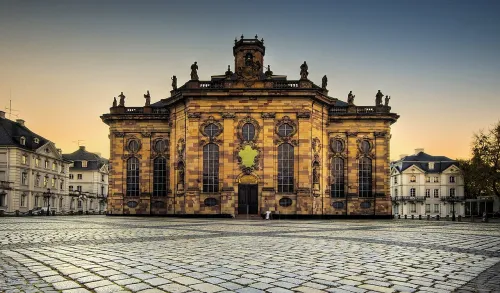
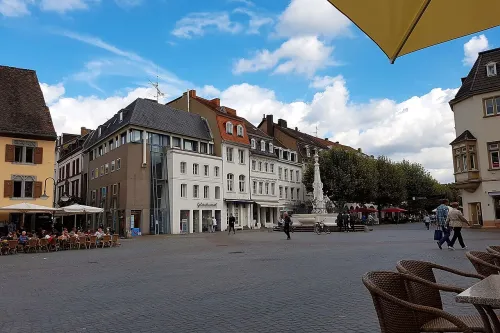
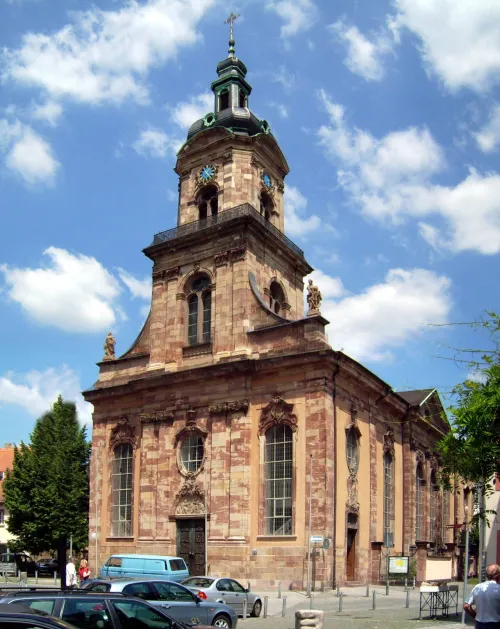
Start on Ludwigsplatz and take in the whole square before you focus on the church. Friedrich Joachim Stengel designed the Ludwigskirche and the square around it as one complete work of art, a baroque place royale, commissioned by Prince William Henry. The church is the emblem of Saarbrücken and is counted, alongside the Frauenkirche in Dresden and St. Michael's in Hamburg, among the most important Protestant churches in Germany.
Its story is one of interruptions. Building began in 1762, stopped when William Henry died in 1768 and the money ran out, and was finished in 1775 by his son Louis, who gave the church his name. It was consecrated on 25 August 1775 with a service and a cantata written for the occasion. Walk around it and you'll notice the ground plan: roughly a Greek cross, with arms 38.5 m and 34.2 m long. In the niches outside stand the four Evangelists by Francuß Bingh, who also made the 28 apostles, prophets and other biblical figures for the stone balustrades.
On 5 October 1944 a bombing raid left only the outer walls standing. Rebuilding began in 1949, followed by a fierce argument, from the 1950s into the 1970s, over whether the lost baroque interior should be recreated or replaced with something modern. A modern interior was agreed at first, then dropped in favour of the original plans. Since the princely seat in the gallery opposite the organ was rebuilt in 2009, the interior is more or less complete. Now look up at the roofline: more than half of the balustrade figures are still missing, and the exterior finish isn't done either.
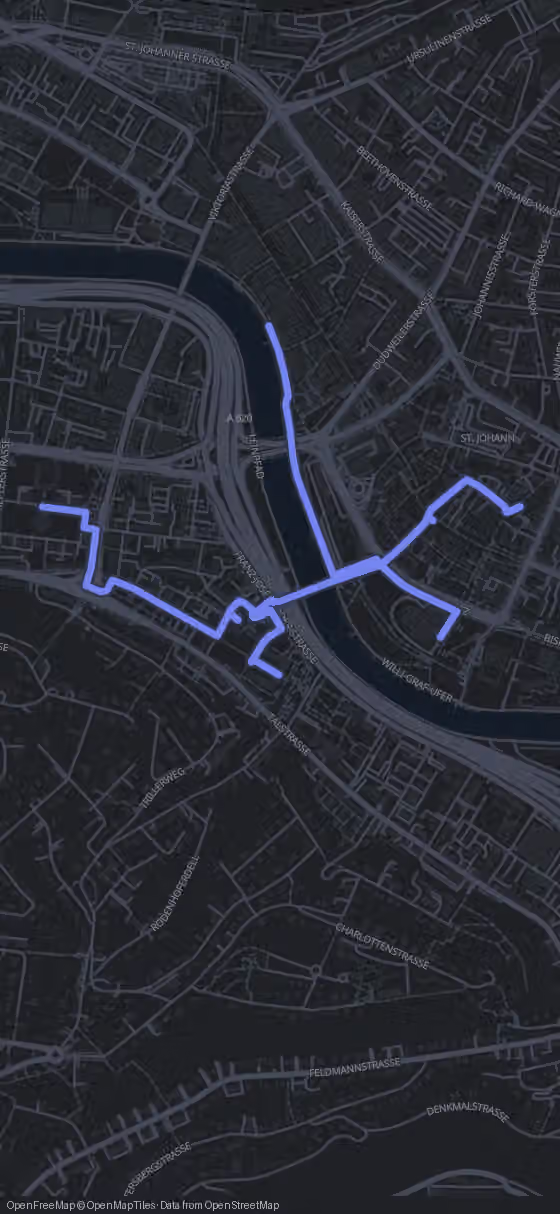
Admission is free, so if the doors are open, go in for the ornamental stucco, the cartouches and rocaille work; twenty minutes is plenty, and anyone who enjoys baroque will want them. Then walk 580 m, about 9 minutes, to the Schlosskirche, passing the Museum für Vor- und Frühgeschichte on the way.