Free Walking Tour Nashville: Country Legends Loop

Eleven stops on a 6.5 km loop: the Man in Black, Tootsie's purple walls, a gospel tabernacle that hosted the Opry and a 1909 bridge over the Cumberland.

11 Stops 6.5 km ~1 h 32 min walking
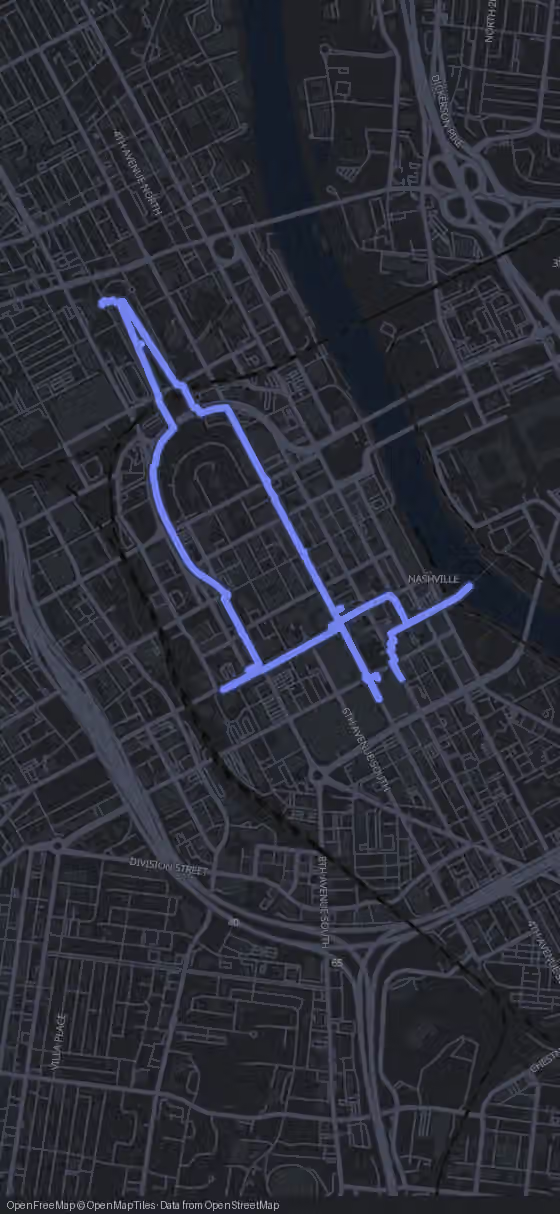
Route map for the Nashville walking tour
Stop 1 of 11
620 m·8 min
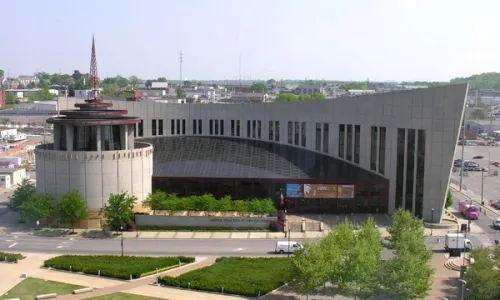
Country Music Hall of Fame and Museum
Head north-east toward the John Seigenthaler Pedestrian Bridge
Welcome to Nashville. I'm Alex, and one back alley here once linked the Grand Ole Opry's stage with a legendary honky-tonk.
Try this tour with Alex

What this Nashville loop covers

This loop has 11 stops and starts and ends at the Country Music Hall of Fame and Museum. It covers 6.5 km with 1 h 32 min of pure walking; plan about three and a half hours with short stops outside, or around six with a few museums inside.

The John Seigenthaler Pedestrian Bridge, Tootsies Orchid Lounge, the Tennessee State Museum and Bicentennial Capitol Mall State Park are free; the music museums charge admission. The GPS route runs free in your browser, and the AI Tour Guide is optional.

Open free GPS & optional AI Tour Guide
This short shows highlights of the route. All 11 stops follow below.

The Route

Walking map of Nashville: an 11-stop loop of 6.5 km

11 stops 6.5 km 1 h 32 min walking
Tap to load interactive map

The 11 stops along this route

  1. Country Music Hall of Fame and Museum in Nashville, stop 1 on the self-guided walking tour
    1Country Music Hall of Fame and Museum
  2. John Seigenthaler Pedestrian Bridge in Nashville, stop 2 on the self-guided walking tour
    2John Seigenthaler Pedestrian Bridge
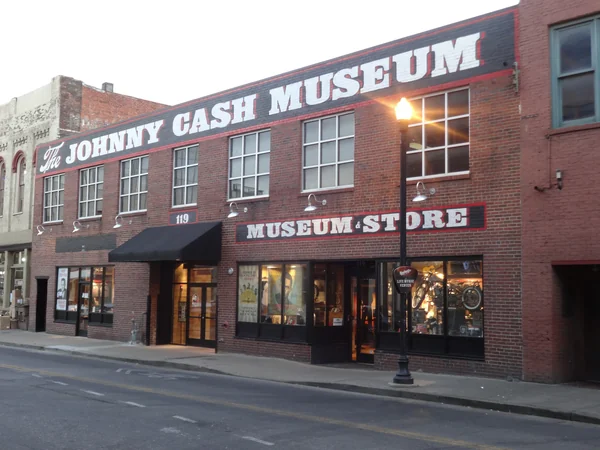
  3. Johnny Cash Museum in Nashville, stop 3 on the self-guided walking tour
    3Johnny Cash Museum
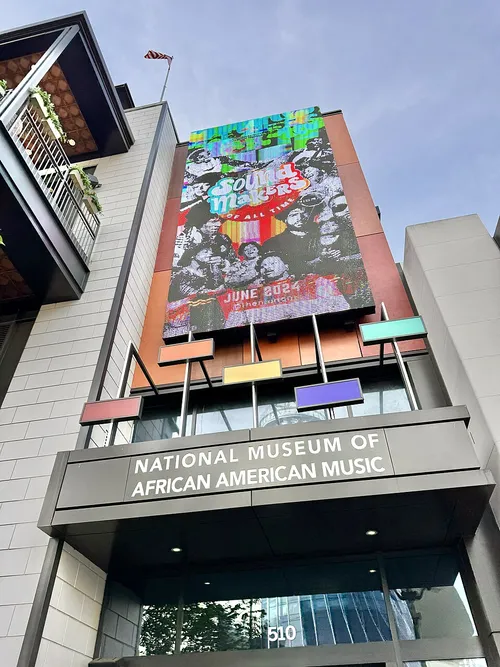
  4. National Museum of African American Music in Nashville, stop 4 on the self-guided walking tour
    4National Museum of African American Music
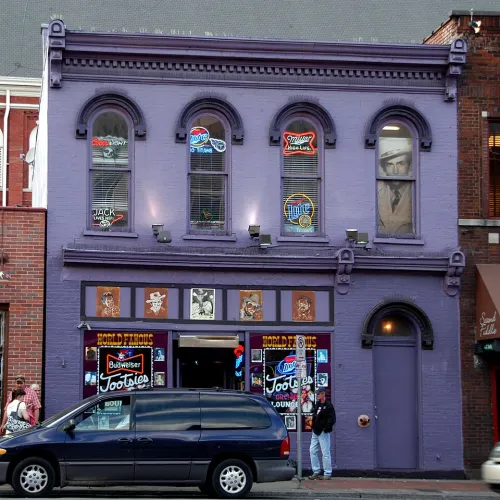
  5. Tootsies Orchid Lounge in Nashville, stop 5 on the self-guided walking tour
    5Tootsies Orchid Lounge
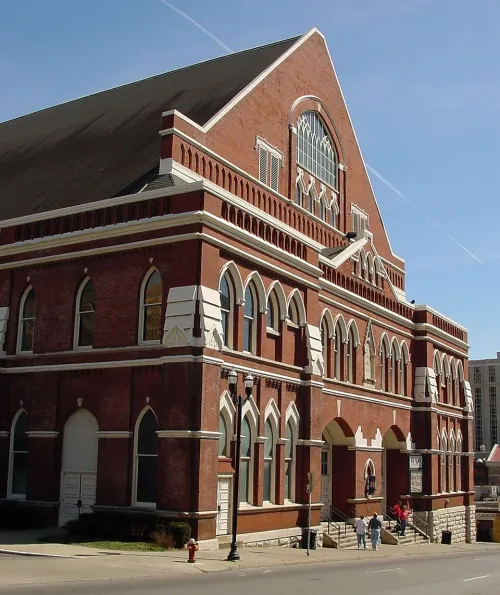
  6. Ryman Auditorium in Nashville, stop 6 on the self-guided walking tour
    6Ryman Auditorium
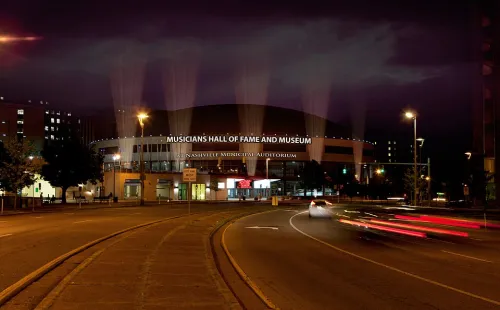
  7. Musicians Hall of Fame and Museum in Nashville, stop 7 on the self-guided walking tour
    7Musicians Hall of Fame and Museum
  8. Tennessee State Museum in Nashville, stop 8 on the self-guided walking tour
    8Tennessee State Museum
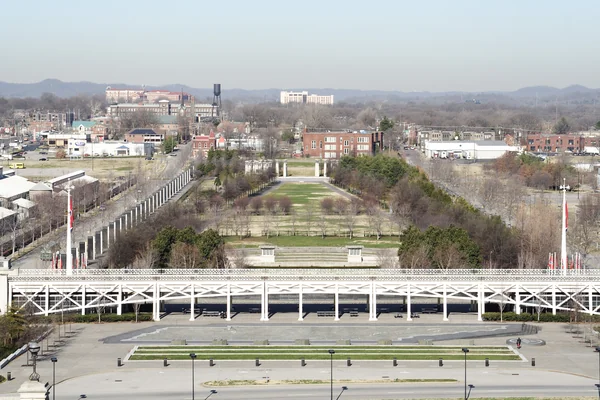
  9. Bicentennial Capitol Mall State Park in Nashville, stop 9 on the self-guided walking tour
    9Bicentennial Capitol Mall State Park
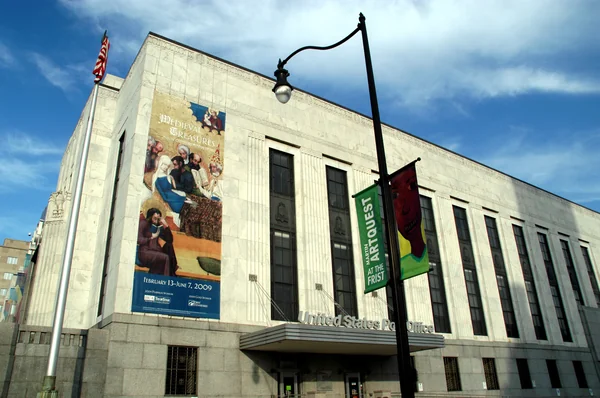
  10. Frist Art Museum in Nashville, stop 10 on the self-guided walking tour
    10Frist Art Museum
  11. Hatch Show Print in Nashville, stop 11 on the self-guided walking tour
    11Hatch Show Print
  12. That's the full loop.

    Walk it with an AI Tour Guide talking you through every one of these streets.

    Start free in your browser
    You made it

Your Nashville walking tour stop by stop, from country legends to the Capitol

  1. 1

    Country Music Hall of Fame and Museum

    Country Music Hall of Fame and Museum in Nashville, stop 1 on the self-guided walking tour

    Your loop begins at one of the world's largest museums and research centers devoted to American country music, and the biggest collection of country artifacts anywhere. Costumes, instruments, recordings, sheet music, photographs and business papers: if it helped make country music, chances are it is archived here.

    The idea grew out of the early 1960s, when the Country Music Association was pushing hard to publicize the genre. Its leaders realized a trade group could not run a museum, so in 1964 the state of Tennessee chartered the nonprofit Country Music Foundation to collect and preserve the music's history. Jo Walker-Meador, the association's executive director, helped raise the money from the industry.

    The first exhibits have a nice story. A New York firm, Jenter Exhibits, designed and built them at its plant in Mount Vernon, then shipped the pieces to Nashville in moving vans, where they were assembled for the grand opening on April 1, 1967. The original building was barn-shaped, stood at the head of Music Row on the site of a small city park, and the whole concept was modeled on the National Baseball Hall of Fame in Cooperstown. The library started small, in a loft above one of the galleries, before expanding into the basement in the early 1970s.

    Is it worth going inside? If country music is even half the reason you came to Nashville, yes, and give it the largest block of your day. Besides admission, the museum offers an audio tour and guided tours of RCA Studio B and of Hatch Show Print, which you will meet again at the end of the loop.

    From here it is 620 m, about 9 minutes, to the river and the old Sparkman Street Bridge.

    Hours
    Daily 09:00–17:00
    Price
    USD 31.95 adult (13+); USD 21.95 youth (6-12); audio tour USD 5; RCA Studio B guided tour USD 23; Hatch Show Print guided tour USD 23
  2. 2

    John Seigenthaler Pedestrian Bridge

    John Seigenthaler Pedestrian Bridge in Nashville, stop 2 on the self-guided walking tour

    This long truss bridge over the Cumberland River is free and open around the clock. It stretches 3,150 feet, about 960 m, which makes it one of the longest pedestrian bridges in the world. Walk out onto the deck for a while and look at the structure: the arched trusses are what made it famous.

    It opened on July 5, 1909, as the Sparkman Street Bridge, one block south of Broadway, linking Sparkman Street with Shelby Avenue, and cost about $475,000. A near twin, the Jefferson Street Bridge, followed a year later. Both had light grey concrete substructures and steel superstructures painted black. This one was the first bridge in North America with concrete arched trusses, designed by Howard M. Jones, chief office engineer of the Nashville, Chattanooga and St. Louis Railway. His approved drawings are still archived by the city.

    The concrete did not age gracefully. After about twenty-five years the surfaces were wearing badly, and between 1927 and 1930 workers chipped them away and replaced them with gunite. Thirty years later another round of repairs followed, with a New York company in charge and the Nashville Bridge Company doing the steel work.

    In 1998 the bridge joined the National Register of Historic Places, mainly for its unusual truss design. The twin on Jefferson Street was considered too, but rejected because it was so similar and in worse condition. Today the bridge carries the name of John Seigenthaler instead of its old street names.

    Back on land, the Johnny Cash Museum is 370 m away, a 5 minute walk.

    Hours
    Open 24/7
    Price
    Free
  3. 3

    Johnny Cash Museum

    Johnny Cash Museum in Nashville, stop 3 on the self-guided walking tour

    The Johnny Cash Museum opened in May 2013 in the SoBro neighborhood, South of Broadway, at 119 3rd Ave S. It holds the world's largest collection of Cash memorabilia and is officially authorized by his estate. Look out for a stone wall taken from his lake house in Hendersonville, and for the restored sign of the House of Cash.

    That sign carries a sad story. The House of Cash in Hendersonville was the original museum about the singer. It closed, fell into disrepair and appeared in the music video for ‘Hurt’. His lakeside home there, where he lived from 1968 until his death, burned down in an accidental fire during renovations in 2007. The Nashville museum was founded by Shannon and Bill Miller, personal friends of Cash, using their own collection.

    Cash was born in 1932 in Kingsland, Arkansas, and became one of the bestselling recording artists of all time. He moved freely between country, rockabilly, gospel, blues and rock and roll, which is why five halls of fame claim him, from Rock and Roll to Gospel to the Country Music Hall of Fame you just left. The nickname Man in Black came from the all-black wardrobe he wore on stage.

    Going inside costs admission for everyone from age six. It is a good choice if you want one focused museum rather than the sweep of the Hall of Fame. Since a 2016 expansion you can mix your own versions of Cash songs, listen to covers by dozens of artists and pose for a green screen photo with the man himself.

    From here it is 360 m, about 6 minutes, to the National Museum of African American Music.

    Hours
    Daily 09:00–19:00
    Price
    USD 32.95 + tax adult; USD 28.95 + tax youth (6-15); USD 1 off AAA/military/seniors/students
  4. 4

    National Museum of African American Music

    National Museum of African American Music in Nashville, stop 4 on the self-guided walking tour

    The National Museum of African American Music sits at Fifth and Broadway and tells the story of more than fifty genres that African Americans created, inspired or shaped, from early American religious music to rhythm and blues and hip-hop. Among the pieces planned for its collection are clothes worn by Nat King Cole, Dorothy Dandridge, Whitney Houston and Lisa Lopes.

    The museum took a long road. Members of the Nashville Area Chamber of Commerce proposed it in 2002 to celebrate African American music, art and culture; over ten years the project narrowed to music alone. Dr. Dina Bennett became its founding curator in May 2018.

    Its address is part of the story. The museum was first meant to rise at Rosa Parks Boulevard and Jefferson Street, the historic heart of Nashville's African American community. In 2015 the city moved it here, to the old convention center site. The Tennessee Tribune, the city's African American newspaper, criticized the decision, reminding readers that the same city government had once destroyed the Black businesses on Jefferson Street. You will pass that very corner later on this walk.

    A visit costs admission and is worth it if you want to understand how much of American music, country included, rests on African American traditions. It also gives the rest of this loop a wider frame.

    Tootsie's is just 120 m away, about 2 minutes on foot.

    Hours
    Mon 12:00–17:00, Tue–Sat 10:00–17:00, Sun 12:00–17:00
    Price
    USD 33.33 adult (18-64); USD 31.33 senior (65+)/military & first responders/educator; USD 29.33 student/youth (5-17); RFID wristband USD 5 on Nissan Free Wednesdays and Community Days
  5. 5

    Tootsies Orchid Lounge

    Tootsies Orchid Lounge in Nashville, stop 5 on the self-guided walking tour

    You cannot miss Tootsie's Orchid Lounge: the building is painted purple, and has been for decades. It is a honky-tonk with three stages and live local musicians every night, playing modern country hits and their own songs. Walking in is free.

    The color was an accident. Hattie Louise ‘Tootsie’ Bess bought the bar, then called Mom's, in 1960. A painter turned the exterior purple, to her surprise, and she renamed the place Tootsie's Orchid Lounge. Orchids stayed her flower: at her funeral in 1978, attended by Tom T. Hall, Roy Acuff and Faron Young, she was buried in an orchid gown, in an orchid-colored casket, with an orchid placed beside her. Connie Smith sang her favorite hymns.

    The early regulars read like a hall of fame roster: Willie Nelson, Patsy Cline, Mel Tillis, Kris Kristofferson, Waylon Jennings and Roger Miller. Nelson is said to have landed his first songwriting job after singing here. Canadian singer Terri Clark started performing at Tootsie's in 1987 and went on to international hits.

    The bar's luck was its neighbor. Tootsie's stands right behind the Ryman, home of the Grand Ole Opry for decades, so performers and writers drifted over between shows. When the Opry left in 1974, Tootsie's survived among pawn shops and adult businesses and remained a gathering place for songwriters and fans of 1950s and 1960s country.

    The Ryman is right behind you, a one minute walk.

    Local name
    Tootsie's Orchid Lounge
    Hours
    Daily 09:30–03:00
    Price
    Free
  6. 6

    Ryman Auditorium

    Ryman Auditorium in Nashville, stop 6 on the self-guided walking tour

    The brick building in front of you looks like a church because it was built as one. It opened in 1892 as the Union Gospel Tabernacle and today is a 2,362-seat concert hall and museum at 116 Rep. John Lewis Way North. It is best known as the home of the Grand Ole Opry from 1943 to 1974.

    The story behind it is one of the best in Nashville. Thomas Ryman owned saloons and a fleet of riverboats. In 1885 he went to a tent revival of the preacher Samuel Porter Jones intending to heckle, and came out converted, pledging to build a hall where Nashville could attend revivals indoors. Jones held his first service on the site on May 25, 1890, when only the foundation and six-foot walls stood. Architect Hugh Cathcart Thompson designed the building, which took seven years, cost $100,000 and opened $20,000 in debt. The planned balcony had to wait for lack of money.

    Ryman refused, several times, to have the tabernacle named after him. At his memorial service there in 1904, Jones asked the crowd to rename it Ryman Auditorium, and the mourners agreed overwhelmingly. Jones himself died less than two years later.

    The honors kept coming: the National Register of Historic Places in 1971, National Historic Landmark status on June 25, 2001 for its role in spreading country music, and a Rock & Roll Hall of Fame Landmark in 2022. Daytime visits cost admission and are worth it for anyone who wants to stand where the Opry was broadcast for three decades.

    Next comes a longer leg: 860 m, about 13 minutes, to the Musicians Hall of Fame.

    Hours
    Daily 09:00–16:00
  7. 7

    Musicians Hall of Fame and Museum

    Musicians Hall of Fame and Museum in Nashville, stop 7 on the self-guided walking tour

    This museum honors the people you rarely see on album covers: session musicians, producers and engineers. It occupies the first floor of the historic Municipal Auditorium at 401 Gay Street, in the old exhibit hall that was Nashville's first convention center, and shows instruments used to record influential songs.

    Session players were the house bands of Memphis, Los Angeles, Detroit, Nashville, Muscle Shoals and New York City. Small groups of skilled musicians played on countless hits from the 1950s through the 1980s, shaping the sound of an era while the stars took the credit. The museum displays their instruments alongside those of famous artists.

    Its own history has drama. Joe Frank Chambers and his wife Linda founded it in 2003, bought a building at 301 6th Ave. S. across from the Country Music Hall of Fame and opened on June 6, 2006. In 2009 and 2010 the city seized that building by eminent domain to make room for the Music City Center. The collection went into storage, and many pieces were damaged in the 2010 Nashville flood. On August 29, 2013, the museum reopened here, in a space more than twice the size of the original.

    Going inside costs admission. It is a strong pick for musicians and anyone who reads the liner notes, less so if you only want the big names.

    From here it is 960 m, about 13 minutes, to the Tennessee State Museum.

    Hours
    Mon–Sat 10:00–17:00, Sun closed
  8. 8

    Tennessee State Museum

    Tennessee State Museum in Nashville, stop 8 on the self-guided walking tour

    The Tennessee State Museum is free, and big: its building covers 137,000 square feet. It opened on October 4, 2018, at the corner of Rosa Parks Boulevard and Jefferson Street, at the foot of Capitol Hill. That is the same corner once planned for the National Museum of African American Music.

    Inside, the Tennessee Time Tunnel leads you through the state's history using the permanent collection. Add a hands-on children's gallery, six rotating galleries, a digital learning center and a two-story Grand Hall. Look for art, furniture, textiles and photographs made by Tennesseans, and a Civil War collection of uniforms, battle flags and weapons.

    Museums have a long history in Nashville. The earliest known one in Tennessee opened in 1817, when the portrait artist Ralph E. W. Earl set one up on the city's public square. The state museum itself opened in 1937 in the War Memorial Building, created to gather state collections and mementos from World War I. In 1981 most of it moved to the James K. Polk Building, shared with the Tennessee Performing Arts Center until May 2018. The Military Museum, covering wars from the Spanish-American War to World War II, still occupies the War Memorial Building.

    Since it costs nothing, this is the obvious place to go inside if you are watching your budget. An hour gives you a good overview.

    Bicentennial Mall begins right next door, 310 m or about 4 minutes away.

    Hours
    Tue–Sat 10:00–17:00, Sun 13:00–17:00, Mon closed
    Price
    Free
  9. 9

    Bicentennial Capitol Mall State Park

    Bicentennial Capitol Mall State Park in Nashville, stop 9 on the self-guided walking tour

    Bicentennial Mall is a 19 acre linear park north-northwest of the Tennessee State Capitol, treated as an extension of the capitol grounds. It is modeled on the National Mall in Washington, D.C. and mixes Classical Greek, Baroque and Beaux-Arts architecture. Entry is free.

    Think of it as an outdoor museum. Monuments, walkways and interpretive displays tell the history, geography, culture and musical heritage of Tennessee, and the planting uses species native to the state. With more than 2.5 million visitors a year, it is the most visited of Tennessee's 57 state parks.

    The ground under your feet has a long story. French Lick Creek runs through the site, and its springs drew game, which made the area an important hunting ground for Native Americans and later for the first European explorers and settlers in the 18th century. Floods from the Cumberland kept people away until German immigrants settled in the 1830s. Once the capitol rose on the hill to the south, the creek filled with garbage and sewage and was finally buried in a brick sewer tunnel.

    In the early 20th century the area declined, and urban renewal funded by the Housing Act of 1949 cleared many buildings. As tall buildings went up around the capitol, people began campaigning to keep the view to the north open, even though a large state office complex had first been planned here.

    Now comes the longest leg of the loop: 1770 m, about 26 minutes, to the Frist Art Museum.

    Local name
    Bicentennial Mall State Park
    Hours
    Daily 07:00–22:00 (Mar 16 – Oct 31); Daily 07:00–20:00 (Nov 1 – Mar 15)
    Price
    Free
  10. 10

    Frist Art Museum

    Frist Art Museum in Nashville, stop 10 on the self-guided walking tour

    The Frist Art Museum occupies Nashville's old main post office, a white marble building in Art Deco and Stripped Classicism style, listed on the National Register of Historic Places. Marr & Holman Architects designed it, and it was built in 1933 and 1934 for $1.5 million. It sits near Union Station on purpose: back then most mail traveled by train.

    By the 1980s downtown no longer suited mail distribution. A new main post office opened near the airport in 1986, and the old building shrank to a branch using part of one floor. In the early 1990s Thomas F. Frist, Jr. and his family, through the Frist Foundation, saw it as the home for a downtown art museum.

    The deal behind it is a fine piece of civic engineering. The city bought the building from the Postal Service in 1999 for $4.4 million and put $15 million into the renovation; the Frist Foundation and family added $25 million for renovation and an endowment. The city still owns the building and leases it to the Frist for 99 years at one dollar a year. The museum opened in April 2001 as the Frist Center for the Visual Arts and took its current name in 2018.

    There is no permanent collection to speak of: the Frist is an exhibition hall with about 24,000 square feet of galleries for local, regional, national and international shows. Admission is charged, so whether to go in depends on what is on. Even if you skip it, the post office branch still works, with its own entrance on the western end.

    From here it is 920 m, about 12 minutes, to Hatch Show Print.

    Hours
    Mon 10:00–17:30, Tue–Wed closed, Thu 10:00–20:00, Fri–Sat 10:00–17:30, Sun 13:00–17:30
  11. 11

    Hatch Show Print

    Hatch Show Print in Nashville, stop 11 on the self-guided walking tour

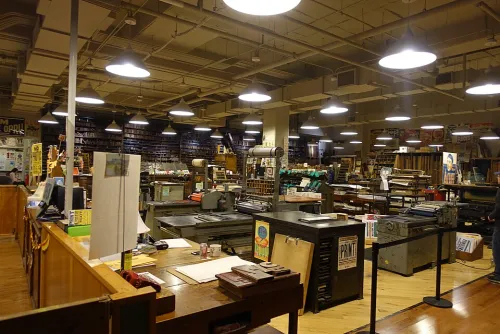
    Hatch Show Print is one of the oldest working print shops in the country and still prints concert posters by letterpress, using vintage wood type and hand-carved blocks. Since 2013 it has been part of the Country Music Hall of Fame and Museum, which makes it the natural end of the loop.

    Brothers Charles and Herbert Hatch founded the shop in 1879. Their first handbill was for the Rev. Henry Ward Beecher, brother of Harriet Beecher Stowe. In the mid 1920s Charles's son Will took over and carved the lettering himself.

    The music connection came through location. From 1925 until 1992 the shop sat behind the Ryman, which put it in the path of country music. Hatch made posters for Patsy Cline, Willie Nelson, Bill Monroe, Minnie Pearl, Loretta Lynn and many more, the same names you met at Tootsie's. Jim Sherraden became manager in 1984, and in 1992 Gaylord Entertainment donated the brand to the Country Music Hall of Fame and Museum.

    The shop is still busy with new work. In 2019 it designed 32 posters for NFL teams for the draft and in the same month marked its 140th anniversary; it celebrated its 145th in April 2024. Hatch offers tours and educational programs for a fee, ideal if you like design, typography or simply want to see how those bold posters are made.

    Your loop closes 160 m away, about 2 minutes back to the Country Music Hall of Fame and Museum where you started.

    Hours
    Daily 09:00–17:30
Walking tour route map of Nashville Route loaded
Country Music Hall of Fame and MuseumJohn Seigenthaler Pedestrian BridgeJohnny Cash MuseumNational Museum of African American Music+7
All 11 stops are already on the map.
You just press start.
AI Tour Guide

You know the route now. Walk it with a guide in your ear.

Press start wherever you are, even hundreds of kilometres from Nashville, and the guide begins telling its stories right away. In the city, pick any of the 11 stops to start from: it leads you there, then talks with you the whole route, asking, listening, remembering, and shaping the tour around your answers.

11stops 6.5km 1 h 32 minwalking 13languages
▶Start the tour free

Free to start · Runs in your browser · No app, no download

Shorter ways to walk this Nashville loop

The full loop is easy to split, because the music stops sit close together and the Capitol side forms its own half.

Music core in a morning

Stops: 1, 2, 3, 4, 5, 6

For anyone who came for country music and has half a day. From the Country Music Hall of Fame over to the river bridge, then Johnny Cash, the African American music museum, Tootsie's and the Ryman. Only 23 minutes of walking; the Country Music Hall of Fame, the Johnny Cash Museum, the National Museum of African American Music and the Ryman charge admission, while the bridge and Tootsie's are free.

Session players, state history and art

Stops: 6, 7, 8, 9, 10, 11

For a second day or anyone who has already seen the honky-tonk blocks. From the Ryman to the Musicians Hall of Fame, the Tennessee State Museum and Bicentennial Mall, then back via the Frist to Hatch Show Print and the Country Music Hall of Fame. About 1 h 10 min of walking; the state museum and the park are free, the Ryman, the Musicians Hall of Fame, the Frist and Hatch Show Print charge admission.

The whole loop on a budget

Stops: 1, 2, 3, 4, 5, 6, 7, 8, 9, 10, 11

For walkers who want the full story without the ticket costs. Walk all eleven stops in 1 h 32 min, see the paid museums from outside, and spend your inside time at the Tennessee State Museum, which is free.

How long this Nashville tour takes, with and without museums

The pure walking time is 1 h 32 min. The first half is compact: from the Country Music Hall of Fame to the Ryman you walk just 23 minutes in total. The second half stretches out, with the longest leg of 26 minutes between Bicentennial Mall and the Frist.

With about ten minutes at each stop and no museum visits, the loop takes around three and a half hours. If you go inside the Country Music Hall of Fame, the Johnny Cash Museum and the Ryman, count on about six hours, which makes this a full day with a lunch break. The music core variant fits into a morning; the second half takes about two and a half hours with a visit to the free state museum.

Before you set out

  • Start: The recommended start is the Country Music Hall of Fame and Museum, but you can join the loop at any stop and follow it from there.
  • End: The loop closes where it began: Hatch Show Print is just 160 m from the Country Music Hall of Fame.
  • Time of day: Start in the morning if you want to go inside museums, since they all keep daytime hours. Tootsie's is at its liveliest at night, so a second evening visit can make sense.
  • Admission: The Country Music Hall of Fame, the Johnny Cash Museum, the National Museum of African American Music, the Ryman, the Musicians Hall of Fame, the Frist and Hatch Show Print charge admission. The bridge, Tootsie's, the Tennessee State Museum and Bicentennial Mall are free.
Walking tour route map of Nashville
AI Tour Guide

Your guide is ready when you are, at any stop

Press start and a voice AI Tour Guide takes it from here: leading the route through Nashville, telling the stories, and turning your walk into a real back-and-forth conversation. No app or download is needed; it runs in your browser.

11stops 6.5km 1 h 32 minwalking 13languages
▶Start the tour free

Free to start · Runs in your browser · No app, no download

What the AI Tour Guide adds on Nashville's music trail

On this loop the stories are tied together: the same names turn up at Tootsie's, on the Ryman stage, on Hatch posters and in the museums. The AI Tour Guide picks up those threads as you walk, asks what you listen to and leans into it, so a Patsy Cline fan hears a different tour than a hip-hop fan. Ask it what a session player actually added to a famous record, or which artists made the Ryman a rock landmark, and interrupt whenever you like. You start with 100 free credits; after that you choose between this tour all-inclusive for €19.99 with no time limit or €5 per hour.

A Real Conversation A voice AI Tour Guide greets you, leads the whole route, and tells the stories and facts as you walk, asking what you want to see and keeping a real conversation going. Not a recording you press play on.
Map Navigation Follow the route on the map and walk at your own pace. You choose where to start and when to move to the next stop.
Ask Anything Curious about a building you pass? Ask your AI Tour Guide on the spot and the conversation carries on.
13 Languages Switch language anytime. No separate tour needed.
Start free in your browser

Common questions about walking Nashville

Can I still see the Grand Ole Opry at the Ryman Auditorium?

The Opry moved out of the Ryman in 1974 to the Grand Ole Opry House, several miles east of downtown. The show still returns to the Ryman occasionally, so check the Ryman's programme if you want an Opry night in the old tabernacle.

Do I need a separate ticket for Hatch Show Print?

Hatch Show Print belongs to the Country Music Hall of Fame and Museum, which also offers guided tours of the print shop and of RCA Studio B as separate tickets. Ask at the museum's ticket desk which combination suits you.

Is this walk good with children?

Yes, if you mix it well. The Tennessee State Museum has a hands-on children's gallery and is free, Bicentennial Mall gives them room to move, and at the Johnny Cash Museum kids can mix songs and pose for a green screen photo with Cash.

Where can I go after Nashville?

Music fans often continue to New Orleans for jazz, or to Chicago. For more Southern history, Savannah and Charleston are the closest coastal cities with their own walking tours.

Is the tour really free?

Yes. The whole tour is free: the route, the interactive map and the navigation cost you nothing. Only the voice AI Tour Guide is optional and paid: you test it with 100 free credits, then you pay either €5 per hour or €19.99 for this whole tour, with no time limit. Admission to 7 of the 11 stops is not included: Country Music Hall of Fame and Museum, Johnny Cash Museum, National Museum of African American Music, Ryman Auditorium, Musicians Hall of Fame and Museum, Frist Art Museum and Hatch Show Print charge their own entry fees.

Do I need to download an app?

No. Everything runs in your phone browser. Open the route and start walking, no download and no sign-up required.

Do I need to book the walking tour in advance?

No booking needed. This self-guided tour is available anytime. Open the route in your browser and start walking. The AI Tour Guide works instantly, no app, no reservation required.

What languages is the AI Tour Guide available in?

The AI Tour Guide speaks 13 languages, so you take the tour in your own language and can switch at any time.

Can I skip stops or change the route?

Yes. Skip any stop, spend extra time at places you like, or start the route from any point. It is your walk, you set the pace.
Image credits
▶ Start free in your browser Runs in your browser, no app, no download