

Bethesda Terrace
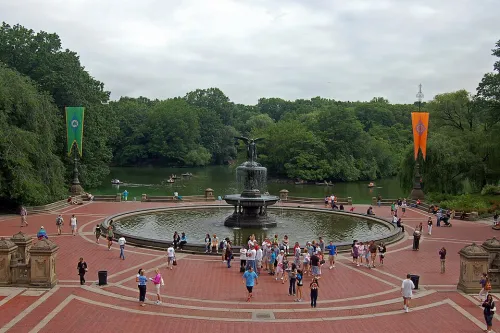
You begin on two levels of carved stone overlooking the Lake in Central Park. In the middle of the terrace stands Bethesda Fountain, crowned by the bronze Angel of the Waters. Take a moment to look at the material: the warm, mustard-olive stone is New Brunswick sandstone, capped with a harder stone, and the paving underfoot is Roman brick laid on edge in a herringbone pattern. The upper terrace runs along the 72nd Street Cross Drive, while the lower one works like a podium for looking out over the water.
When Calvert Vaux and Frederick Law Olmsted drew up their Greensward Plan for the park in 1858, this spot at the end of the Mall was simply called the Water Terrace. Only after the angel was unveiled did it take the name Bethesda Terrace. From here a passage leads south to the Mall and the Naumburg Bandshell at the center of the park, which is why the terrace feels like the park's formal living room.
The timing is remarkable: almost all of it was built while the American Civil War was raging. Work was well underway by the end of 1861, the stone arrived in 1862, and the fountain's masonry was in place by 1863. Only two other major park structures were finished during the war, the Music Stand and the Casino restaurant, and both are long gone. The sculptor was hired in 1864, the figures were being cast in bronze by 1867, and the fountain was officially completed in 1873. The plans also called for marble and bronze figures on the upper level, but those were never made.
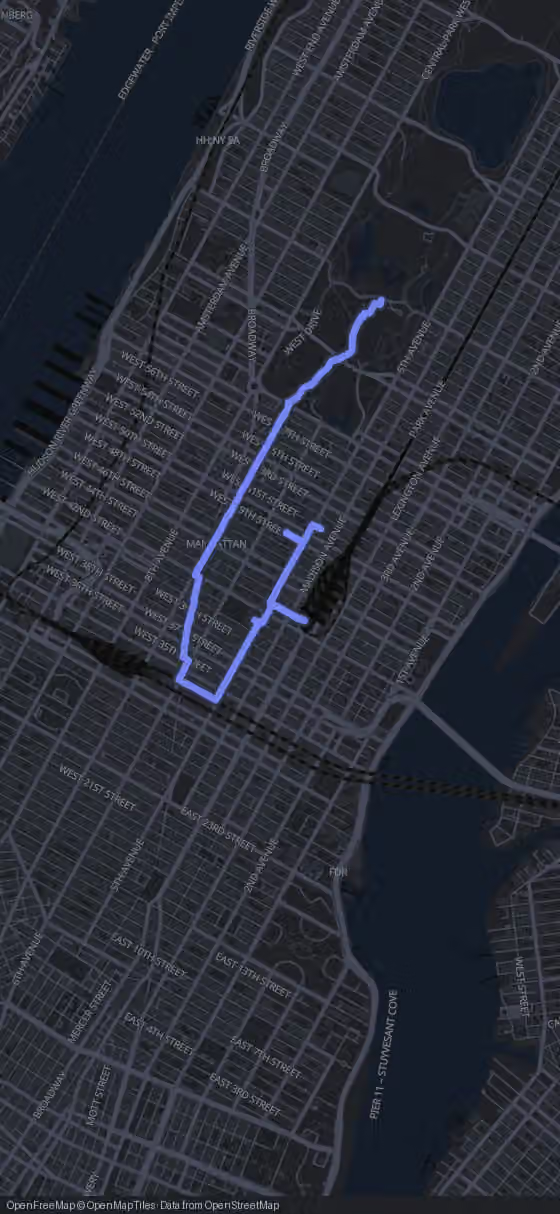
The terrace has not always been loved. For years it was neglected and served as little more than a bicycle rental spot, and in the late 1960s an outdoor lunch café called The Fountain Cafe set up here before closing in 1974 ahead of a restoration that took years to begin. From here you have the longest leg of the day: 2310 m, about 32 minutes, out of the park and down into Midtown to Times Square.