

Mausoleo di Teodorico
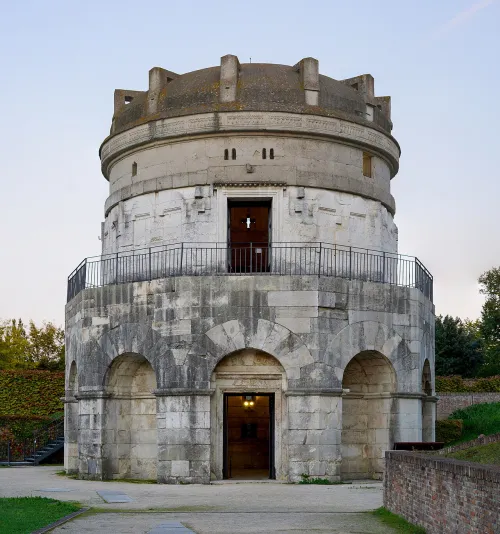
Start at the tomb of a Gothic king. Theodoric the Great, ruler of the Ostrogoths, kept his court in Ravenna, and around 520 he had this mausoleum built in the cemetery of the Gothic suburb, probably for himself and the closest members of his court. It is regarded as the outstanding building achievement of the Ostrogoths in Italy, and yet the name of its architect has not come down to us.
A Latin chronicle, the Anonymus Valesianus, says the king raised the monument in his own lifetime from blocks of hewn stone and had a huge single stone sought out to finish it. Even so, the tomb was evidently not complete when he died.
Theodoric was an Arian Christian, and that sealed the fate of his grave. When Byzantine troops under Belisarius took Ravenna in 540, the Catholic clergy gained the upper hand and wiped out traces of Theodoric and Arianism wherever they could. His sarcophagus was thrown out as that of a cursed heretic. Floods later left the lower chamber half buried for a long time; it was only fully cleared in 1918 and 1919, and the digs around it turned up ancient walls and a gold-decorated breastplate.
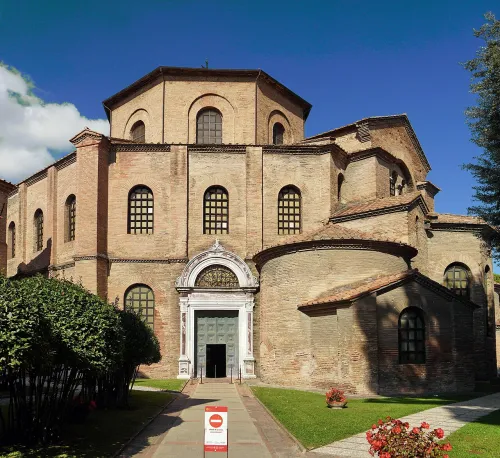
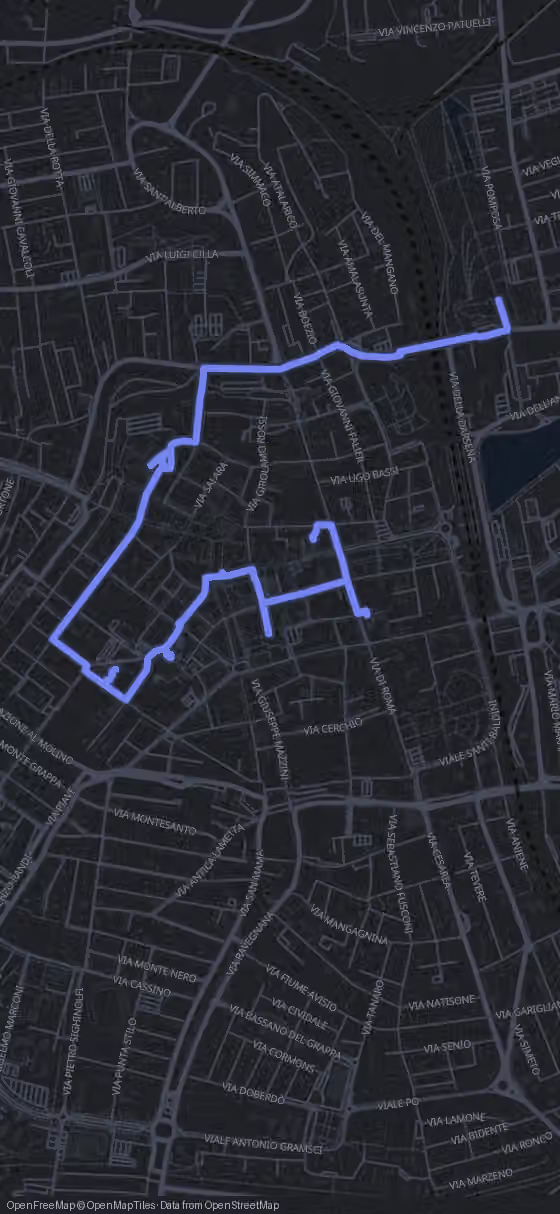
The mausoleum has its own ticket, separate from the combined ticket for the mosaic sites. Go in if the Goths fascinate you; if mosaics are your priority, the outside and the story are enough. From here comes the longest leg of the walk, 1470 m and about 20 minutes, to the Basilica di San Vitale, a church begun while Theodoric's Goths still ruled the city.