

Galleria Estense
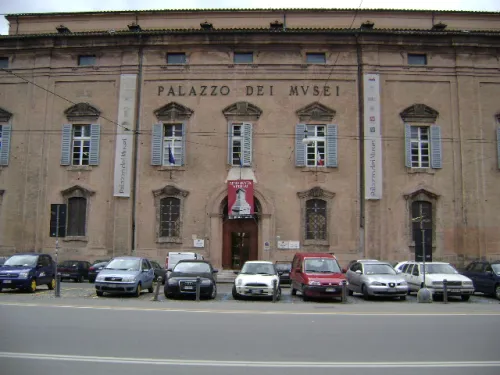
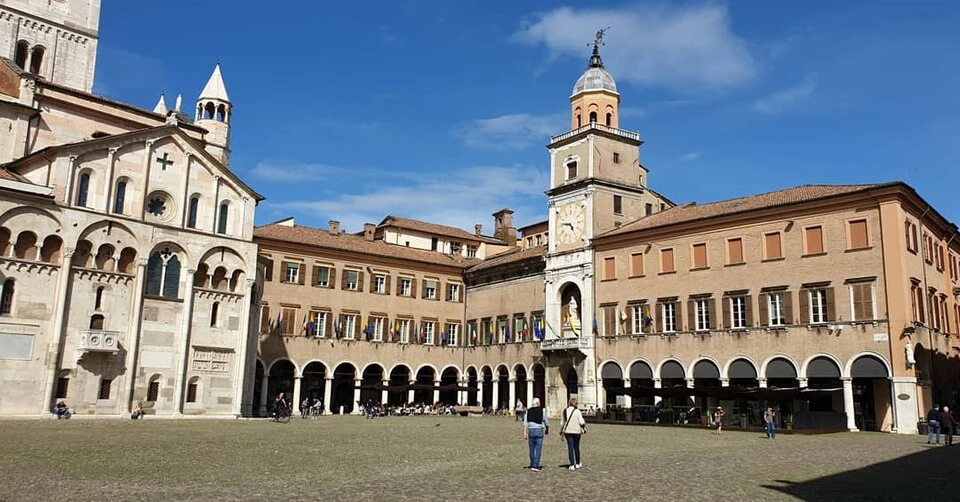
Begin on the St. Augustine square, at the Palazzo dei Musei. The Galleria Estense fills its top floor, and what you find there is the taste of a single family: the d'Este, who ruled Modena, Reggio and Ferrara from 1289 until 1796. Modena became their capital only late in that story. In 1598 the dukes were forced to hand their seat in Ferrara to Pope Clement VIII, and the court, its collections included, moved here.
The gallery opened to the public in 1854 under the last duke, Francis V of Austria-Este, and moved from the Palazzo Ducale to this building in 1894. Since 2014 it has belonged to the Gallerie Estensi, together with the Biblioteca Estense, the Estense Lapidary Museum, the ducal palace in Sassuolo and the Pinacoteca Nazionale in the old Este capital. Seen together, they show how the taste of an Italian noble court changed over the centuries.
Sixteen rooms and four large thematic salons hold mostly Italian painting, but look out for the Flemish, German and French works, from the workshop of van Eyck to Aelbrecht Bouts and Charles Le Brun, and for pieces from Sierra Leone and Iran. The object people remember is the Estense Harp: a mannerist double harp, 148 cm tall, made entirely by hand by five craftsmen from Ferrara and Flanders. It appeared next to Verdi on the Italian 1,000 lire note for twenty years from 1961. Also worth finding: a Madonna and Child and a Telamon by the Modenese sculptor Wiligelmo, an 18th century coral nativity scene and a wooden still life carved to celebrate the accession of James II of England.
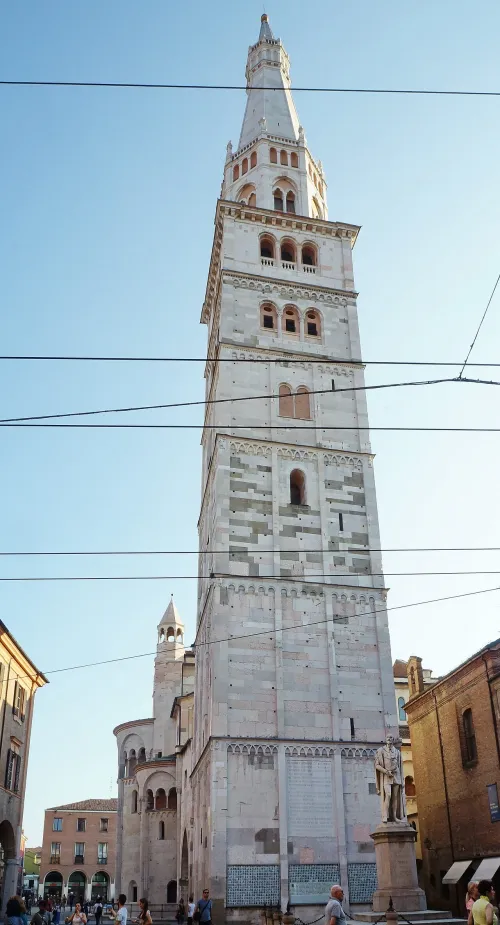
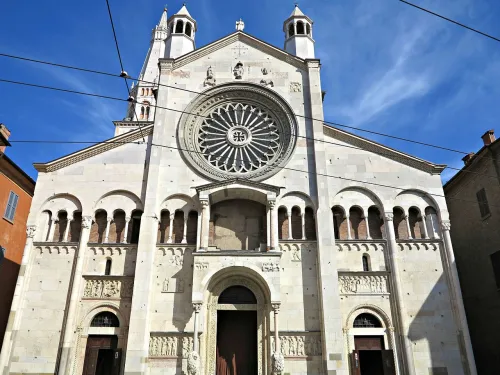
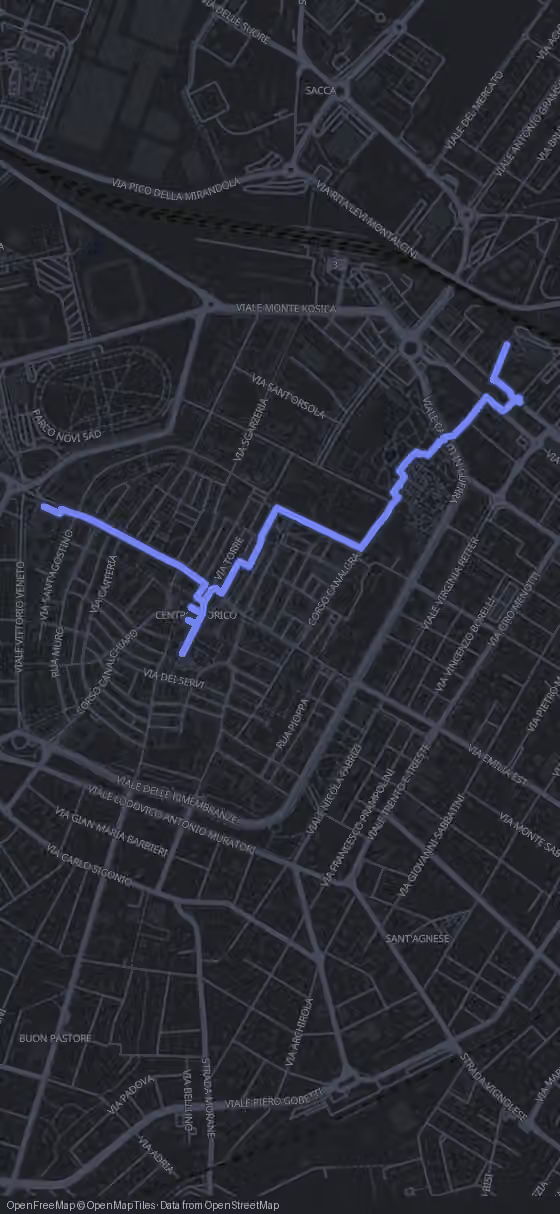
Is it worth going in? If you like art, decorative objects or court history, yes: plan about an hour. The gallery charges entry, with reduced tickets for young visitors. Keep Wiligelmo's name in mind: you meet his work again on the cathedral façade. From here it is 540 m, about 7 minutes, to the Ghirlandina Tower.