Free Walking Tour Venice: 15 Stops, San Marco to Rialto

From the gold mosaics of San Marco across to the quiet campi of Dorsoduro and back over the Rialto: one loop on foot through the Venice of doges, painters and merchants.

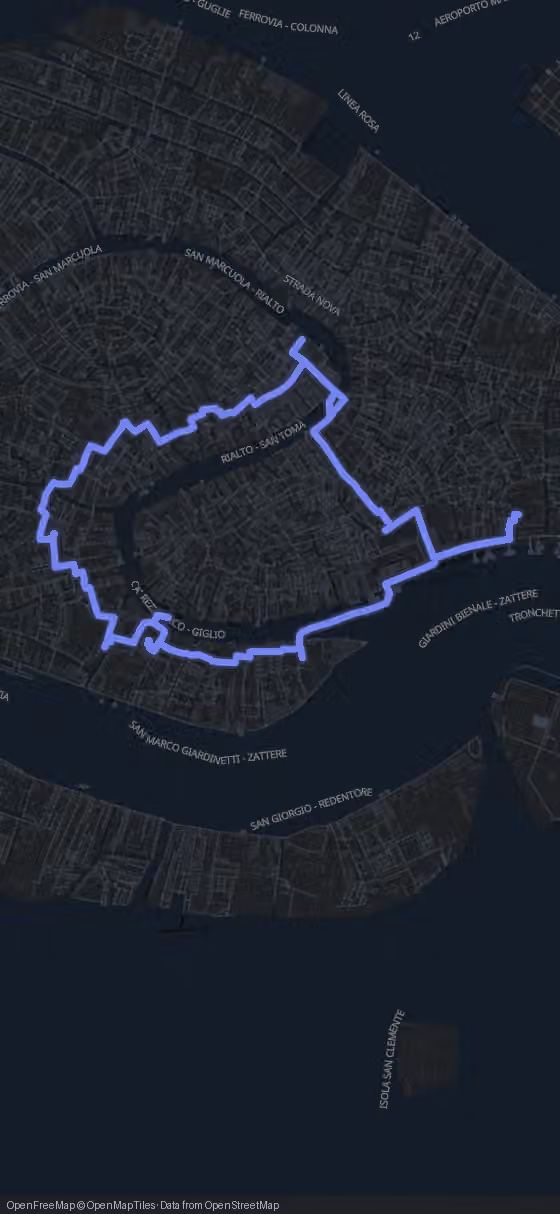
15 Stops 5.8 km ~1 h 24 min walking
Route map for the Venice walking tour
Stop 1 of 15
160 m·2 min
Piazza San Marco
Head east across the square toward St Mark's Basilica
Buongiorno, welcome to Venice. I'm Alex, and even the city's most beautiful landmarks can hide a darker story.
Try this tour with Alex

Your Venice Loop at a Glance

This free walking tour of Venice links 15 stops in a 5.8 km loop that starts and ends at Piazza San Marco, crosses into Dorsoduro and comes back by the Rialto. Pure walking time is 1 h 24 min; plan about three hours with short stops, or a full day with the big interiors.

Squares, bridges, the market and the main churches are free. St Mark's Basilica, the Doge's Palace, the Gallerie dell'Accademia and Ca' Rezzonico charge admission. The GPS route runs free in your browser; the AI Tour Guide is optional.

Open free GPS & optional AI Tour Guide
This short shows highlights of the route. All 15 stops follow below.

The Route

Walking Map of Venice: The 15-Stop Loop

15 stops 5.8 km 1 h 24 min walking
Tap to load interactive map

The 15 stops along this route

  1. Piazza San Marco in Venice, stop 1 on the self-guided walking tour
    1Piazza San Marco
  2. St Mark's Basilica in Venice, stop 2 on the self-guided walking tour
    2St Mark's Basilica
  3. Doge's Palace in Venice, stop 3 on the self-guided walking tour
    3Doge's Palace
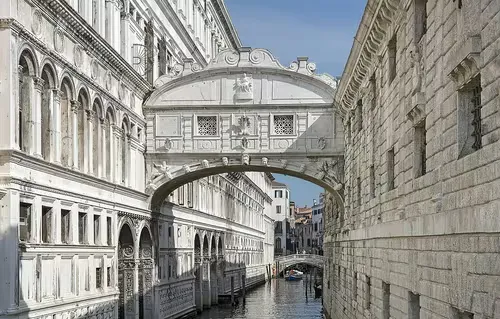
  4. Bridge of Sighs in Venice, stop 4 on the self-guided walking tour
    4Bridge of Sighs
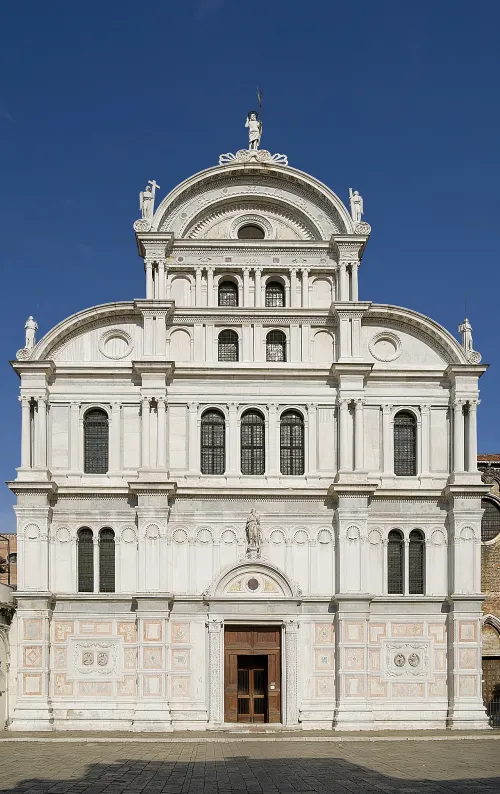
  5. San Zaccaria in Venice, stop 5 on the self-guided walking tour
    5San Zaccaria
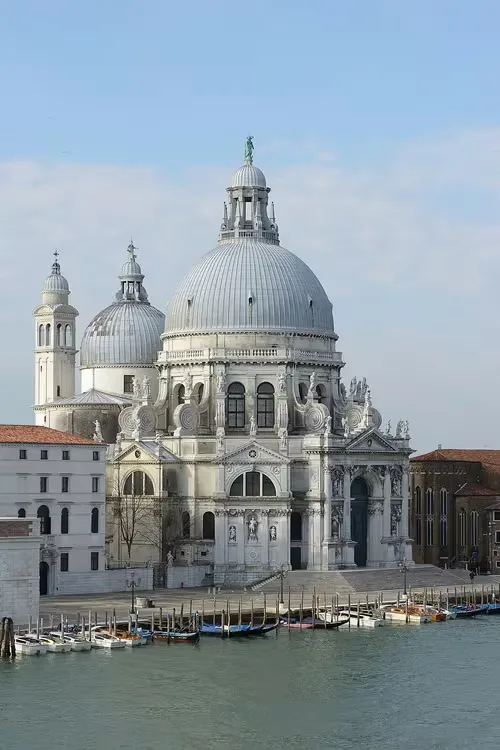
  6. Santa Maria della Salute in Venice, stop 6 on the self-guided walking tour
    6Santa Maria della Salute
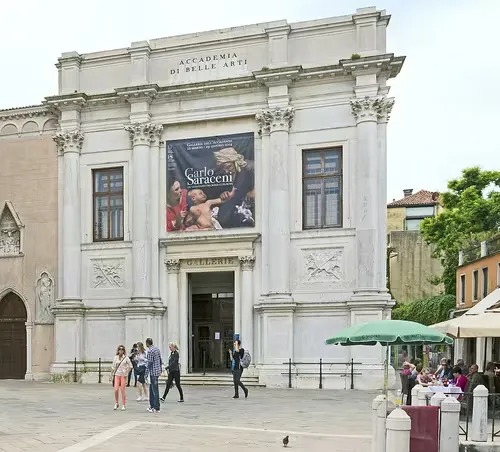
  7. Gallerie dell'Accademia in Venice, stop 7 on the self-guided walking tour
    7Gallerie dell'Accademia
  8. Ponte dell'Accademia in Venice, stop 8 on the self-guided walking tour
    8Ponte dell'Accademia
  9. Dorsoduro in Venice, stop 9 on the self-guided walking tour
    9Dorsoduro
  10. Ca' Rezzonico in Venice, stop 10 on the self-guided walking tour
    10Ca' Rezzonico
  11. Campo Santa Margherita in Venice, stop 11 on the self-guided walking tour
    11Campo Santa Margherita
  12. Campo San Polo in Venice, stop 12 on the self-guided walking tour
    12Campo San Polo
  13. Mercato di Rialto in Venice, stop 13 on the self-guided walking tour
    13Mercato di Rialto
  14. San Giacomo di Rialto in Venice, stop 14 on the self-guided walking tour
    14San Giacomo di Rialto
  15. Rialto Bridge in Venice, stop 15 on the self-guided walking tour
    15Rialto Bridge
  16. That's the full loop.

    Walk it with an AI Tour Guide talking you through every one of these streets.

    Start free in your browser
    You made it

Your Venice Walking Tour, from San Marco to the Rialto

  1. 1

    Piazza San Marco

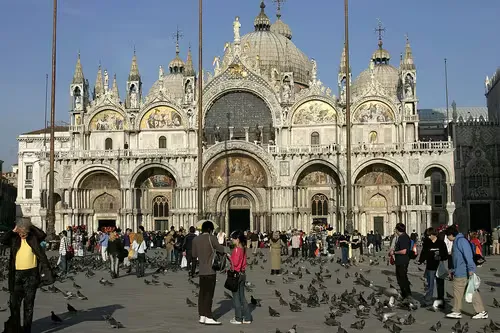
    Piazza San Marco in Venice, stop 1 on the self-guided walking tour

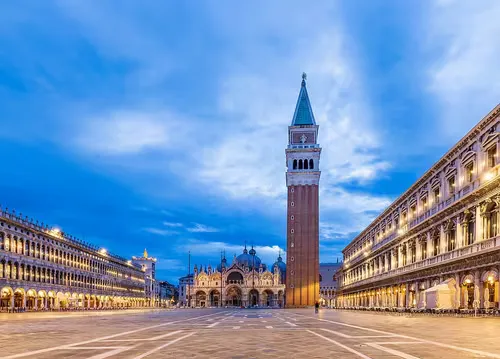
    Venetians simply call this la Piazza, the Square. Together with the Piazzetta, the smaller extension that opens towards the San Marco basin in its southeast corner, it was the social, religious and political centre of the Republic. The famous line about “the drawing room of Europe” is usually credited to Napoleon, although nobody has ever proved he said it.

    Face the eastern end, where St Mark's Basilica closes the square: great arches, marble, Romanesque carvings around the central doorway, and four horses presiding over the whole Piazza. For Venice they were a symbol of pride and power. In 1379 the Genoese declared there could be no peace between the two cities until those horses had been bridled. Four hundred years later Napoleon, having conquered Venice, had them taken down and shipped to Paris.

    Now look along the north side of the church. The small open space with two marble lions, a gift of Doge Alvise Mocenigo in 1722, is the Piazzetta dei Leoncini, officially renamed Piazzetta San Giovanni XXIII. The neo-classical building next to the basilica is the Palazzo Patriarcale, seat of the Patriarch of Venice. Beyond it rises the clock tower, the Torre dell'Orologio, completed in 1499 over a high archway. Through that arch runs the Merceria, the shopping street that leads to the Rialto, the old commercial and financial heart you reach near the end of this loop.

    Right of the clock tower stands the closed church of San Basso, designed in 1675 by Baldassarre Longhena and sometimes opened for exhibitions. Keep his name in mind; you will meet his work again in Dorsoduro.

    St. Mark's Campanile and the Giardini Reali are also right at the start, outside this walk. The basilica entrance is 160 m away, a 2-minute walk across the square.
    Hours
    Always accessible (public square, open 24/7)
    Price
    Free
  2. 2

    St Mark's Basilica

    St Mark's Basilica in Venice, stop 2 on the self-guided walking tour

    This is the cathedral of Venice and the seat of its patriarch, built to hold the relics of Saint Mark, the city's patron. For most of its history, though, it was something more political: until the fall of the Republic it served as the palace church of the doge, joined to the Doge's Palace and run by a primicerio whom the doge appointed.

    The building you see is the third church on this site, probably begun in 1063 as an expression of Venice's growing civic pride. Like its two predecessors it follows the sixth-century Church of the Holy Apostles in Constantinople, adapted to the cramped site and to the ceremonies of the state. Look for the mix: middle Byzantine, Romanesque and Islamic influences, with Gothic elements added later. The façades were originally plain brick and were dressed over time, above all in the thirteenth century, in rare marble and precious stone.

    Much of that decoration is plunder. After Venice took part in the Fourth Crusade, columns, reliefs and sculptures were carried off from churches, palaces and public monuments in Constantinople, among them the four ancient bronze horses placed over the entrance. Inside, the domes, vaults and upper walls were gradually covered in gold-ground mosaics of saints, prophets and Bible scenes.

    Is it worth going in? Yes, for the mosaics alone, and the basic ticket covers them. The Pala d'Oro add-on is a short walk past the altarpiece. The better upgrade is the Loggia dei Cavalli, the balcony over the Piazza where copies of the horses stand; the full combination ticket is only for keen art lovers. Remember that a timed online booking is compulsory.

    The Doge's Palace adjoins the church: 170 m, 2 minutes on foot.

    Local name
    Basilica di San Marco
    Hours
    Mon–Sat 09:30–17:00 (last entry 16:45); Sun and holidays 14:00–16:30 (last entry 16:15) for tourist visits, mornings reserved for Mass.
    Price
    10 EUR basilica-only online ticket ('Biglietto Margherita', mandatory advance booking since 1 July 2025; was 6 EUR online/3 EUR onsite before); 20 EUR basilica+Pala d'Oro or basilica+Museum; 30 EUR full combo (basilica+Pala d'Oro+Museum+Loggia Cavalli); Sunday 09:30-14:00 only Museum/Loggia dei Cavalli open, 7 EUR. Free entry for prayer/Mass via Porta dei Fiori (Piazzetta dei Leoncini, north side) at any time; free for residents of the Diocese municipalities, children under 10/11, disabled visitors+companion, clergy, police, accredited guides; 50% reduction ages 10-18/students under 26/65+.
  3. 3

    Doge's Palace

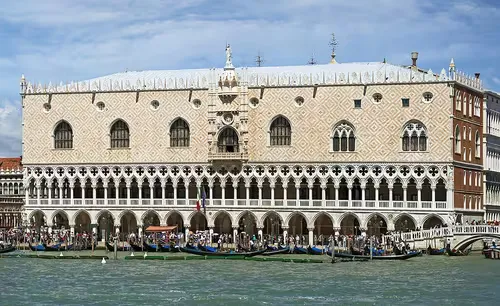
    Doge's Palace in Venice, stop 3 on the self-guided walking tour

    For centuries this was simply “the Palazzo”, the only building in Venice to carry that title. Every other patrician residence, however grand, was called a ca', a house. Here sat the doge and the magistracies of the Republic. Founded in 811, hit by fire again and again and rebuilt each time, the palace followed the Serenissima from its beginnings to its fall; after Venice joined the Kingdom of Italy it became a museum.

    Stand back and look at the façade, a masterpiece of Venetian Gothic with Byzantine and eastern roots that show how close the trade and cultural ties to the East were. Its effect rests on a clever paradox: the heavy upper block appears to rest on slender, delicately carved colonnades, as if the weight were on the wrong floor.

    Inside, many works have gone, but a large picture gallery remains, with Jacopo and Domenico Tintoretto, Titian, Veronese, Francesco Bassano, Palma il Giovane and others. For a first visit to Venice the interior is worth it: the Great Council Hall and Tintoretto's Paradise are the reason to come. If time is short, skip the armoury and the map room. On a second trip to Venice you can leave it out. In 2022 more than 1.1 million people came, making it the third most visited museum in Italy.

    The Bridge of Sighs is only 40 m away, a 1-minute walk along the side of the palace. If you go inside, the prison route takes you across it.

    Local name
    Palazzo Ducale
    Hours
    Apr 1-Oct 31: daily 09:00–19:00 (last entry 18:00); Nov 1-Mar 31: daily 09:00–18:00 (last entry 17:00); extended hours 1 May-26 Sept 2026 Fri/Sat until 23:00 (last entry 22:00); 19 Dec-3 Jan Fri/Sat until 21:00.
    Price
    35 EUR standard St. Mark’s Square Museums ticket including Doge’s Palace; 30 EUR online at least 30 days before visit; 15 EUR reduced
  4. 4

    Bridge of Sighs

    Bridge of Sighs in Venice, stop 4 on the self-guided walking tour

    The enclosed white bridge over the Rio di Palazzo links the Doge's Palace with the New Prison. The cells inside the palace, the pozzi, had become too small, so in 1580 the architect Gianantonio Rusconi was commissioned to design a separate prison across the canal. After his death Antonio da Ponte completed the south wing, giving it the only decorated wall of an otherwise bare building, facing the Riva degli Schiavoni and the lagoon. The fortress look was borrowed from Jacopo Sansovino's Mint, the Zecca, on the other side of the Piazzetta.

    The bridge itself was designed by da Ponte's nephew and pupil, Antonio Contin, and built soon after 1600 to move people securely from the interrogation rooms and courts to the cells. Inside it has two passages divided by a wall, so that convicted prisoners never met those still on their way to trial.

    Now look closely at the stone. It is white Istrian limestone over a single arch, and the roofline with its volutes struck one critic as “inappropriately frivolous” for a prison crossing, a hint of the Baroque to come. Along the lower arch runs a row of eleven carved heads, the central one a lion, with reclining figures in the corners. Each side has two windows with stone tracery in the shape of four eight-leaf flowers.

    The best way to see it is the free view from the Ponte della Paglia. Inside you cross only as part of the palace route and get a few seconds at the grilled window in a slow-moving queue, so the bridge alone is no reason to buy the palace ticket. Da Ponte's name returns at the end of the loop.

    San Zaccaria is 260 m further, about 4 minutes.

    Local name
    Ponte dei Sospiri
    Hours
    Exterior: always visible/accessible (public bridge/canal view). Interior crossing: same hours as Doge's Palace.
    Price
    Free to view/photograph from outside (from Ponte della Paglia). Walking across the interior is NOT a separate ticket; it is part of the standard Doge's Palace admission route (Doge's Palace: 35 EUR full / 30 EUR online / 15 EUR reduced), which visitors cross after the prison rooms.
  5. 5

    San Zaccaria

    San Zaccaria in Venice, stop 5 on the self-guided walking tour

    The church stands on Campo San Zaccaria, just off the waterfront southeast of the Piazza. It is dedicated to Zechariah, father of John the Baptist, whose body was a gift from the Byzantine Emperor Leo V the Armenian; it lies under the second altar on the right. The first church here was founded in the early ninth century by Doge Giustiniano Participazio, and several doges are buried in the crypt.

    Look at the façade, a very Venetian blend. Antonio Gambello began the present church in 1458 in Gothic style; years later Mauro Codussi finished the upper part, with its arched windows and columns, in early Renaissance style, and the work was done by 1515. The earlier Gothic church was not demolished: the new one was simply built beside it, and its remains still stand.

    The church belonged to a convent of Benedictine nuns, most of them from the leading noble families, and the convent had a reputation for being relaxed about enclosure. The abbess was usually a relative of the doge. In 855 Pope Benedict III hid here while fleeing the violence of his rival Anastasius, and out of gratitude he gave the nuns a large collection of relics, among them those of Athanasius of Alexandria and a piece of the True Cross. In 1105 a fire destroyed the whole complex.

    The main church is free and well worth a quiet look. The Chapel of Sant'Atanasio, the Golden Chapel and the crypt share a small separate ticket; the crypt often stands in water, with the columns mirrored in it, which makes it the part to choose if you add one.

    Next comes the longest leg so far: 970 m, about 15 minutes, to Santa Maria della Salute, as you leave San Marco for Dorsoduro.

    Hours
    Mon–Sat 10:00–12:00 and 16:00–18:00; Sun 16:00–18:00. Not visitable during Mass (Mon–Sat 18:30, Sun 10:00 and 18:30).
    Price
    Main church: free. Chapel of Sant'Atanasio, Golden Chapel, and Crypt: 1.50 EUR combined ticket.
  6. 6

    Santa Maria della Salute

    Santa Maria della Salute in Venice, stop 6 on the self-guided walking tour

    La Salute, Saint Mary of Health, stands on the narrow finger of the Punta della Dogana between the Grand Canal and the Giudecca Canal, so anyone arriving at the Piazza by water sees it. It is the last of the Venetian plague churches.

    In the summer of 1630 the plague swept through Venice and, by 1631, had killed nearly a third of the population: 46,000 people in the city and some 94,000 across the lagoon. Displays of the sacrament, prayers and processions to the churches of San Rocco and San Lorenzo Giustiniani had all failed. On 22 October 1630 the Senate decreed a new church, just as it had commissioned Palladio's Redentore after the previous outbreak in 1575 and 1576. This time it was not to be dedicated to a plague saint but to the Virgin Mary, long seen as a protector of the Republic.

    The design went to Baldassare Longhena, a pupil of Vincenzo Scamozzi, in the Baroque style then in fashion, and building began in 1631. Most of the art inside refers to the Black Death. The dome quickly became an emblem of the city skyline, painted by Venetians such as Canaletto and Francesco Guardi and by visitors such as J. M. W. Turner and John Singer Sargent.

    Go in: the main basilica is free, with no ticket or offering required. Only the sacristy has a small admission charge, worth it if you want to see more of the church's art.

    The Gallerie dell'Accademia are 620 m away, about 9 minutes on foot.

    Hours
    Basilica: Apr 1-Oct 31 daily 09:00–12:00, 15:00–17:30; Nov 1-Mar 31 daily 09:30–12:30, 15:00–17:30. Free basilica access; paid sacristy and dome have separate times. Religious services may restrict access.
    Price
    Main basilica (rotonda maggiore): free, no ticket or offering required. Sacristy (Sacrestia Maggiore / Museum): 4 EUR full, 2 EUR reduced (students, Venice residents, 65+, journalists, FAI/ICOM/UNESCO members, groups of 5-35, visitors who also see the Pinacoteca Manfrediniana).
  7. 7

    Gallerie dell'Accademia

    Gallerie dell'Accademia in Venice, stop 7 on the self-guided walking tour

    Venice's great collection of pre-nineteenth-century art fills a whole complex on the south bank of the Grand Canal: the former Scuola Grande, church and convent of Santa Maria della Carità. These buildings became free after the Napoleonic administration disbanded many churches, convents and scuole in the city.

    The gallery grew out of the Accademia di Belle Arti, the art academy founded on 24 September 1750. Its first director was Giovanni Battista Piazzetta, and Giambattista Tiepolo became its first president after returning from Würzburg. From 1777 it was one of the first places to study art restoration, under Pietro Edwards, and by 1819 this had become a formal course. A Napoleonic decree of 1807 refounded it as a royal academy and moved it here. The collections opened to the public on 10 August 1817, the gallery became independent in 1879, and the art school stayed in the same building until 2004, when it moved to the Ospedale degli Incurabili. The bridge and the vaporetto stop are both named after it.

    Is it worth the ticket? If you want Venetian painting in one place, yes; give it about an hour and a half. If you can only manage one museum in Dorsoduro, choose between this and Ca' Rezzonico by taste: older masters here, eighteenth-century life there.

    The Ponte dell'Accademia is 240 m away, about 5 minutes.

    Hours
    Tue–Sun 09:00–19:00 (ticket sales until 18:00); CLOSED MONDAYS.
    Price
    20 EUR full price; 2 EUR reduced (EU citizens 18-25); free under 18. Groups (10-25 adults) 17 EUR; 'Arteritivo' ages 26-35 Fri 17:15-19:00 15 EUR; Dorsoduro Museum Mile holders 17 EUR. Free first Sunday of each month and on designated 2026 national holidays; free for ICOM members and museum cardholders.
  8. 8

    Ponte dell'Accademia

    Ponte dell'Accademia in Venice, stop 8 on the self-guided walking tour

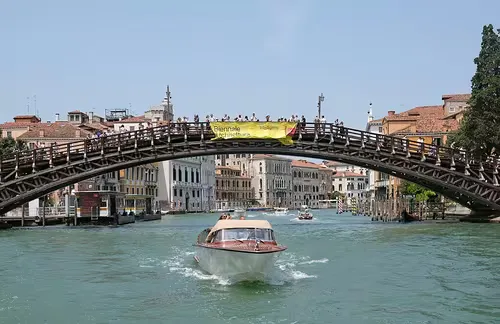
    This is the southernmost of the four bridges across the Grand Canal, linking San Vidal with the former church of Santa Maria della Carità. Hard to imagine today, but for three hundred years the Rialto Bridge was the only place where you could cross the Grand Canal on foot.

    The change came during the eighteen years of the last Austrian rule, between 1848 and 1866, the most important urban innovation in the city's history. Two new crossings were wanted, one at the new railway station and one here at the other end of the canal. In 1838 the architect Giuseppe Salvadori put forward several ideas, including a tunnel under the canal so that masted boats would not be blocked. After a pause caused by the uprisings of 1848, the English engineer Alfred Neville, who had already built 37 iron suspension bridges across Europe, proposed a single horizontal span of 50 m in 1852.

    His Ponte della Carità, named after the convent complex now housing the gallery, opened as a toll bridge on 20 November 1854. Venetians disliked it: the iron looked industrial among the old palaces, and at only 4 m high it got in the way of boats. People kept walking this line anyway. Within a few years the structure showed weak points, and by the fascist period it was visibly corroding.

    Pause in the middle and look along the Grand Canal before you go on. Dorsoduro proper is 290 m away, about 4 minutes.

    Hours
    Always accessible (public bridge, open 24/7)
    Price
    Free
  9. 9

    Dorsoduro

    Dorsoduro in Venice, stop 9 on the self-guided walking tour

    Dorsoduro means “hard back”. The name goes back to the ground the district was built on: firm, partly rocky soil, unlike much of the lagoon. The sestiere covers the southern part of the old town and also takes in the Giudecca and the small islands beyond it; at the end of 2024 it had 10,893 residents, 3,956 of them on the Giudecca.

    Its builders had two long waterfronts to work with, the Grand Canal and the Zattere, and the district is rich in churches and palaces as a result. The Salute and the Accademia, which you have just seen, both belong to it. On the Grand Canal, at the start of the Rio delle Torreselle, stands Palazzo Dario, commissioned from Pietro Lombardo in 1479 and finished in 1487: a Gothic body with a Renaissance façade towards the canal, one of the most characteristic palaces in the city.

    This is a good stretch to slow down. Ca' Rezzonico is 540 m away, about 7 minutes.

    Hours
    Always accessible (public neighborhood, open 24/7)
    Price
    Free (district/neighborhood; individual museums within it charge their own admission, e.g. Gallerie dell'Accademia and Ca' Rezzonico above)
  10. 10

    Ca' Rezzonico

    Ca' Rezzonico in Venice, stop 10 on the self-guided walking tour

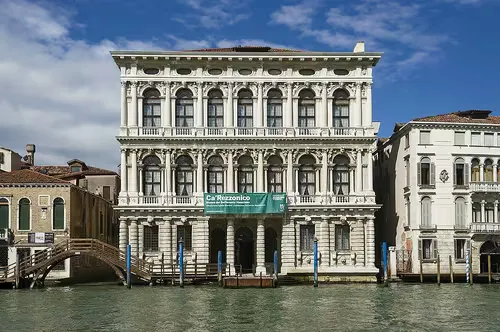
    The palazzo stands on the Grand Canal where the Rio di San Barnaba flows into it. Today it is the museum of eighteenth-century Venice, one of the eleven civic museums, with Baroque and Rococo interiors and paintings by Francesco Guardi and Giambattista Tiepolo. Note the “Ca'”: like every patrician home except the doge's, it was officially just a house.

    Its story is one of ambition outrunning money. Two decaying houses of the Bon family stood here, already visible in paintings around 1500. In 1649 Filippo Bon, a Procurator and patron of the arts, decided to turn them into one great palazzo and hired Baldassarre Longhena, the leading architect of Venetian Baroque and the man behind the Salute's dome. By 1661 the two buildings were joined and the canal façade had risen to the first, noble floor.

    Then it stalled. Longhena died in 1682, and the cost of the palace ruined Filippo Bon, who had to halt the work. He died in 1712, and the unfinished, already crumbling building passed to sons and grandsons, none of whom could afford to complete it.

    Go in if eighteenth-century rooms, furniture and painting appeal to you more than older altarpieces; it pairs well with an afternoon in Dorsoduro. Campo Santa Margherita is just 120 m away, 2 minutes on foot.

    Hours
    Apr 1-Oct 31: 10:00–18:00 (last entry 17:00); Nov 1-Mar 31: 10:00–17:00 (last entry 16:00); CLOSED TUESDAYS year-round; extended Fri/Sat hours until 20:00 (last entry 19:00) from 1 May-26 Sept 2026.
    Price
    15 EUR full price; 7.50 EUR reduced (children 6-14, students 15-25, 65+, cardholders). Combined 'Musei del Settecento Veneziano' pass (Ca' Rezzonico + Palazzo Mocenigo + Casa Tue Carlo Goldoni): 20 EUR full / 10 EUR reduced. Musei Civici Venezia all-museums pass: 50 EUR full / 25 EUR reduced.
  11. 11

    Campo Santa Margherita

    Campo Santa Margherita in Venice, stop 11 on the self-guided walking tour

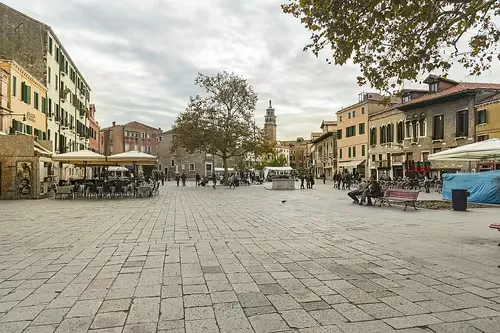
    This is one of the few centres of student life in Venice and, after Campo San Polo, the second largest square on this side of the Grand Canal. It is named after Saint Margaret of Antioch. Her parish church was deconsecrated under Napoleon and now serves as a university lecture hall; its bell tower was partly taken down in 1880 because it threatened to collapse, and only a stump remains.

    The square is bigger than it was meant to be. Its southern edge used to be the Rio della Scoazzera, filled in in 1863, which left the Scuola dei Varoteri of 1725 standing unexpectedly in the middle; the district council meets there today. Another filled canal once linked the square to the Rio di San Barnaba, and a house inscription records the work: “Colmato il Rio / A maggior ampiezza / MDCCCLXIII / Podestà Bembo”. See if you can find it.

    Architecturally the buildings are modest, with two exceptions: a Gothic one-storey building and the neighbouring Palazzetto Corner Foscolo from the thirteenth century, both restored so often that they reflect later ideas of the Middle Ages as much as the real thing. At the western end, beside the half-hidden Carmini church, rises the Scuola Grande dei Carmini, a large seventeenth-century building by Francesco Cantello, completed by Longhena, with its interior and Tiepolo's paintings intact.

    It is a natural place for a spritz before the next leg: 830 m, about 12 minutes, to Campo San Polo.

    Hours
    Always accessible (public square, open 24/7)
    Price
    Free
  12. 12

    Campo San Polo

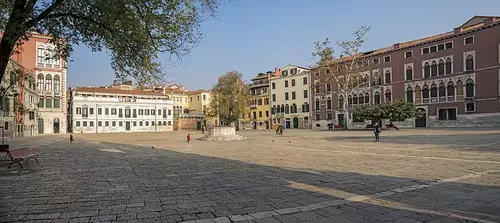
    Campo San Polo in Venice, stop 12 on the self-guided walking tour

    Campo San Polo is the largest campo in Venice, second in size only to Piazza San Marco. It takes its name from the church of San Polo in the southwest corner, which turns its apse, not its front, towards the square. One theory of a Roman origin for Venice even claims this was the arena of the Roman town, dismantled bit by bit for building material.

    At first it was used for crops and grazing. In 1493 it was fully paved and the well in the middle was set up, and from then on it hosted markets, fairs and large gatherings. Around the seventeenth century the markets for the poor were moved here from Piazza San Marco, though it never rivalled the Rialto. Instead it became a place of entertainment: public festivals, ball games, even bull hunts. It got out of hand, and in 1611 all games and all selling were banned on the square. A plaque on the outside of the church still records the ban.

    In 1548 Lorenzino de' Medici was stabbed to death here by two assassins working for Cosimo I. Look around at the palaces facing the square: Palazzo Maffetti Tiepolo, Palazzo Soranzo, Palazzo Donà and Palazzo Corner Mocenigo. In a large family house on the campo, Franco Basaglia was born, the psychiatrist behind Law 180, which led to the closure of Italy's asylums.

    The Mercato di Rialto is 590 m away, about 8 minutes.

    Hours
    Always accessible (public square, open 24/7)
    Price
    Free
  13. 13

    Mercato di Rialto

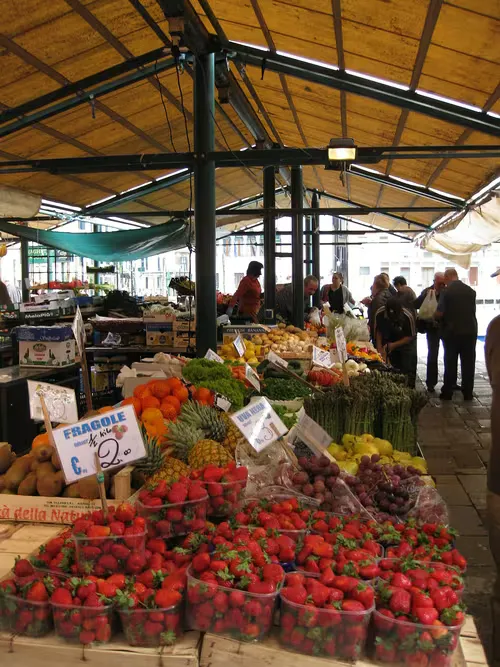
    Mercato di Rialto in Venice, stop 13 on the self-guided walking tour

    Rialto comes from rivo alto, the high bank, one of the first places in the lagoon to be settled. Trade and traffic gathered here from the start. Originally the Venetian market was held on Saturdays at Olivolo in Castello, and in its early days it was known for having no taxes or public charges, which let it compete with Pavia and Campalto, then among the most important markets in Italy.

    When the government settled here in the ninth century, the Rialto became the driving force of Venetian commerce, and the fish and vegetable market was its visible sign. By the late fifteenth century three big markets rotated on Saturdays, at San Polo, San Marco and San Giovanni in Bragora, but the Rialto always stayed the main one. Here goods changed hands by the piece and by the shipload, prices were fixed, imports, exports and ship hire were regulated, and an exchange traded above all gold and silver.

    The state watched everything. The Dogana di Terra levied a duty on every bolt of cloth, every litre of oil or wine, every kilo of flour, millet or beans. At the Fondaco della Farina, the state flour store, families and bakers could buy supplies for one month only, to stop hoarding and speculation. Traders rented a stazio from the state: an open-air pitch with a counter, a wooden shed behind and a sail stretched over it.

    Browsing is free. This is a morning market, so the produce stalls of the Erbaria and the fish of the Pescheria are at their liveliest early, and a bacaro nearby is the natural next move. San Giacomo di Rialto is 190 m away, about 3 minutes.

    Hours
    Erbaria (fruit/vegetable stalls): Mon–Sat approx. 07:30–13:30. Pescheria (fish market): Tue–Sat approx. 07:30–12:00. Closed Sunday; fish section also closed Monday (some produce stalls may still appear Monday).
    Price
    Free to browse (public market; prices are only for goods purchased)
  14. 14

    San Giacomo di Rialto

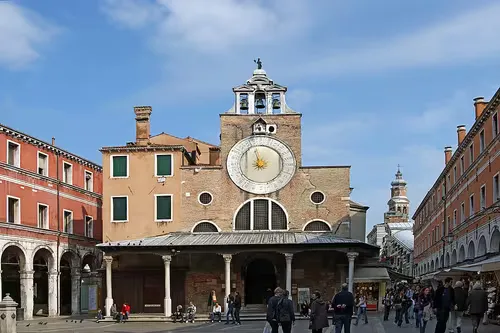
    San Giacomo di Rialto in Venice, stop 14 on the self-guided walking tour

    Venetians call it San Giacometto. It was probably built in the late eleventh or early twelfth century, but Renaissance writers believed it dated from late antiquity and saw it as the model for San Marco. In their version its foundation stone was laid on 25 March 421, and with it Venice itself was founded.

    The medieval records are full of practical detail. In 1341 the roof and both sides of the loggia were to get rain gutters. In 1393 the still fairly new bell tower received a new mechanical striking clock with a hammer three times larger than the old one, and in 1394 a new bell, the Rialtina, whose ringing marked the start and end of the working day across the whole city. The square in front was to be repaved, because merchants, nobles and foreigners met and lingered here, and a covered hall was planned so they could do business in bad weather.

    After the Rialto fires of 1531 and 1601 the church was restored each time. What you see is a 1601 rebuild that copies the medieval layout and reuses the columns of the old church; the floor was raised noticeably against flooding, and the rich vault mosaics mentioned in older records were lost. Look up at the large clock, from the fifteenth century, the feature the church is known for.

    It is free to go in, with donations welcome. The Rialto Bridge is 200 m away, about 5 minutes.

    Hours
    Mon: 09:00–17:00 | Tue: Closed | Wed–Sun: 09:00–17:00
    Price
    Free (church open for worship; donations welcome)
  15. 15

    Rialto Bridge

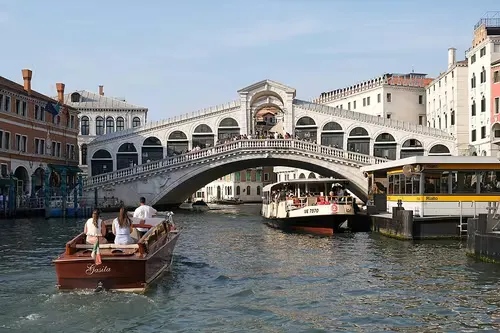
    Rialto Bridge in Venice, stop 15 on the self-guided walking tour

    The Rialto Bridge is the oldest of the four bridges over the Grand Canal, connecting the sestieri of San Marco and San Polo. The first dry crossing was a pontoon bridge in the twelfth century, built by Nicolò Barattieri and called the Ponte della Moneta, probably after the mint near its eastern end. As the market grew, traffic outgrew the floating bridge, and in 1255 a wooden bridge replaced it, with two ramps meeting at a movable centre that could be raised for tall ships. In time the market gave the bridge its name.

    The wooden bridge needed constant care. In the first half of the fifteenth century two rows of shops were built along it, and their rents went to the State Treasury to pay for maintenance. It was partly burnt in the revolt of Bajamonte Tiepolo in 1310, collapsed in 1444 under a crowd rushing to see the wedding of the Marquis of Ferrara, and collapsed again in 1524. A stone bridge was first proposed in 1503, and in 1551 the authorities called for designs.

    The winner was Antonio da Ponte, the same man who finished the New Prison by the Bridge of Sighs. His single stone span was built between 1588 and 1591 and closely follows the wooden bridge before it: two ramps rising to a central portico, with rows of shops along the covered ramps. The engineering seemed so daring that Vincenzo Scamozzi, Longhena's teacher, predicted it would fail. It is still standing.

    From here it is 580 m, about 8 minutes, back to Piazza San Marco, where the loop closes.

    Hours
    Always accessible (public bridge, open 24/7)
    Price
    Free
Walking tour route map of Venice Route loaded
Piazza San MarcoSt Mark's BasilicaDoge's PalaceBridge of Sighs+11
All 15 stops are already on the map.
You just press start.
AI Tour Guide

You just read the route. Now walk it with a guide who keeps the stories coming.

Press start wherever you are, even hundreds of kilometres from Venice, and the guide begins telling its stories right away. In the city, pick any of the 15 stops to start from: it leads you there, then talks with you the whole route, asking, listening, remembering, and shaping the tour around your answers.

15stops 5.8km 1 h 24 minwalking 13languages
▶Start the tour free

Free to start · Runs in your browser · No app, no download

Shorter Ways to Walk Venice

Not every visit has room for the whole loop. These three sections each work on their own and keep the stories together.

San Marco in a morning

Stops: 1, 2, 3, 4, 5

For first-time visitors who want the Republic's showpieces. Only 9 minutes of walking from the Piazza to San Zaccaria. St Mark's Basilica and the Doge's Palace charge admission; with both interiors this fills half a day.

Dorsoduro for art lovers

Stops: 6, 7, 8, 9, 10, 11

From the Salute to Campo Santa Margherita: 27 minutes on foot. The Salute's main church is free; the Gallerie dell'Accademia and Ca' Rezzonico charge admission. Pick one gallery and you have a relaxed afternoon ending with a spritz.

Campi, market and the Rialto

Stops: 11, 12, 13, 14, 15

For anyone who likes everyday Venice more than museums. 28 minutes of walking, everything free. Best done in the morning, while the market stalls are still trading.

How Long This Venice Tour Takes, With and Without the Interiors

The pure walking time is 1 h 24 min, and most legs are short. The two longer stretches are the 970 m from San Zaccaria to Santa Maria della Salute (15 minutes) and the 830 m from Campo Santa Margherita to Campo San Polo (12 minutes).

Walked with a look around every stop and the free churches, the loop takes about three hours. Add the interiors that are worth it, roughly 45 minutes in the basilica, two hours in the Doge's Palace and an hour and a half in one gallery, plus lunch, and you are at about seven hours, a full day.

The San Marco section takes half a day with both interiors, the Dorsoduro section an afternoon with one gallery, and the Rialto section about an hour and a half with a drink on the way.

Before You Set Off in Venice

  • Start and finish: The recommended start is Piazza San Marco, and the loop brings you back there. You can join at any stop and follow the same order from there.
  • Time of day: The Mercato di Rialto is a morning market. If you want the stalls busy, start at the Mercato di Rialto in the morning and walk the loop from there, finishing at Campo San Polo.
  • Tickets: St Mark's Basilica needs an online booking with a time slot in advance. For the Doge's Palace, booking online at least 30 days ahead is cheaper, and the ticket also covers the Museo Correr, the Archaeological Museum and the Marciana, valid for three days. The Gallerie dell'Accademia and Ca' Rezzonico charge admission; the side chapels of San Zaccaria and the Salute's sacristy have small separate tickets.
  • Water: Bring a bottle. Venice has 122 public fountains, roughly one every 100 m, and the tap water comes from the same aquifer as a well-known Italian mineral water.

Food and Breaks Along the Route: Cicchetti, Spritz and Coffee

Venice eats standing up as often as sitting down. A coffee at the bar, a few cicchetti at a bacaro counter and a spritz on a student square keep you going for the whole loop without a long restaurant lunch.

Bar espresso at Caffè FlorianA table on the Piazza costs several times the bar price, and the cafés add a surcharge when the orchestra plays. Florian is the one café on the square whose history makes a sit-down defensible; an espresso standing at its bar, like the Venetians do, is the sensible compromise. (Piazza San Marco)
Cicchetti and spritz in a bacaroSmall bites on bread, a glass of wine or a spritz at the counter: four or five cicchetti and two drinks cost well under half of a restaurant meal near the big squares. Italian being spoken at the counter is a good sign. (Around the Rialto)
A spritz on Campo Santa MargheritaThe student square has some of the cheapest spritz in town, and benches and bar tables make it the natural pause after the galleries of Dorsoduro. (Campo Santa Margherita)

Tourist Traps to Avoid in Venice around San Marco and the Rialto

  • Tourist menus near San Marco and the Rialto: Photo menus in five languages are the warning sign. Check the coperto and whether a servizio is added before you order; a cover charge on the high side plus an unannounced service charge is a red flag. Walk two lanes further and look for prices listed with Italian first. (Around Piazza San Marco and the Rialto)
  • Skip-the-line resellers for the basilica: Third-party sellers charge several times the official price for what is simply the regular timed ticket. Book directly on the basilica's official website. (St Mark's Basilica)
  • A gondola ride just to cross the Grand Canal: If you only want the feeling of a gondola, take a traghetto, the gondola ferry the locals use. You cross standing, it takes a few minutes and costs a tiny fraction of a private ride.
Walking tour route map of Venice
AI Tour Guide

Your guide is ready when you are, at any stop in Venice.

Press start and a voice AI Tour Guide takes it from here: leading the route through Venice, telling the stories, and turning your walk into a real back-and-forth conversation. No app or download is needed; it runs in your browser.

15stops 5.8km 1 h 24 minwalking 13languages
▶Start the tour free

Free to start · Runs in your browser · No app, no download

What the AI Tour Guide Adds in Venice

This loop is full of threads that run between stops: Longhena from San Basso to the Salute, Ca' Rezzonico and the Carmini, Antonio da Ponte from the prisons to the Rialto Bridge. The AI Tour Guide follows them as a conversation, notices whether you lean towards the painters or the merchants and tells you more of that, and picks up what you point at, like the palazzo across the canal or an inscription on a wall. Interrupt it whenever you like. You start with 100 free credits; after that you choose this tour all-inclusive for €19.99 with no time limit, or credits at €5 per hour.

A Real Conversation A voice AI Tour Guide greets you, leads the whole route, and tells the stories and facts as you walk, asking what you want to see and keeping a real conversation going. Not a recording you press play on.
Map Navigation Follow the route on the map and walk at your own pace. You choose where to start and when to move to the next stop.
Ask Anything Curious about a building you pass? Ask your AI Tour Guide on the spot and the conversation carries on.
13 Languages Switch language anytime. No separate tour needed.
Start free in your browser

Common Questions About Walking Venice

Can I get into St Mark's Basilica without a ticket?

Only to pray. The Porta dei Fiori on the Piazzetta dei Leoncini lets you in free for prayer and Mass, but you stay in a small area by a side altar. It is no substitute for the mosaic visit.

Will I see Leonardo's Vitruvian Man at the Accademia?

Probably not. The drawing belongs to the Gallerie dell'Accademia, but for conservation it is shown only for a few weeks every six years.

Is there a free viewpoint over the Grand Canal near the Rialto?

Yes: the rooftop terrace of the Fondaco dei Tedeschi looks over the Rialto and the Grand Canal at no cost. Slots last 15 minutes, take up to 50 people and are booked on dfs.com from 21 days ahead; without a reservation you are often turned away.

Is the Chorus church pass worth it for this walk?

Not for this route. The main churches here are free, and the pass only pays off once you visit four or five Chorus churches. For San Zaccaria's crypt a single ticket is enough.

Which city pairs well with Venice for a day trip?

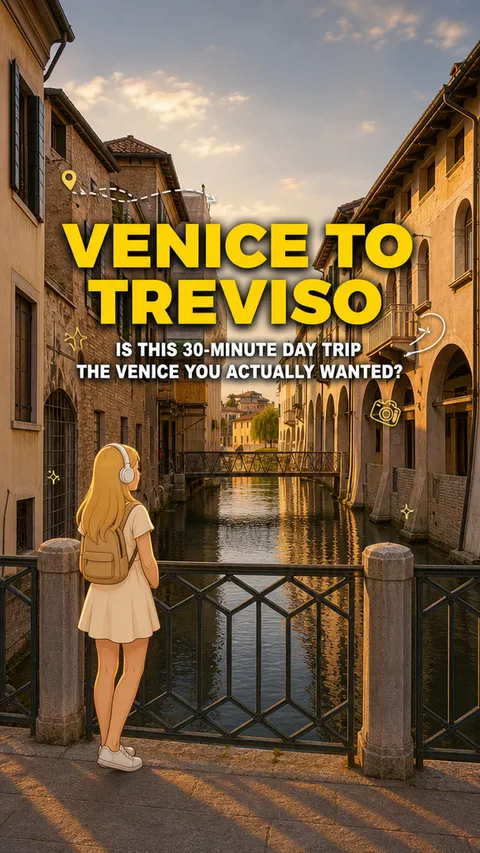
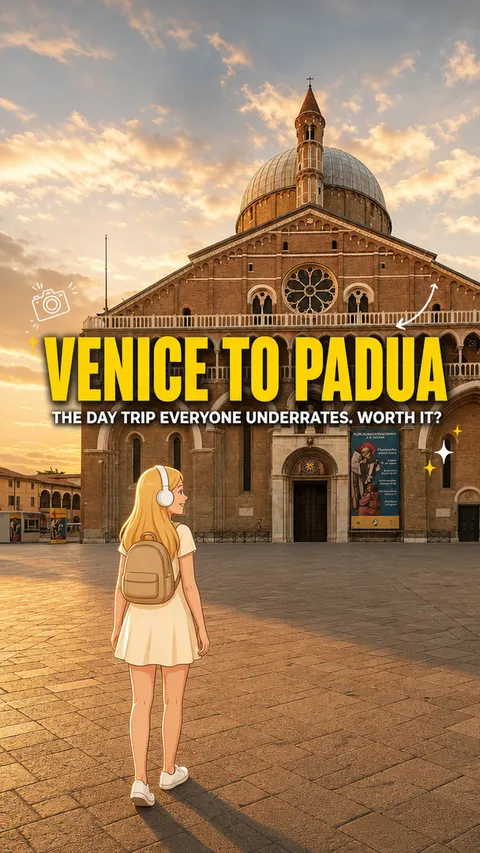
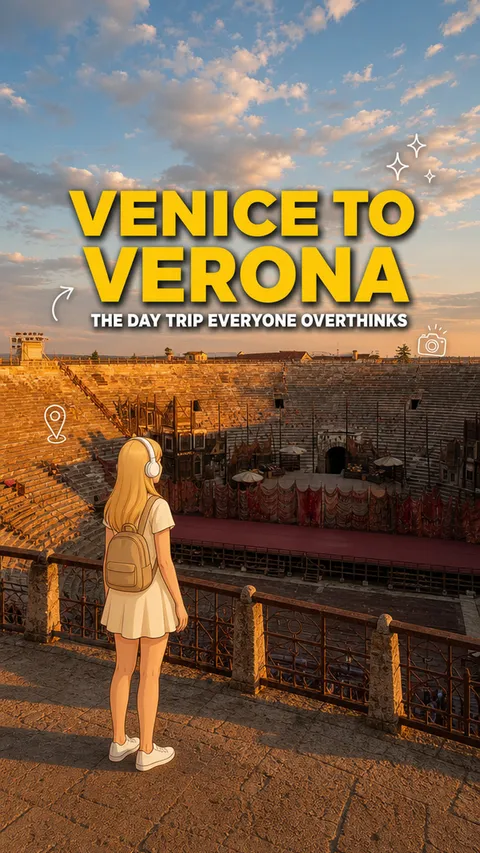
Treviso at 27 km and Padua at 36 km are the closest, each with its own free walking route. Verona, 104 km away, makes a longer but rewarding day.

Is the tour really free?

Yes. The whole tour is free: the route, the interactive map and the navigation cost you nothing. Only the voice AI Tour Guide is optional and paid: you test it with 100 free credits, then you pay either €5 per hour or €19.99 for this whole tour, with no time limit. Admission to 5 of the 15 stops is not included: St Mark's Basilica, Doge's Palace, Bridge of Sighs, Gallerie dell'Accademia and Ca' Rezzonico charge their own entry fees.

Do I need to download an app?

No. Everything runs in your phone browser. Open the route and start walking, no download and no sign-up required.

Do I need to book the walking tour in advance?

No booking needed. This self-guided tour is available anytime. Open the route in your browser and start walking. The AI Tour Guide works instantly, no app, no reservation required.

What languages is the AI Tour Guide available in?

The AI Tour Guide speaks 13 languages, so you take the tour in your own language and can switch at any time.

Can I skip stops or change the route?

Yes. Skip any stop, spend extra time at places you like, or start the route from any point. It is your walk, you set the pace.
Image credits
▶ Start free in your browser Runs in your browser, no app, no download