



Scrovegni Chapel
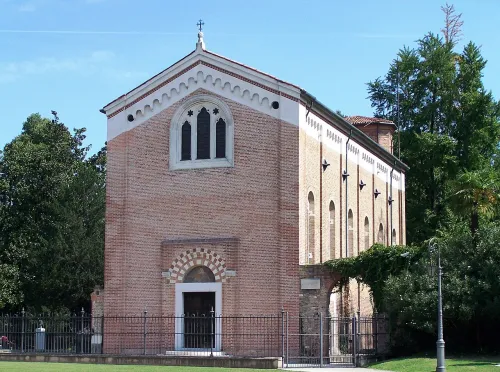
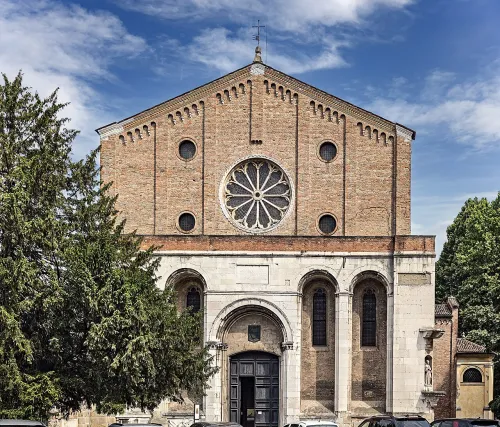
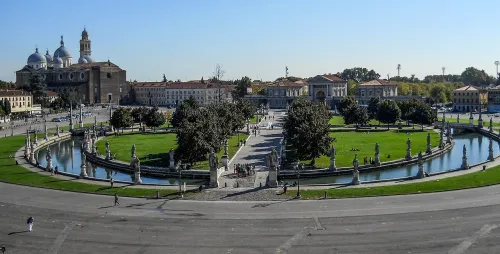
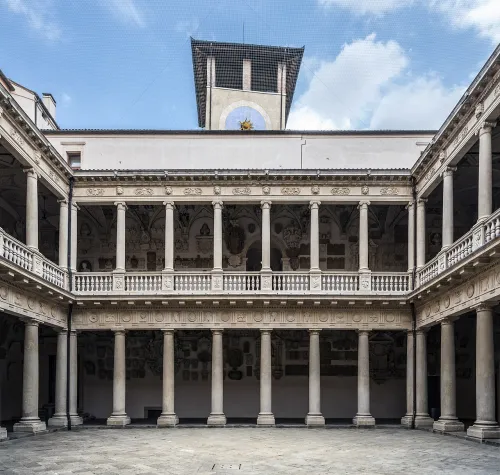
From outside, the Scrovegni Chapel looks modest: a small church beside the former Augustinian monastery of the Eremitani, both now part of the Civic Museums of Padua. Locals also call it the Arena Chapel, because it stands on land that the banker Enrico Scrovegni bought right next to the remains of a Roman arena. For a generation before the chapel existed, this open ground was where Padua staged an outdoor procession and sacred play of the Annunciation.
Scrovegni gave the commission to Giotto. The church was dedicated to Santa Maria della Carità on the Feast of the Annunciation in 1303 and consecrated in 1305, and a motet by the composer Marchetto da Padova seems to have been written for the dedication on 25 March 1305. So the place carries the Annunciation in its ground, its name day and its music.
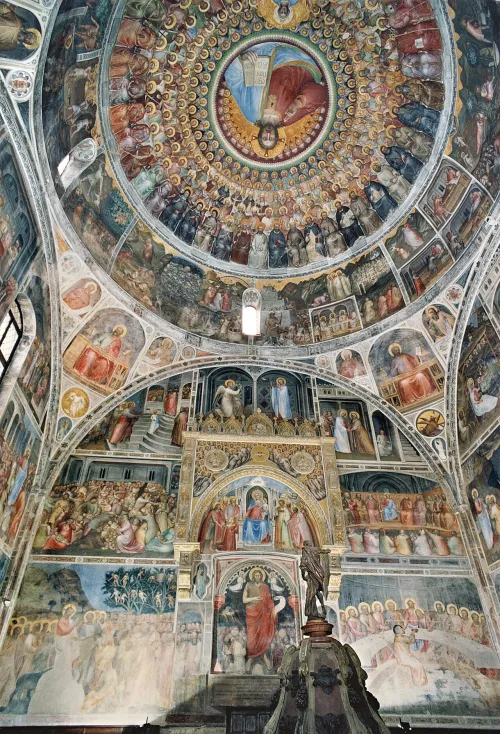
Inside, Giotto and his workshop painted every surface, walls and ceiling alike, in a nave just under 21 metres long, about 8.4 metres wide and 12.65 metres high. The largest cycles tell the life of the Virgin and the life of Christ, with Mary's role in salvation at the centre. Turn around before you leave: the entrance wall carries a huge Last Judgement. Low on the side walls, look for the grisaille panels in grey tones showing the Vices and Virtues.
These frescoes, finished around 1305, set off a revolution in wall painting and shaped technique, style and subject matter for a whole century. Whether you know art history or not, this is the one interior on the route you should not skip; entry is by booked time slot.
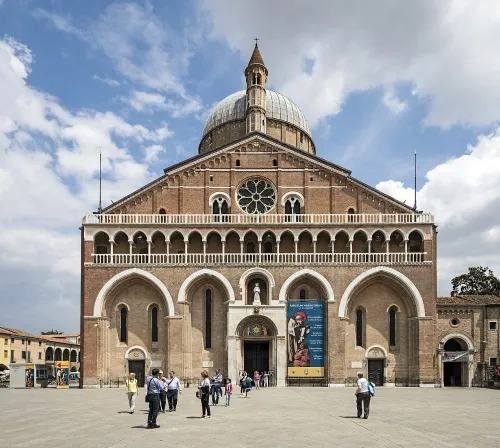
From here it's 300 metres, about 4 minutes, past the Civic Museums to the church the Augustinian friars built next door.