

Piazza Maggiore
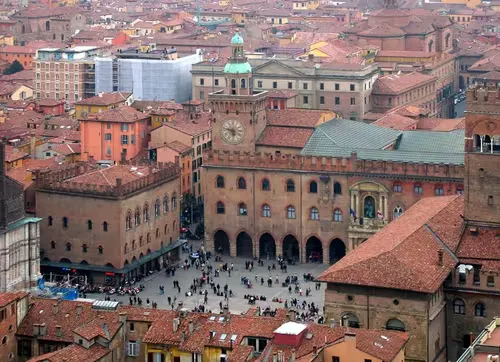
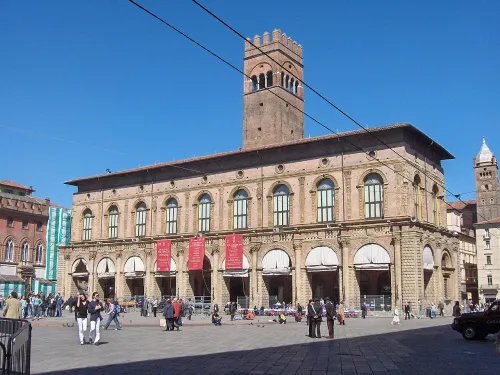
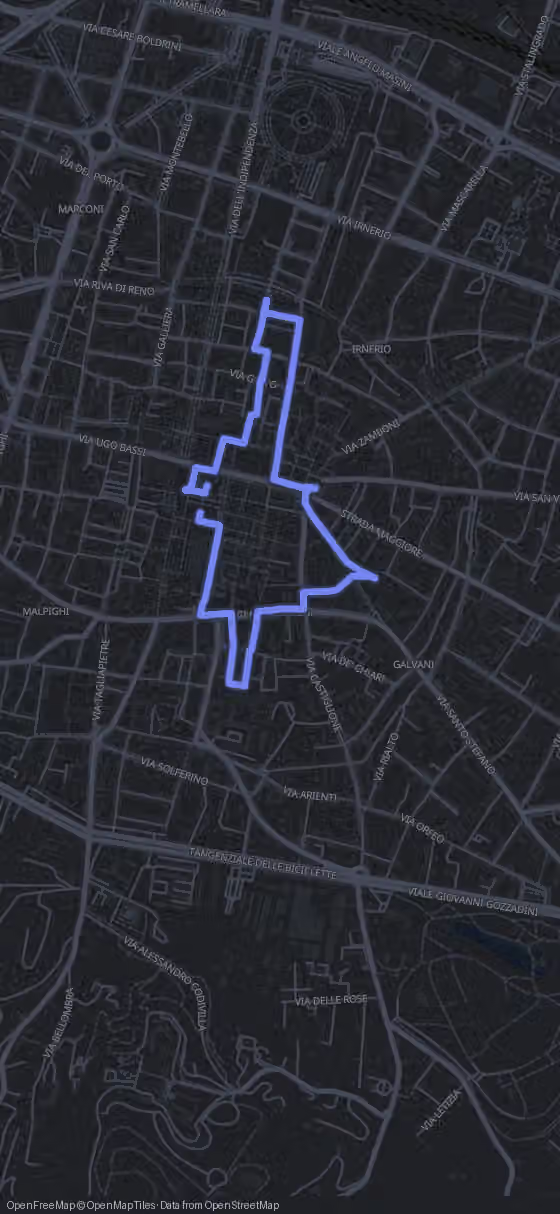
Piazza Maggiore has been Bologna's gathering place since the 13th century, when the commune bought up houses on this spot and pulled them down to make room for a market square. Stand in the middle and turn slowly: almost every side shows you a different century. To the north rises the Palazzo del Podestà, the oldest of the buildings, crowned by the Torre dell'Arengo, with the Palazzo Re Enzo added onto it. You come back to it at the very end, so just fix it in your mind for now.
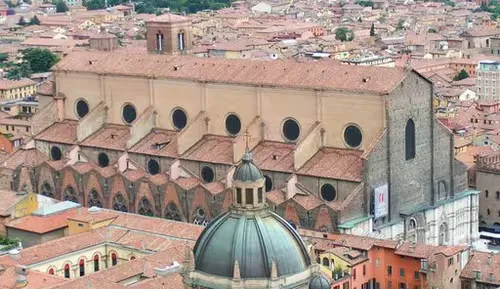
To the west the Palazzo d'Accursio, also called Palazzo Comunale, closes the square: a 14th-century palace that still serves as city hall and also houses the Museo Morandi. Opposite the Podestà, on the south side, the unfinished façade of the Basilica of San Petronio towers over everything.
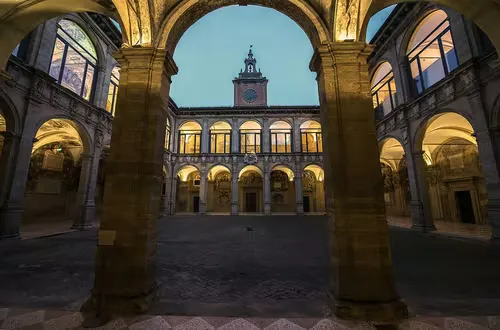
The east side looks like one long palace but is really a screen. The Palazzo dei Banchi was put up between 1565 and 1568 on a design modelled on Giacomo Barozzi, to replace humbler houses while keeping the old streets that crossed there. Its portico runs straight on into the portico of the Archiginnasio, the old seat of the university.
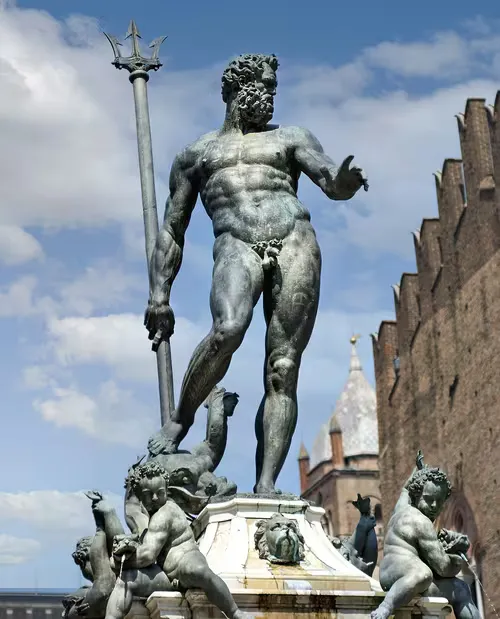
The square took its present outline in the 15th century; in the 16th the pope had the whole area remodelled through Cardinal Charles Borromeo, which gave the neighbouring Piazza Nettuno its fountain by Giambologna. From 1860 the square carried the name of King Victor Emmanuel II, and his equestrian statue stood here until 1945, when it moved to the Giardini Margherita, where it still is.
The square is free and open at any hour. Give it ten minutes, then walk 40 m, about a minute, to the doors of the basilica.