

Porte Mordelaise
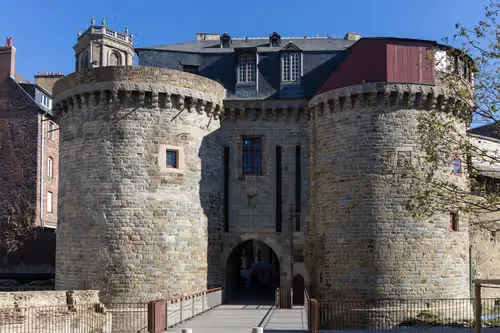
You start at the old front door of Rennes. The Porte Mordelaise is a fortified gatehouse and one of the last pieces of the city's ramparts. Look at how it is built: a large carriage gate and a smaller pedestrian gate, both with pointed arches, set between two heavy towers crowned with machicolations, the projecting openings from which defenders could drop missiles on anyone below. There was a moat too, and you can still make out remains of a barbican, the outer defensive work in front of the gate.
Each of the two gates once had its own drawbridge, worked by arms and counterweights, and behind them a portcullis that could slam down as a second barrier. Above the big gate, find the carved stone with a coat of arms: two lions on either side of a lance. That was the emblem of the Montfort dukes, who ruled Brittany from 1364 until 1514.
The site is far older than the stones you see. The first wall around Rennes went up in the 3rd century, and a gate stood roughly here from that time; the present architecture is mostly 15th century. This was the main entrance to the city, the one used by processions, and it takes its name from Mordelles, an important lordship from the 11th century onwards, which lay in the direction the gate faces. Tradition holds that future dukes swore their oath in front of it, which is why it is sometimes called the royal, ducal or bishop's gate.
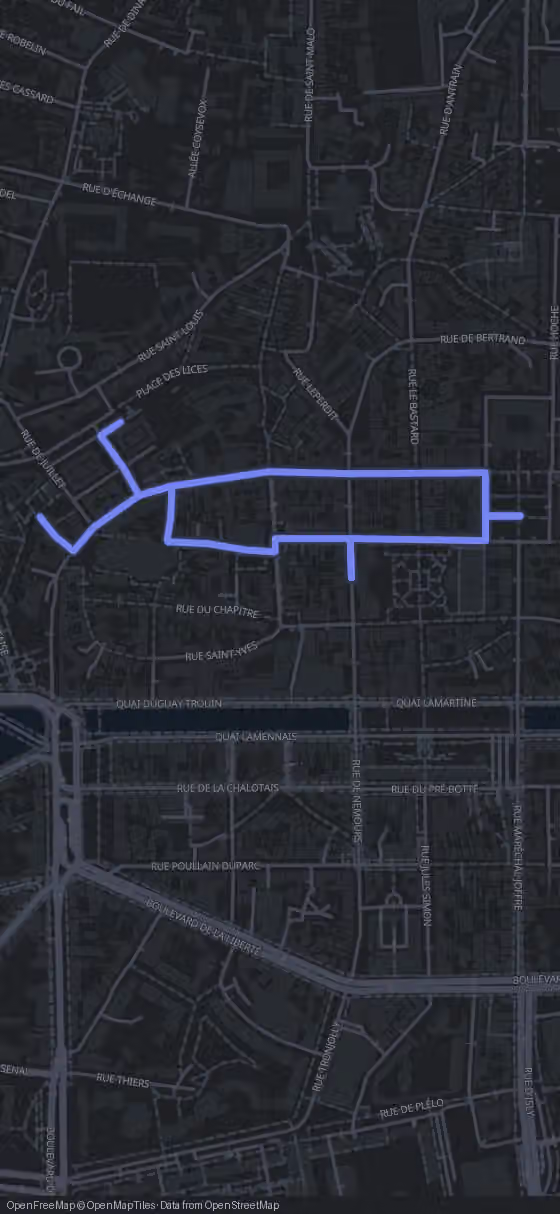
From 1418 the gatehouse was renovated several times to serve as the residence of the city's governors, a role it kept until the end of the 16th century. After that the town community held its meetings here. By 1723 it was in very poor condition and was leased out. It costs nothing to walk through, and that is the best way to feel the double defence of drawbridge and portcullis. From here it is 240 m, about 4 minutes, to Rennes Cathedral.