

Monet's House and Gardens
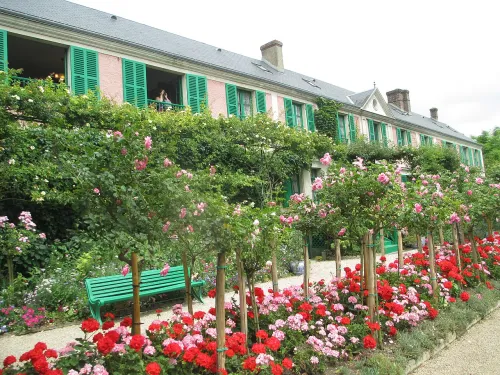
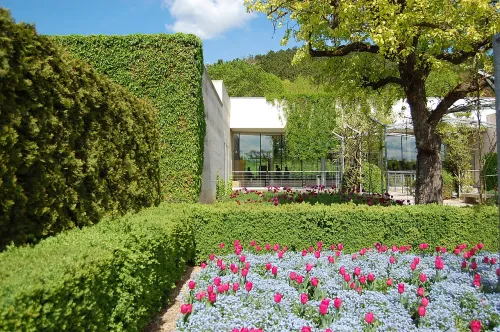
Everything in Giverny begins at this gate. Claude Monet lived and painted here for 43 years, from 1883 until his death in 1926, and he spent years reshaping the grounds, planting thousands of flowers. He believed a painter had to surround himself with nature and work outdoors, so the garden became his real studio. The pond with its water lilies, the Japanese bridge and the weeping willow turn up on canvas after canvas, and those paintings now hang in dozens of major collections. Standing at the pond, you are looking at the motif itself.
How he got here is a story of debt and scandal. From December 1881 Monet rented the Villa Saint-Louis in Poissy, until the owner threatened to take him to court over unpaid rent; Monet only won a delay before eviction on 15 April 1883. He needed somewhere affordable, close enough to Paris to stay in touch with dealers, yet far from the city's rivalries and gossip, not least because he was living with a married woman, Alice Hoschedé. The house also had to hold a household of ten: Monet, his two sons aged 5 and 15, Alice and her six children, the youngest five and the eldest nineteen.
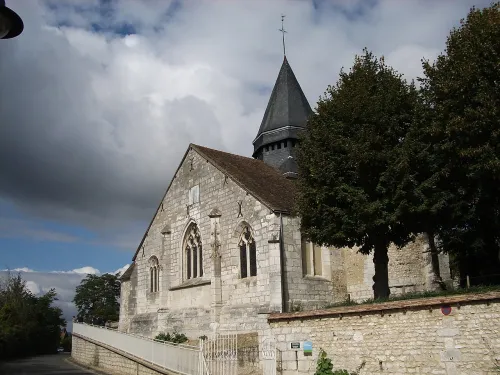
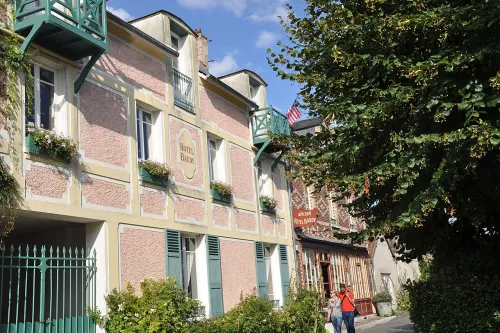
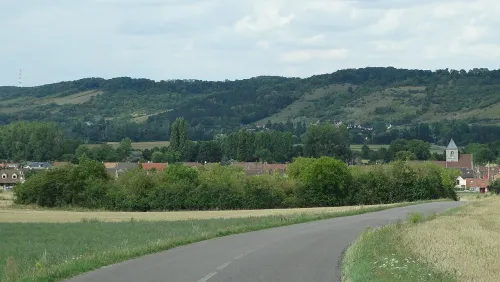
On 5 April he went house hunting by train on the line from Gisors to Pacy-sur-Eure, which stopped at every village along the Epte between Vernon and Gasny. From his carriage he spotted Giverny: 279 inhabitants, small farms around it, a blacksmith, three mills, a school and its own railway station.
Is it worth going in? This is the reason Giverny is on the map. With 530,000 visitors in 2010 it was the second most visited site in Normandy after Mont-Saint-Michel, it has been a monument historique since 1976 and carries the labels Maison des Illustres and Jardin Remarquable. Give it at least an hour and a half, more if you paint or photograph.
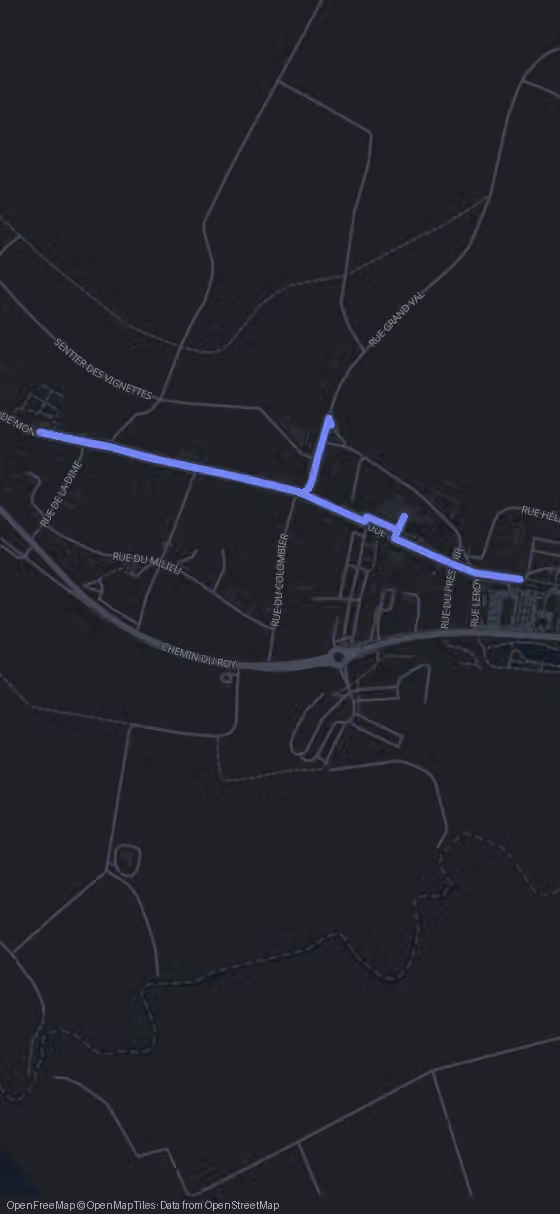
From the gate it is only 240 m, about 3 minutes on foot, to the museum that tells what happened after Monet arrived.