



Alameda del Tajo
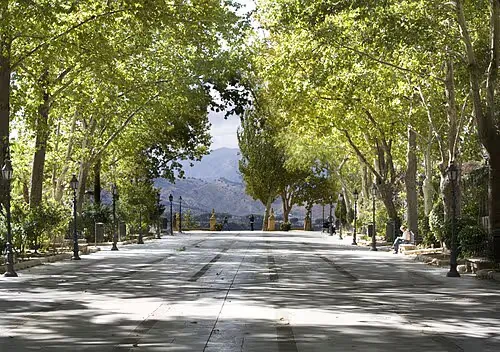
The walk begins in a park on the very rim of the Tajo. The Alameda del Tajo, once called the Alameda de San Carlos, dates from the early 19th century and is part promenade, part botanical garden. Five planted avenues lead to a walkway lined with balconies, and from those railings you look out over the basin below the town and the Serranía de Ronda beyond.
Give the trees a moment. Several are more than 200 years old and listed among the notable trees of Málaga province: look for a Himalayan cedar, an enormous stone pine and a honey locust. Beneath the viewpoints lies a rock formation known as the Asa de la Caldera, the 'handle of the cauldron'. Among the statues is one of Pedro Romero, a name you will meet again at the bullring at the end of the walk.
From the western side, the Paseo de los Ingleses follows the edge of the gorge to the gardens of the Hotel Victoria. It was laid out at the same time as that hotel and Ronda's railway, with one goal: bringing in visitors. The Camino de los Tilos has a gentler story. It runs straight to the Parador along a line of lime trees, and each tree originally carried the name of a child born in Ronda on the day it was planted. On the way it crosses the Blas Infante gardens, home to the mausoleum of the Japanese artist Miki Haruta, an open-air auditorium and a tourist office.
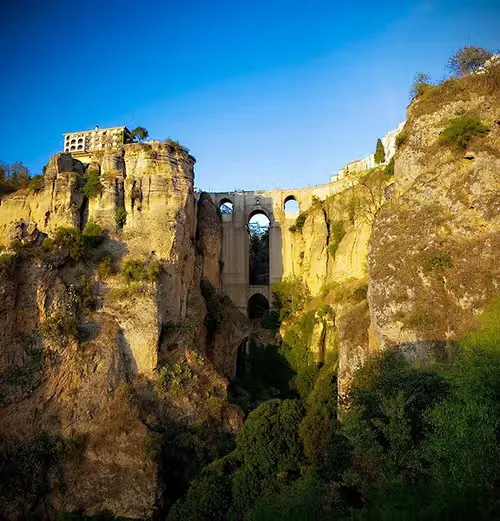
There is nothing to pay here, so stay as long as the view holds you. Then walk 440 metres, about six minutes, to the bridge that made the gorge famous.