Free Walking Tour Santa Cruz: Plaza to Cristo Redentor

From the palm-shaded main plaza to the bronze Cristo on the second ring road and back to an Art Nouveau mansion: 4.5 km through the story of Santa Cruz.

7 Stops 4.5 km ~1 h 3 min walking
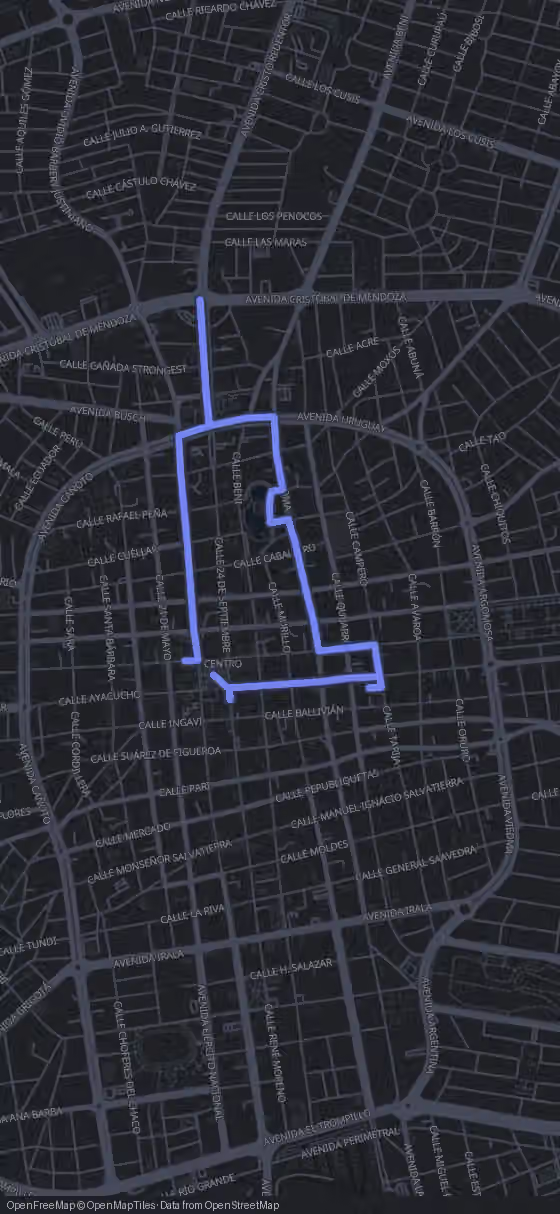
Route map for the Santa Cruz walking tour
Stop 1 of 7
130 m·2 min
Plaza 24 de Septiembre
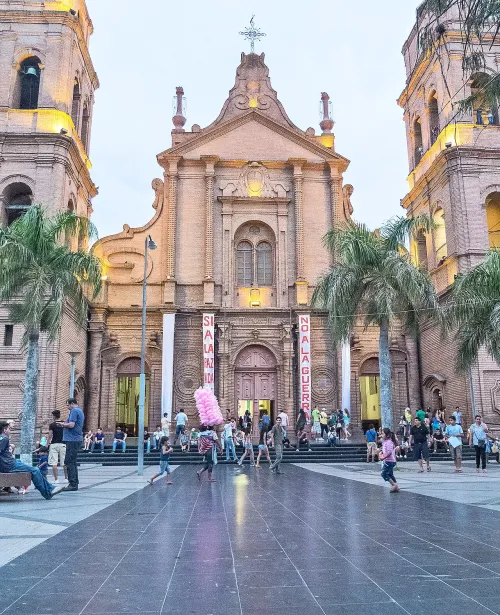
Head south-east across the plaza toward the Catedral basílica de San Lorenzo
Hola, welcome to Santa Cruz. I'm Alex, and a landmark at one of the city's busiest roundabouts began far from home.
Try this tour with Alex

What This Santa Cruz Walk Covers

Seven stops lead from Plaza 24 de Septiembre and the Catedral Basílica de San Lorenzo past the Museo de Arte Contemporáneo de Santa Cruz de la Sierra and Parque El Arenal, up Avenida Monseñor Rivero to Cristo Redentor and back to the Museo de Historia de Santa Cruz, half a block from where you began.

It is 4.5 km with 1 h 3 min of pure walking; allow about four hours with visits. Everything is free except the cathedral's tower and sacred art museum. The GPS route runs free in your browser, and the AI Tour Guide is optional.

Open free GPS & optional AI Tour Guide
View of Santa Cruz

The Route

Walking Map of Santa Cruz, From the Plaza to the Cristo

7 stops 4.5 km 1 h 3 min walking
Tap to load interactive map

The 7 stops along this route

  1. Plaza 24 de Septiembre in Santa Cruz, stop 1 on the self-guided walking tour
    1Plaza 24 de Septiembre
  2. Catedral Basílica de San Lorenzo in Santa Cruz, stop 2 on the self-guided walking tour
    2Catedral Basílica de San Lorenzo
  3. Museo de Arte Contemporáneo de Santa Cruz de la Sierra, stop 3 on the self-guided walking tour
    3Museo de Arte Contemporáneo de Santa Cruz de la Sierra
  4. Parque El Arenal in Santa Cruz, stop 4 on the self-guided walking tour
    4Parque El Arenal
  5. Avenida Monseñor Rivero in Santa Cruz, stop 5 on the self-guided walking tour
    5Avenida Monseñor Rivero
  6. Cristo Redentor in Santa Cruz, stop 6 on the self-guided walking tour
    6Cristo Redentor
  7. Museo de Historia de Santa Cruz, stop 7 on the self-guided walking tour
    7Museo de Historia de Santa Cruz
  8. That's the full route.

    Walk it with an AI Tour Guide talking you through every one of these streets.

    Start free in your browser
    You made it

Your Santa Cruz Walking Tour, From Cathedral Bricks to Bronze

  1. 1

    Plaza 24 de Septiembre

    Plaza 24 de Septiembre in Santa Cruz, stop 1 on the self-guided walking tour

    You begin where the city itself began. The main square was one of the very first things laid out when Santa Cruz de la Sierra was planned, and it is still the place the city comes back to. Palms and other trees native to the region shade the paths, and around the edges stand the buildings that run the city and the department: the Casa de Gobierno, the Alcaldía, the Casa de la Cultura, the Club Social 24 de Septiembre and the Argentine consulate, with the cathedral filling one side.

    The square has changed its name with the city's politics. It started as the Plaza de Armas, and in 1898 it was the scene of fighting during the liberal federal revolution. Once things calmed down it became the Plaza de la Concordia, the square of harmony. Today it carries the date of the uprising of 24 September 1810, when Santa Cruz rose for independence.

    Look for the statue of Ignacio Warnes, one of the heroes of that independence struggle. The story told here is a grim one: after his death, his head is said to have been placed on a pike in this very square as a warning to anyone else thinking of rebellion. The statue stands as the city's answer.

    Since 2004 the streets Ayacucho and Junín along the square have been pedestrian, which makes it easy to wander. Because the plaza is the heart of social life, you may find concerts, art, celebrations or a protest here. From the square, the cathedral is just 120 m away, about 2 minutes on foot.
    Hours
    Open 24/7
    Price
    Free
  2. 2

    Catedral Basílica de San Lorenzo

    Catedral Basílica de San Lorenzo in Santa Cruz, stop 2 on the self-guided walking tour

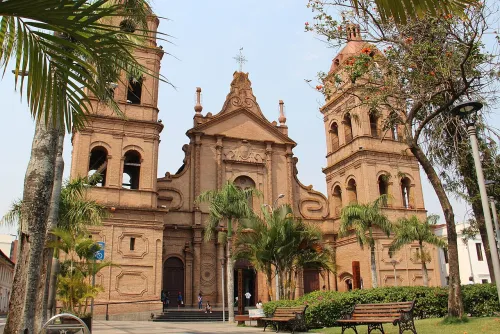
    Before you go in, take a good look at the facade. The warm brick you see, with every cornice, ornament and relief picked out in fired clay, is not how the church always looked. In the second half of the 20th century restorers stripped off the lime and sand render to reveal the brickwork underneath, then treated it to keep it from weathering. That restoration gave the cathedral its signature face.

    This is the third church on the spot. The first was built by the Mercedarian friar Diego de Porres in the time of Viceroy Francisco de Toledo. In 1770 Bishop Ramón de Herboso had it rebuilt, with the head sacristan Antonio Lombardo in charge of the work. Then in 1838, under President Andrés de Santa Cruz and at the urging of his vice president José Miguel de Velasco, the old church was replaced by the eclectic building you see now, designed by the French architect Felipe Bertrés. It took until 18 August 1915 for it to be consecrated.

    Inside, look up: the vaults are made of wood and covered in painted decoration. At the high altar you will find part of the original worked silver cladding from the Jesuit mission of San Pedro de Moxos, and four sculpted reliefs from the same mission are on display. Entering the nave is free, so it is worth a few minutes even if you are short on time.

    The mirador tower and the Museo de Arte Sacro charge a small entry fee. The tower is for you if you want the plaza from above; the sacred art museum suits anyone drawn by the mission silver. From here it is 700 m, about 9 minutes, to the contemporary art museum, four blocks from the plaza.

    Local name
    Catedral Metropolitana Basílica de San Lorenzo
    Hours
    Mon 07:30–11:00, 15:00–19:00; Tue–Fri 07:30–12:00, 15:00–19:00; Sat 07:30–08:30, 15:00–19:00; Sun 06:30–12:00, 17:00–20:30 (church); Mon–Sat 09:00–12:00, 15:00–18:30, Sun 15:00–18:00 (mirador tower)
    Price
    Free for church nave / prayer; Museo de Arte Sacro and mirador tower ~Bs 10
  3. 3

    Museo de Arte Contemporáneo de Santa Cruz de la Sierra

    Museo de Arte Contemporáneo de Santa Cruz de la Sierra, stop 3 on the self-guided walking tour

    On the corner of Calle Sucre and Calle Potosí stands a republican style mansion built around 1910, known locally as the Casa de los Tres Pavos, the House of the Three Peacocks. The building has lived several lives. The Frerking Osuna family donated it to the city, and it became the Neftalí Sandoval school. During the Chaco War it served as a hospital.

    The museum itself opened on 14 March 1991, created by the then education minister Mariano Baptista Gumucio together with the director of the local Casa de la Cultura. Its collection of more than 300 works covers paintings, sculpture, drawings and prints by generations of Bolivian artists and by foreign artists living in Bolivia, with a focus on the second half of the 20th century up to today.

    The collection keeps growing in an interesting way: since the 1990s the museum has added works through the acquisition prizes of the Bienal de Artes Plásticas y Visuales and the city's Premio Municipal de Pintura y Escultura. So what hangs here is a running record of what Bolivian juries have rated highly over three decades. Temporary exhibitions, talks and workshops mean there is often something new.

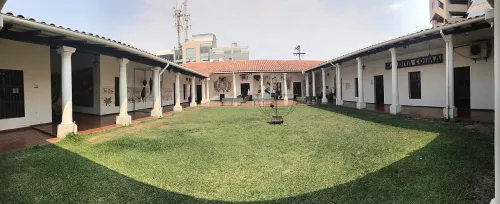
    Entry is free, which makes it an easy yes even if contemporary art is not your thing: at least visit the sculpture patio, a garden where art and greenery meet and you can sit for a moment. Art lovers should give it a good half hour or more. From here it is 1070 m, about 15 minutes, to Parque El Arenal.

    Hours
    Mon 08:00–16:00, Tue–Fri 08:00–19:00, Sat 16:00–20:00, Sun closed
    Price
    Free
  4. 4

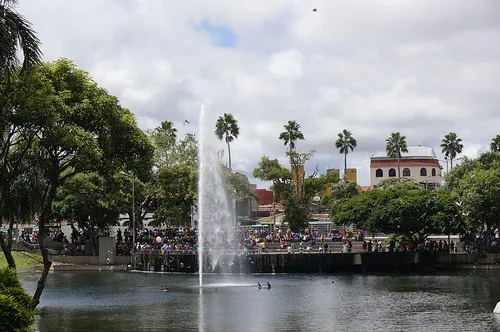
    Parque El Arenal

    Parque El Arenal in Santa Cruz, stop 4 on the self-guided walking tour

    Parque El Arenal sits inside the historic centre around a lagoon. For much of the 19th century and part of the 20th this was simply a natural pond. In 1958 work began to turn it into a place for leisure, and in the 1970s, under the architect Sergio Antelo, the island in the lagoon received a museum and a restaurant.

    Keep an eye on the water for the sculptures of the mermaids and the Hydra. They had been taken away, and they returned to the lagoon during the city's anniversary month, put back in place under mayor Manuel Saavedra. For many locals that return mattered: the figures belong to the park's identity.

    The park's future has been debated for years. A revitalisation project led by the architect Víctor Hugo Limpias, first presented to the public in October 2016 and announced in 2018, aims to connect the park directly with the city centre so the two feel like one space.

    The park is free and makes a natural pause between the museums and the longer stretch ahead. From here it is 820 m, about 12 minutes, to Avenida Monseñor Rivero.

    Price
    Free
  5. 5

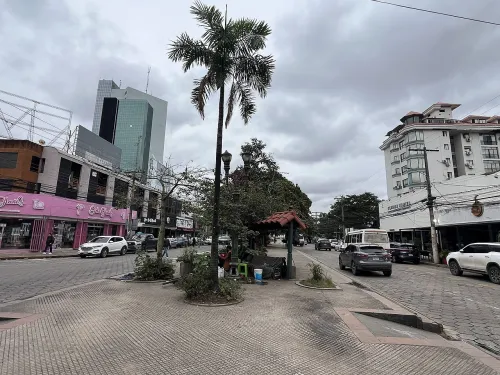
    Avenida Monseñor Rivero

    Avenida Monseñor Rivero in Santa Cruz, stop 5 on the self-guided walking tour

    Avenida Monseñor Rivero runs between the first and second ring roads, and it shows you a different Santa Cruz from the colonial centre. The avenue is lined with restaurants, cafés and bars aimed at the city's better off residents, which makes it the obvious place on this route to sit down for a coffee or a meal.

    Notice how the street is framed. At one end rises the Cristo Redentor statue, at the other the Palacio de Justicia, the Palace of Justice, built in 1996. Faith at one end, the law at the other, and the city's social life in between.

    Once a year the avenue becomes a parade route. The Santa Cruz carnival procession moves up the left side of Avenida Monseñor Rivero to the Cristo, turns around the statue and comes back towards the centre along the right side.

    The avenue has also seen ideas come and go. In 2003 an illuminated glass fountain was installed here to symbolise the cultural diversity of the city. It stopped working for a long time and was removed in 2008, when the street was renovated. The Cristo is only 290 m away, about 4 minutes on foot.

    Hours
    Open 24/7
    Price
    Free
  6. 6

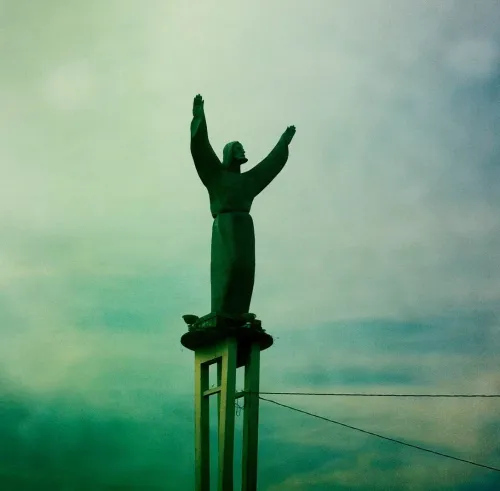
    Cristo Redentor

    Cristo Redentor in Santa Cruz, stop 6 on the self-guided walking tour

    The bronze Christ with open arms, a sign of peace and welcome, stands on the second ring road and is one of the clearest symbols of cruceño identity. It is also a landmark people use to find their way around the city. Around it you will see green spaces, a huge flag of the department of Santa Cruz, Bolivian flags and a papal altar, used by Pope Francis during his visit to Bolivia in 2015.

    The statue was made in La Paz by Emiliano Luján, a Bolivian sculptor and caricaturist, and brought to Santa Cruz to mark the fourth National Eucharistic Congress of 1961. The money came from the Asociación de Damas Cruceñas, women from Santa Cruz living in La Paz, led by Victoria Velasco Franco de Tejada. President Víctor Paz Estenssoro attended the inauguration and had even contributed to the design.

    In 2013 the Cristo Redentor was declared Religious Cultural Heritage of Bolivia. Its role goes beyond religion: large civic assemblies, the cabildos, and gatherings for regional demands of Santa Cruz are often held at its feet. When the city wants to make its voice heard, this is where it comes.

    The monument is free and open at all hours. The traffic around it is heavy, so cross with care. Now comes the longest leg of the walk: 1510 m, about 22 minutes, back into the old town to the Museo de Historia de Santa Cruz.

    Hours
    Open 24/7
    Price
    Free
  7. 7

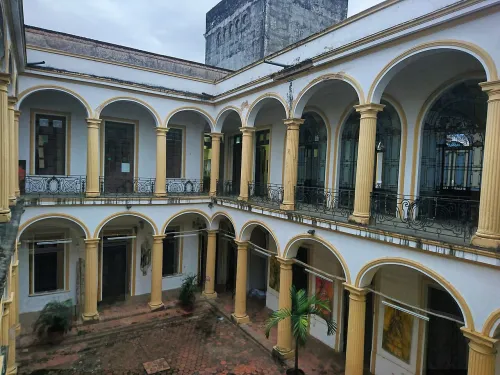
    Museo de Historia de Santa Cruz

    Museo de Historia de Santa Cruz, stop 7 on the self-guided walking tour

    You finish half a block from the plaza where you started, in front of one of the most elegant houses of the old town. The Art Nouveau mansion was built between 1915 and 1920 by the architect Juan Knez for the Gutiérrez Jiménez family. The city has declared it a heritage building under full protection, so take a moment for the facade before you go in.

    The family sold the house to the Bolivian state in 1960, and it passed through several public institutions until 1989, when the Universidad Autónoma Gabriel René Moreno took it over to set up a museum and a historical archive. The museum was formally created in 1996, and the university still runs it.

    The real treasure is the archive: the oldest collection of documents in eastern Bolivia, with colonial papers from 1614 through the first century of the republic. There is also a library on the region's history, a research centre, an exhibition hall and a small house theatre for 70 people with its own resident company.

    Entry is free. If you have enjoyed the stories along the way, the exhibition rooms are a good way to tie them together; history fans could spend an hour here. When you are done, the GPS navigation will take you the short way back to Plaza 24 de Septiembre.

    Hours
    Mon–Fri 08:00–12:00, 15:00–18:30, Sat–Sun closed
    Price
    Free
Walking tour route map of Santa Cruz Route loaded
Plaza 24 de SeptiembreCatedral Basílica de San LorenzoMuseo de Arte Contemporáneo de Santa Cruz de la SierraParque El Arenal+3
All 7 stops are already on the map.
You just press start.
AI Tour Guide

You've read the route. Now walk it with a guide in your ear.

Press start wherever you are, even hundreds of kilometres from Santa Cruz, and the guide begins telling its stories right away. In the city, pick any of the 7 stops to start from: it leads you there, then talks with you the whole route, asking, listening, remembering, and shaping the tour around your answers.

7stops 4.5km 1 h 3 minwalking 13languages
▶Start the tour free

Free to start · Runs in your browser · No app, no download

Shorter Ways Through the City

Not every day has room for the full loop out to the second ring road. These two halves each work on their own.

Old town and art

Stops: 1, 2, 3, 4

For a morning in the historic centre: the plaza, the cathedral, the contemporary art museum and the lagoon at El Arenal. About 26 minutes of walking. Only the cathedral's mirador tower and sacred art museum charge entry; the rest is free.

Avenue and Cristo

Stops: 4, 5, 6

For a relaxed afternoon with coffee: from Parque El Arenal along Avenida Monseñor Rivero to Cristo Redentor. About 16 minutes of walking, and every stop is free.

How Long This Santa Cruz Tour Takes With the Museums

The pure walking time is 1 h 3 min. If you only look from outside and pause briefly at each stop, you are done in about two and a quarter hours. With the cathedral nave and tower, a proper round of both museums and a coffee on Avenida Monseñor Rivero, plan around four hours.

The old town and art variant takes roughly two hours with the museum visit, the avenue and Cristo variant about an hour and a quarter. The longest leg is the last one, 1510 m from the Cristo back into the centre, so keep some energy for it.

Before You Set Out in Santa Cruz

  • Start and finish: The recommended start is Plaza 24 de Septiembre, but you can join at any stop. The walk ends at the Museo de Historia de Santa Cruz, half a block from the plaza, and the GPS navigation will take you back to the start if you want.
  • Time of day: Both museums keep shorter hours than the outdoor stops and do not open every day. If they matter to you, a weekday start is the safer choice; check their hours before you leave.
  • Entry fees: The plaza, the parks, the avenue, the Cristo and both museums are free. In the cathedral the nave is free, while the mirador tower and the Museo de Arte Sacro charge a small entry fee, paid on site.
  • Navigation: Route, map and GPS navigation run free in your browser and lead you from stop to stop.
Walking tour route map of Santa Cruz
AI Tour Guide

Your guide is ready when you reach the plaza.

Press start and a voice AI Tour Guide takes it from here: leading the route through Santa Cruz, telling the stories, and turning your walk into a real back-and-forth conversation. No app or download is needed; it runs in your browser.

7stops 4.5km 1 h 3 minwalking 13languages
▶Start the tour free

Free to start · Runs in your browser · No app, no download

What the AI Tour Guide Adds Between the Plaza and the Cristo

The AI Tour Guide leads this walk as a conversation: it greets you at the plaza, tells the stories of each place and asks what catches your eye. Want to know who Ignacio Warnes actually was, what the federalists were fighting for in 1898, or what the Chaco War meant for a city this far from the front? It remembers what you care about, shapes the rest of the walk around it, and you can interrupt it whenever you like. Start with 100 free credits; after that, choose this tour all-inclusive for €19.99 with no time limit, or €5 per hour.

A Real Conversation A voice AI Tour Guide greets you, leads the whole route, and tells the stories and facts as you walk, asking what you want to see and keeping a real conversation going. Not a recording you press play on.
Map Navigation Follow the route on the map and walk at your own pace. You choose where to start and when to move to the next stop.
Ask Anything Curious about a building you pass? Ask your AI Tour Guide on the spot and the conversation carries on.
13 Languages Switch language anytime. No separate tour needed.
Start free in your browser

Common Questions Before You Walk

Can I go up the cathedral tower?

Yes. The Catedral Basílica de San Lorenzo has a mirador tower that is open to visitors for a small fee, separate from the free nave. Its hours differ from the church's, so check them before you plan your visit.

Are the museums open every day?

No. Both the contemporary art museum and the history museum keep limited hours and close on some days. If you want to see inside, build your day around their hours and walk the outdoor stops at the edges of it.

Where can I sit down along the way?

Parque El Arenal with its lagoon and the sculpture garden of the Museo de Arte Contemporáneo are both good places to pause, and Avenida Monseñor Rivero is lined with cafés.

Where can I go next in Bolivia?

Many travellers continue to Sucre, the closest of the classic Bolivian cities, or to La Paz, where the Cristo Redentor of Santa Cruz was actually made.

Is the tour really free?

Yes. The whole tour is free: the route, the interactive map and the navigation cost you nothing. Only the voice AI Tour Guide is optional and paid: you test it with 100 free credits, then you pay either €5 per hour or €19.99 for this whole tour, with no time limit.

Do I need to download an app?

No. Everything runs in your phone browser. Open the route and start walking, no download and no sign-up required.

Do I need to book the walking tour in advance?

No booking needed. This self-guided tour is available anytime. Open the route in your browser and start walking. The AI Tour Guide works instantly, no app, no reservation required.

What languages is the AI Tour Guide available in?

The AI Tour Guide speaks 13 languages, so you take the tour in your own language and can switch at any time.

Can I skip stops or change the route?

Yes. Skip any stop, spend extra time at places you like, or start the route from any point. It is your walk, you set the pace.
Image credits
▶ Start free in your browser Runs in your browser, no app, no download