Cementerio de Trenes (Train Cemetery)
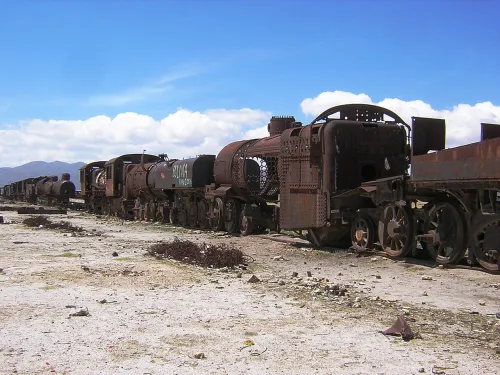
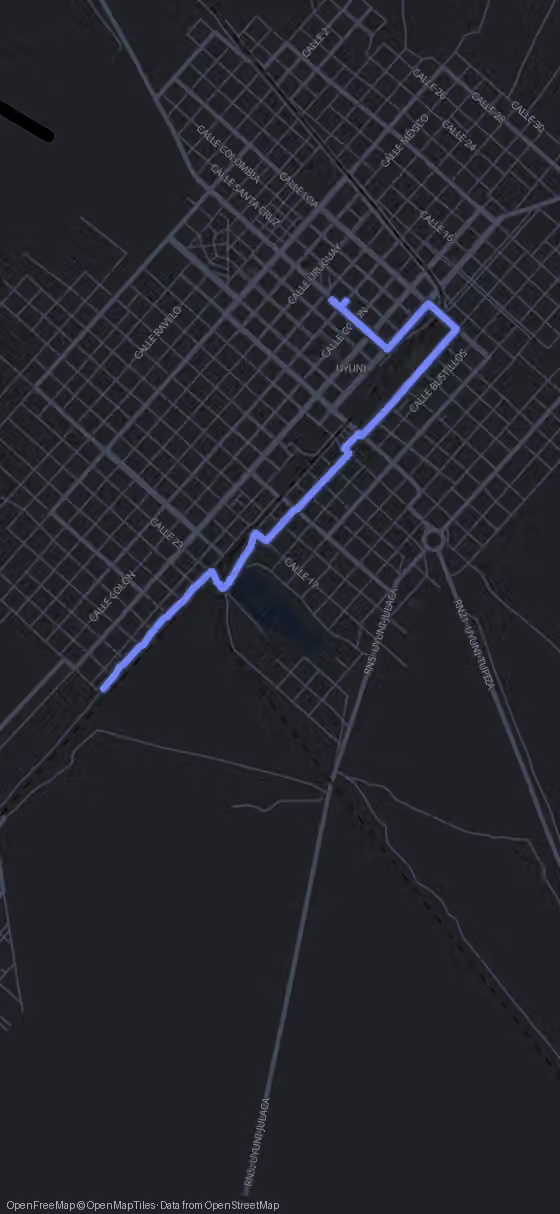
The Cementerio de Trenes lies a few kilometres south-west of the town centre, at the edge of the Salar de Uyuni, and it is often described as the largest railway cemetery in the world. Around 100 locomotives and wagons stand here, the oldest dating from the late 19th century. Walk between them, look into the boilers and wheel sets, and you see what is left of a whole industry.
The story starts in 1872, when work began on the Ferrocarril de Antofagasta a Bolivia, the country's first railway. It carried sodium nitrate and other salts, along with copper, silver and gold from the mines inland, down to the ports on the Pacific. When the line reached Uyuni at the end of the 19th century, the town got a railway depot and became an important junction. If the silver trade interests you, the mining city of Potosí tells the other half of that story.
Around the 1940s the local industry collapsed. Most of the precious metal mines were abandoned, the supply lines lost their purpose, and the locomotives and wagons were taken out of service and left to decay. The dry local climate slows the corrosion, but salt from the Salar eats at the metal, residents have stripped parts for scrap, and many wrecks are covered in graffiti.
Because travellers come to Uyuni for the Salar, the largest salt lake in the world, the Train Cemetery has become a busy stop, and many salt flat tours include it. For photographers it is the highlight of this walk: the wrecks are a favourite subject. Entry is free, so take your time; this is where the route ends.
- Hours
- 24/7
- Price
- Free