

Piazza dei Signori
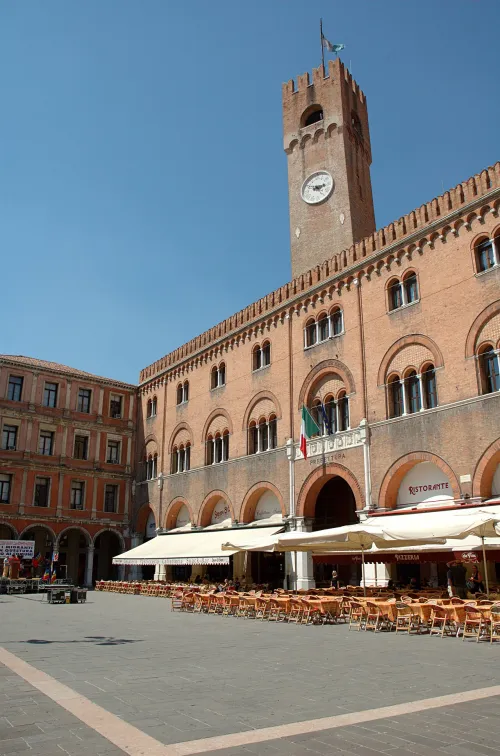
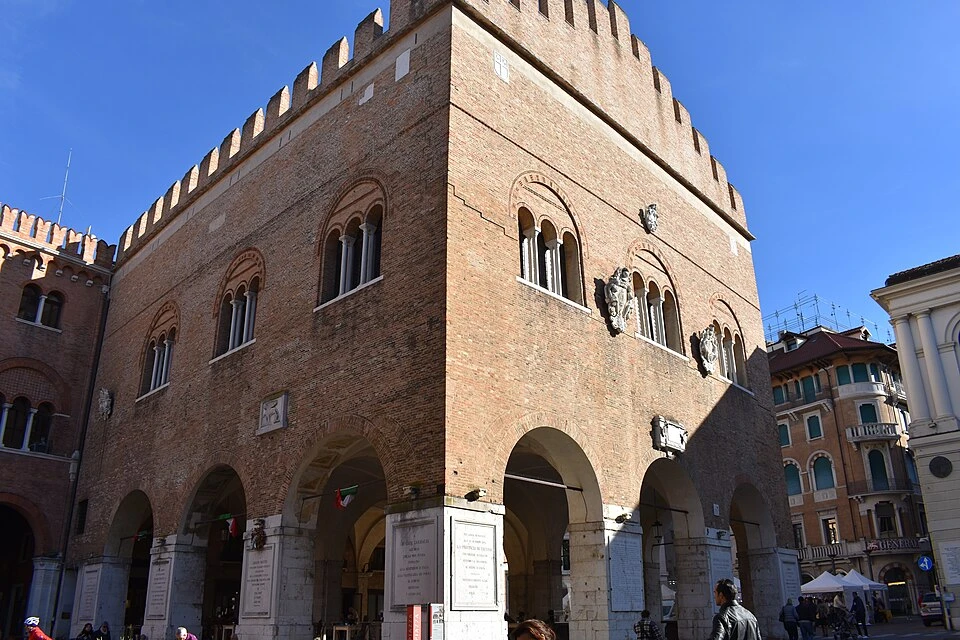
You start where Treviso has gathered for centuries. Piazza dei Signori takes its name from the palaces that housed the old Signoria: the Palazzo del Podestà, today the prefecture, the Palazzo dei Trecento, where the city council still meets, and the Palazzo Pretorio. Stand in the middle and turn slowly: this ring of buildings was the political heart of medieval Treviso, and the piazza is still the city's cultural, historic and social centre.
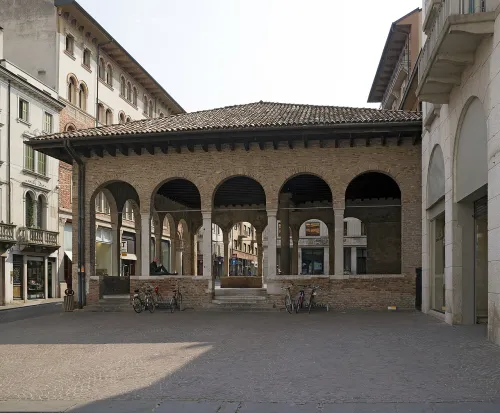
The square has worn many names. The earliest was probably Piazza del Carubio, a corruption of the Latin quadruvium, the crossing of a Roman town's two main streets. A Latin inscription found in 1760, now set into the bell tower of the cathedral, shows that Roman Tarvisium was laid out on a grid of streets meeting at right angles, and some historians place that crossing right here. Others argue for the nearby Piazza Carducci by the Loggia dei Cavalieri; you will stand there in a few minutes and can judge for yourself.
Once the town hall rose, people called it Piazza delle Catene or Piazza della Berlina, the square of chains and of the pillory, where the condemned were put on show to the crowd. In the 1500s it became Piazza Grande, Piazza del Popolo and later Piazza dei Nobili, and shops began to cluster around the Palazzo del Podestà. It was a place for fun as well: the civic band played here every Sunday evening, and carnival was celebrated on these stones.
Your next stop faces this square: the Palazzo dei Trecento is 100 metres away, a one-minute walk, and on the way you can glance into Vicolo del Pino, a quiet lane few visitors notice.