

St. John's Cathedral
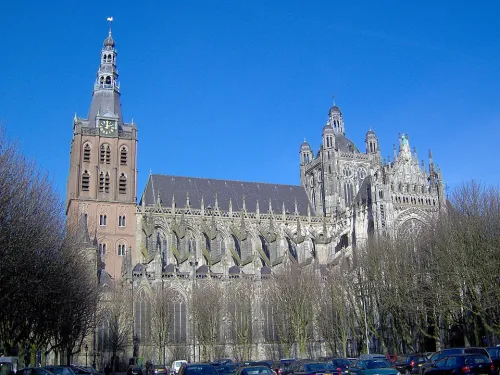
Before you go in, walk slowly along the outside. The main entrance is on Torenstraat, at the corner with the Parade, but the real show is overhead: double flying buttresses carry 96 small carved figures, and reliefs sit above the windows. Late Gothic builders loved ornament, and here they let themselves go on a scale that makes the building feel even bigger than it is.
Construction ran from the late 14th to the early 16th century, yet the builders held to one style the whole time. That is why the interior feels so harmonious, and why the church is regarded as a high point of Brabantine Gothic and as something unique in Dutch church architecture. It began as a parish church, became a collegiate church in 1366 and the cathedral of the new diocese of 's-Hertogenbosch in 1559. On 22 June 1929 it was made a basilica because of the special devotion to the Zoete Lieve Vrouw, the Sweet Lady of Den Bosch.
Inside, look for the richly decorated brass baptismal font from 1492, which weighs 350 kilos, and the three-part altarpiece from the early 16th century with carved scenes of the Passion; six panels painted on both sides can close it. The carved pulpit dates from the middle of the same century. Then turn to the organ case, almost 20 metres high and from the early 17th century, counted among the finest organ fronts in the world. The Renaissance organ behind it was rebuilt into a full 18th-century instrument in 1784.
Going in is free, so there is no reason to skip it; give it at least half an hour. If you want the stories behind the altarpiece and the organ from a person, book the guided cathedral tour. When you come out, Parade Square is right there, 90 metres and a minute away.