

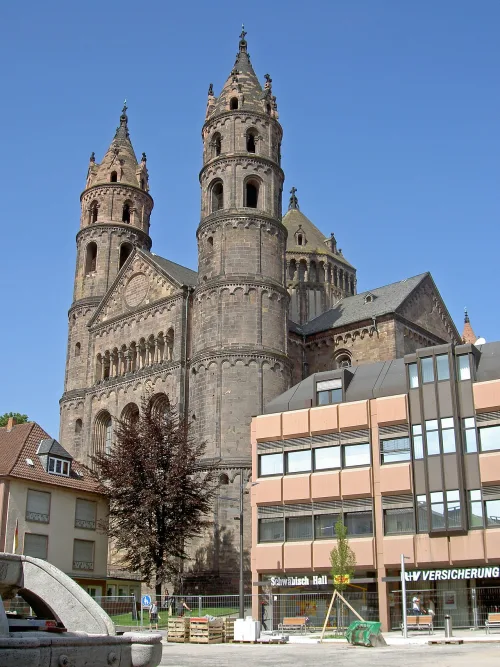
Wormser Dom St. Peter
You begin on the highest point of the inner city, and that is no accident. Because this hill stayed safe from the floods, people have lived on it since the third millennium BC. Celts came first, then the Germanic Vangiones, whose name survives in the Wonnegau, the countryside around Worms. The Romans built a trading centre and a temple district up here. After their garrison left in 401, the Burgundians took the town in 413, lost their bid to shake off Roman rule in 435, and the Franks finally took Worms by force and turned to Christianity.
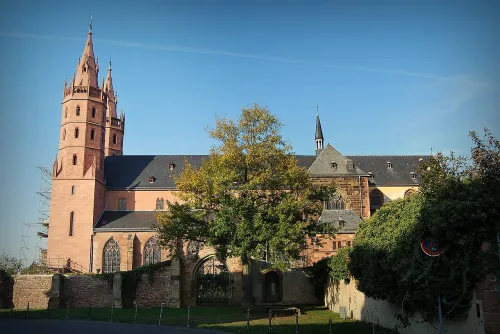
The cathedral in front of you is the most important Romanesque building in Worms, closely tied to Bishop Burchard and to the city's high point in the 12th and 13th centuries. Most of it was finished by 1181; the west choir and the vaulting followed in the 13th century, and the elaborate south portal was added in the 14th. Walk round to that portal before you go in, it is the youngest showpiece of the exterior. The central dome you see has been rebuilt.
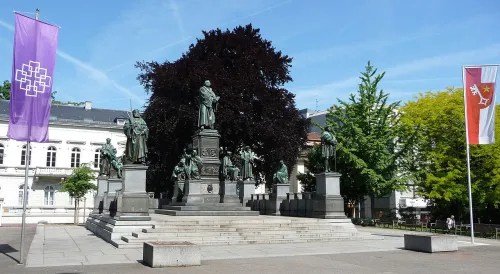
A remarkable amount of European history took place here. Leo IX was nominated pope in 1048, the Concordat of Worms ended the Investiture Controversy in 1122, Emperor Frederick II married Isabella of England in 1235, and in 1521 the Diet of Worms condemned Martin Luther as a heretic. Until 1802 this was the seat of the prince-bishops of Worms, who lived next door in the Bischofshof. Then the bishopric was dissolved and the cathedral became a parish church, until Pope Pius XI made it a minor basilica in 1925.
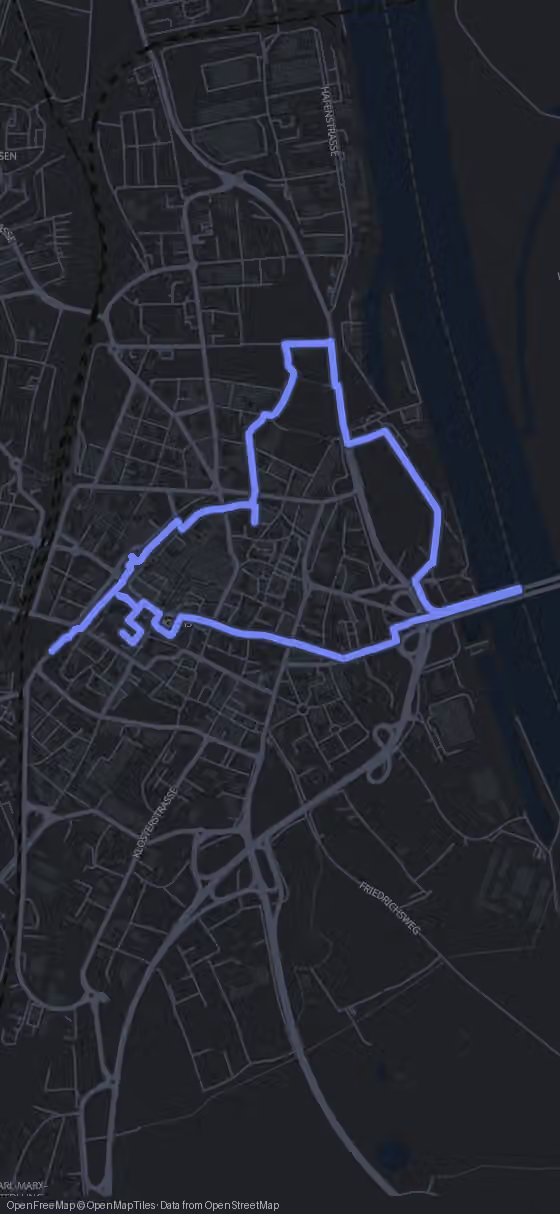
Entry is free, so go inside even if you only have a few minutes. Afterwards walk 310 m, about 4 minutes, to Heylshof-Park, which stands on the ground of that bishops' palace.