

Ortenburg
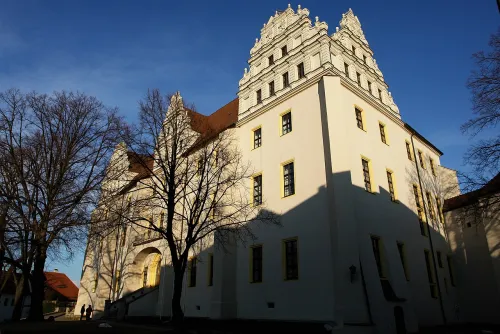
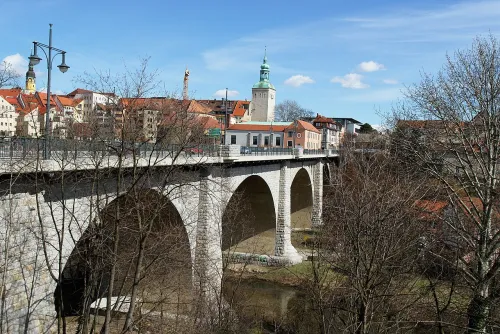
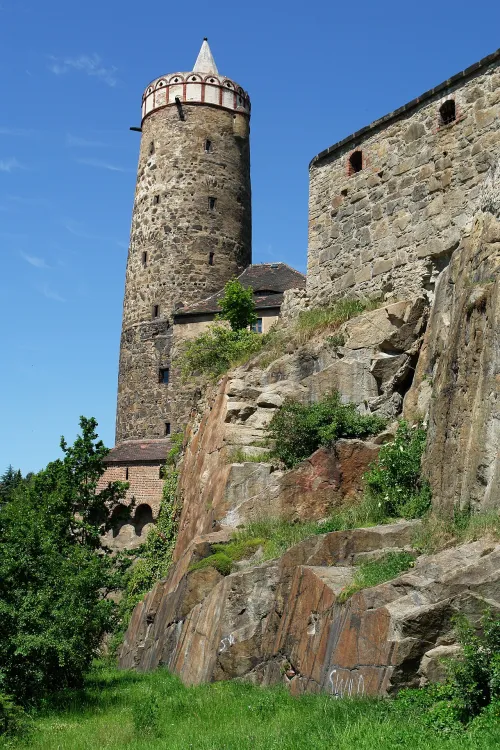
Start where Bautzen began. The Ortenburg sits on a rocky spur about 20 metres high over the east bank of the Spree, and its Sorbian name is simply Hród, the castle. The grounds are free and open around the clock, so you can begin as early as you like.
Why here? The river crossings close by gathered the important routes running from west to east, at a favourable point between wooded ridges to the south and often marshy heathland to the north. Earthworks may go back to the Bronze and Iron Ages, and a tribal castle of the Milzener, the Old Sorbian people living at the heart of today's Upper Lusatia, is often assumed. Yet nothing reliable is known about either: around 850 the Milzener were credited with thirty castles, and not one was named.
Written history starts with conquest. According to the chronicle of Thietmar of Merseburg, King Henry I forced the Milzener to pay tribute, took their land on the upper Spree and drew it into the East Frankish realm. Chronicles say a ring wall was begun under Henry and completed under his son Otto I. After 970, as Polish and Bohemian dukes pressed from the east, the roads through Upper Lusatia mattered to the whole empire; the margraves of Meissen enlarged the castle, and around 1000 it was the political centre of the terra milsca, the Milzener border land. From then on it belonged to whoever ruled the country.
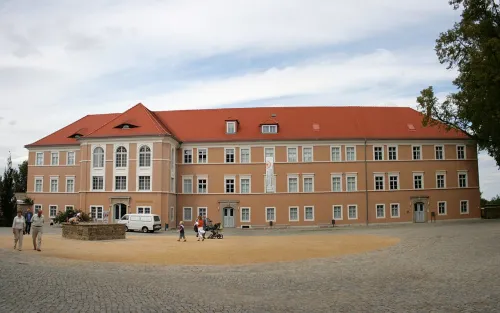
The name itself is younger: it first appears in 1405 as 'castrum Orthenburg in Budissin'. Scholars trace it to the medieval word 'ort' or 'ert' for a site that juts out into the landscape, which makes sense once you stand on the spur. The Sorbian Museum is housed in the Salzhaus up here, but the route brings you back to it later. For now, walk 340 m, about 5 minutes, to the cathedral.