

Castle Church
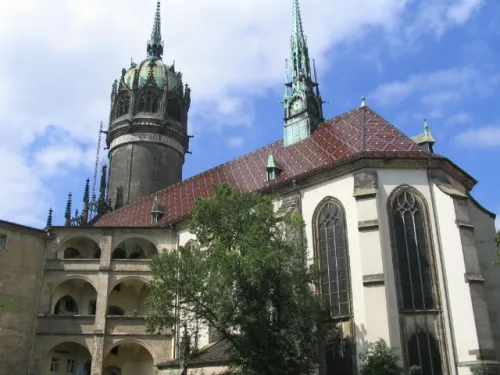
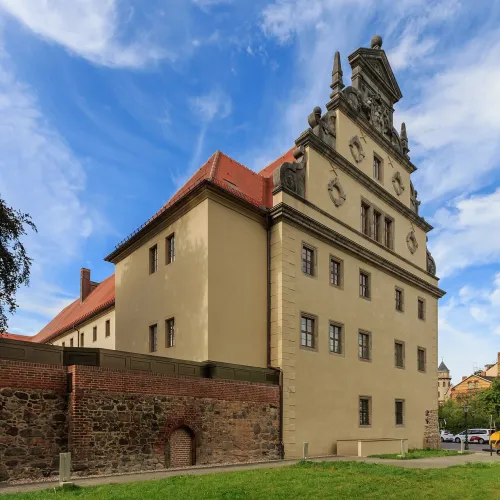
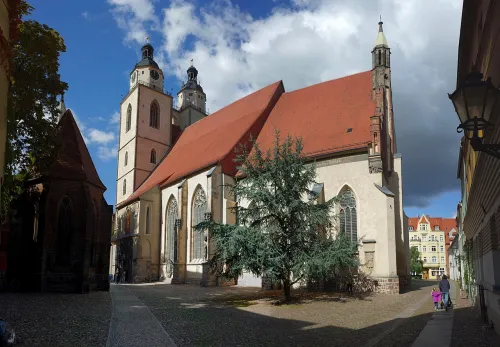
You start where the Reformation, by tradition, began. According to Philip Melanchthon, Martin Luther posted his Ninety-five Theses at this church in 1517, and the Late Gothic building in front of you is the one that made Wittenberg a name across the world. Its proper name is All Saints' Church; people call it the Castle Church to tell it apart from St Mary's, the town church you reach near the end of the walk.
The story goes back further than Luther. Around 1340 the Ascanian duke Rudolf I built a first All Saints' chapel at his new residence, consecrated on 6 May 1346 and placed directly under the Holy See. In 1400 Pope Boniface IX made it Wittenberg's main church. The building you see today came later: Elector Frederick the Wise had the old fortress rebuilt, and his architect Conrad Pflüger raised the new church between 1490 and 1511 as part of the electoral castle. Artists of the rank of Tilman Riemenschneider, Jacopo de' Barbari and Albrecht Dürer worked for the complex.
When Frederick founded the university, the Leucorea, in 1502, the church became its chapel, so scholars and worshippers met under the same roof. That is the world Luther lived in: a court, a church and a young university side by side.
What you see is also a memorial. From 1883 the church was restored as a Reformation monument and reopened on 31 October 1892, exactly 375 years after the theses. Since 1996 it has been a UNESCO World Heritage Site together with the other Luther sites in Wittenberg and Eisleben. Going in costs a conservation fee, with a guided tour and the tower as extras; if you came for Luther, it is the first interior worth paying for.
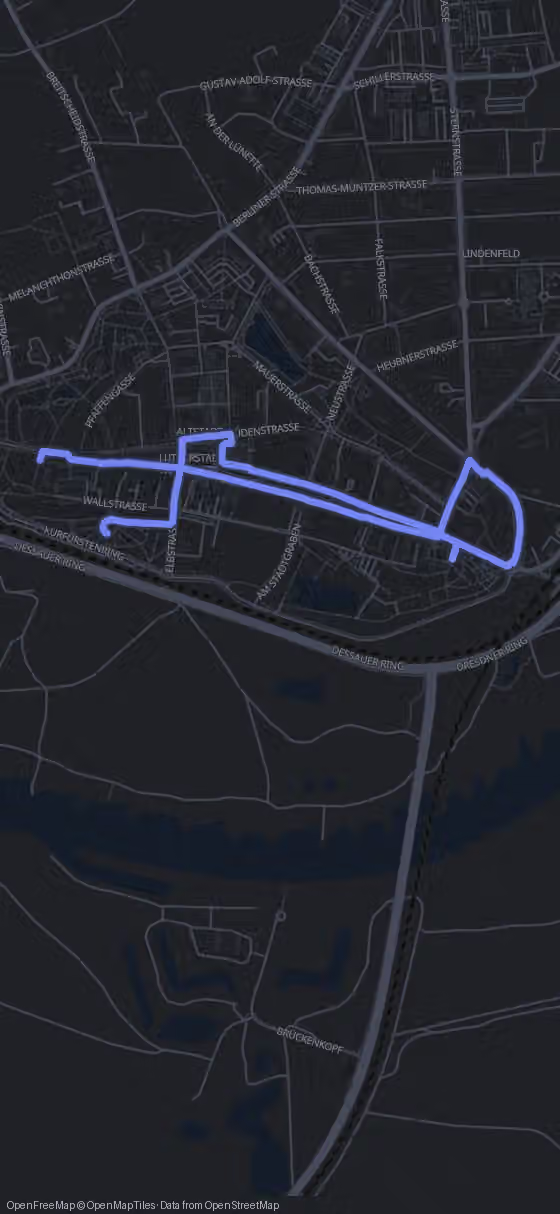
From here it is 310 m and 4 min to the Museum of City History.