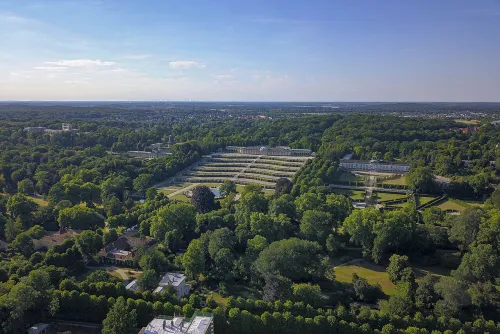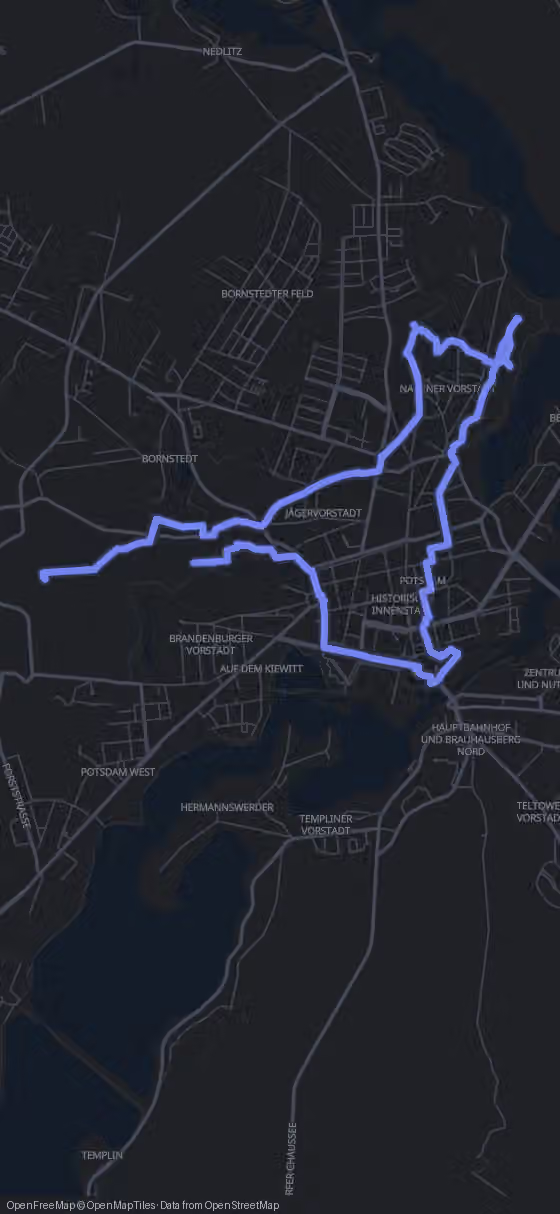


Neues Palais
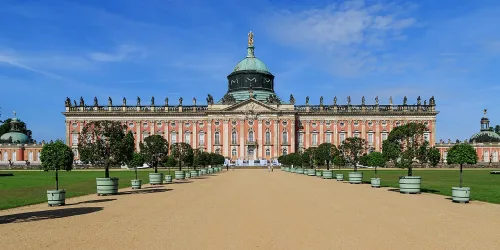
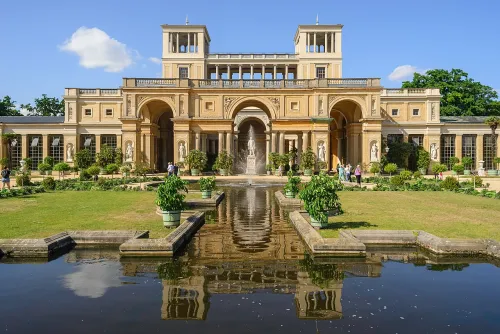
You begin at the western end of Park Sanssouci, in front of a palace built to impress. The New Palace went up between 1763 and 1769, right after the Seven Years' War, and Frederick the Great meant it as a statement: Prussia had survived and won. He himself called it a fanfaronade, a show of excess in marble, stone and gilt. Take in the length of the building; its east and west façades run to 220 metres.
This was never Frederick's home. It was a stage for receiving royals and dignitaries, with over 200 rooms, four grand gathering rooms and a theatre for balls and state occasions. When he did stay, he used a suite at the southern end: antechambers, a study, a concert room, a dining salon and a bedroom. Frederick still preferred Baroque and Rococo while much of Europe was turning to Neoclassicism, and this is the last great Prussian Baroque palace.
The building history had its own drama. Johann Gottfried Büring, who had built the Chinese Teahouse and the Picture Gallery, planned it with Heinrich Ludwig Manger, but after disagreements Carl von Gontard took over the design in 1764, while the three storeys were already rising around unfinished interiors. Going inside costs admission and is worth it if you want to see Prussian splendour at full volume; if your time is short, the façade tells much of the story.
From here it is 1200 metres, about 18 minutes, to the Orangery Palace.