

Karl Marx Monument
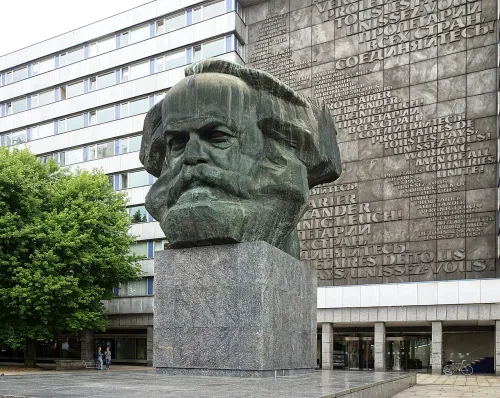
Stand back a few metres and let the scale sink in: the head alone is 7.1 metres tall, more than 13 metres with its pedestal, and weighs about forty tonnes. It was designed by the Soviet sculptor Lev Kerbel and unveiled in 1971 on Brückenstraße, near the crossing with Straße der Nationen. Only the Lenin head in Ulan-Ude, 60 centimetres taller, beats it as a portrait bust.
Now look at the wall behind it. On the building locals call the Parteisäge, the party saw, after its sawtooth row of blocks, you read "Workers of all countries, unite!" from the Communist Manifesto in German, English, French and Russian. An artists' collective including the graphic artist Helmut Humann designed it. The building once housed the district council and, in the 1980s, the regional leadership of the ruling SED party; today a state tax and finance office works behind the slogan.
Why Marx, here? On 10 May 1953 Chemnitz was renamed Karl-Marx-Stadt. The city had been heavily bombed, and the rebuilding followed the plans of socialist town planning. The monument was meant to embody that change into a city of a new, socialist kind.
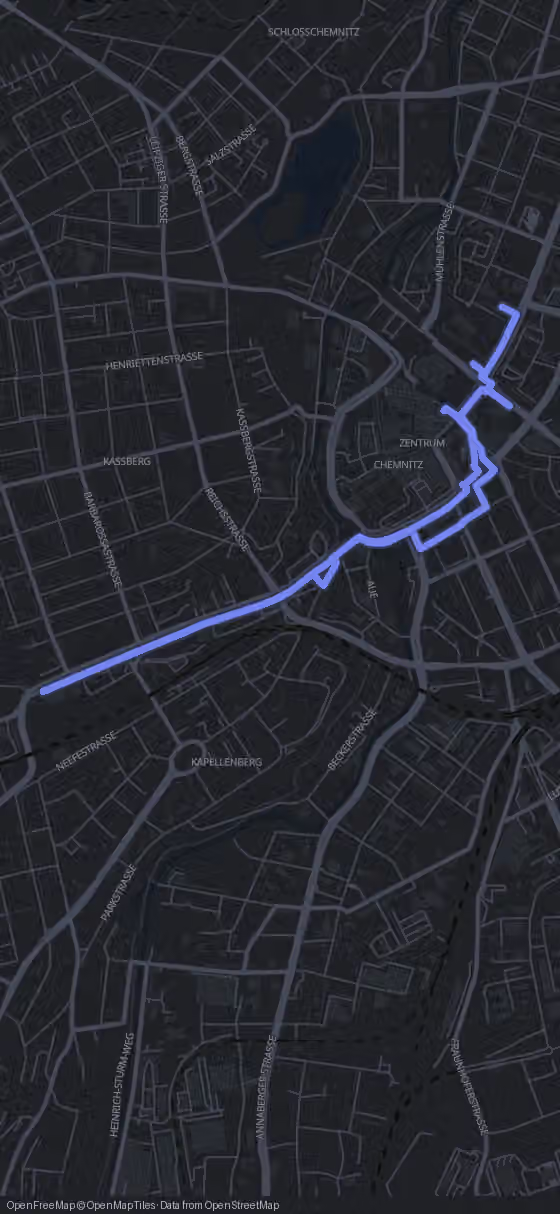
The people of Chemnitz answered with humour. They call the head dor Nischel, a Central German dialect word for head or skull, and the square around it was nicknamed the Schädelstätte, the place of the skull, the word Luther used for Golgotha. Take your photo, then walk 800 m, about 12 minutes, to DAStietz, which also houses the Naturkundemuseum Chemnitz.