

Beethoven-Haus
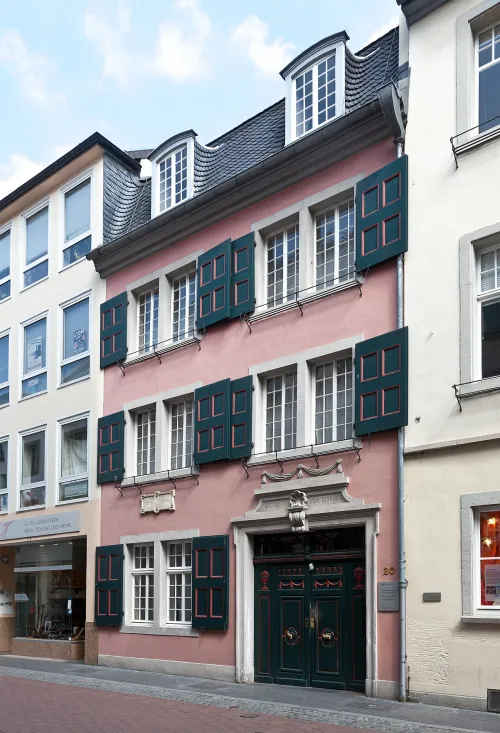
The walk begins at Bonngasse 20, a baroque house with a stone facade built around 1700 on top of an older vaulted cellar. It is one of the few middle-class houses left from the time when Bonn was the seat of the prince elector. Back then this was the neighbourhood court employees preferred, right in the heart of town between the palace, the town hall on the market square and the Rhine.
For much of the 19th century nobody treated it as a shrine. Five families lived in the front and rear buildings at various times, and three tailors and a shoemaker kept their workshops here. Around 1840 Beethoven's friend Franz Gerhard Wegeler, a physician, and the teacher Carl Moritz Kneisel identified the rear part of the house as the composer's birthplace. The owner's answer was business: in 1873 a restaurant called Beethoven's Geburtshaus opened on the ground floor, and in 1887 a beer and concert hall went up in the yard.
In 1888 a grocer bought the property and sold it again a year later. That was when the Beethoven-Haus association was founded in 1889 and saved the house from demolition. Financed by the association and public money, it has grown into far more than a museum: the neighbouring houses at Bonngasse 18 and 24 to 26 hold the Beethoven archive with its collection, library and publishing house, plus a chamber music hall where music lovers and scholars from around the world meet.
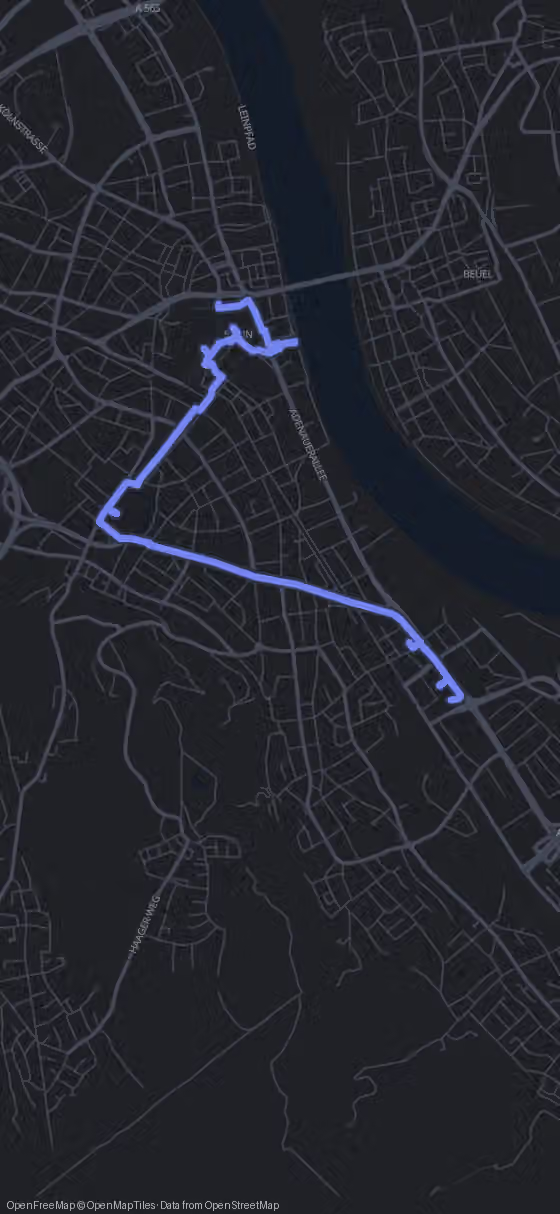
The museum in the birthplace charges admission, and it makes a natural first stop for the morning. If Beethoven is part of why you came to Bonn, give it about an hour; if not, the facade and the story of how close this house came to being torn down are enough. From here it is 750 m, about 10 minutes, to the Rhine bank.