



Aachener Dom
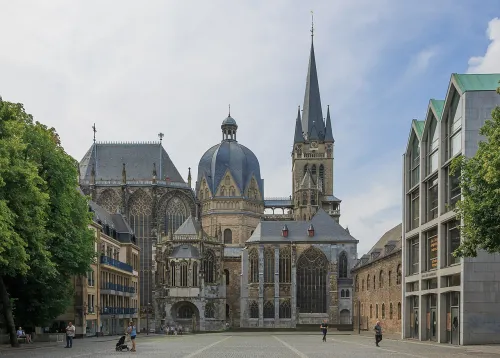
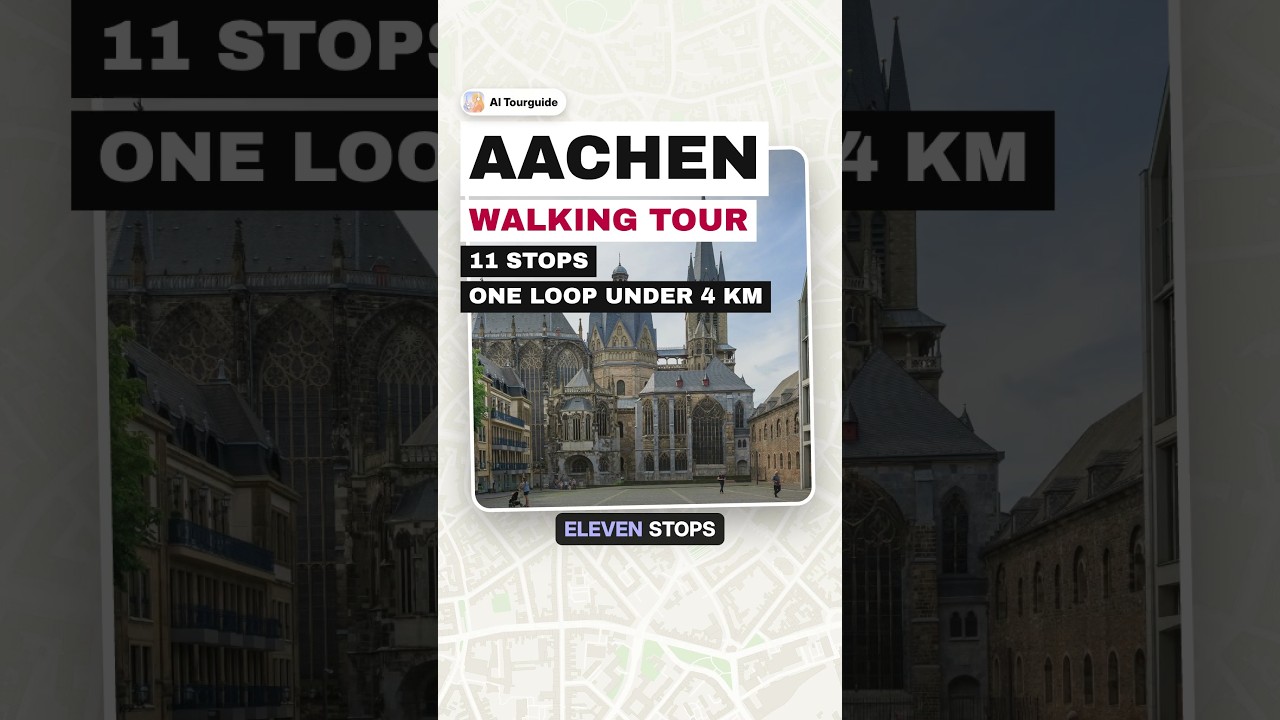
The core of the Aachener Dom is the Carolingian octagon, once the palace chapel of Charlemagne's royal palace in Aachen. Charlemagne had this central building and its westwork raised toward the end of the eighth century as the heart of his palace complex: the foundation stone was laid around 795 and the work finished around 803. Over the following centuries more buildings grew around it, so the church you see today spans everything from the early Middle Ages to modern times.
The consecration is usually dated to 17 July 802, although nobody can be sure, and the relics had arrived in the two years before. The often told story of Pope Leo III consecrating the church in 805 is a legend from the fourteenth century. The cathedral is dedicated to the Virgin Mary and is the seat of the Bishop of Aachen; its consecration is still remembered on 17 July, while since 1803 the patronal feast has been held on 15 August.
Going inside is free and worth it for everyone, not just for church lovers: the octagon is the most important architectural example of the Carolingian Renaissance, and half an hour lets you take it in properly. Bring a little change if you want to photograph inside.
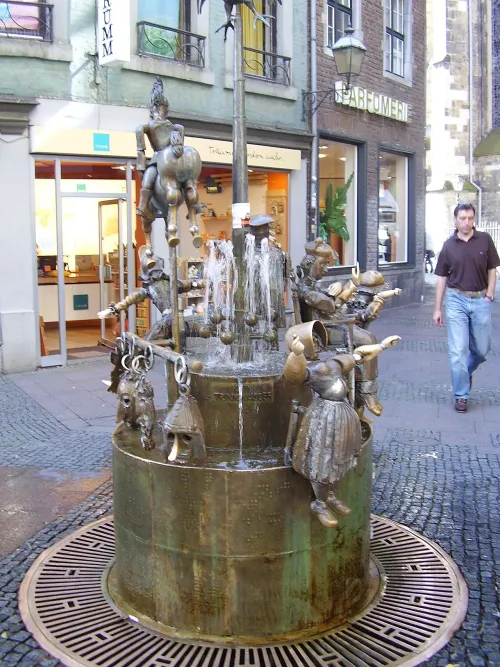
From the cathedral it is only 40 m, about a minute, to the Puppenbrunnen on Krämerstraße, the lane that links the Dom with the Rathaus.