



Burgplatz
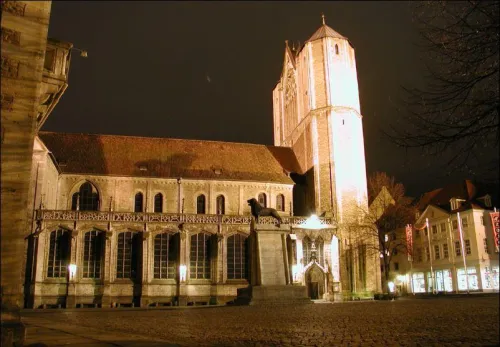
This square is where Brunswick began. From the 9th century the Brunonen counts had their seat here, a lowland castle on a natural island in the River Oker. In the 12th century Duke Henry the Lion built it into the centre of Guelph power, and in the middle of the square stands the Brunswick Lion, there since around 1166. Today Burgplatz is one of the city's five so-called tradition islands, and it still follows its medieval ground plan.
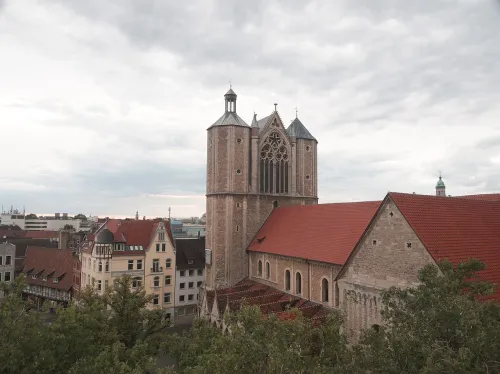
Turn slowly around and read the edges. On one side rises the palas of Dankwarderode Castle, opposite it the cathedral, and around them the classicist Vieweghaus, the Veltheimsches Haus and the Huneborstelsches Haus. The Veltheimsches Haus from 1573 is the last reminder of the noble courts that once lined the north of the square.
Do not take the castle at face value. The building you see was put up between 1887 and 1889, and any resemblance to Henry the Lion's own castle is generous at best. The wing towards the cathedral is historicist fantasy, crowned by a deliberately built ruin at its southeast corner. One detail is genuine, though: wall remains prove there really was a raised passage from the castle into the church.
Much of the old setting has vanished. Until the late 19th century the Oker bounded the site to the east, where roads and large public buildings stand today; the moat that cut off the western side and the defensive wall around the whole area are gone too.
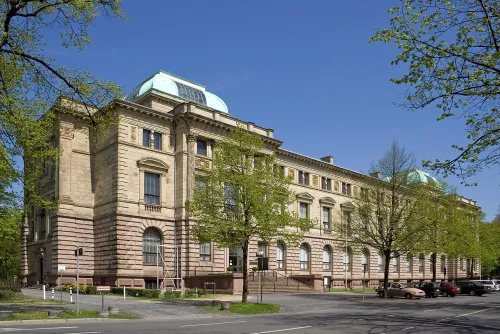
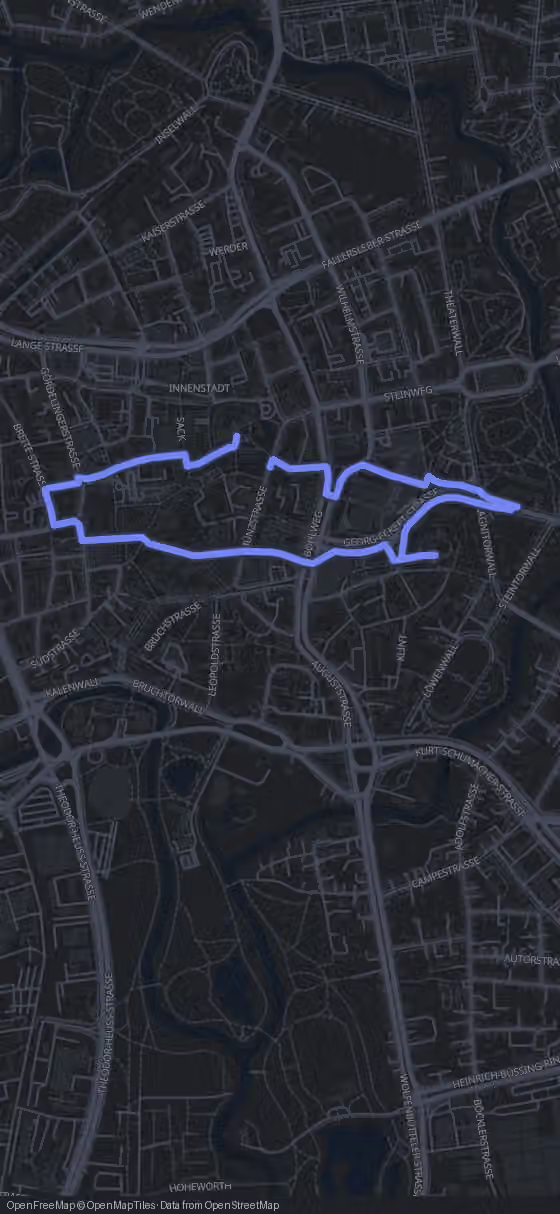
From here you walk 570 m, about 8 min, to the burghers' side of town, passing the Braunschweigisches Landesmuseum on the way.